

WHO IS A LINK BUILDER AND HOW TO BECOME ONE?
-
Post author

-


According to Ahrefs, about 50% of pages in the top Google search results contain backlinks. This shows that the search engine trusts the backlink profile of websites.
In this case, the quality of the content that includes outbound links and its relevance to the platform is extremely important. Effective link building plays a key role in improving a website’s ranking on Google and building brand reputation.
What is this about?
- What does a link builder do?
- Link builder responsibilities and skills
- How much does a link builder earn?
- Conclusions
What does a link builder do?
Link building is an important part of a successful marketing strategy. Building backlinks helps establish communication with the target audience and promote the website. SEO specialists should understand how to get links, even if it’s not part of their direct responsibilities. In any case, they’ll need to include this task in the general website optimization strategy from time to time, create technical assignments, and check how correctly they are implemented.
The link building profession appeared in the late 1990s and became especially in demand in the 2000s with the growth of the SEO industry. In the 2010s, search engine algorithms became more complex and link requirements became stricter. A link builder, like any specialist who works on website promotion, must constantly develop their skills to stay up to date with industry trends and algorithm changes.
For example, recently, the trend is toward natural link placement, which means it’s important to choose the right platforms and create high-quality, relevant content. Google, like internet users, pays attention to anchor text, the place on the page where the link appears, and the attributes added to the link. That’s why this task, although it may seem simple at first glance, has many details and requires expertise.
Link builders are narrow-specialized professionals who work on off-page SEO and search for platforms to place backlinks. Depending on the type and niche of the website, these specialists may focus on getting crowd links or negotiating with blog editors.
Crowd links are brand mentions on relevant platforms, forums, social media, and communities, along with descriptions of the promoted product or service.
Main responsibilities of a link builder
Let’s take a look at the main responsibilities of a link builder. We’re not talking about artificial link building where you need to create fake accounts and post comments—this is only about high-quality link building that Google won’t treat as spam.
- Developing a link building strategy
- Finding relevant platforms
- Placing backlinks
- Working with content
- Analyzing performance and reporting
Let’s explore each stage of the link builder’s work in more detail.
Developing a link building strategy
Strategy development can only be handled by an experienced link builder or SEO specialist. The expert analyzes the website’s backlink profile, audits competitors, and selects the best link building methods for the business based on goals and budget. Often, the specialist is also responsible for creating anchor lists at this initial stage. These are lists of all anchors—texts with links to different pages—that should be placed on the site and externally.

Popular link building strategies
Overall, there are several common strategies for link building.
- Searching for platforms with the highest traffic to increase website visits.
- Getting a large number of backlinks from different types of websites—a method that is no longer considered effective. This may include crowd marketing.
- Building organic backlinks from trusted sources. To publish on high-authority niche sites, outreach is used—meaning links are placed based on agreements with site owners.
- In some cases, link builders use strategies that involve finding platforms where top competitors have already placed their links. Once these sites are found, more valuable or viral content must be created.
Once the strategy is prepared, it becomes clear which websites are the best fit for placing links and what kind of content is needed for such promotion.
📌 Read the article: What is Link Building
Finding niche platforms
When it comes to Google promotion, it’s important to note that the number of referring domains is not the main metric Google uses to evaluate a site’s backlink profile.
“Search engines rank web pages based on what will be most helpful to the majority of users. Links are used to create a pool of candidate pages that then go through other algorithmic processes to determine whether those candidates are the most useful. Links are important for all publishers because they remain one of the ways a site becomes ‘eligible’ to be ranked.”—“Link Building Fundamentals” (“Link Building Guide”), Roger Montti, Search Engine Journal
When choosing platforms, a link builder pays attention to relevance and content quality, traffic volume, number and quality of existing outbound links, and more.
Websites that rank in Google and have organic traffic are suitable for link building. This shows that the domain is not under penalties. Google devalues links placed on informational sites that sell links in all their articles. It’s important that the selected platforms have regularly updated content created to provide real value to users, not just to include external links.
When selecting websites, a link builder should also monitor keyword growth trends. If the number of ranking keywords and positions isn’t growing, the site’s traffic may soon drop—and links from it won’t bring the desired results.
You can search for platforms manually, but it’s more efficient to automate the process and learn how to use specialized online tools. For example, BuzzSumo helps find popular content, influencers, and blogs in the right niche. This kind of search allows you to build backlinks effectively on relevant platforms through outreach.
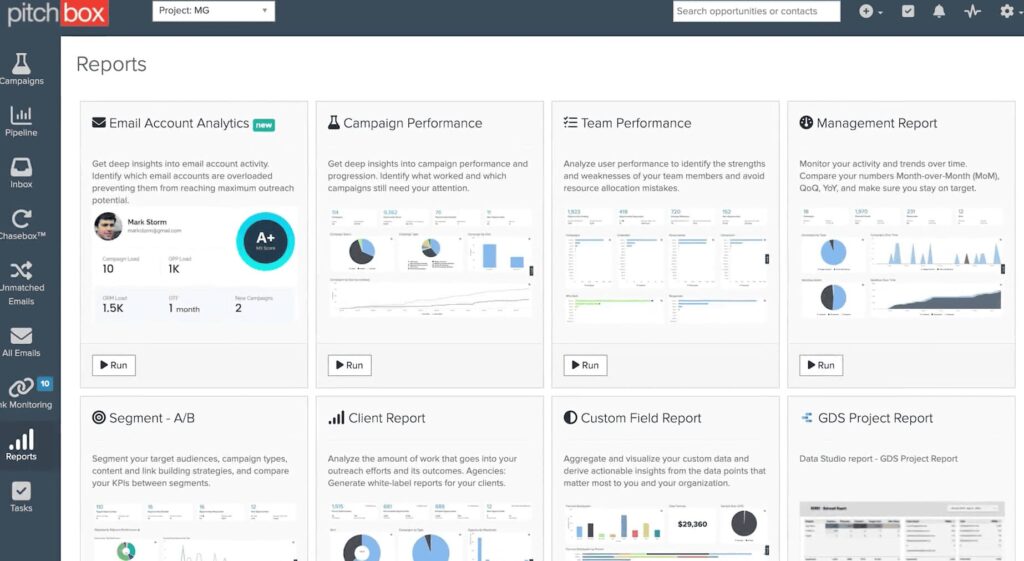
Pitchbox is a specialized platform for connecting with bloggers, finding websites, and discovering thought leaders across industries. It automates the process of finding sites for link building.
Working with content
Many owners of popular websites and editors of expert blogs usually don’t link to other materials because they see it as advertising. In some cases, well-known platforms may publish guest posts, but these articles must be truly unique and follow the editorial guidelines of the platform.
Link builders need to be good at negotiations and flexible, keeping in mind the needs and expectations of both parties. The best option for getting high-quality backlinks is to use niche websites. These sites can really help improve the authority and search ranking of your website.
Before placing links, the link builder should have ready-to-publish content that meets all the platform owner’s requirements. For the business owner or writer, it’s important that the content goes viral—meaning users want to share it. This requires an understanding of marketing tricks and trends. For example, if infographics, long-reads, or short videos are the most shared formats in your industry and online right now, keep this in mind when writing content briefs and creating content.
You can also pick some popular topics, jokes, or hot issues, or use famous movie or TV characters, and add them into your content that will be published on external websites. This way, more people are likely to notice your content.
Placing links
This includes choosing where to place the links, writing anchor text, and working with webmasters and editors. At first, this step might seem technical and simple, but if your brand promotion strategy needs many links across different sites, the process can become boring and hard.
To post on popular websites that don’t usually publish guest content, you need to know how to negotiate. Some platforms allow users to submit their own articles—for example, HuffPost accepts guest posts on topics like politics, culture, tech, and health. Writers can submit articles through the contributor program and include relevant external links.

A popular crowd-marketing tool is Google Alerts, which allows you to receive email notifications of new content based on keywords you want.

Performance analysis and reporting
In the end, it is the link builder who evaluates the success of the link-building strategy and works to improve it regularly. They identify and analyze key link-building metrics, such as the number of backlinks created, referral traffic stats, brand visibility, search engine rankings, and more.
After placing backlinks, the link builder checks if they are indexed and contacts webmasters to recover lost links. Special tools are used to measure results and optimize the link-building process.
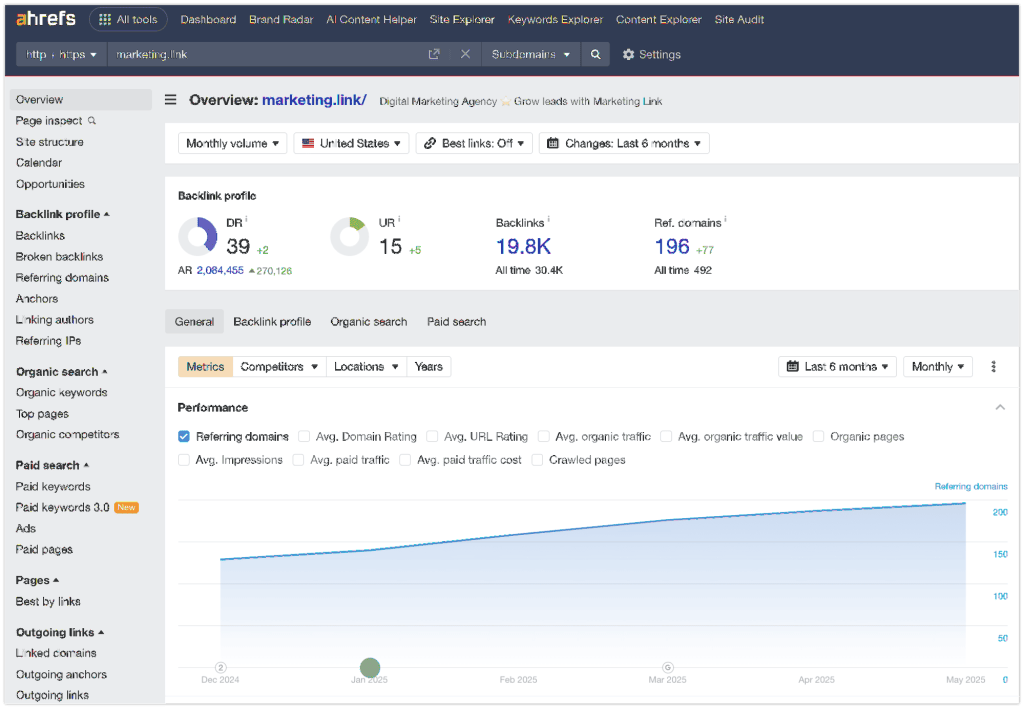
One of the most popular tools for link analysis is Ahrefs. It is a full-featured platform that helps analyze competitors’ backlinks and find niche-relevant websites and blogs for outreach.
📌 Read the article: How to choose a domain name
Semrush offers backlink profile analytics to help find and remove harmful links. The tool also analyzes competitors and identifies websites you can reach out to for backlink opportunities. The Backlink Gap feature compares your backlinks with your competitors’ to help you discover new sites for getting more backlinks.
Se Ranking lets you monitor your competitors’ backlinks and analyze them based on domain authority and traffic.
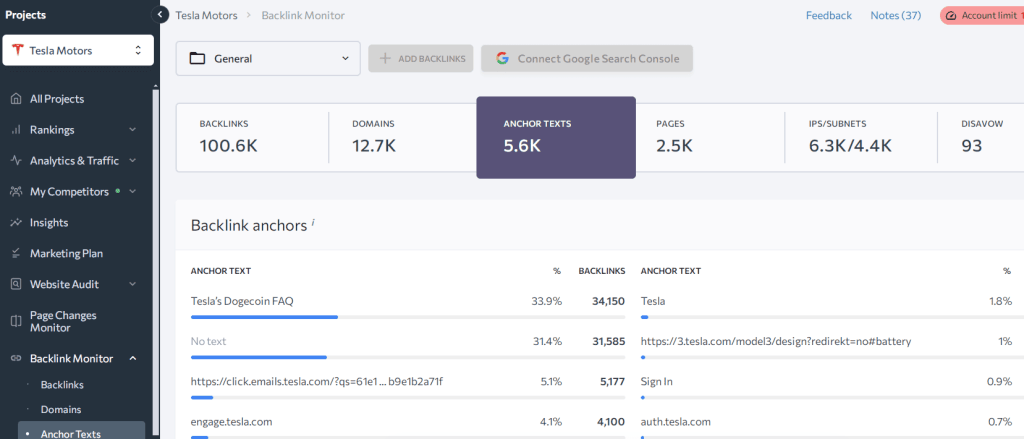
Moz offers a backlink analysis tool called Link Explorer. It can be useful both when selecting platforms for placing links and for tracking the performance of your backlink profile. It even provides an analysis of the quality of anchor texts.
Link builder responsibilities and skills
First of all, a link builder needs to understand how search engines work and how their ranking algorithms function. It’s important to know the basics of link building strategies, key KPIs, link-building metrics, and methods for finding websites to place links. You also need to know how to evaluate those sites. Understanding the basics of content marketing and web analytics is also important.
Link building is always evolving, so link builders need to be flexible and creative. Here are the main soft and technical skills needed to become a link builder.
Soft skills
- Good communication, negotiation, and compromise skills
- Ability to pitch and promote your offer
- Analytical thinking—you’ll need to monitor competitors, their backlinks, and websites regularly
- On some jobs, management skills may help—writing clear instructions and making sure tasks get done
Hard skills
- SEO—you should at least understand the basics of both on-page and off-page optimization
- Copywriting—depending on the company, you might need to create content where links will be placed, not just get the links
- A skilled link builder should also think like a markete—using the right link building methods for each niche and business type
- Ability to use link building, SEO, and analytics tools
We already mentioned some professional tools. A link builder needs to know how to use them, plus tools like Google Search Console, Google Analytics, Excel, Google Sheets, and others.
To start a link building career, it’s enough to take specialized courses. For beginners, free or low-cost training like the ones from Yoast are a good start. There are lots of resources online, but you should check the date on articles or videos, make sure the information is updated, and check if the authors are experts. A detailed guide called “Link Building for SEO: A Complete Guide” is available in the Search Engine Journal knowledge base.
How much does a link builder earn?
The more experience and broader the skill set a link builder has, the higher their salary can be. Each link building strategy has its own KPIs to measure performance.
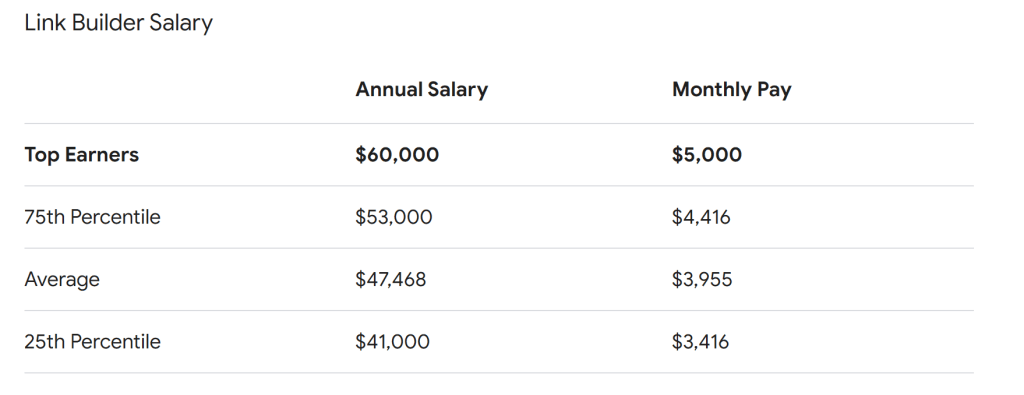

Link builders’ salaries depend on the level of the specialist.
- Junior specialists usually make between $200 and $300. They often do routine tasks that don’t require experience. This can include mass account registration, manually posting links on forums and directories, and mass selection and analysis of platforms. A benefit for beginners is that many companies provide detailed instructions for newcomers, which help them quickly adapt to the workflow and gain valuable experience.
- Middle-level specialists earn between $500 and $1,000, depending on the niche and number of projects. These professionals can promote projects on their own.
- Senior and full-stack link builders fully understand their profession and can create and implement an effective link building strategy from scratch. They can expect to earn from $800 and up.
A former Senior with management skills can become a team lead. Their main job is building and managing a team. In this role, the average salary starts at around $2,000. The salary level of a link builder depends on factors like the niche, type of link building, and workplace (agency, freelance, etc.).

Most SEO job descriptions include requirements for link building. Usually, these are hybrid roles, and it can be quite hard to find a full-time, well-paid job that focuses only on placing backlinks.

Conclusions
A link builder is a modern job that changes along with the rules search engines set for backlinks and updates to how websites are ranked. This role can be your starting point toward becoming a senior SEO specialist, team leader, or marketer.
About 85% of the work time is spent finding and checking websites for collaboration, talking to current partners, and negotiating with possible new ones. The rest of the time is used to review results, create reports, and improve the company’s link building strategy.
In some companies, strategy and analysis are done by other specialists, while the link builder focuses on manual outreach. This means you will do interesting but challenging and responsible work, like choosing trusted websites, talking to their owners or editors, and placing links in expert-level branded content.
Building backlinks plays an important role in how a site is ranked. If your business depends on SEO traffic, make sure to include link building in your online marketing plan.
Answers to questions
A link builder is a specialist who gets backlinks for a website. Their tasks may include choosing sites for link building, talking to partners, creating anchor text lists, placing links, and checking the results.
You can become a link builder by taking online courses. If you already understand basic SEO, learning this job is not hard. However, it helps to know how to use tools that analyze a site’s backlink profile.
-
Tags
