

HOW TO CHOOSE A DOMAIN NAME?
-
Post author

-


A domain name, together with your brand name, creates the image of your company in the minds of potential customers. How simple, clear, and pleasant the domain name sounds can affect how many people visit your website. That’s because organic traffic can come from users who type the website address directly into the search bar.
Even if a potential customer types your brand name or other related words into a search engine, many different results might appear. In this case, the person looks at the URL and chooses the link that most likely leads to the official brand website. That’s why it’s important to choose your domain name carefully and do all the needed research.
What is this about?
- Why is a domain name important?
- How to come up with a domain name for your website?
- Domain name research
- Conclusion
Why is a domain name important?
Before opening a new restaurant, the owner will have to decide where it will be located. Should they rent a more expensive place in the city center or save money and look at the suburbs? Should they think about having a visible front or a nice terrace? Or just go with a simple place in a good spot—like near offices or apartments?
How easy it is to reach the restaurant or store affects how many people come and how much money it makes. It’s the same with websites: the easier it is to find your site, the more people will choose it over others. That’s why marketers and business owners should spend time and money to choose and buy a good domain name.
Typical examples of domain names that people remember can be found in famous and successful companies. Usually, they prefer simple names—just like they often choose simple designs for their websites.
For example, the marketplace Amazon uses the same name for its domain in the most common zone, .com. Amazon.com is short and easy to understand—you won’t mix it up with anything else.

Some trademarks and brands, including personal ones, have multiple web resources that play different roles in business development. Large companies practice purchasing multiple domain extensions to protect their online presence. As a result, the price of related domain names increases.
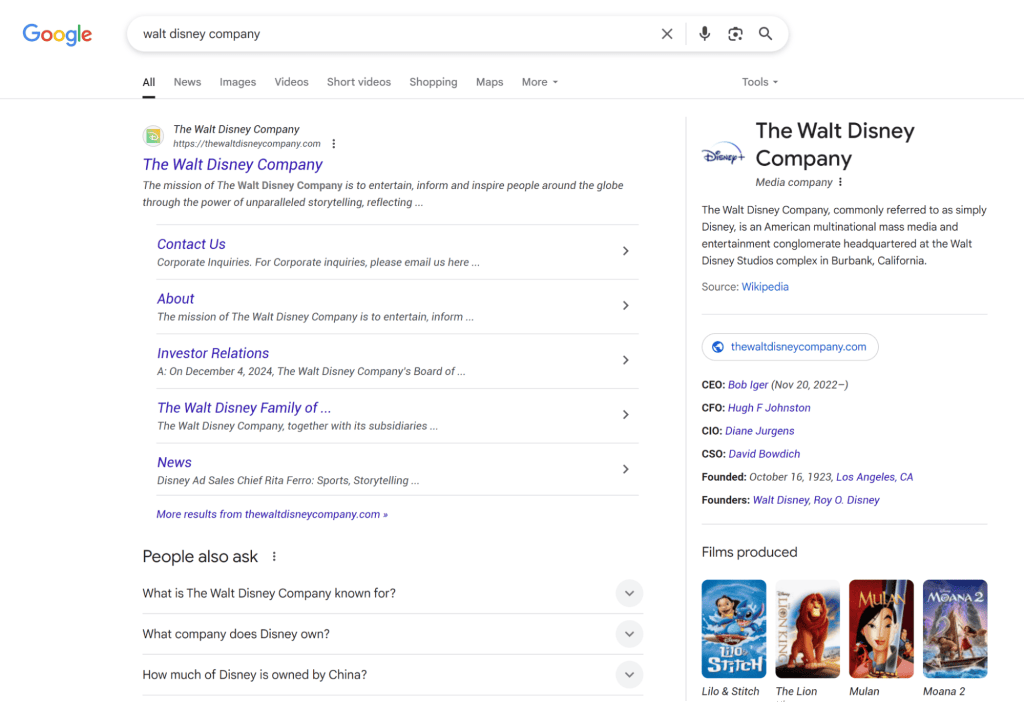
One of the sites related to Walt Disney is waltdisney.org. The website was created to familiarize fans with the artist’s biography and work. Other related sites are registered in the .com zone.

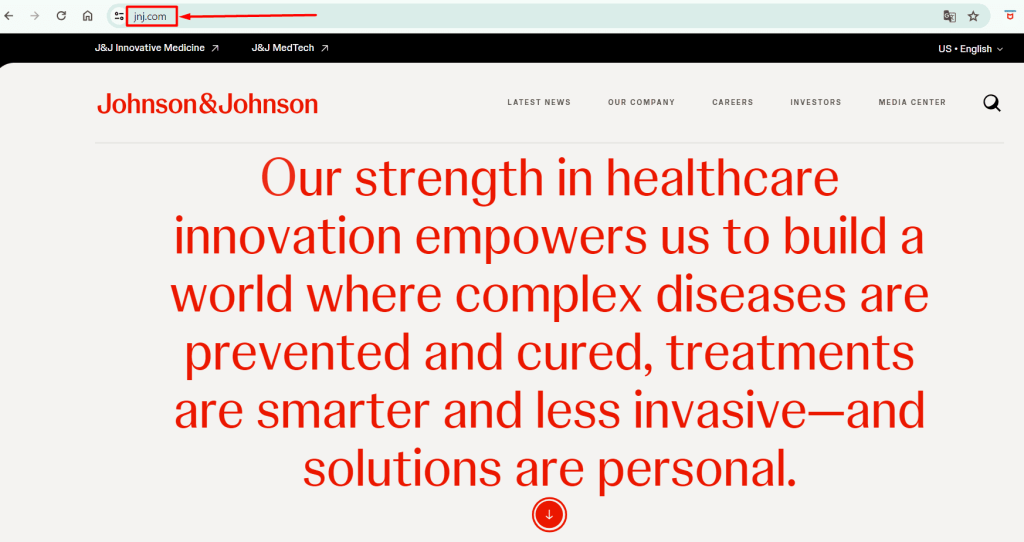
If a company name is too long, hard to pronounce, or includes words with different spelling options, it’s a good idea to make things easier for users and help them find the website more easily. That’s what Johnson & Johnson did by using only three letters for their domain: jnj.com. Of course, in this case, brand recognition plays a big role. The company name is so well known that even this short combination of letters brings the right associations to consumers.
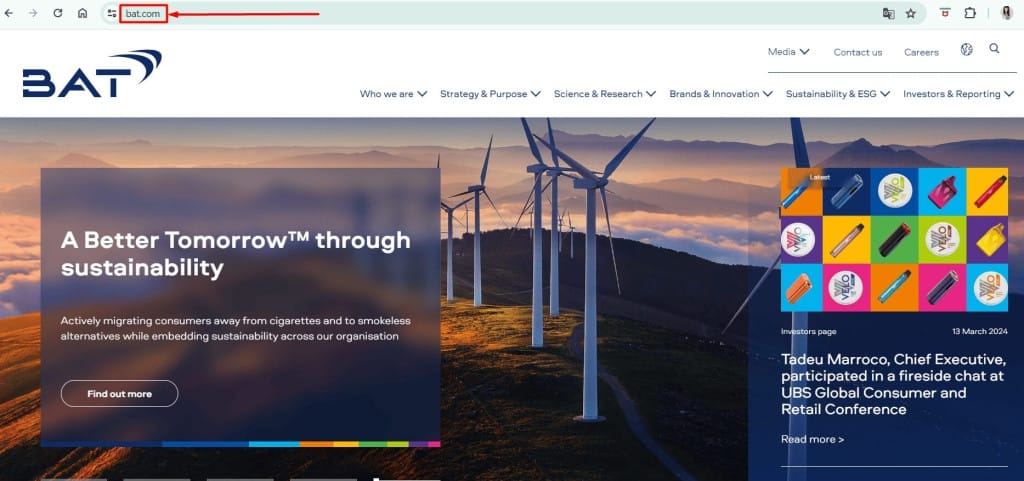
The company British American Tobacco used the first letters of the words in its name to create its domain: bat.com. This kind of abbreviation might not work well for a lesser-known company that doesn’t rank high on Google search. But in this case, it’s a perfect solution that lets customers type the URL in the search bar in just 2–3 seconds.
Sometimes, brands get creative and make their domain name both short and catchy. Procter & Gamble added the word “us” at the beginning and used the initials of their name: us.pg.com.

The jewelry store BiKo added two full words to its brand name: ilovebiko.com. Most likely, this is because the word “biko” is often used in the names of other brands, can be a last name, etc.

A domain name is not just a URL. It shows brand authenticity, grabs attention, and acts as a kind of business card. When choosing a domain name, you need to think about what the potential customer should imagine and feel when they hear it.
A good domain name is an important part of promoting your business online for several reasons.
- First impression and branding. A domain name is the first thing users see when they visit a website. It helps create a positive brand image.
- Traffic growth. A short, easy-to-remember, and clear domain name helps increase organic traffic and brings more repeat visitors.
- Search engine optimization. A domain name can affect your search rankings if it includes keywords related to your business or products.
- Protection from competitors. A registered domain name prevents competitors from using similar names and keeps your business unique in the market.
Overall, a good domain name is a key part of your online identity—it affects how well you promote your brand and how recognizable and respected your company is.
📌 Read the article: “What Is Link Building?”
How to come up with a domain name for your website?
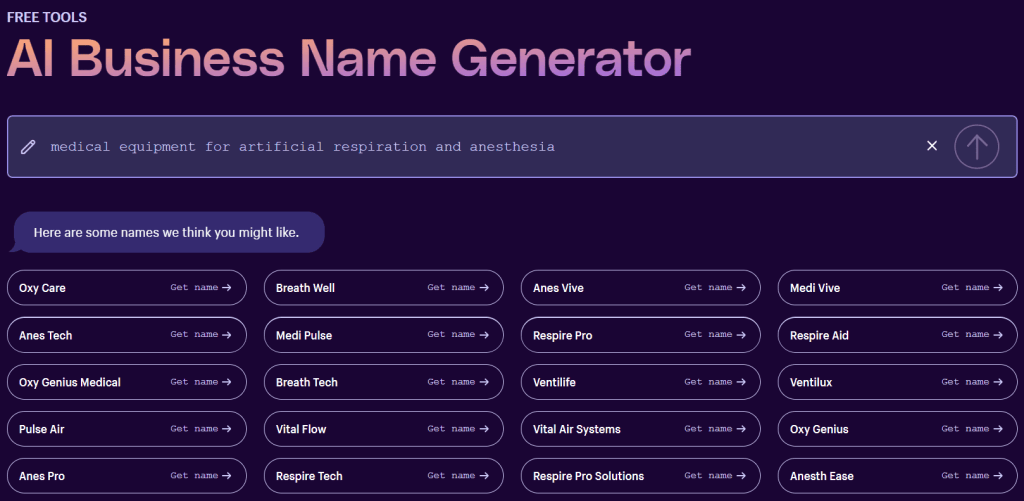
If you’re just starting a new project and creating a website along with your business, you have a chance to build a unique brand name. To choose a catchy and easy-to-remember company name, you can hire a specialist or use a name generator like the AІ Business Name Generator by Shopify.
For example, if you sell medical equipment for artificial respiration and anesthesia, enter a short description of your business and get a list of simple and clear name options.
The online service showed results for the request “medical equipment for artificial respiration and anesthesia.” Let’s choose one of the names—”Breath Te”—for further analysis.
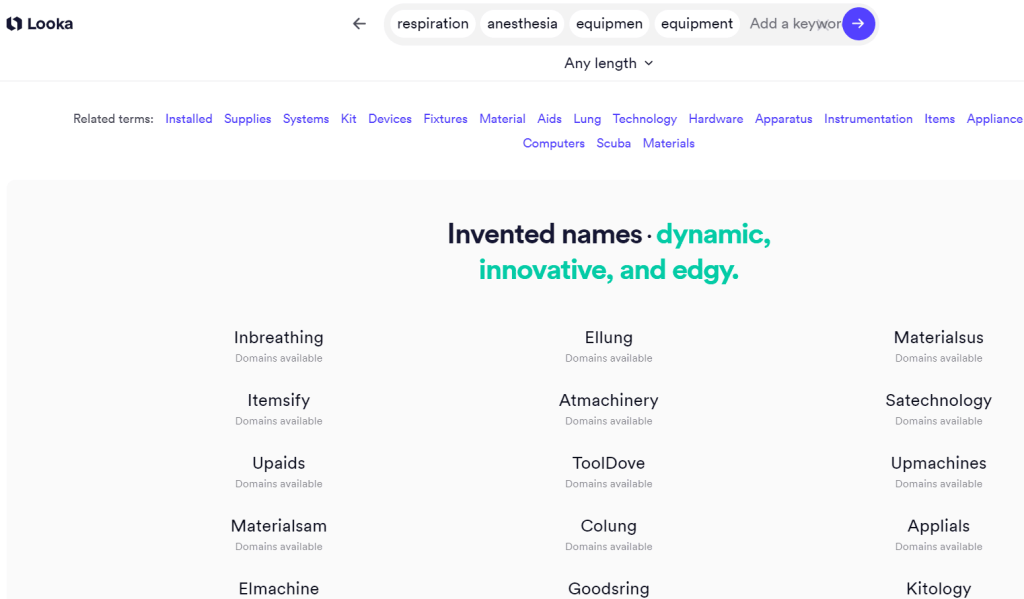
Another similar tool is Looka’s Business Name Generator. After you enter a few keywords related to your business, it gives you name ideas along with available domain names.
Once you choose a name, you need to register a domain name that hasn’t been taken yet in the desired domain zone. There are different services for this, including the free Domain name generator from Shopify. This kind of domain name idea search is useful because it lets you instantly check domain availability.
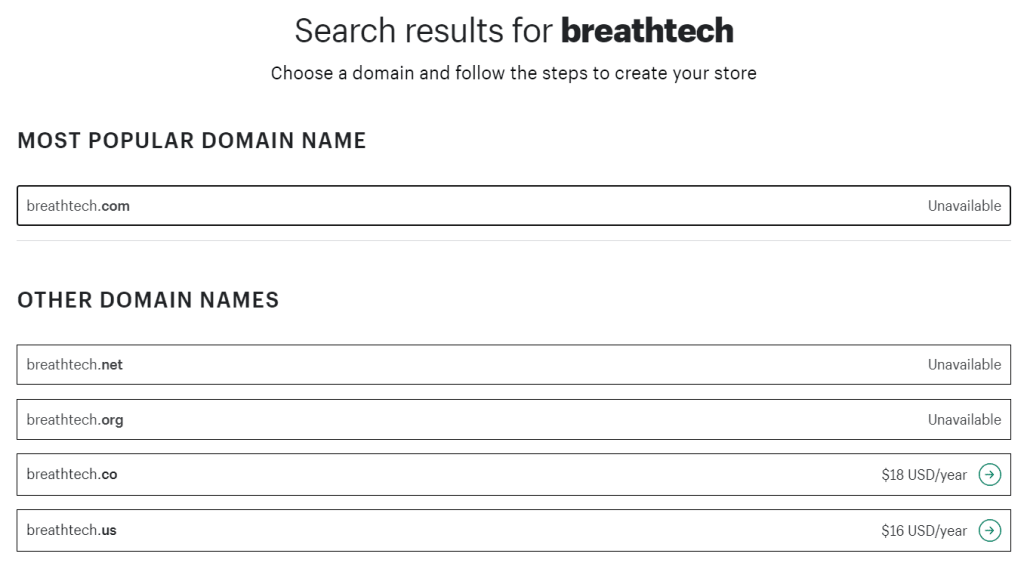
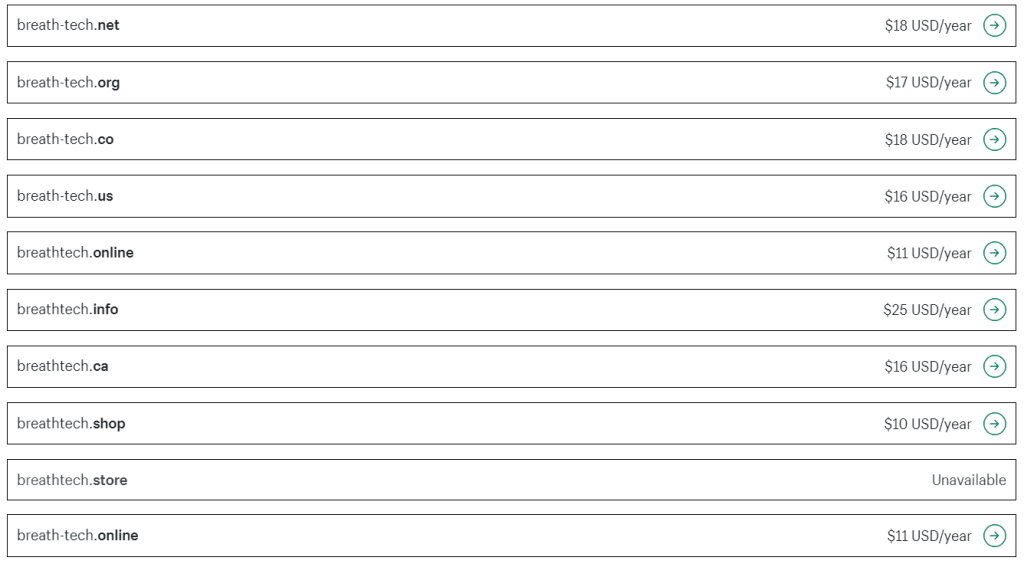
The service first shows names in popular domain zones and adds notes about whether they are already taken. Below, it lists alternative options.
WHOIS Lookup from Network Solutions shows available results, including premium domain names.
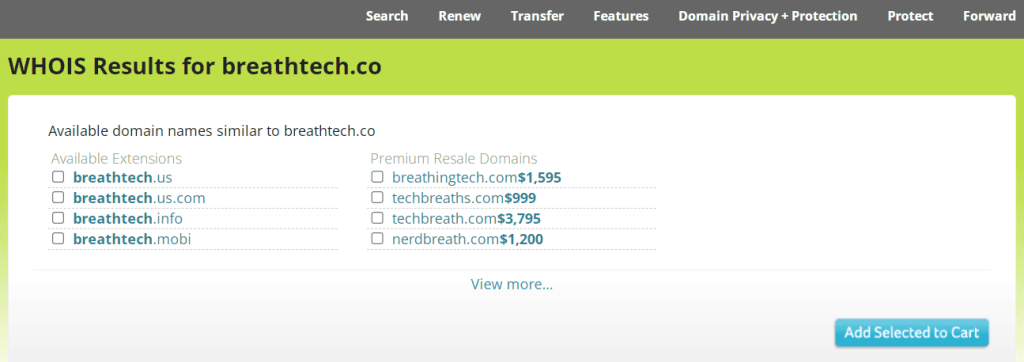
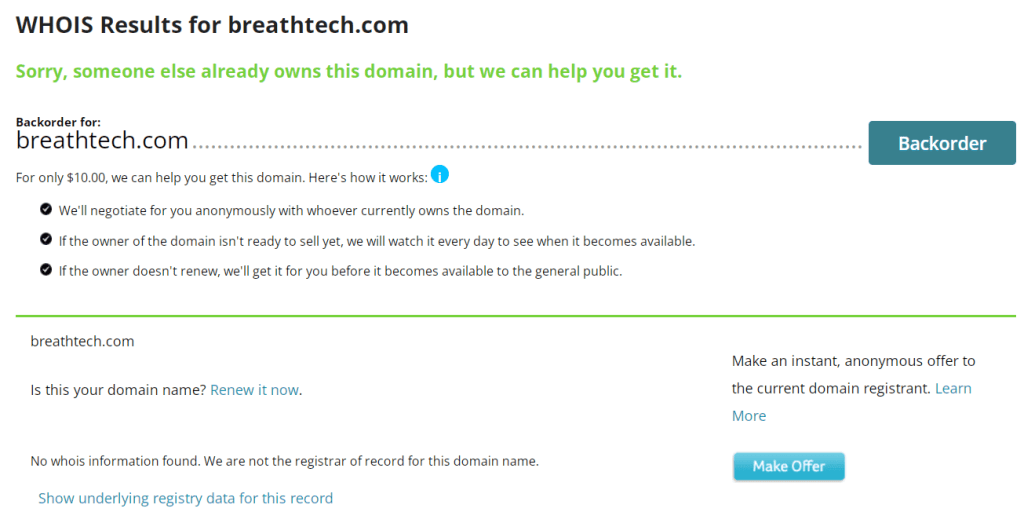
The domain with the desired name in the .com zone is already taken, but the service offers a negotiation feature to buy it from the current owner in the future: “Unfortunately, someone already owns this domain, but we can help you get it. For just $10.00, we can assist you in trying to acquire this domain.”
Also, for an extra fee, the platform’s specialists can monitor the status of the desired domain name: “If the current owner doesn’t renew it, we will try to get it for you before it becomes available to the general public.”
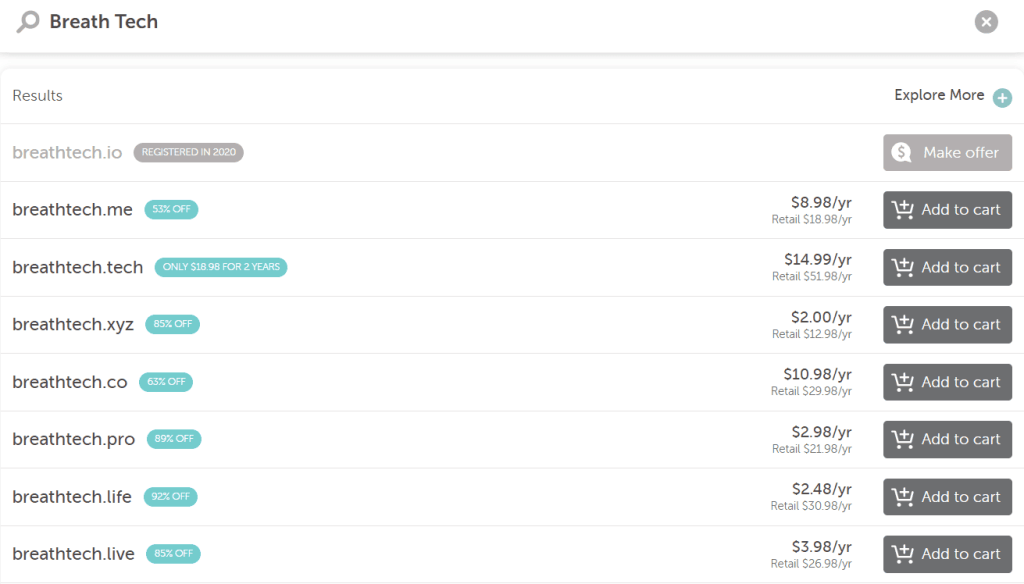
Another domain name registrar is Namecheap. The service also offers domain protection with an SSL certificate and other features.
The tool Nameboy also shows a list of domain names based on certain keywords. This oldest domain name generator helps with choosing names for blogs, brands, and companies.
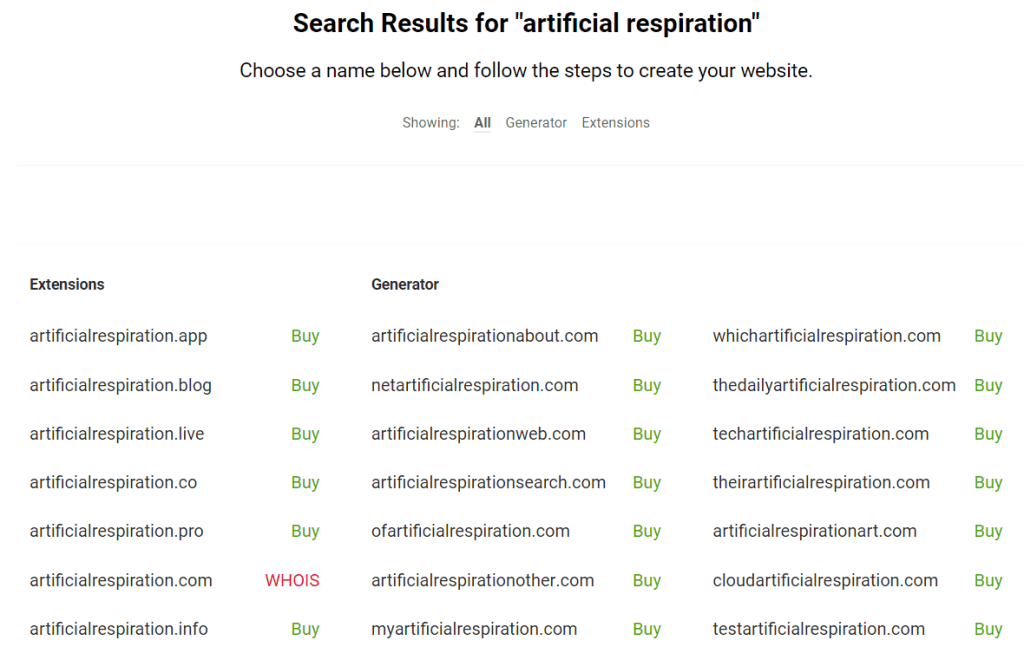
Finally, let’s look at another platform for finding available domain names, domain extensions, and domains for sale—Instant Domain Search. To quickly search a large number of available names, the site uses powerful artificial intelligence, which gives users many interesting ideas right while they type in the search box.
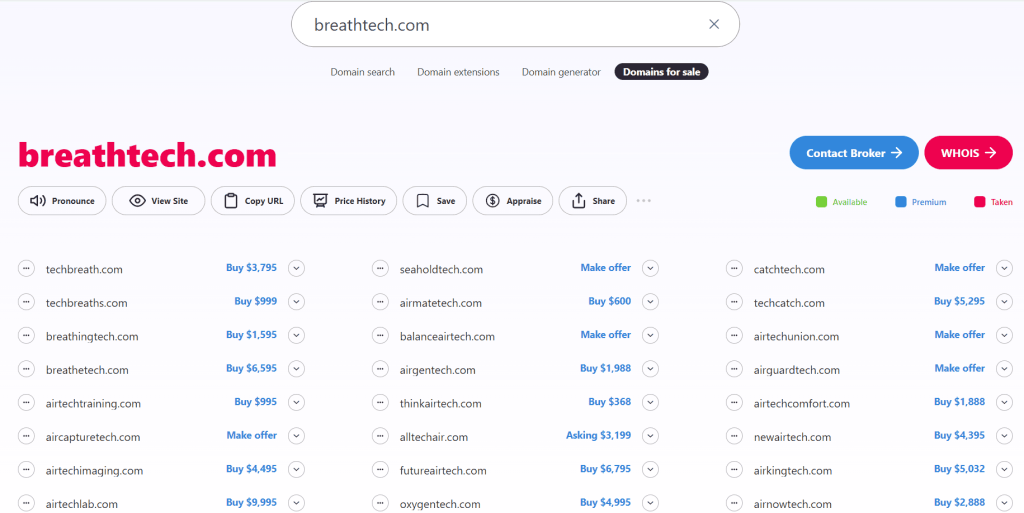
The tool Nameboy also shows a list of domain names based on certain keywords. This oldest domain name generator helps with choosing names for blogs, brands, and companies.
📌 Read the article: Who is a linkbuilder and how to become one
Tips for Choosing a Domain Name Quickly and Successfully
Choose a clear and meaningful domain name
Your domain name should be connected to your brand—even better if it sounds like your company name. If you already have a registered trademark, use that name as the base of your domain. This will help potential customers find you online more easily. If you’re just starting your business, think about how the brand name will look as a domain name. Make sure it’s short and easy to understand.
Keep it short
It’s best if the part of the domain before the dot is no longer than 15 characters. Avoid using slang like “U” instead of “you,” and don’t double letters.
Register a .com domain
More than 75% of companies use the .com extension. Most smartphones have a “.com” button, which makes it easier to type in the domain. Many .com names are already taken or cost a lot, so it’s smart to look at other options too.
You can also look at other top-level domain (TLD) suffixes like .city (.london) or .country (.usa). If you run an online store, domains like .shop or .store are good options. The .trade extension fits B2B ecommerce or wholesale stores. There are also specific TLDs like .museum, .jobs, .travel, and others. But names that use rare or creative extensions like .cafe or .pizza might seem suspicious to users.
.com, .co, .org (for non-profits), .net, .xyz, .biz, and .info are just part of the list of general top-level domains (gTLDs). In 2011, ICANN let companies and organizations create their own gTLDs. This lets brands register names like home.cern.
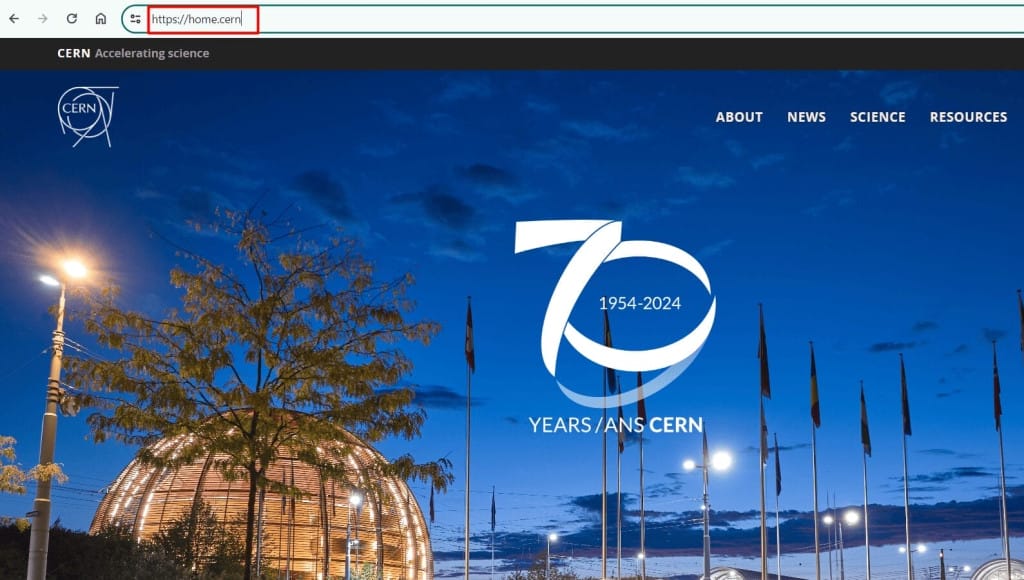
Such domain names are often used for internal company needs and are not available for general registration.
Avoid extra symbols and numbers in domain names
Using a domain name without extra symbols helps reduce typing mistakes. The only exception is for brand names that already include numbers or symbols like a dash or the “&” sign. Keep in mind that when typing a website address on a phone, users sometimes have to switch between letter and number keyboards. This makes mistakes more likely, so it is better to avoid such names.
There are different opinions about dashes. Just like with using short forms, dashes can affect website traffic in both good and bad ways.
“When it comes to using dashes (the symbol –) in website addresses, some people like them and some people hate them. It’s easy to see why many people don’t like them. They are not easy to remember. And to some people, they look ‘cheap and not professional.’ But using dashes can help you get the domain name you want with just a small change. Many successful websites use dashes, like Go-Gaia.com and Merriam-Webster.com.”—“What to Do If Your Domain Name Isn’t Available: 13 Strategies”, Neil Patel
Add keywords for SEO
This is not always needed, because it can make the domain name sound strange or hard to write. But in many industries, using a keyword can help your site show up higher in Google search results. It is important to mix the keyword and the brand name in a natural way.
[brand name] + [main keyword] = [domain name]
For example, if you sell toys and the store name is Lola, the domain name can be:
Lola + toys = lolatoys.com
If you are building a site using a website builder, make sure it lets you use your own domain. Some “free website” offers do not clearly say that you must use the builder’s domain. The best choice is to use a content system that lets you connect your own domain.
Add words or parts of words related to your product or service
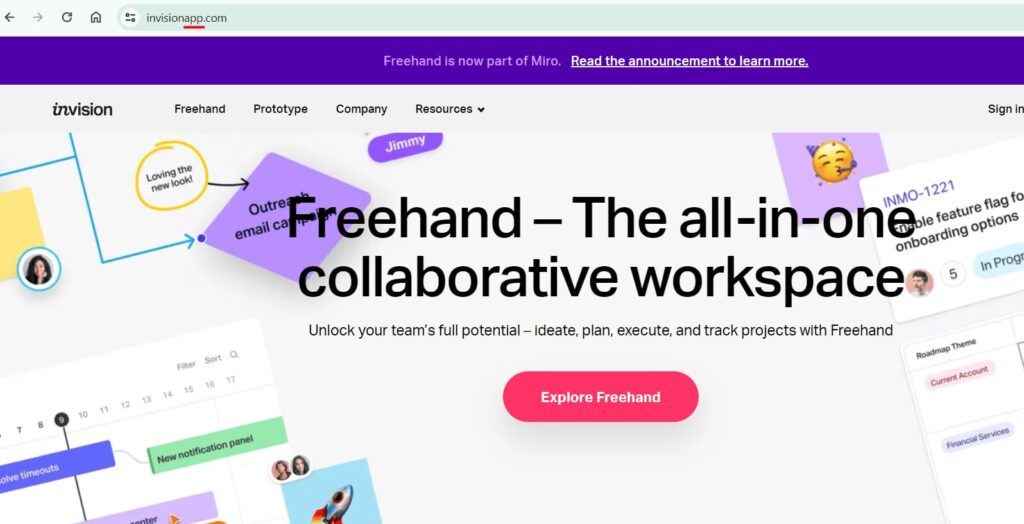
Companies whose activities are related to the IT sector can use elements such as “app” in their domain name. This is what the Invision platform did.
Extend domain names with verbs
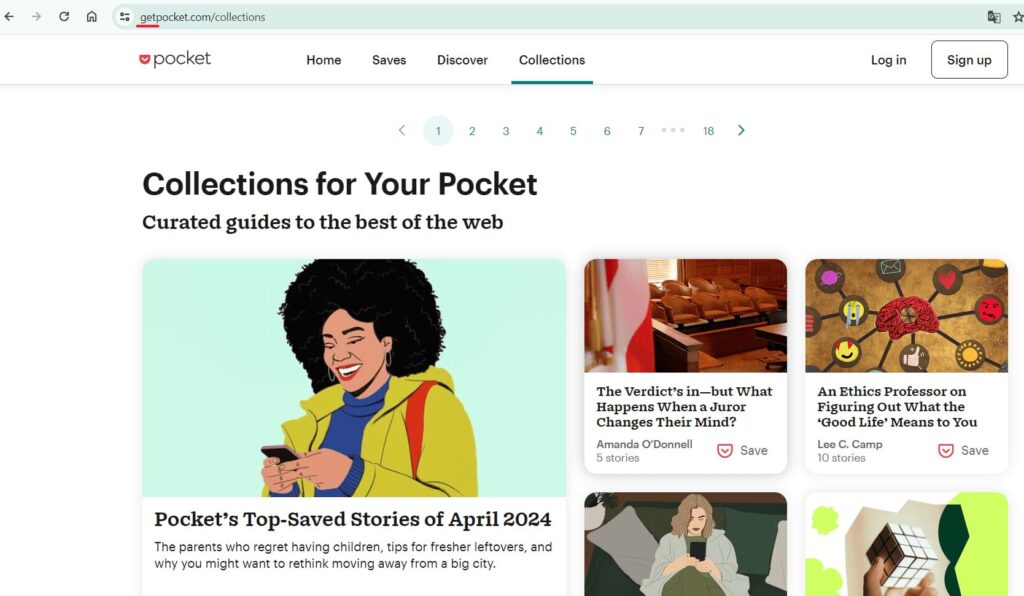
“Get,” “try,” “download,” “read”—these and other imperative verbs serve both to make domain names unique and as calls to action. This is reflected on the website of Pocket, an app for saving materials online.
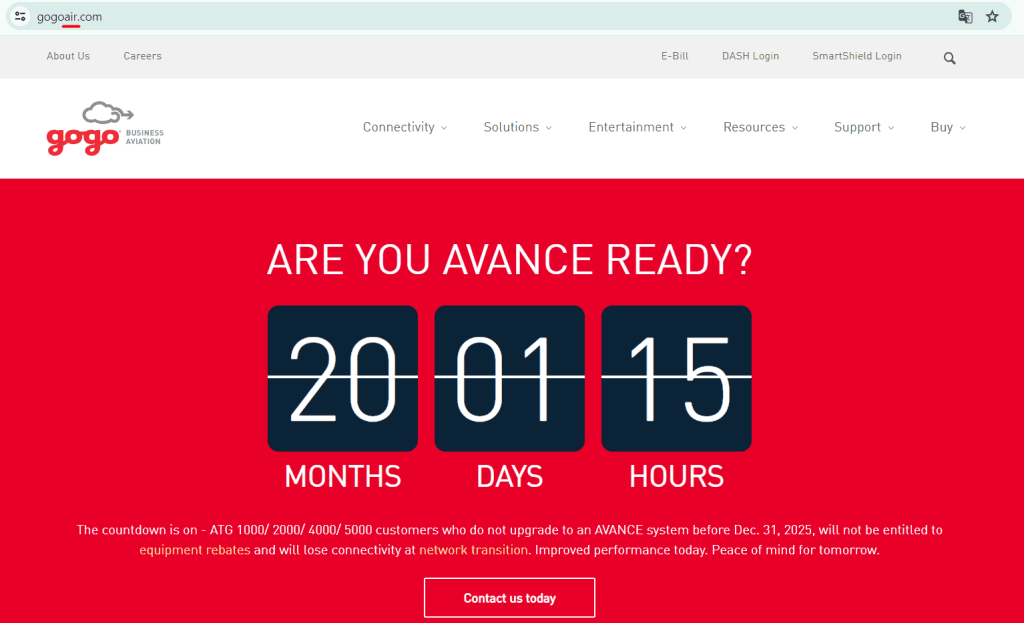
Gogo, an internet provider that offers services during flights, uses the word “air” in its domain name along with the brand name. This way of expanding the brand name in a URL is useful when the company name is already used in other, completely unrelated industries, or when the word itself is very common (for example, a popular first or last name, or the title of a famous movie or song).
“Until 2016, Tesla Motor didn’t own Tesla.com because it was already taken. What did they do? Instead, they used TeslaMotor.com. This URL worked well for them for years because the word ‘motor’ was a natural extension of their brand. The advantage of this method is that it keeps the trust in your URL.”—“What to Do If Your Domain Name Isn’t Available: 13 Strategies”, Neil Patel
It’s important to only consider related words that can be added to the brand name without changing its meaning or making it harder to say or spell.
Don’t limit yourself to only .com domains
Of course, URLs ending in .com create the most user trust. But it’s not always necessary to get a .com domain at any cost. Sometimes ccTLDs (country code top-level domains) can be better than .com. For example, in Germany, the national top-level domain .de is more popular than .com. The same is true in many other countries, except the United States (.uk—United Kingdom, .eu—European Union, .ca—Canada, .co.za—South Africa, etc.).

Domain name research
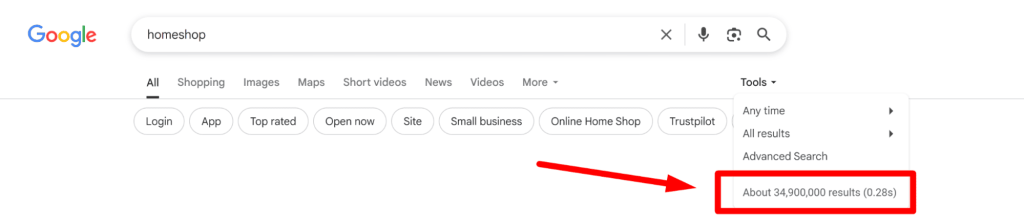
To start, you can check the selected word by simply searching it on Google. The fewer pages that show up, the easier it will be for you to rank high for branded queries. When doing this kind of research, use a combination like “brand + commercial word”.
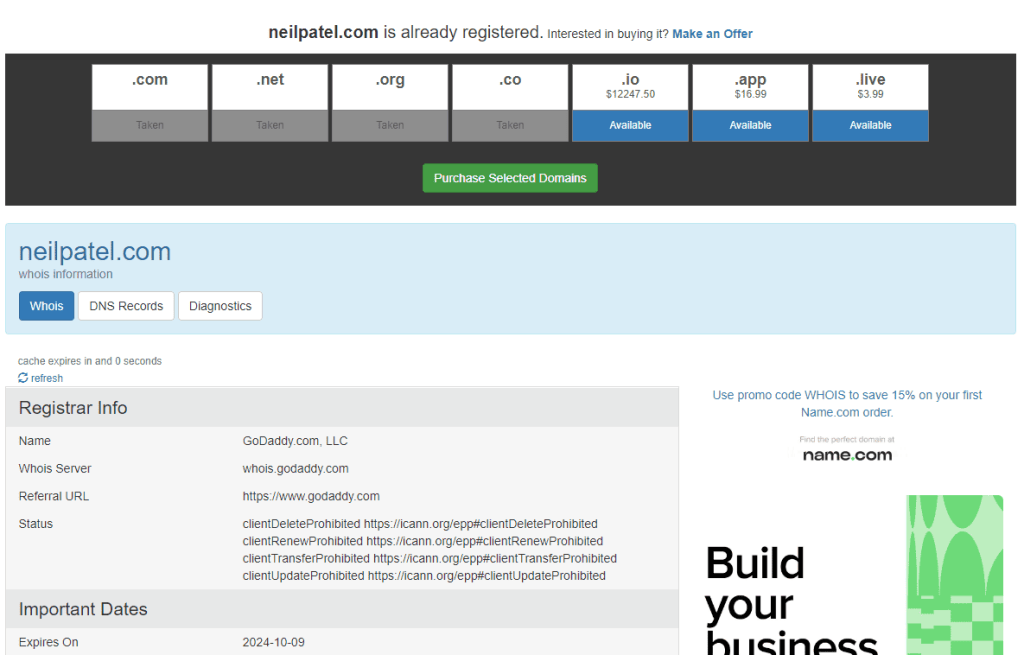
To check if your domain name is already taken, you can use the WHOIS tool. It shows whether a domain name is available and also gives important information about the site that has the name.
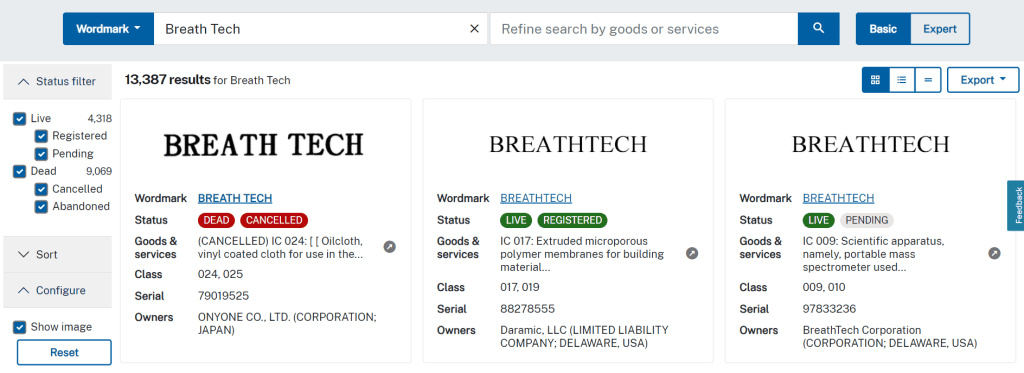
You can also do a trademark search. This method works better for people starting a new business who haven’t chosen a name yet. You can check for registered names in the USPTO.gov database. This service shows information about different brands with the same or similar names.
It’s also a good idea to check social media. Monitor Instagram, Facebook, TikTok, and others. This can help you avoid accidentally breaking copyright laws and make it easier to set up your business accounts on popular platforms.
If the domain name you want is already taken, you can try to buy it from the current owner. Use the WHOIS database to find the owner and reach out to discuss buying the domain. This is especially useful for domains that haven’t been updated for a long time.
You don’t have to focus on one specific name in one zone. Think of similar options. Do a brainstorming session or talk to ChatGPT to come up with another version of the name. Try a different top-level domain (TLD) or check trendy options on the NameStat website.
“Make sure the domain you choose is really original, so you can avoid legal problems and the hard process of finding another unique domain name that works well for SEO.”—“13 Tips for Choosing the Perfect Domain Name”, Anna Fitzgerald
You can track changes in the registration status of your desired domain using DomainTools Monitorsor other tools. Set up a temporary domain, and when the name you want becomes available, use a 301 redirect to the new URL.
Keep in mind that not all available domain names can be bought. Some are restricted top-level domains (rTLDs). To get one of these, you have to meet the rules set by the TLD registry.
For example, .edu is only for certain schools and educational institutions, and .name is for individuals. Domains ending in .gov show authority. They are used for official websites of government departments, agencies, and other public organizations. If you want to buy a domain with a trademark, like .nescafe, you must prove that you own the trademark.
Conclusions
Choosing and registering a domain name is an important part of your SEO strategy. It affects website traffic and user trust. Popular names are expensive and sell fast, especially in the .com zone.
It’s smart to pick short domain names that are easy to type and remember. You can include keywords related to your business, as long as the name doesn’t get too long or hard to use.
Domain names can be bought and sold on the secondary market. You can use tools like the Domain Name Generator from Shopify or Namecheap to help you find the perfect name.
A big part of organic traffic comes from navigational search. So it’s important to include your brand name in the URL and avoid numbers, dashes, and extra symbols.
Answers to questions
Use your brand name or a main keyword that shows what your business does.
Good domain names are often in the .com zone. They are short and close to the brand name, like nestle.com, amazon.com, or apple.com. If the company has a long name, shortened versions are okay—like jnj.com (Johnson & Johnson).
Make sure it’s available in the .com zone and not already registered. Try to avoid dashes or numbers unless they’re part of your brand.
The best ones are short, clear, and use top-level domains like .com.
Long names might work, but usually they’re harder to remember and easier to mistype.
You can buy a domain for one year or longer. But there’s no such thing as “forever”. You’ll always need to renew it when the time ends.
-
Tags
