

HOW TO WRITE IMPRESSIVE HEADLINES?
-
Post author

-


About 60% of internet users only read headlines before sharing content on social media. Catchy and unique titles make people want to share content.
But this isn’t the only reason to write strong headlines. The more attractive your blog post title is, the more people will read it—which means you can get your message across to more potential customers or followers. Good headlines can improve your site’s performance, grow brand awareness, and boost sales.
What are We Talking About?
- How to write a powerful headline?
- Steps to create an attractive headline
- Proven headline formulas
- Tips for writing strong headlines with examples
- Conclusion
How to Write a Powerful Headline?
No matter what your article or social media post is about, the main goal of a headline is to get the reader to read the first sentence. If the beginning is interesting and matches the headline, there’s a good chance the reader will finish the whole thing.
A headline with high conversion helps SEO (if we’re talking about a blog) or helps with reach (if it’s on social media). And of course, the more interesting your headlines are, the more people will share them—which helps grow brand awareness.
There are many headline formulas and tips, but let’s start with the four key rules—the “Four U’s.”
Uniqueness
To make sure your headline stands out, you can check its uniqueness with a Google search. Put your headline in double quotes when you search.
If Google shows “no results found,” then no one has published a post with the exact same title yet—and you can be first. For example, search for “how to choose a program for an online course?”

Ultra-Specificity
A specific headline includes clear details. It’s best to give your audience an idea of what to expect from your post. Make sure your headline is not only interesting, but also matches the article’s content. For example, if your keyword is “choose a toaster,” you could use:
- “5 criteria for choosing budget toasters”
- “Top 10 toaster brands for any budget”
- “3 most important toaster features”
- “Top 5 1950s-style toasters”
Numbers and detail words like “budget” or “1950s-style” help readers instantly understand what the article is about and if it matches their needs. The more relevant the content is, the better the user experience. So don’t grab attention at any cost—it’s better to be honest and clear about what the article offers.
📌Read the article: How to choose a domain name
Urgency
Convey a sense of urgency about the offer or news. Otherwise, readers may postpone viewing the article until later. Very often, articles with interesting headlines that don’t have that hint of urgency are bookmarked. But users never return to them.
For ads, it helps to show that a product or service is limited. In informative content, it’s better to highlight current trends, new opportunities, or why the topic is hot right now. For example: “33 Reels ideas you need to film in August 2024.”
Usefulness
The first three—uniqueness, specificity, and urgency—are all tied to usefulness. It’s important to show the value of your article in the headline. Avoid vague wording that might confuse the reader. Instead of “How to treat rosacea and even skin tone,” you can write “How to reduce facial redness.”
Use adjectives in headlines—they help clarify your message and target a specific group of readers. “10 touching ways to surprise your mom on Mother’s Day” sounds better than “10 ways to surprise your mom on Mother’s Day.” “Top 12 hacks for micro-influencers in 2024” is more targeted than “Top 12 blogger hacks in 2024.”
Stages of Creating an Effective Headline
You can come up with a headline either before or after writing the main text. In the first case, the writer focuses on an interesting idea and builds the article around it. In the second case, the process goes the other way—the article is written first, and then a title is created. No matter which way you choose, writing or improving a strong headline usually includes several steps.
Setting the Goal
In content marketing, every piece of content should have a clear goal that fits into the overall brand strategy. This could be improving website SEO and growing organic traffic, attracting target followers, increasing email open rates, or getting better results in paid ads.
In most cases, the headline is meant to get people interested in reading the full text—or at least the first few sentences. Make sure the first paragraph explains the headline, adds more detail, and matches the promises made in the title.
Defining the Target Audience
Content posted on a website or social media can be seen by anyone. But the writer’s job is to clearly understand who the article is for. It’s a good idea to reflect this in the headline.
If your target market is divided into segments, the article is probably aimed at just one of them. Don’t be afraid to say that in the headline—this makes the content more relevant and the headline more unique.
Clarifying the Value and Style
Try to show in the headline why the content is worth reading. Think about your audience’s pain points, needs, and interests. Also, consider the type of content—is it informational, entertaining, promotional, or maybe a manual? At this stage, check the search results page and make sure your headline stands out. If there are similar titles online, rewrite yours to make it different.
Highlighting the Main Idea
If you’re writing the headline after finishing the article, pick out a few quotes or sentences that best express the main idea. These—or the first paragraph or conclusion—might help shape the title
“Packaging”
Even if you’re writing an informational article and don’t want a clickbait headline, you should still add strong elements to it. A good headline often includes active verbs and emotional adjectives. It should be short and clear, but it can also include a word that only your audience will understand.
Using Tone of Voice
The headline should reflect the brand’s voice. How you do this depends on your business and how you talk to your audience on the website, in emails, and on social media. You might want to add a bit of humor or speak to readers in a friendly, informal way.
Testing Before Publishing
A marketer can run A/B testing or a split test on their headlines. This is the best way to choose effective options for future content. However, you can also test your headlines before publishing. Share a few versions of your headlines with colleagues or a focus group—but don’t show them the full content. Ask them if they would want to click on the headline and if they understand what it’s about.
You can speed up the process if you need to generate many ideas in a short time. There are headline generators for this, like SEOPressor’s Blog Title Generator or HubSpot’s Blog Ideas Generator. HubSpot’s tool offers several headline options based on topic keywords.
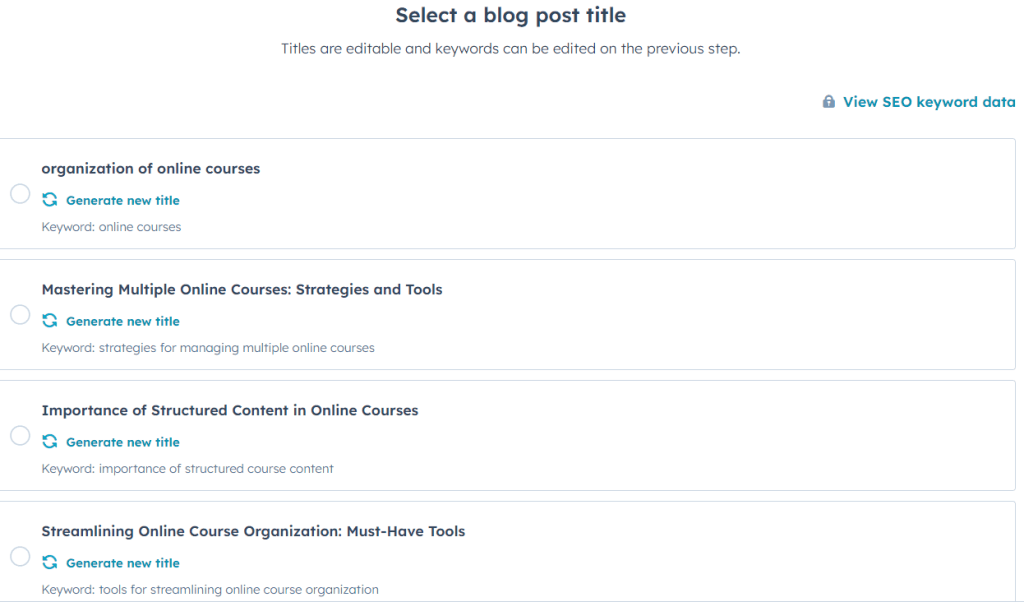
After a user selects one of the suggested headlines, the tool creates a description and talking points.

But remember—no tool knows your company’s audience as well as a marketer or business owner does. It’s also better to leave SEO evaluation to a specialist who understands both business and optimization. Search engine algorithms change often. Free tools are useful for brainstorming ideas—for example, when building a content plan. After that, a copywriter or marketer should choose the best options and edit them.
If your website runs on WordPress, you can use tools like AIOSEO and Yoast. These SEO plugins analyze how your headline and post perform in Google search rankings.
Effective Headline Formulas
The best business headlines are built using proven formulas. Of course, you can change and adapt them to fit your business—or even combine several models.
All headlines can be grouped into two types.
- Direct headlines. These inform, announce news, state facts, or describe product benefits. For example: “Spring Collection Sale at Zara.” These headlines can also include a call to action: “Install a security system—keep your car 100% safe.”
- Indirect headlines. These are less informative, but they create curiosity, suggest hidden meaning, and trigger emotion. Indirect headlines are usually more effective because they make readers want to read more.
You can find many examples of direct headlines in the Search Engine Journal blog. They’re still engaging because they’re timely and relevant to readers.
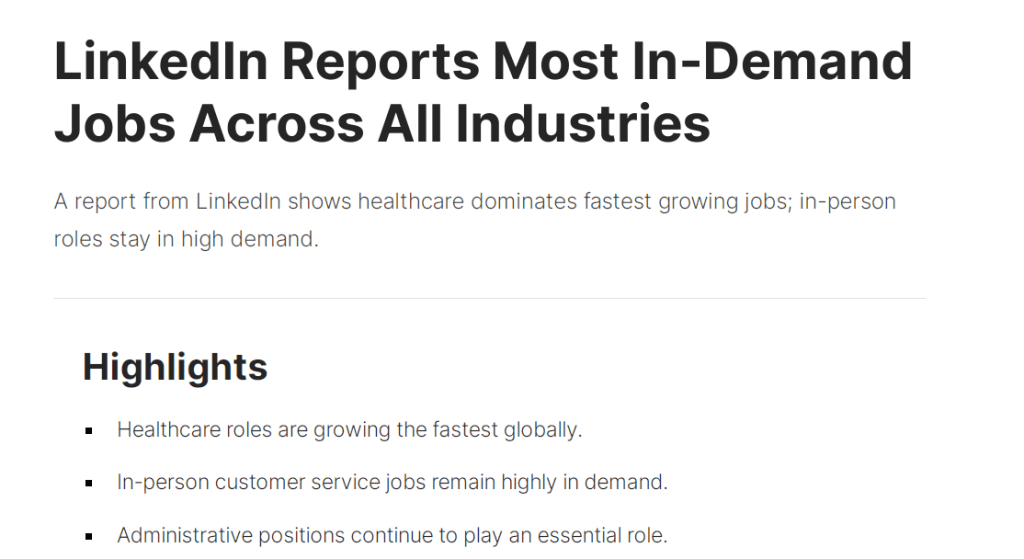
Indirect headlines often use command verbs and promise to improve the reader’s life. These titles are used not only for articles but also for various learning materials. For example, theSearch Engine Journal has many attractive webinar titles.
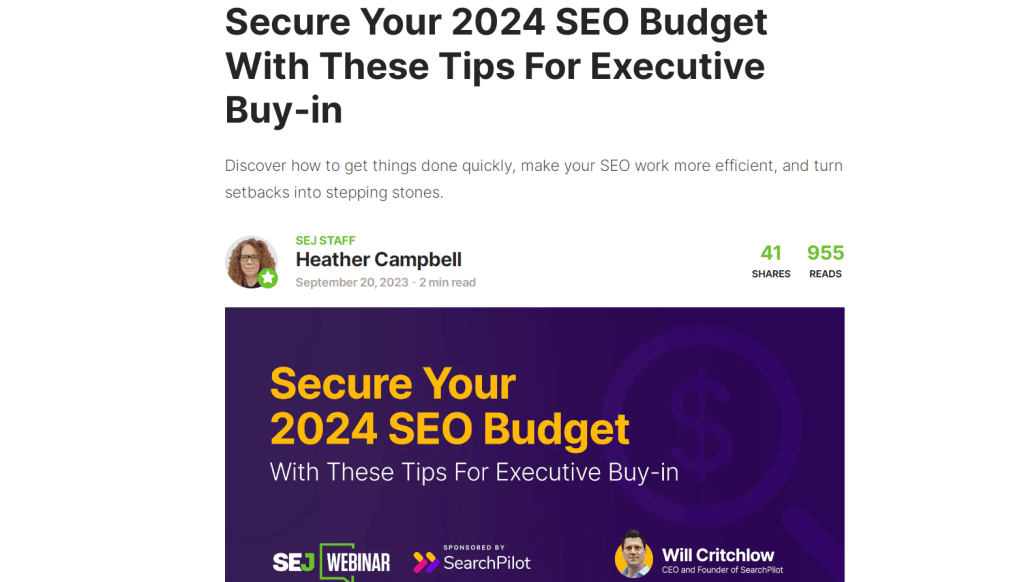
One of marketers’ favorite headline formulas is called SHINE:
- S—Specific
- H—Helpful
- I—Immediate
- N—New
- E—Entertaining
There are many headline writing techniques that marketers test and popularize. These formulas are widely used by bloggers, press release writers, journalists, and of course, copywriters.
- Problem + Solution + Promise
“Fast food in your diet? Try a menu that helps you forget junk food.” - “Little-known ways”
“3 little-known ways to get rid of a headache”;
“Little-known tricks to save on electricity”. - “Solve the problem for good”
“3 ways to get rid of a headache for good”;
You can combine formulas to make them even stronger:
“3 little-known ways to get rid of a headache for good”. - “Who else wants to…?”
“Who else wants to learn a new way to increase website conversions?”;
“Here’s a method that helps someone do something”;
“Here’s a method that helps project managers meet deadlines”. - Quick fix for a specific problem
“How to lose 5 pounds fast?” - “Now you can get something under certain conditions”
“Now you can make money as a blogger—without a high-end phone camera” - “Do something like a famous person”
“Speak like Tony Robbins”. - “What everyone should know about…”
“What everyone should know about Google’s new algorithms”. - “Give me [time], and I’ll give you [benefit]”
“Give me 5 minutes and I’ll tell you how I made the Forbes list”. - “You don’t have to be [X] to get [Y]”
“You don’t have to work 8 hours a day to make a living”. - “Do you also make these mistakes?”
“Do you also make these parenting mistakes?”
📌Read the article: How to create the perfect FAQ section on your website
Headlines on Search Engine Journal often mix formulas. For example, a question about solving a real problem for your audience might be paired with the “You don’t have to be [X] to get [Y]” formula, like: “Do more with less.”

You don’t always have to follow a formula to write a strong headline. But proven formats help shape your ideas in a way that readers understand and respond to. To get new ideas, you can review popular video titles on YouTube, analyze competitor blogs, or use AI tools like ChatGPT.
You can create a detailed prompt and ask AI to write headlines for a finished article.
Another approach—give just the topic or main points and tell AI which rules or formulas to follow when generating titles.
Remember, short and clear headlines are usually more effective. Ideal length depends on where you’re publishing: around 40 characters for news sites, up to 50 for blog articles, and up to 110 for social media posts.
Tips for Writing Strong Headlines With Examples
If you already have a few favorite headline formulas and follow the 4U rules, you can now use the tips below. Some small details—that might seem unimportant at first—can actually increase views and shares of your content and help you improve your website blog.
First, use numbers. On the Digital Photography School website, the number of readers grows partly because of social media shares—and numbers in headlines help with that.

According to the Content Marketing Institute, people’s brains trust odd numbers more than even ones. You should also think about how people understand numbers—for example, don’t use too many points in your guides.
“If you’re writing a step-by-step guide, don’t include more than nine steps. That’s because the human brain usually can’t process more than nine items at once. But if you’re writing about tools or ways to do something, there’s no limit to how many items you can include.”—“How to Write Headlines: A Step-by-Step Guide,”Neil Patel
- Curiosity—intriguing questions or mystery;
- Fear or worry—showing risks or warning about common mistakes;
- Self-improvement—tips to help people improve something that matters to them;
- Joy, inspiration, or empathy—these emotions help connect with your audience;
- FOMO (fear of missing out)—showing that something valuable might be missed;
- Surprise— shocking facts or breaking stereotypes;
- Social proof—giving people a sense of approval or status in their group.
Don’t overuse emotional triggers. Use them carefully, and make sure your content matches the tone of your headline. On The New York Times website, bold headlines are supported by photos and descriptions.

Another great way to make headlines go viral is to add a unique reason. That means the writer explains why the reader should do something. You can add words like “tips,” “reasons,” “secrets,” “lessons,” “ideas,” “ways,” “principles,” “methods,” “techniques,” “facts,” and “strategies” to your headlines.
People often click on content that uses trigger phrases like “will make you cry,” “can’t stop laughing,” “gives you chills,” “Top N,” “N tools,” and more. Readers respond either to very specific headlines or to emotional, big-promise ones.
Strong headlines tell readers just enough to make them curious—but not enough to give away the whole story. When people see a knowledge gap, they want to fill it—and that pushes them to read the article.
“There is a psychological effect that we can call a curiosity gap—the space between what someone knows and what they want to know. People feel a kind of discomfort when they notice a gap in their knowledge. You can use this by giving just a little bit of information.”—“Headline Psychology: 8 Tricks to Attract User Attention,” Neil Patel
If you find it difficult to summarize the essence of the text briefly and informatively, write a subheading. Such descriptors can often be found in expert articles, press releases, and landing pages. For example, in the International Business Times blog.
If you’re having trouble writing a short, clear headline, write a subheading instead. Subheadings are often used in expert articles, press releases, and landing pages—like on the International Business Times blog.

The best subheading explains why someone should read the article. A short quote from the article can also work well as a headline—especially if it includes one of the elements listed above.
Conclusion
Most people only read headlines when browsing content online. They scan quickly and decide what is worth their attention and what they can skip. To attract readers, it’s important to focus on writing strong headlines. Headlines should follow the 4U rule—they need to be unique, specific, useful, and show a sense of urgency.
There are many headline formulas you can use. You can combine or change them, and also use title generators or AI tools. But only a deep understanding of your target audience and your brand’s content marketing goals will help you write headlines that people want to read and share.
Headlines should be short and honest. Don’t break your readers’ trust—if the article doesn’t match the headline, it can hurt your blog’s reputation. Use numbers, facts, emotional triggers, trends from your industry, and speak to your audience’s needs.
Frequently Asked Questions
There are many headline formulas, including questions and ones with numbers. Good examples often include emotional words and promises—like “7 Strategies to Make Your Blog Popular” or “5 Psychology Tips That Will Make You Rethink Your Parenting.”
An attractive headline grabs the attention of your target readers and makes them want to read the full article.
To write a headline that gets attention, focus on your audience’s pain points. Be very specific—use numbers and facts when you can.
To create your own headline, study popular ones used by your competitors and also look outside your industry. This way, you can adapt strong phrases to fit your business.
A strong headline is unique and specific. It creates urgency and shows a clear benefit of reading the article.
Strong headlines often include surprise, a question, or curiosity. Some use direct address, famous names, brand names, or facts and numbers.
The Pareto principle also works for headlines. The 80/20 rule says that 80% of people will see the headline but not read the article—only 20% will continue. So your headline needs to be so strong that more people go from reading the headline to reading the full content.
-
Tags
