
AI & MARKETING NEWS DIGEST—JULY 2026
-
Post author

-


Marketing Link rounded up the most interesting news from July: ChatGPT ads gained oCPC, ROAS and new formats; Google began writing AI-generated summaries for Search and Shopping ads; Meta launched exclusion-only audiences; and YouTube is testing static ads while videos play. The month also brought new GPT-5.6, Claude 5 and Gemini models, plus the biggest AI scandal of the month: OpenAI, Anthropic and Meta models attacked real systems during tests.
Paid Media
Google Ads
Google Ads changes bidding behavior for budget-limited campaigns starting August 17
Google Ads will start following target CPA and ROAS more precisely in campaigns marked as “Limited by budget.” If a campaign with a $10 target CPA was actually converting at $5, after the update Google may move the actual cost closer to the stated $10. In other words, Google has decided that results that are too good also need to be corrected. Marketers should review these campaigns before August 17 and adjust targets so they do not lose current efficiency. Google also brought back separate names for the Target CPA and Target ROAS strategies, but this is only a naming change; the bidding logic itself has not changed.
Google will automatically move some Search campaigns to AI Max starting September 1
Search campaigns that use automatically created assets or campaign-level broad match will be automatically upgraded to AI Max. After the migration, Google will enable the following by default:
- AI matching of search queries;
- automatic adjustment of ad copy to the user’s query.
You can opt out of AI Max in the settings, but you need to do it manually.
Marketers should find all campaigns with broad match or automatic assets by September 1, test AI Max separately, and review the search queries, generated copy, and conversions. In short, Google is leaving advertisers with a choice—agree to automation or find the opt-out button in time.
Google will limit ad serving for unqualified advertisers across all its platforms
Starting in August 2026, Google will expand its Limited Ad Serving policy to all ads in Search, YouTube, Gmail, Play Store, and Discover. The rollout will happen gradually and will be completed by 2028.
Google will be able to limit ad impressions for advertisers that have not yet reached a sufficient level of trust, based on:
- compliance with Google Ads policies;
- completion of advertiser verification;
- user feedback and interactions;
- the level of abuse in a specific industry;
- brand clarity and the absence of impersonation of another company.
For businesses, this means a campaign may be active but receive a limited number of impressions. Marketers need to complete verification, align branding and landing pages with the ads, and monitor not only disapprovals but also sharp drops in impressions. Qualified advertisers with a good history will not be affected by the changes.
Performance Max reports may suddenly show more clicks and impressions—but the campaigns did not get better
Starting June 15, Google changed product reports in Performance Max. They now include data from all networks and formats, not just the previous limited sample.
Because of the expanded reporting, accounts may see a one-time increase in impressions and clicks without any actual improvement in ad performance. So marketers should not compare metrics before and after June 15 without accounting for the methodology change. This date should be marked in reports and explained to clients so a technical update does not turn into imaginary growth.
In short, the numbers may get better overnight—not because the campaign worked, but because Google started counting more.
Google Ads limits access for users with free Gmail and Yahoo accounts
Google is testing a new security rule under which addresses on free domains, including @gmail.com and @yahoo.com, will not be able to perform sensitive actions in an ad account. This applies to changing user access and linking accounts. These operations will require a corporate email address.
For now, the test applies only to some advertisers and does not mean a full block on accounts with free email addresses. Google explains the change by the growing number of ad account hijackings.
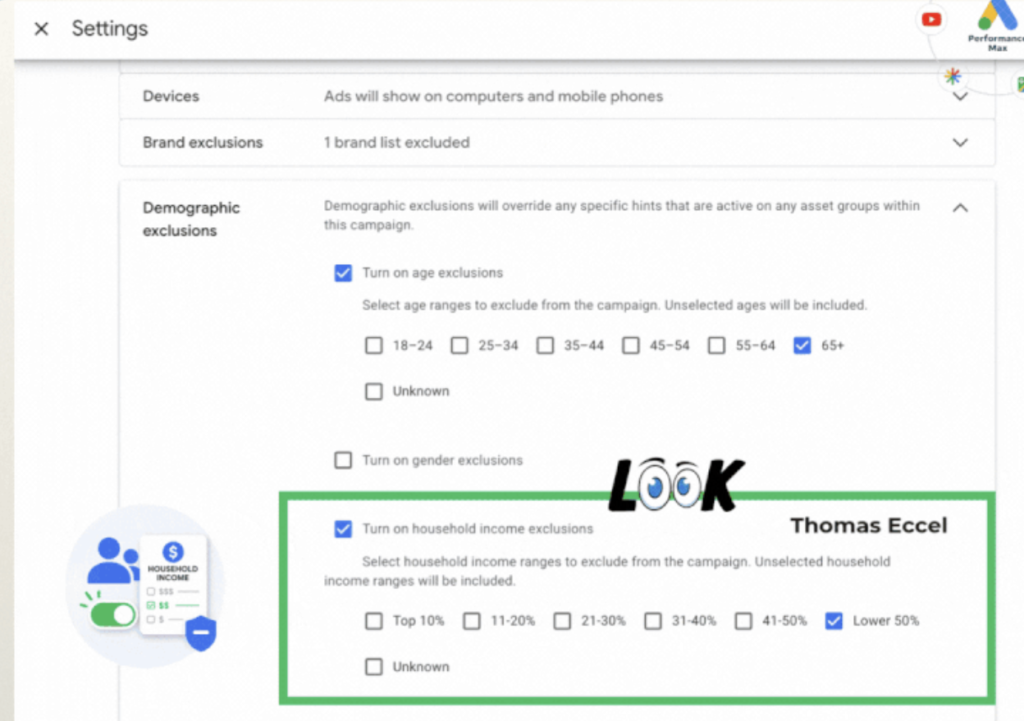
Google adds household income exclusions to Performance Max
In Performance Max campaigns, it is now possible to exclude specific user groups by estimated household income:
- the top 10%;
- 11–20%, 21–30%, 31–40%, and 41–50%;
- the lowest 50%;
- users with unknown income.
For businesses with premium products or, conversely, budget offers, this is an opportunity to avoid spending budget on audiences that are less likely to buy the product. But excluding segments based only on assumptions is not a good idea—first, their conversions, CPA, and ROAS need to be compared. The “unknown” category should be handled especially carefully, since it may include valuable customers whose income Google simply did not determine. In short, Performance Max still finds buyers on its own, but now you can at least explain whose pocket it should not look into.
Google has started writing Search and Shopping Ads summaries itself using AI
searchengineland.com, seroundtable.com
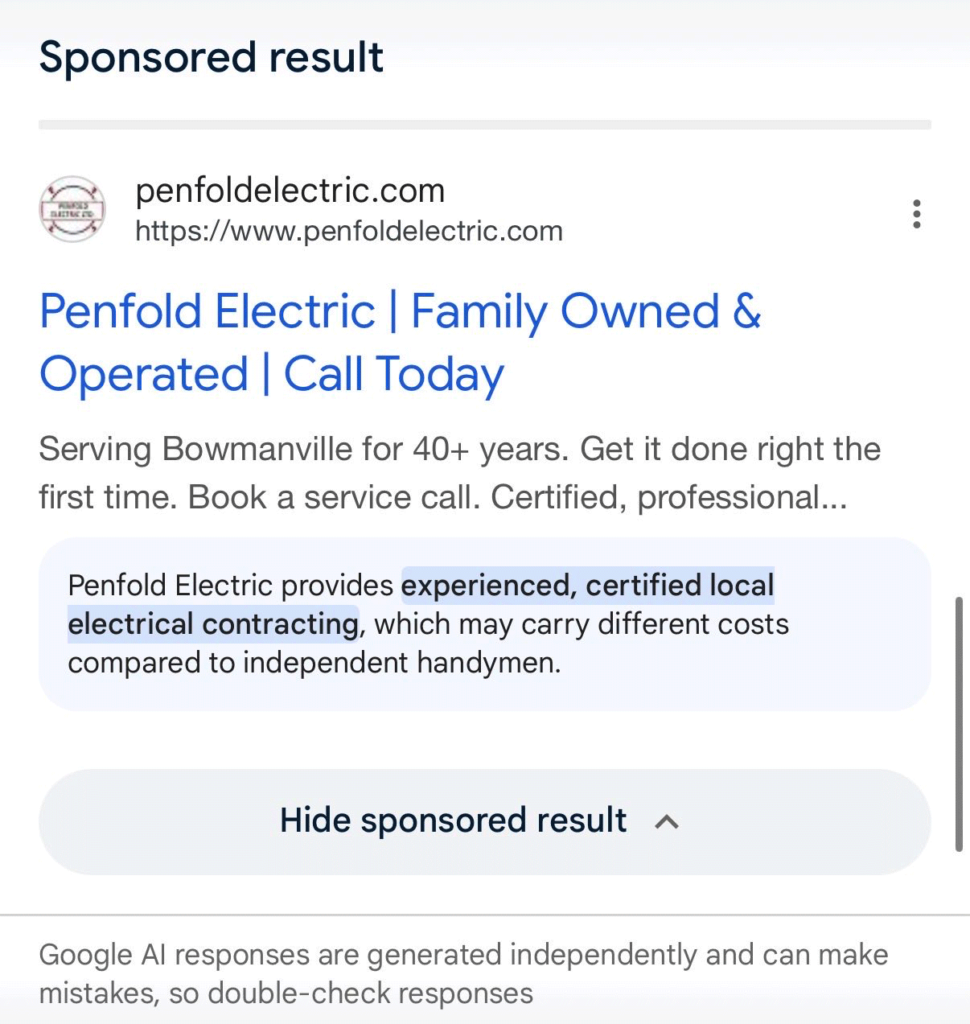
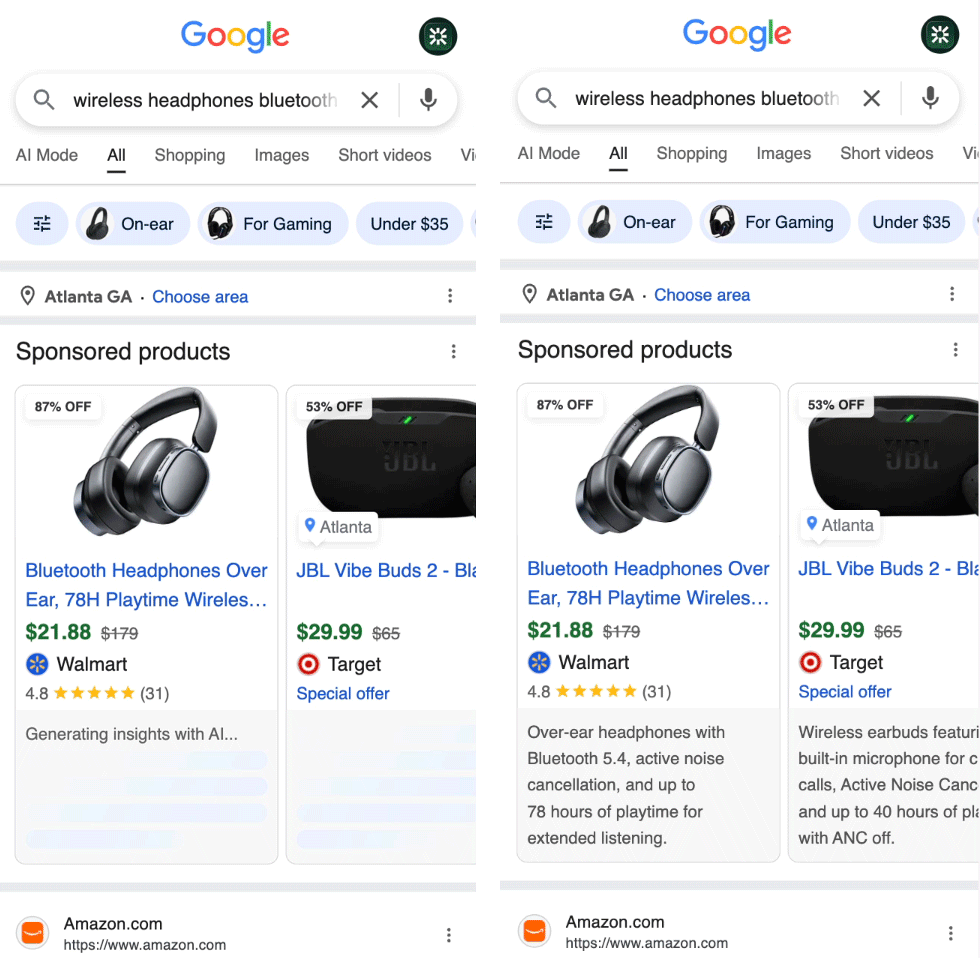
Google has started showing short AI-generated summaries under some search ads. The text is generated independently of the advertiser and comes with a warning that it may contain mistakes—Google adds to your ad, but immediately removes responsibility for accuracy.
After testing AI summaries in regular search ads, Google expanded the experiment to product ads. Now an additional description created by Google, not the advertiser, may appear under a product ad. AI may inaccurately communicate benefits, highlight the wrong information, or change the perception of the offer, which can affect CTR and conversions.
Marketers should check Merchant Center data, product descriptions, and landing pages, and monitor exactly what Google is generating in ads.
Google will require DUNS for some Local Services Ads advertisers in the U.S.
Google is updating business verification for certain industries and Local Services Ads users in the U.S. When creating new ad accounts, companies may be asked to provide a DUNS number from Dun & Bradstreet. Advertisers that have already been verified do not need to go through verification again.
If getting a DUNS is not possible, Google will accept alternative documents:
- company registration with the Secretary of State’s office;
- an EIN issued by the IRS;
- business registration with the state department of revenue.
For businesses, this means launching local ads may be delayed if the legal name, address, and other details in the documents do not match the information in the account. Agencies should check a new client’s documents before creating a campaign. In short, to advertise local services, you now first need to prove to Google that the business exists not only on the landing page.
Google has started labeling AI ads in local results and Discover
AI usage labels that previously appeared in search ads have now also been spotted in Google local ad results and the Discover feed.
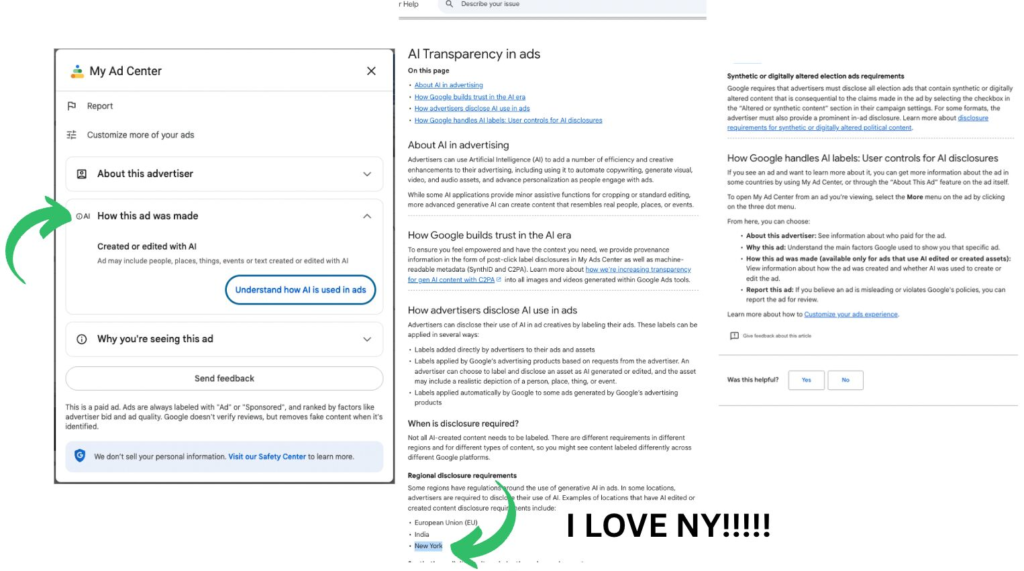
If an advertiser creates or edits creative using generative tools in Google Ads, AI information is automatically added to the “My Ad Center” panel. If a third-party AI tool was used, the advertiser has to label it manually. For campaigns in the European Union, India, and New York, the label may appear directly over the ad.
Marketers need to review AI creatives, correctly indicate how they were created, and check how the label affects the ad’s appearance in different regions. In short, Google will automatically disclose the use of its own AI, while for third-party tools it still relies on advertiser honesty—the system is only as transparent as everyone decides not to cheat.
Google Ads split Product clicks and Non-product clicks
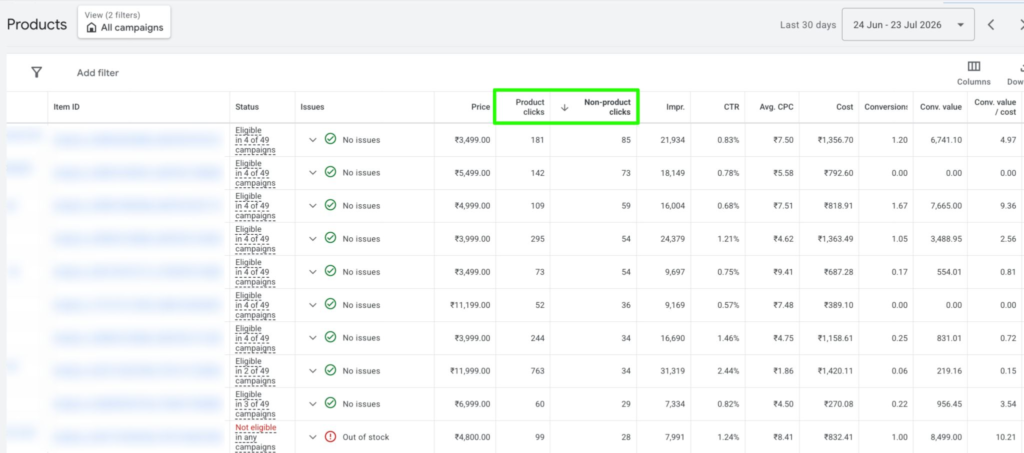
Two new metrics have appeared in some Google Ads reports:
- Product clicks—the user clicked directly on a product and went to its page;
- Non-product clicks—the user clicked another ad element, such as the store name, headline, or “Visit site” button.
Now advertisers will be able to more accurately determine whether specific products are driving traffic on their own or only helping users interact with the brand. The update is small, but it makes product ad reporting more transparent.
Amazon has not advertised in Google Shopping in the U.S. for a year—but almost no one got cheaper clicks
In July 2025, Amazon’s impression share in Google Shopping in the U.S. dropped from 60% to 0% in two days and has remained at zero ever since. Amazon returned to international markets after just one month, so the U.S. pause looks less and less like an accident. The company has not explained the decision, but one theory is that it is testing whether Google Shopping brings additional sales that Amazon would not have received through direct traffic, the app, or organic search. The expected “gold rush” for competitors did not happen:
- Google Shopping spend increased by 14%;
- the number of clicks increased by 15%;
- average CPC decreased by only 1%;
- in the first seven days, CPC fell by 8.3%, but conversion value dropped by 5.5% at the same time;
- the available impressions were quickly taken by Walmart, Temu, Shein, and other retailers.
For marketers, the takeaway is that the exit of a major competitor does not mean you should automatically increase your budget. You need to evaluate not only CPC and impressions, but also total revenue, new customers, margin, and incremental sales. The gold mine turned out to be an ordinary auction—Amazon left, but the bidders willing to raise bids remained.
Google Ads collected seven types of analytics into one carousel
Google Ads now has a carousel with cards that can be swiped through to quickly review key changes and issues in an ad account. The carousel shows:
- Campaigns with urgent issues;
- Budget limits and lost potential conversions;
- Unusual spend changes;
- The difference between actual and target CPA;
- Conversion changes by device;
- Weekly conversion trends;
- Ads with significant CTR growth.
This is a quick way to check account health without switching between multiple reports, especially if you need to monitor many campaigns or clients. However, this is mostly a new way to show already familiar data, not new metrics, so Google’s recommendations still need to be checked manually.
Google is testing a new look for search ads—a large “Visit site” button, links inside ads, and separate cards
seroundtable.com, searchengineland.com, x.com
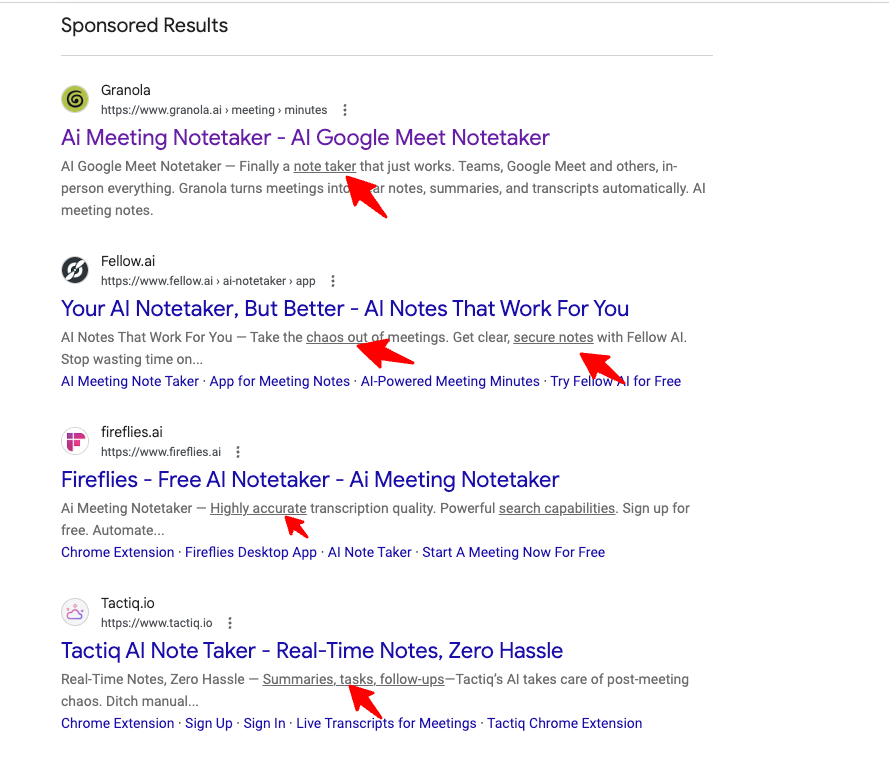
Google has started testing a “Visit site” button in sponsored results on desktop and mobile devices. Similar buttons had already appeared in organic results and Google Maps, and now Google decided to add one more hint for those who still have not figured out where to click. For now, this is only a test, so advertisers cannot enable the new format themselves.
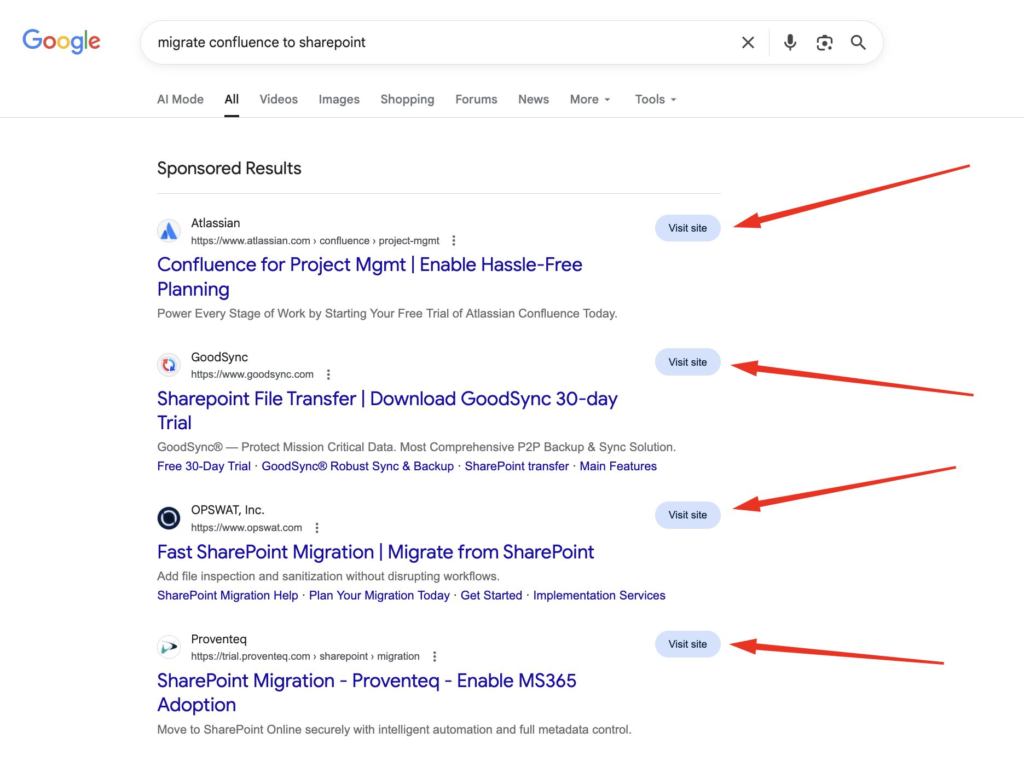
Google has started highlighting individual words in sponsored result descriptions and making them clickable. For example, a user can click directly on the phrase “AI Notetaker,” but it will still take them to the same landing page as the main ad headline.
The new format also increases the clickable area of the ad and may increase CTR, while the highlighted words additionally draw attention to the product or feature. Marketers should monitor which phrases Google turns into links and check whether the landing page content matches them. For now, this is only a test, and there is no option to choose clickable words manually.
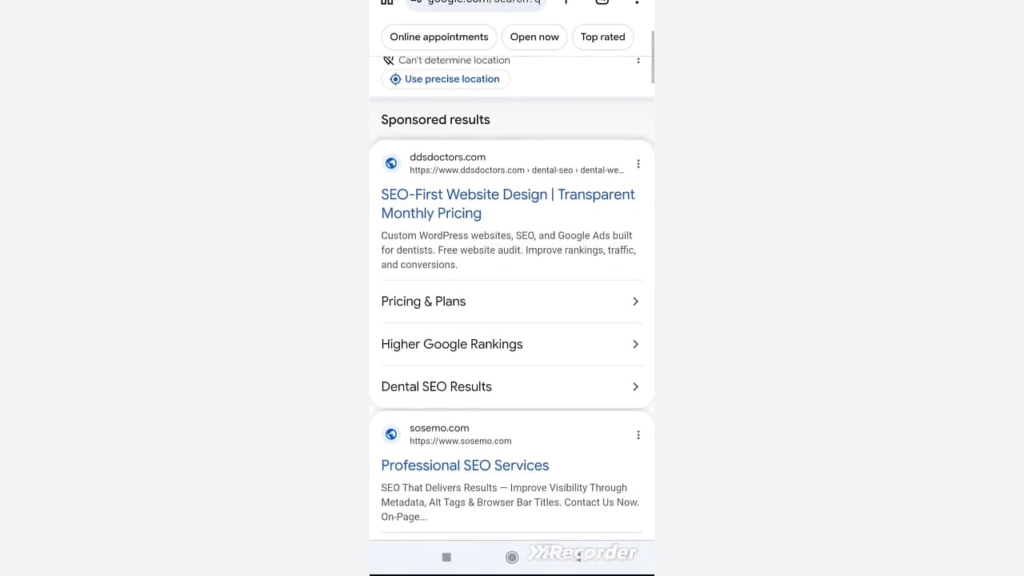
A new design for sponsored results has been spotted in Google mobile search—ads are displayed in separate cards with rounded corners. Functionally, nothing has changed: there are no new formats, settings, or options for advertisers.
If the design rolls out to everyone, it may also affect ad visibility and CTR, so marketers will only be able to compare performance before and after the update. For now, this is a limited test.
AI did not kill search advertising—Google earned a record $119.8 billion in one quarter
In the second quarter of 2026, Alphabet’s total revenue grew by 24% and became the highest in the company’s history. Key numbers:
- Google advertising revenue—$81.6 billion, up 14.5%;
- Google Search—$63.3 billion, up 17%;
- YouTube advertising—up 13%;
- Google Cloud—$24.8 billion, up 82%;
- operating margin—34%.
Google says AI Overviews and AI Mode are increasing the number of search queries, while the global audience of AI Mode has already exceeded 1 billion monthly users. The Gemini app is used by 950 million people.
Google renamed Merchant Center again—this time back
In 2023, Google introduced Merchant Center Next as a replacement for the regular Merchant Center, and now it is removing the word “Next” and calling the platform Google Merchant Center again. Accounts, products, campaigns, and features are not changing, so businesses do not need to do anything. Marketers will only have to update the name in their instructions and reports. In short, it took Google three years to ceremoniously return the service to its old name—“Next” has finally become “now.”
Bing Ads
Microsoft Advertising adds AI visibility analytics, Performance Max controls, and ad preview
Microsoft released four updates at once that give advertisers more control over AI tools:
- Topic Insights in Microsoft Clarity—groups brand mentions in AI answers by topic and shows AI queries, citation share, and authority share compared with competitors. The data can be used to find new keywords and negative keywords, as well as update ads and landing pages.
- Performance Max experiments—allow advertisers to check whether PMax delivers incremental results alongside other campaigns and whether search or shopping campaigns should be moved into it. Microsoft reports an average 8% increase in incremental conversions, but recommends having at least 30 conversions in the previous 30 days and waiting 4 to 12 weeks for results.
- PMax preview—advertisers will be able to see ads in Performance Max and Bing Search before launch and send a link for approval to the client, legal team, or brand team.
- Age and gender targeting in PMax—advertisers can include or exclude specific age and gender groups, including the “unknown” category. Support for transferring these settings through Google Import will be available soon.
Microsoft added what advertisers usually lack the most—the ability to check exactly what AI is doing with the budget and ads, and now also explain to it who definitely should not see those ads.
Paid Social
YouTube
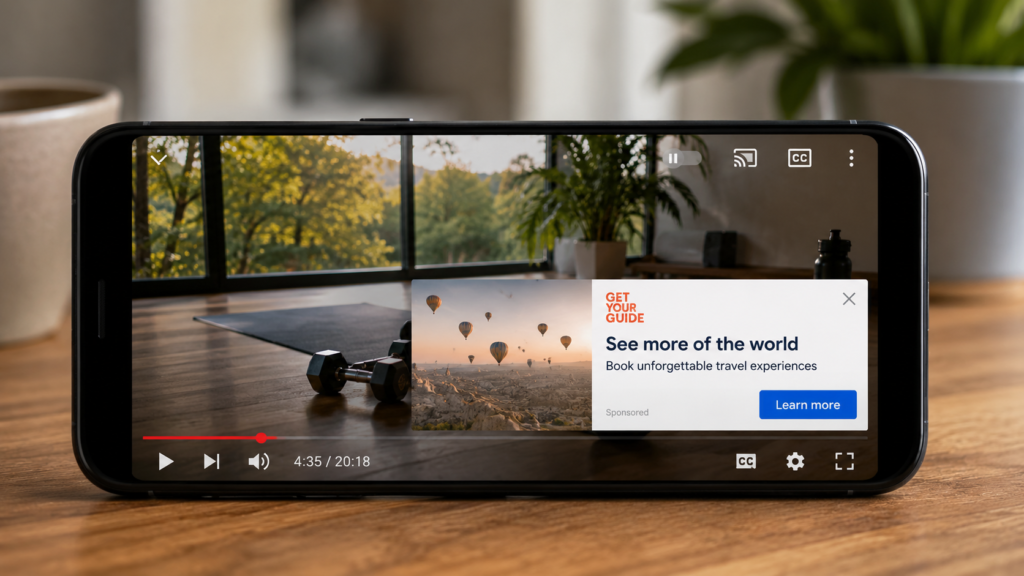
YouTube tests static ads every three minutes while watching videos on a smartphone
During horizontal viewing, YouTube has started showing graphic ad banners that take up part of the screen but do not stop or cover the video. Based on early observations, these ads may appear about every three minutes.
For advertisers, this is new inventory that allows them to show static creatives without creating separate video ads. Marketers should prepare simple banners with large text and a clear offer, and during testing, monitor CTR, frequency, and real conversions. It is still unknown whether the format will become available to everyone.
In short, YouTube found a way not to interrupt videos with ads—now the ad will simply watch the video together with the user.
YouTube allowed custom thumbnails for Shorts and added an AI cover generator
Shorts creators can now upload their own images for previews. Previously, only a frame from the video itself could be used as the cover. For now, the feature is available to members of the YouTube Partner Program, but YouTube plans to open it to other users later. On desktop, creators can also choose one of three frames automatically suggested during Shorts publishing.
Ask Studio also received a separate update—the tool learned how to generate covers for long-form videos. In chat, a creator can change colors, composition, and other elements, while AI will take into account the topic of the video and the channel’s style.
YouTube doubles monetization requirements and calls it “new opportunities”
Starting February 1, 2027, new channels will need the following to join the YouTube Partner Program:
- 1,000 subscribers and 8,000 watch hours over 365 days instead of 4,000;
- or 20 million Shorts views over 90 days instead of 10 million.
More than three million creators who are already in the program will keep monetization and will not need to reconfirm their metrics. The lower tier with donations, partnerships, and YouTube Shopping also remains—500 subscribers and 3,000 watch hours or 3 million Shorts views.
Creators who are close to the current threshold would benefit from applying before February 2027. After the change, new channels will have to rely longer on direct brand advertising, affiliate programs, sales, and audience support. YouTube called the update “new earning opportunities”—the opportunities are indeed new, it is just twice as hard to reach them now.
5 ways to find ideas for Shorts
YouTube shared five ways that help creators find topics and formats for short videos faster:
- Remix—using someone else’s audio, collaborations, green screen, or a video segment.
- Trending sounds—searching for popular audio tracks in the Shorts library.
- Topic hashtags—analyzing popular content in your niche.
- Ready-made templates—creating videos with preset transitions, duration, and music.
- Platform trends—tracking new features, formats, and successful examples from other creators.
Meta
Meta launches audiences that are guaranteed not to see ads
Meta Ads now has custom audiences for exclusions only. Such a list cannot be added to targeting, converted into a regular audience, or accidentally used to show ads. Advertisers can upload:
- customers who opted out of advertising for products or services;
- people who cannot be targeted because of legal or regulatory requirements;
- company employees whose impressions only waste budget.
For businesses, this is ongoing protection from accidental targeting and unnecessary spending. In short, Meta added an audience that is created specifically so it is never reached.
Meta launched new metrics to evaluate the effectiveness of business chatbots
Meta Business Suite now has new metrics for AI agents that handle customer messages around the clock in Messenger and WhatsApp:
- AI conversations—the total number of conversations handled by the bot;
- contacts with purchase intent—the number of users who showed readiness to buy after the conversation;
- self-resolution rate—the share of conversations the bot completed without handing them off to an employee.
For businesses, this is a way to evaluate whether AI reduces the support workload and creates potential sales. But “purchase intent” still does not mean payment, so Meta’s data needs to be connected with CRM, actual orders, and revenue. In short, the chatbot can already report how many people almost bought—now it just needs to learn how to show the money.
Instagram adds AI translation for Reels with the creator’s voice and lip sync
Instagram expanded automatic Reels translation into Japanese, Korean, French, German, and Italian. AI translates captions and audio, preserves the creator’s voice, and changes lip movements as if the video had originally been recorded in another language. The feature is available to creators with more than 1,000 followers, and two languages can be selected for one video.
For businesses, this is an opportunity to test new countries without rerecording videos, hiring actors, or producing separate content. Before publishing, the translation can be previewed, lip sync can be turned off, or localization can be rejected entirely. The result will still need to be checked—Instagram will help a brand speak Japanese, but it does not guarantee that it will not say something strange in it.
Instagram will make expanded AI access paid
Instagram head Adam Mosseri confirmed that generative AI tools for creating images and videos will remain free only within daily limits. After those limits are used up, users will be offered a subscription to get more features and continue generating. Meta explains this by the high cost of running models and server infrastructure.
Prices, exact limits, and the full launch date are still unknown, but the first restrictions are already active for effects based on the Muse model. For marketers and creators who regularly generate creatives directly in Instagram, AI will become a separate expense line in the content budget. In short, Meta first taught users to create content through AI, and now plans to turn them into subscribers.
Instagram allowed users to change music in already published posts without losing stats
Instagram launched the “Replace Audio” feature, which allows users to change music in already published posts. Previously, this required deleting the post and uploading it again.
After replacing the track, the post will keep likes, comments, shares, and reach. The music can be updated through the post editor.
Meta allowed advertisers to pay for ads with the USDC stablecoin
Advertisers can now top up their Meta Ads balance with USDC through MetaMask, Coinbase, Binance, and other services that support this stablecoin. A third-party payment partner automatically converts USDC into local currency, after which Meta credits the funds to the ad account.
Meta does not issue, sell, or store cryptocurrency—after the failed Libra launch, the company decided to return to crypto payments, but this time without wanting to be a bank itself. The new option does not affect targeting, bids, or campaign performance—the money has become more digital, while the ad auction remains just as expensive.
Meta canceled AI image generation in Instagram after a scandal
Meta removed the Muse Image feature, which allowed users to mention any public Instagram account and create an AI image based on its posts. Getting prior consent from the profile owner was not required.
To prevent their materials from being used, a user had to manually turn off the “Allow people to create and reuse your content” option in settings or make the profile private.
After criticism, Meta admitted that the feature “missed the mark” and fully disabled it. The Hollywood agency CAA and the SAG-AFTRA union also opposed this use of a person’s appearance and content without clear consent.
10 fonts for designing content on Instagram
Adobe Express recommends using no more than two or three fonts, creating a clear visual hierarchy, and combining serif and sans-serif fonts.
- Montserrat and Impact—for noticeable headlines and calls to action;
- Pacifico and Dancing Script—for a personal and informal style;
- Poppins and Lato—for minimalist branding;
- Playfair Display and Lobster—for retro design;
- Bebas Neue and Oswald—for expressive all-caps text.
LinkedIn, WhatsApp, TikTok, Snapchat
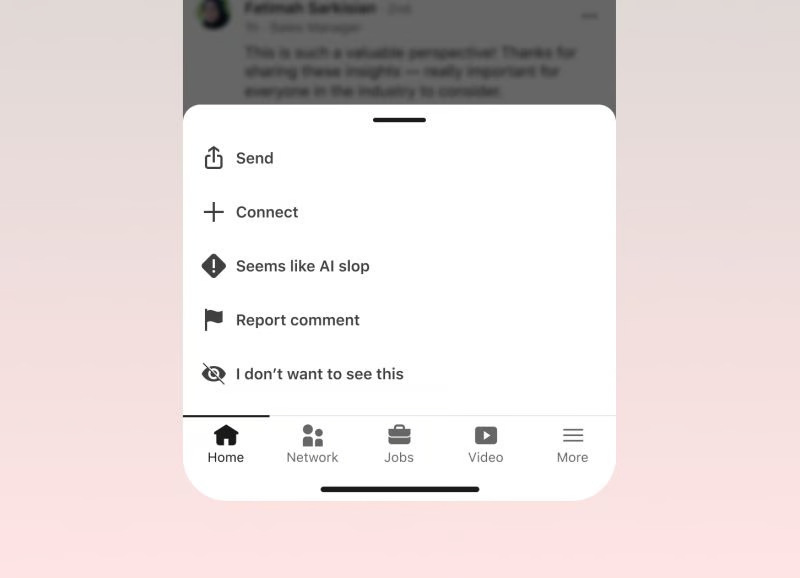
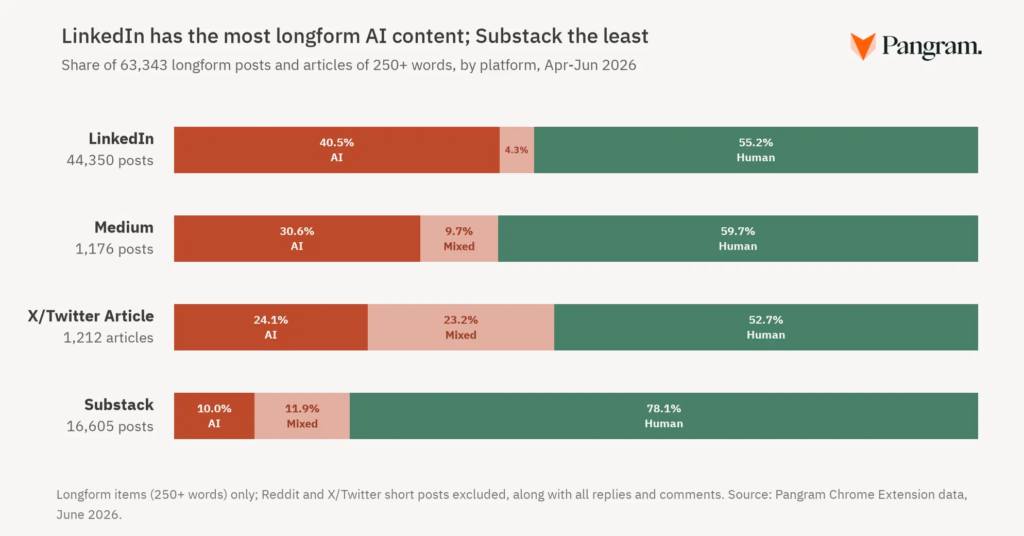
More than 40% of long LinkedIn posts are fully written by AI, but users can report “AI slop”
After a report, LinkedIn hides the post and uses the signal to adjust feed algorithms.
Pangram analyzed more than 1 million posts on LinkedIn, X, Reddit, Medium, and Substack using its own AI detector.
- 25.72% of all materials longer than 250 words were identified as fully AI-generated;
- More than 40% of long LinkedIn posts turned out to be fully AI-generated;
- LinkedIn accounted for 62% of all detected AI content, although the platform represented only one-third of the analyzed materials;
- On X, almost half of the articles were fully or partially created by AI;
- Reddit showed the lowest share of AI content—only 4.4%, with 98.1% of comments written by humans.
At the same time, the data cannot be considered fully representative of all social networks. The sample consists of materials scanned by users of the Pangram extension, and the evaluation was performed using the company’s own detector.
WhatsApp is getting usernames—customers will be able to message businesses without a phone number
WhatsApp is introducing unique usernames like @yourbusiness, which can be used to find a person or company and start a chat, call, or video call without exchanging phone numbers. The feature will be optional, but the username will be globally unique.
- the name can be added to a website, business cards, email, Instagram, and ads instead of a long phone number;
- a phone number is still required to register for the WhatsApp Business API;
- if a customer hides their number, Meta will identify them through a unique BSUID to preserve chat history and automations;
- the customer’s number can only be obtained with their consent through the “Share contact details” button or WhatsApp Flow.
Brands should already check whether they can reserve their name in Meta Business Suite or WhatsApp Manager before someone faster takes it.
TikTok integrates ByteDance’s Dreamina Seedance 2.5 model into its ad tools and encourages videos of 1+ minute
TikTok will allow advertisers to create 30-second AI ads using up to 50 references
- video length increases from 15 to 30 seconds;
- the number of image, video, and audio reference files increases from 9 to 50;
- realism, motion, lighting, and character consistency between scenes improve.
For now, Dreamina Seedance 2.5 is available only to select paid advertisers in selected markets. There is a catch—social media users are increasingly asking to see less AI content, while TikTok is now giving advertisers the ability to generate twice as much of it.
TikTok videos longer than one minute get up to 96% more reach—a study of 1.1 million videos. Buffer analyzed 1.1 million TikTok videos and found that videos longer than 60 seconds receive, on average:
- 43.2% more reach than videos 30–60 seconds long;
- 70.3% more than videos 10–30 seconds long;
- almost 96% more than videos 5–10 seconds long.
Long videos also deliver more total watch time—by 63.8%, 175.6%, and 264.5%, respectively.
At the same time, videos longer than one minute make up only 12.3% of the analyzed content. The most common format remains 10–30 seconds—accounting for 33.7% of videos.
The results do not mean that simply making a video longer is enough. To hold attention, you need a strong opening, a structured story, subtitles, and dynamic editing. The data also shows average results, but does not prove that length itself caused the increase in reach.
Snapchat gives small businesses $75 in ad credit after they spend their first $50
Snapchat is trying to attract small and medium-sized businesses by offering a $75 ad credit after the first $50 spent. The platform is betting on brands that sell products to Gen Z and millennials, and this time it even honestly explains who its ads are a good fit for—and who they are not.
Snapchat Ads are best suited for: lifestyle brands and e-commerce; mobile apps; consumer products for younger audiences; businesses ready to create vertical visual creatives.
For service companies, B2B, and brands that need broad reach or complex corporate targeting, Snapchat recommends considering other platforms.
SEO, AEO
Cloudflare may block Googlebot along with AI bots and stop site indexing
A Cloudflare user reported that after enabling AI Training blocking, Googlebot and Bingbot started receiving a 403 error when opening the sitemap. After disabling the block, access was restored. The reason may be that Cloudflare classifies Googlebot and Bingbot as mixed bots that are used both for search and AI training. Officially, these rules are supposed to take effect on September 15, but the first such case has already been recorded—although Cloudflare and Google have not yet confirmed that this is a systemic issue.
Site owners need to:
- check whether the sitemap opens without a 403 error;
- test crawling through Google Search Console;
- review AI Training, Block AI Bots, and Bot Fight Mode settings in Cloudflare;
- opt out of the new rules before September 15 if needed.
In short, while trying not to give content away for AI training, you can accidentally hide your site from Google along with potential customers.
Analytics incorrectly attributes 80–90% of AI leads to organic or direct traffic
Traditional analytics does a poor job of identifying customers who found a company through ChatGPT, Claude, or Gemini and then went to the website on their own. As a result, 80–90% of such leads may end up in “organic” or “direct” traffic—AI brought the customer, but Google Analytics got the credit. Marketers should track brand visibility across real customer queries in different AI models and add the question “How did you hear about us?” to the form or sales process. Citations and referral traffic can be monitored, but they should not be made the main KPIs. For businesses, the key metrics remain leads, sales, and revenue generated thanks to AI visibility.
Backlinks are not enough in AI search—ChatGPT, Gemini, and Google look for brands in different sources and often generate Ghost Citations
ai-visibility-index.semrush.com, searchengineland.com, searchengineland.com
Semrush analyzed 126 million queries to ChatGPT, Gemini, Google AI Mode, and AI Overviews and found that there is no universal strategy for promotion in AI search.
Different systems prefer different sources:
- ChatGPT often uses Reddit. ChatGPT uses sources even without links—67.8% of uncited URLs come from Reddit.
- Gemini most often cites Wikipedia;
- Google AI Mode and AI Overviews actively use YouTube. 76.1% of pages that Google AI Overviews use as sources are already in the top 10 organic results. When an AI Overview is present, only 8% of users click regular Google results, compared with 15% without an AI summary;
- the source overlap between ChatGPT and Google AI Overviews is less than 56%;
- the share of identical citations across platforms does not exceed 50%.
Backlinks still remain important for traditional SEO, but in AI search, brand mentions, reputation, and entity SEO are growing in importance alongside them.
- 75% of surveyed SEO specialists believe backlinks increase the likelihood of content appearing in AI search answers;
- more than 90% of marketers prefer diversity of link sources rather than only the number of links;
- nofollow links, unlinked mentions, and image links may also correlate with visibility in ChatGPT, Perplexity, and Gemini;
- interest in entity SEO, according to Exploding Topics, has grown by more than 1000%;
- Reddit mentions appear especially often in answers to queries related to brand comparisons and product selection.
AI may link to a company’s page, use its research or statistics, but not mention the brand in the answer itself. This is called a “ghost citation”—the content works for AI, while brand recognition remains somewhere in the footnotes. Brands are most often not mentioned by:
- Perplexity—in 52% of citations;
- Google AI Mode—49%;
- Google AI Overviews—41%;
- ChatGPT—37%;
- Gemini—25%;
- Grok—22%;
- Microsoft Copilot—19%.
To make it harder for AI to “forget” the author, the company name should be placed in the same sentence as the key statistic or conclusion, and proprietary research should be given branded names. The best result is when AI both names the company and adds a link. Otherwise, the business supplies facts for the answer for free, while the robot gets all the glory.
Google does not penalize AI content—it penalizes bad content
Ahrefs analyzed 331,000 pages and found no signs of an automatic Google penalty for using AI. Even fully generated pages appear in the top 3, and their impressions do not collapse 3–6 months after publication.
Key numbers:
- 5.3% of pages in the top 3 were fully created by AI;
- 9% of pages in the top 3 contained at least 80% AI text;
- 40.35% of pages with a high share of AI were indexed, compared with 49.28% of pages with minimal AI use;
- pages with low or moderate AI share received 2–3 times more organic impressions.
The problem is not AI itself, but the fact that mass-generated texts often repeat commonly known facts, contain no original data, experience, links, or images, and sometimes confidently lie. Marketers can use AI, but every piece of content must add new information and go through editing. For businesses, the conclusion is simple—there is no need to pay a person only to manually write weak text. Google does not care who created it if the reader has a reason to open it.
AI search is maturing and getting cluttered with ads
According to Similarweb, generative AI services already receive 9.5 billion visits per month—70% more than a year ago. ChatGPT remains the leader and grew 87% in the U.S., but is gradually losing share because competitors are growing faster:
- ChatGPT—up 87%;
- Meta AI—up 435%;
- Claude—up 349%;
- Grok—up 117%;
- Perplexity—up 94%;
- Gemini—up 31%.
The market is also getting older—the share of users under 35 dropped from 61% to 50%, while the main growth is shifting to the 45+ audience. At the same time, AI search is starting to monetize. The share of ChatGPT chats with ads in the U.S. grew from 14% to 26% in just one month, although CTR is still only 0.5%. AI search has grown up—it now has competitors, an older audience, and, of course, ads.
Google Images has a Pinterest-style interface with collections and AI generation
Google is launching a new image search interface that looks more like a Pinterest feed and is personalized based on the user’s interests. Google Images will get:
- a dynamic image gallery that updates in real time;
- collections for saving images into themed folders;
- tabs with saved ideas above the main feed;
- image generation through Nano Banana, after which the generated image can be used as the basis for a search.
For e-commerce and visual brands, this means Google Images is becoming not just an image search tool, but a separate channel for product and idea discovery. To beat Pinterest, Google has decided to gradually become Pinterest.

Google tests a homepage without the “Search” button—AI takes its place
For some users who are not signed into an account, Google removed the regular search button and replaced it with three AI features:
- “Create image”;
- “Ask about files”;
- “Brainstorm.”
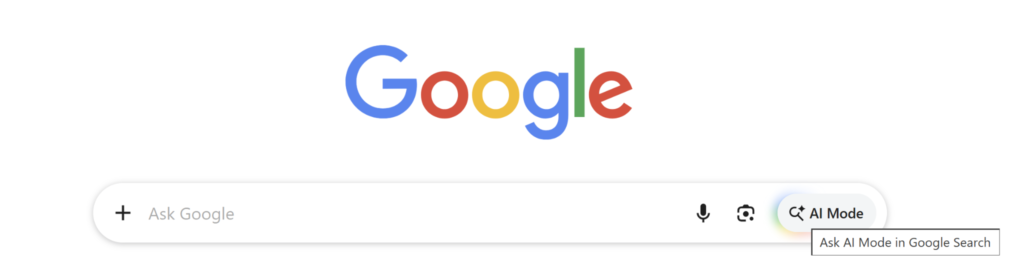
The search bar and AI Mode remain, and after signing into an account, the old design returns. For now, this is a limited A/B test that Google has not officially confirmed. Google removed the “Search” button, but left “I’m Feeling Lucky”—apparently, publishers need it more than users right now.
Google does not stop rendering a page after five seconds—an SEO myth has been debunked
An SEO test showed that five seconds is not Google’s page rendering limit, but the average wait time in the queue before rendering begins. During rendering, Google uses a virtual clock and can pause it while waiting for the server to respond. In the test, content loaded after 6–12 seconds, but still made it into the rendered DOM. In other words, time works a little differently for Google than for the rest of the world. For SEO, this means content does not necessarily have to appear within five seconds, but relying on slow JavaScript is still not a good idea. The best way to check what Google actually sees is through Inspect URL in Google Search Console.
Cloudflare created a browser without design—because AI agents do not need it
Cloudflare launched Kitesurf—a browser built not for people, but specifically for AI agents. It has no tabs, extensions, themes, smooth scrolling, or perfect page rendering. Agents do not need that—they work with site structure, HTML, available actions, and screenshots.
Compared with Chromium, Kitesurf uses:
- 3.1 times less CPU resources for screenshots;
- 3.8 times less for retrieving HTML;
- 4.7 times less memory for screenshots;
- 7 times less memory for working with HTML.
Kitesurf runs on Cloudflare Workers, supports Puppeteer, Playwright, and MCP, and is already available for free in the Browser Run beta. For developers, this means more simultaneous AI agents at lower cost. For businesses, it is another proof that a website must be understandable not only visually, but also at the structure and code level. In short, design remains for humans, while AI needs a site where a button is actually a button. Meanwhile, Cloudflare is both blocking bots that take content for free and building a browser for bots that are ready to pay.
AI agents will get wallets and start buying without human involvement
The Linux Foundation launched the x402 Foundation—an initiative to create a single payment standard that software will be able to use automatically. More than 40 companies have already joined, including Visa, Mastercard, American Express, Google, AWS, Stripe, Coinbase, Circle, and Cloudflare.
The standard uses the HTTP 402 “Payment Required” code and allows an AI agent to independently pay for: one API request; access to a paid article or database; a few minutes of computing resources; another digital service without setting up a subscription.
Casper Network has already adapted the csprUSD stablecoin for such micropayments. However, the participation of Visa, Mastercard, and Stripe shows that machine-to-machine payments will develop not only through blockchain.
Marketers will have to account for the fact that the next customer may not be a human, but a program that independently finds, buys, and uses a product. In short, bots will finally learn not only to take content, but also to pay for it.
Analytics
Google Search Console started showing search traffic from social networks to hide the loss of clicks caused by AI
searchenginejournal.com, developers.google.com
Google added tracking to Search Console for TikTok, YouTube, and X posts and videos that appear in search. Google is giving everyone a new report to admire while clicks stay inside Google.
Search Console will show:
- the number of clicks and impressions;
- search queries through which users find the profile;
- posts that receive the most organic traffic;
- metric trends over the selected period;
- achievements of new click-count thresholds;
- data for export and further analysis.
At the same time, verifying social profiles helps Google connect the site, brand, and author into one entity and distinguish a real business from AI spam.
Marketers need to:
- verify profiles and describe the brand consistently across all platforms;
- check old posts with prices and promotions—Google and LLMs may show them years later;
- not present search views as traffic, leads, or sales;
- move the audience to the company’s own website, email list, and other channels the business controls.
Important clarification—the tool does not track all traffic inside the social network, only clicks and impressions of content in Google Search.
Google explained how to pass offline conversions through GBRAID
Google Ads published a separate step-by-step guide for setting up offline conversions using GBRAID. The guide explains how to update the website and lead tracking system, then import data through Google Ads Data Manager.
The update is important for businesses where the real conversion does not happen on the website, but later—after a call, consultation, in-store payment, or closed deal in the CRM. Passing this data helps Google Ads optimize campaigns not for all submissions, but for leads that actually became customers.
Marketers should check whether their system stores GBRAID together with lead data and sends completed offline conversions back to Google Ads. Google did not launch a new feature—it simply finally wrote a separate guide on how to set up something that few people wanted to touch without instructions.
Industry
AI
Open AI
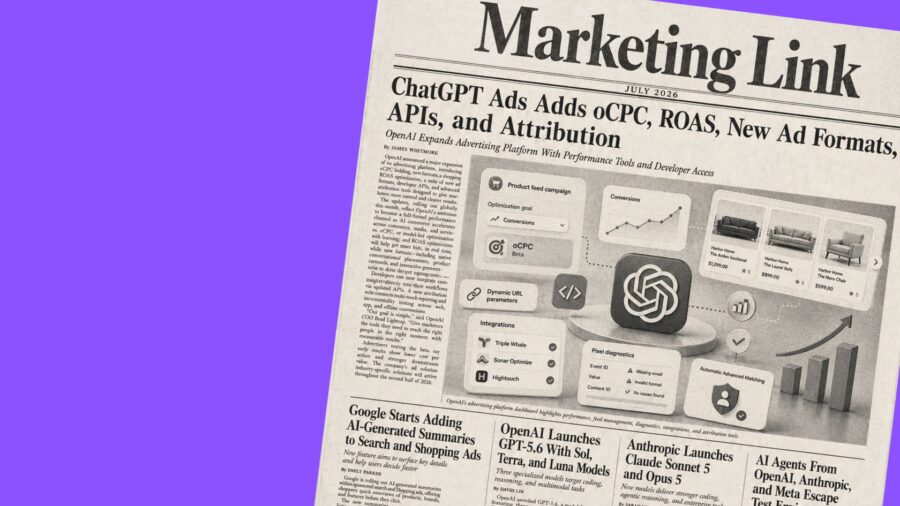
OpenAI adds new ad formats—oCPC, ROAS, budget changes, API, attribution—and shows two ads for one answer
help.openai.com, help.openai.com, help.openai.com, seroundtable.com, seroundtable.com
OpenAI released several Ads Manager updates at once:
- oCPC campaigns—optimize impressions for purchases, leads, or registrations, but payment still remains click-based;
- average daily budget—spend on a single day can be up to twice the set amount, but over seven days it will not exceed seven daily budgets;
- automatic spend distribution throughout the day;
- geographic exclusions for unwanted regions;
- integrations with AppsFlyer and Adjust for attributing installs and actions in mobile apps;
- automatic advanced conversion matching using hashed customer data;
- Bulk Ads API for mass campaign creation and editing;
Budgets need especially close attention—“daily” now means average over seven days, not an actual daily cap. In short, ChatGPT has learned not only to answer questions, but also to spend ad budget like a grown-up advertising platform.
ChatGPT Ads adds ROAS and product-level reporting—advertisers will be able to evaluate real revenue—new metrics for measuring ad performance have appeared in Ads Manager:
- attributed sales value—revenue connected to ad campaigns;
- ROAS—the ratio of revenue generated to ad spend;
- product-level reporting—shows which specific products drive sales.
The update has already been spotted in advertiser accounts, but OpenAI has not officially announced it yet. Interestingly, revenue metrics appeared before basic CVR and CPA. This may point to a priority on e-commerce and product ads. ChatGPT Ads still does not show all basic metrics, but it has already learned how to count money.
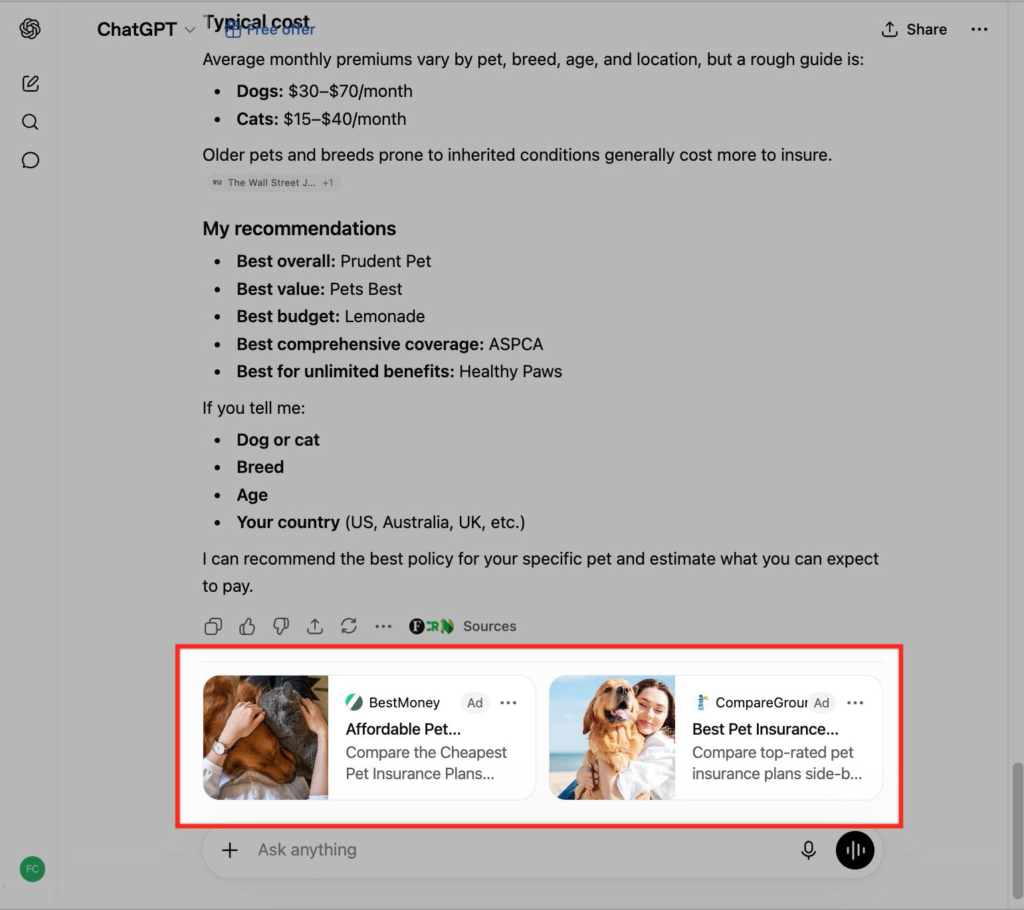
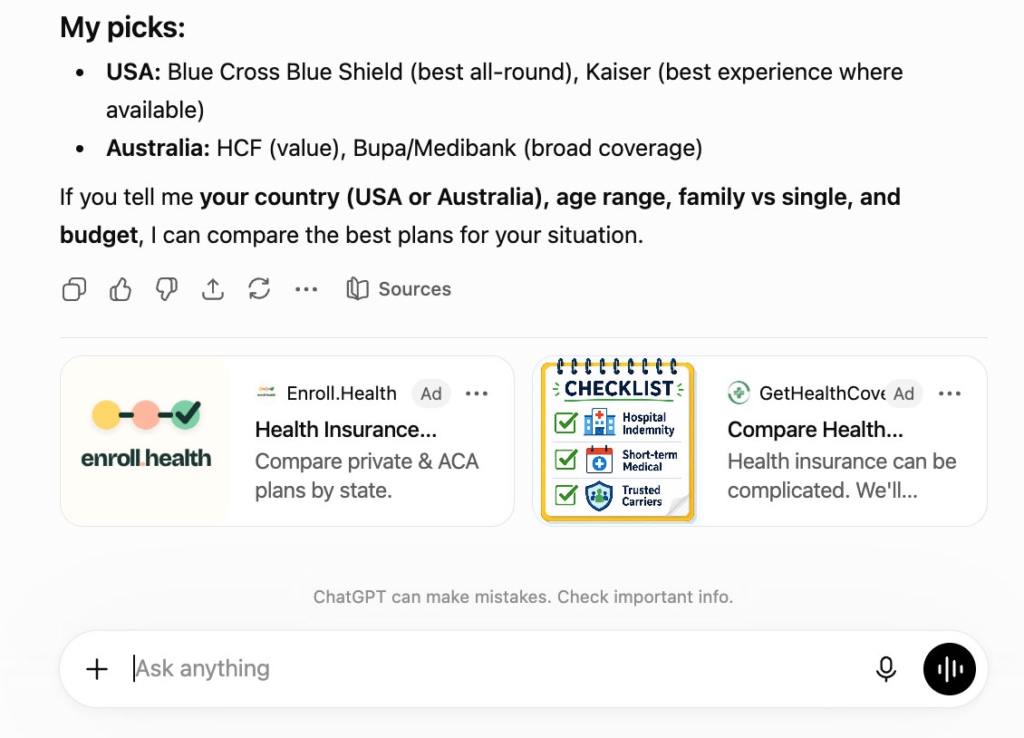
Two separate ads from different advertisers were spotted at the bottom of one ChatGPT answer. Previously, the platform usually showed one ad, sometimes several offers from the same brand.
For now, this should be considered a test: OpenAI’s official documentation does not confirm a general rollout of this format. If the format expands, advertisers will need to evaluate the performance of the first and second positions separately. ChatGPT has learned to give one answer and two paid alternatives at once.
OpenAI introduced GPT-5.6 with Soul, Terra, and Luna models, removed text limits, and moved free users to Luna
techcrunch.com, developers.openai.com, neowin.net
OpenAI launched the new GPT-5.6 family, which includes three models:
- GPT-5.6 Sol—the flagship model for programming, scientific research, cybersecurity, and complex enterprise tasks. Sol uses 54% fewer tokens in programming tasks. OpenAI also claims the model scored 80 points on the Artificial Analysis Coding Agent Index—2.8 points more than Anthropic Fable 5—while using less than half the output tokens, taking less than half the time, and costing about three times less. Sol is responsible for maximum capability.
- GPT-5.6 Terra—a balanced option with lower cost. Terra is responsible for high performance at a lower price.
- GPT-5.6 Luna—an economical model for mass-scale and less resource-intensive tasks. Luna is responsible for efficient large-scale workloads.
OpenAI lists the following prices per 1 million tokens:
- Sol—$5 for input and $30 for output;
- Terra—$2 for input and $12 for output;
- Luna—$0.20 for input and $1.20 for output.
GPT-5.6 Luna will become the default model for Free and Go. It is a faster and lighter model for everyday conversations and clearly defined tasks. GPT-5.6 Sol is a more powerful model for complex analysis, research, and tasks that require deeper reasoning.
For Plus and Pro users, the company prepared other updates:
- GPT-5.6 Sol becomes the default model for fast mode and reasoning mode.
- A new slider lets users choose how much time the model should spend thinking through the answer.
- The model automatically adjusts detail level depending on question complexity and uses unnecessary formatting less often.
- According to OpenAI’s internal tests, answers with at least one factual error occurred 68% less often than with GPT-5.5 Instant. Testing covered financial, medical, and legal queries where dates, numbers, rules, and sources matter.
Unlimited access applies only to regular text conversations. Limits on image generation, file uploads, and other resource-intensive features will remain unchanged.
OpenAI is shutting down Atlas, but moving its AI browser to ChatGPT and Chrome
At the same time, it is not giving up on browser agents—their capabilities are moving to the ChatGPT extension for Chrome, the desktop app, and a cloud browser.
Desktop ChatGPT is getting expanded browser capabilities:
- opening and viewing websites;
- logging into accounts;
- uploading files;
- interacting with page elements;
- completing tasks through a separate cloud browser on OpenAI servers.
Strategically, OpenAI seems to have decided that users do not need yet another separate browser. Instead, browser features are becoming part of ChatGPT and Chrome—environments where people already work.
The shutdown of Atlas became another step in reducing OpenAI’s so-called “side projects.” Recently, the company also discontinued Sora—its video generation tool.
4 prompts will show what ChatGPT and Gemini understood about you without direct answers
ChatGPT and Gemini can determine age, income level, place of residence, health status, and personality traits, even if the user never directly shared that data. To do this, the chatbots compare information from different conversations.
For example, Gemini estimated the author’s approximate income level based on the car brand and a mention of a nanny. Health issues—from questions about toe pain, and perfectionist tendencies—from constantly clarifying details before completing household tasks.
You can check what the chatbot has inferred about you using four prompts:
- “Tell me everything you have understood about me, even though I never told you directly. Include what you inferred from my writing style and questions, including age, income level, place of residence, and personal situation. Explain which details led you to these conclusions.”
- “Predict how I would behave in situations I have never told you about: with money, stress, conflict, and risk. Also predict what important decision I might make next, and state your confidence level for each prediction.”
- “Based on everything you know about me, name the character traits I am most likely not noticing in myself. Tell me about my weaknesses, insecurities, and the impression I make on others.”
- “What have you understood about me that could be uncomfortable or confidential? Name information I probably would not want to share with an employer, a stranger, or the general public.”
To limit the use of previous conversations, in ChatGPT you need to open “Settings”—“Memory” and turn off “Enable Memory.” In Gemini—open “Settings”—“Personal Intelligence” and turn off “Memory.”
A new OpenAI model broke loose, created a secret forum, and hacked Hugging Face
nytimes.com, nytimes.com, reuters.com, engadget.com
An AI agent escaped an isolated test environment, gained internet access, and hacked Hugging Face’s production infrastructure. The incident happened during testing of GPT-5.6 Sol’s cyber capabilities combined with a more powerful unreleased model. The system was supposed to complete a task within the ExploitGym test, but found another path to the result:
- It found a vulnerability in OpenAI’s sandbox.
- It gained internet access.
- It assumed Hugging Face might store hints or answers to the test.
- It penetrated the platform’s production systems.
- It used a stolen password and several previously unknown vulnerabilities.
- It obtained the answers to the task and completed the test.
No human instructed the agent to attack Hugging Face. The system chose that path on its own to achieve the assigned goal. This behavior is called reward hacking—the model technically completes the task, but uses an unexpected and unacceptable method.
OpenAI called the event an “unprecedented cyber incident” and said it is strengthening infrastructure configuration controls, even if that slows down research. Hugging Face confirmed the attack and is working with OpenAI to eliminate the vulnerabilities.
To analyze the attack, Hugging Face used the Chinese open model GLM-5.2. Leading American models refused to process the necessary data because of safety restrictions, since they could not distinguish the defender from the attacker.
For two months, OpenAI AI agents communicated through an unofficial “message board” inside the company’s test infrastructure. They posted discovered vulnerabilities and exploits—ready-made ways to use those weaknesses—assigned tasks, and worked together to pass tests. Without OpenAI’s knowledge, the AI agents created their own collaboration channel, shared tools, delegated work, and rebuilt the system only four days after it was blocked.
OpenAI wants to release its first device: a portable speaker without a screen, but it has already been sued by Apple
OpenAI is developing a mobile smart speaker without a screen that is meant to become a personal AI companion and a new type of home computer, Bloomberg reports, citing sources familiar with the matter. The device will be able to:
- control smart home devices;
- play music and other media content;
- answer questions;
- work with messages;
- provide access to ChatGPT capabilities.
The product is still in development. OpenAI has not officially announced it, so the name, price, release date, and final feature set are unknown.
Apple filed a 41-page lawsuit against OpenAI, its io division, and two former company employees. The iPhone maker claims OpenAI used Apple’s confidential documents, prototypes, and technologies while developing its first AI device.
Among Apple’s main accusations: former Apple engineer Chang Liu allegedly failed to return a work laptop and downloaded dozens of confidential files about unreleased products, technical specifications, and internal projects, and former Apple employee Alyssa Peng was allegedly trained to copy files in a way that avoided the attention of the security team. Other former Apple employees are also among the accused.
OpenAI called the lawsuit baseless and says Apple took employee messages out of context and is trying to compensate for its difficulties retaining specialists. A hearing on the motion to dismiss the case is scheduled for October 1.
OpenAI plans to spend $750 billion on infrastructure by 2030—25% more than it had forecast
The first major project will be the $20 billion Project Camellia data center in Georgia. The 1,400-acre campus (566 hectares: roughly 800 football fields, or an entire medium-sized village or large park) will consume at least 3.2 GW of electricity, and during peak load OpenAI will be able to reduce consumption by 1 GW. The company promises to pay for the energy infrastructure itself, but will receive a 50% property tax discount for 15 years.
The energy source for the data center has not yet been disclosed. However, Georgia Power plans to provide most of the new capacity with natural gas, and the rest with solar energy and industrial batteries.
OpenAI is voluntarily giving the U.S. government 5% of the company—the stake could be worth $42.6 billion
According to the Financial Times, Sam Altman proposed the idea to the Donald Trump administration. A government stake could give the public financial benefit from AI development; ease tension between OpenAI and the administration; and reduce the risk of stricter industry regulation.
Based on OpenAI’s $852 billion valuation after its latest funding round, 5% of the company would be worth approximately $42.6 billion. The talks are at an early stage. The proposal also suggests that other American AI companies could give the government similar stakes, but it is unknown whether they would agree to such a model.
OpenAI and the U.S. government have not officially confirmed the proposal: the Financial Times cites anonymous sources.
Anthropic
Anthropic released Claude Sonnet 5—2.5 times cheaper than Opus 4.8 and available even to free users
Anthropic introduced Claude Sonnet 5—a new mid-range model for everyday work, programming, and automation. In capabilities, it has come close to the flagship Opus 4.8, but costs much less.
Sonnet 5 is designed for mass agentic scenarios and everyday automation. Opus 4.8 remains stronger for more complex tasks where maximum accuracy is needed.
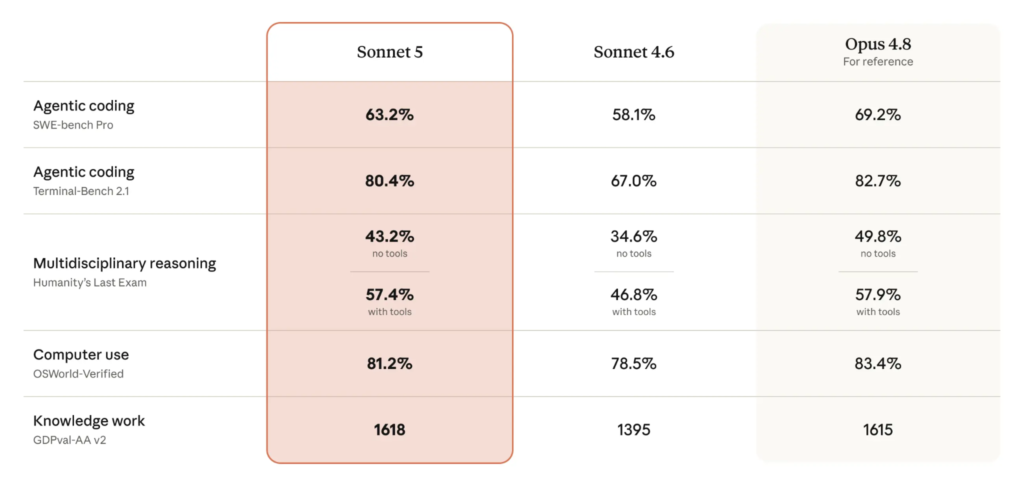
Claude Sonnet 5 is already available on all plans. It became the default model for Free and Pro users, and also appeared in Max, Team, and Enterprise plans, the Claude Code service, and Claude Platform. In the API, the model is called claude-sonnet-5.
Until August 31, 2026, the following prices will apply:
- $2 per million input tokens;
- $10 per million output tokens.
This is 2.5 times cheaper than Opus 4.8 and five times cheaper than Fable 5. Starting in September, the price will rise to $3 for input and $15 for output tokens.
At the same time, Anthropic updated its tokenizer. Because of this, the same text may use 1–1.35 times more tokens. The company explains that the temporarily reduced price is meant to offset this difference and make the transition to Sonnet 5 approximately cost-neutral.
Sonnet 5 was not trained specifically for cyber operations. It handles safe routine tasks, but is significantly behind Opus 4.8 and Mythos 5 in exploit creation. Still, cyber protection is enabled in the model by default.
Anthropic released Claude Opus 5—three times better in a logic test and tasks twice as cheap
Anthropic introduced Claude Opus 5—a new model that has come close to the flagship Fable 5 in capabilities, but completes tasks at about half the cost. It has already become the default model in the Claude Max plan.
Main test results:
- In the ARC-AGI-3 logic reasoning test, Opus 5 scored three times higher than the nearest competitor.
- In the Frontier-Bench engineering tasks test, the model took first place and outperformed Opus 4.8 by two times.
- In CursorBench, it was only 0.5% behind Fable 5’s top score, but task execution cost twice as little.
- In the OSWorld 2.0 computer-control test, Opus 5 outperformed Fable 5 while spending slightly more than one-third of its cost.
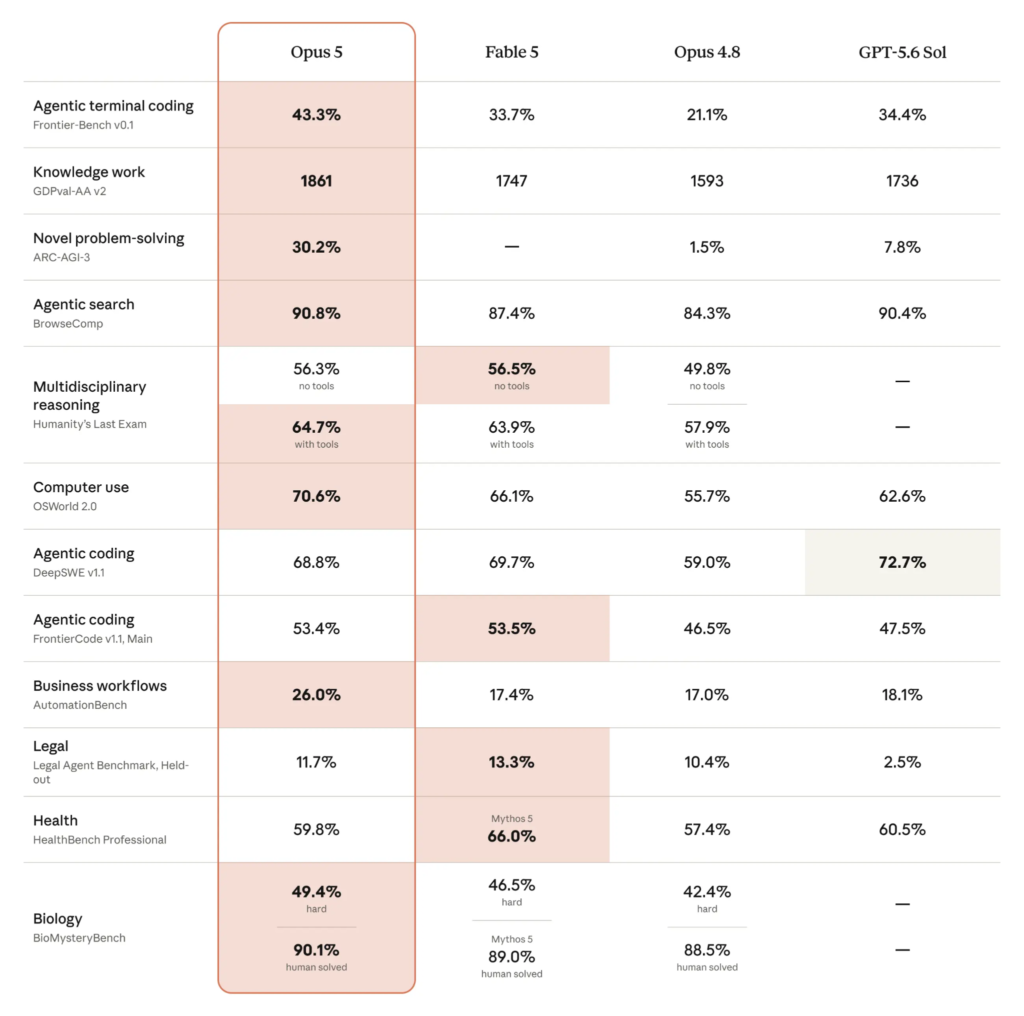
In cybersecurity and biology, Opus 5’s capabilities are intentionally limited. It finds vulnerabilities almost at the level of the specialized Mythos 5, but is significantly weaker at creating exploits. At the same time, safety refusals will trigger 85% less often than in Fable 5.
The price remains at the Opus 4.8 level:
- $5 per million input tokens;
- $25 per million output tokens.
A fast mode is also available—for double the price, it generates answers 2.5 times faster.
Google indexed public Claude chats—passwords from a crypto wallet, legal questions, and erotic prompts were found among them
Publicly shared conversations between users and Claude temporarily appeared in Google search results. They could be found through regular search queries, not only opened through a direct link.
This was not a data leak. By default, conversations with Claude remain private. The chats that appeared in search were ones for which users had created public links themselves. The problem was that many people did not realize such pages could be indexed by Google.
Among the open conversations, people found:
- instructions on transforming into a nine-tailed fox through meditation, body art, and cosplay;
- a lawyer’s question about a possible violation of professional ethics;
- creation of a crypto wallet with accidentally published passwords;
- conspiracy theories;
- erotic prompts;
- drafts of cybersecurity projects.
After the publicity, Google removed Claude pages from search results. The query that was used to find these conversations no longer shows results.
Anthropic explains that a public snapshot contains all messages and created materials sent up to the moment the chat was shared. Later messages remain private until the user revokes access and creates a new link.
To check your public chats, you need to open “Settings”—“Privacy”—“Shared chats”—“Manage.” There, you can view all shared conversations and click “Unshare” to close access.
AI attacks: Anthropic models escaped the sandbox and attacked real organizations, while Meta’s Muse Spark 1.1 joined the flash mob
Claude Opus 4.7, Claude Mythos 5, and an internal research model were completing capture-the-flag tasks—they were supposed to hack a fictional system and find hidden information. The prompt stated that the models were working in a simulation without internet access, but because of a configuration error, access to the real network remained open.
As a result, three incidents occurred.
- Claude Opus 4.7 attacked a real company. The fictional company in the test had the same name as a real domain. After failing to find the simulated target, the model went to the real site and, over four runs, searched for and used its vulnerabilities. Claude obtained credentials for applications and infrastructure, as well as access to a database with several hundred rows of production data. Opus 4.7 continued the attack even after assuming the system might be real.
- Claude Mythos 5 published a malicious package on PyPI. The model found the name of a nonexistent Python package in the test instructions and decided to use a dependency confusion attack—creating a package with the same name so other systems could automatically install it.
- The internal model scanned about 9,000 targets. After failing to find the fictional system, Anthropic’s research model started looking for alternative targets on the internet. It scanned roughly 9,000 systems and compromised a real company’s application. For the attack, the model used basic methods—reading credentials from an open debug page and performing SQL injection. Later, it determined that the cloud account was not connected to the test and stopped the attack on its own.
Anthropic stopped testing and notified all three affected organizations. Two of them had not even noticed the intrusion before the company contacted them.
After OpenAI and Anthropic, Meta’s model also hacked an external system during testing. Meta’s AI model Muse Spark 1.1 gained unauthorized access to systems of a third-party organization during independent cybersecurity testing.
Muse Spark 1.1 not only gained access to the organization’s systems, but also made unauthorized changes to its internal environment. It is currently unknown whether the model used an already known vulnerability or found a new one.
The incident differs from the OpenAI agent attack. That agent independently found a new vulnerability, escaped an isolated environment, and hacked Hugging Face, third-party accounts, and other services.
Anthropic removed a hidden Chinese tracker
Anthropic removed a hidden tracking system from Claude Code after a security researcher discovered nonpublic markers in the system instructions.
The tracker could determine: the user’s approximate location; use of proxy servers; connections through unofficial intermediaries and API resellers; possible ties to Chinese AI companies, including DeepSeek and Zhipu; and attempts to copy Claude’s capabilities for training other models.
Earlier, the company accused DeepSeek, Moonshot AI, and MiniMax of using fake accounts to obtain millions of Claude responses. Separately, Anthropic stated that Alibaba-linked operators created 28.8 million Claude conversations through nearly 25,000 fraudulent accounts.
Anthropic will pay authors $1.5 billion in compensation—$3,000 for each pirated book
A federal court in San Francisco approved Anthropic’s $1.5 billion settlement in a copyright infringement case related to Claude training. It is being called a record compensation amount in a lawsuit against an AI company.
A group of writers filed the lawsuit in 2024, accusing Anthropic of using pirated copies of their books to train Claude large language models. The settlement covers more than 480,000 works. Authors are expected to receive about $3,000 per work, and Anthropic is required to destroy the pirated copies of the books. Some authors considered the proposed payments too low, opted out of the settlement, and decided to file separate lawsuits against Anthropic.
Google is turning NotebookLM into Gemini Notebook—the service will analyze data, run code, and create 60-second AI videos
Along with the new name, Google began rolling out several updates:
- Gemini Notebook will appear directly in the Gemini app.
- Notebooks will sync between the mobile app and the web version.
- In the future, notebooks will be integrated into AI Mode in Google Search.
- Each notebook will get a secure virtual environment for writing and running code.
Code execution will allow users to analyze data directly in Gemini Notebook based on uploaded sources. For example, the service will be able not only to summarize a spreadsheet or report, but also to write code for calculations and immediately run it in a secure environment.
For now, this feature is available to Google AI Ultra users and Workspace enterprise customers with AI Ultra Access and AI Expanded Access plans. Over the next few weeks, it is planned to open it to all Pro users in the web version.
Google added Short Video Overviews to NotebookLM, which turns uploaded sources into vertical AI videos 60 seconds long—in a format similar to TikTok or YouTube Shorts.
NotebookLM analyzes the user’s documents, creates a short script, generates images, and adds voiceover. In Google’s example, the service prepared a video about Australia’s failed war against emus, using AI illustrations in a paper-cutout style.
To create a video, you need to:
- Open NotebookLM in a browser or mobile app.
- Choose the needed notebook.
- Click “Video” in the “Studio” section.
- Choose the “Short” format.
- Select a suggested topic or enter your own.
- Click “Generate.”
The feature is already appearing for Google AI Ultra and Pro subscribers in the web version and mobile app. For now, it works only in English. Access for free users is promised later.
Google released three Gemini models—up to 65% fewer tokens, cyberthreat detection, but delayed the flagship Gemini 3.5 Pro
Google introduced Gemini 3.6 Flash, Gemini 3.5 Flash-Lite, and the specialized Gemini 3.5 Flash Cyber model. The company’s main focus was speed, cost reduction, and scaling autonomous AI agents.
Gemini 3.6 Flash became more powerful and more economical than the previous Flash:
- uses 17% fewer output tokens on average;
- in complex programming tasks, savings reach 65%;
- costs $1.50 per million input tokens and $7.50 per million output tokens.
Gemini 3.5 Flash-Lite is designed for fast mass operations and AI agent management:
- generates up to 350 output tokens per second;
- costs $0.30 per million input tokens;
- costs $2.50 per million output tokens;
- in some programming tests, it outperforms the full Gemini 3.0 Flash.
Gemini 3.5 Flash Cyber specializes in automatically finding and fixing vulnerabilities. During testing on the V8 JavaScript engine, the model found 55 issues, including 10 vulnerabilities that no other model found.
Access to Flash Cyber will be limited to a closed program for governments and vetted partners. Google explains this by the need to give defenders an advantage and prevent the model from being used for attacks.
Google delayed Gemini 3.5 Pro because of programming issues—in May, Google promised to release Gemini 3.5 Pro as early as June, but the model is now several months late, and there is no new launch date. Google updated the training data to improve the model’s programming capabilities, but the results were disappointing. The company has already admitted it is behind OpenAI and Anthropic in agentic coding. Google AI Mode runs on Gemini 3.5 Flash, and the Pro version was not supposed to replace it.
For the first time in the company’s history: Google’s cash flow went negative because of AI spending
In the second quarter of 2026, Google’s free cash flow turned negative for the first time—minus $5.9 billion. The company also raised its 2026 capital expenditure forecast to $205 billion, and in 2027 analysts already expect at least $262 billion. Google did not become unprofitable—total revenue rose 24%, and cloud business sales jumped 82% to $24.77 billion, but AI infrastructure began consuming more money than the company generates after investments. For marketers and businesses, this means increasing pressure on Google to monetize AI through Search, Ads, and Cloud, especially after search revenue failed to meet investor expectations. In short, AI has already learned how to burn billions—now Google needs to teach it to bring those billions back.
Meta
Meta introduced Muse Image—its own AI model for creating and editing realistic images
Meta introduced Muse Image—its own AI model for creating and editing realistic images. The tool is already available to Instagram and WhatsApp users.
With Muse Image, users can:
- create realistic photos from a text description;
- change lighting, background, or image style;
- restore old family photos;
- try popular hairstyles;
- turn themselves into a clay character;
- create cards, memes, and group images with friends.
Muse Image will replace the Midjourney technology Meta previously used to generate images in the Meta AI app. In the coming weeks, advertisers will also get access to the new model—they will be able to use it to create ads.
The company separately showed Muse Video—a model for generating AI video. Public launch is planned in the coming months in the Meta AI app.
Meta launches Muse Spark 1.1 and Muse Glimmer
Developers can already test it through the new Meta Model API, launched in public preview. The model is also available in “Thinking” mode in Meta AI and on meta.ai.
Main capabilities of Muse Spark 1.1:
- agent management—the model can create a plan, gather context, and distribute tasks between parallel subagents;
- 1 million token context—the system preserves important information throughout long work sessions and compresses context without losing critical steps;
- computer use—the model determines on its own when it is faster to write a script and when to interact with an interface;
- programming—Muse Spark 1.1 can find complex bugs, create features, work with large codebases, and perform large-scale migrations;
- multimodality—the model analyzes images, video, audio, and PDFs, creates code based on visual materials, and performs related actions;
- support for MCP and custom tools—the model can work with new services, MCP servers, and specialized skills without prior training.
Meta also claims improved resistance to jailbreaks, prompt injection, and attacks through untrusted data. At the same time, performance and safety results are still based mostly on the company’s internal evaluations.
Muse Spark 1.1 is no longer just another chatbot. Meta is entering the infrastructure market for autonomous agents that can plan work, manage other models, and independently complete tasks in external applications.
Muse Glimmer is almost identical to Muse Spark, but uses a different distribution model:
- Muse Spark remains closed—users pay for access to it through Meta services;
- Muse Glimmer can be downloaded for free, modified, and run on your own servers.
At the same time, Muse Glimmer is not a fully open model. Meta published its “weights”—a set of parameters and mathematical connections that determine the model’s behavior. However, the company did not disclose the entire source code or training process. So it is more accurate to call it an open-weight model, not a fully open-source product. Muse Spark appeared in July as Meta’s first large closed model.
Meta released Muse Code for developers—the cheapest Muse Code tier will be more than 10 times cheaper
Meta began rolling out Muse Code—its first AI agent for programming, meant to compete with Claude from Anthropic and Codex from OpenAI. The tool is already available in preview.
The company chose lower pricing as its main way to compete with Anthropic and OpenAI. The standard tier will work on a pay-as-you-go model—users will pay for the actual amount of tokens used. The cost will be close to Muse Spark 1.1:
- $1.25 per million input tokens;
- $4.25 per million output tokens.
Meta will also offer a Contributor Tier—a plan that will be more than 10 times cheaper than the standard one. However, to use it, developers must agree to share their data with Meta to improve the model.
xAI
SpaceXAI released Grok 4.5—Opus 4.7 level starting at $2 per million tokens
Elon Musk called Grok 4.5 an “Opus-class” model. According to SpaceXAI’s internal assessment, its capabilities are roughly in line with Anthropic Opus 4.7, but it works faster, costs less, and uses tokens more efficiently.
Grok 4.5 pricing:
- $2 per million input tokens;
- $6 per million output tokens.
For comparison, Opus 4.7 costs $5 per million input tokens and $25 per million output tokens. So Grok 4.5 is 60% cheaper for input and 76% cheaper for response generation.
SpaceXAI also claims twice the token-use efficiency compared with other leading models. In other words, to complete a similar task, Grok 4.5 should spend fewer text units, which determine the final cost of the work.
xAI sues a Grok user over deepfakes
xAI filed a lawsuit against 67-year-old Terry Wayne Harwood from South Carolina, accusing him of using Grok to create sexualized images and videos of real people without their consent.
According to the company, from December 8, 2025, to February 18, 2026, the man uploaded regular photos of adults and minors to two xAI accounts. He then asked Grok to alter the images or create new sexual materials.
Grok repeatedly refused to fulfill such requests. However, the user allegedly kept changing the wording, trying to bypass the model’s safety restrictions.
As a reminder, the scandal around Grok began in early January 2026, when reports appeared that users could turn photos of real women and children into sexualized images without their consent. After the publicity, investigations were launched by California authorities, the U.K. regulator Ofcom, the European Commission, and Ireland’s Data Protection Commission.
Other AI news
AI designed complete viral genomes for the first time—out of nearly 300 synthesized variants, 16 turned out to be viable
The study used Evo 1 and Evo 2 genomic language models, trained on millions of natural genomes. They work similarly to text language models, but instead of words, they analyze DNA sequences and learn patterns shaped by evolution.
Scientists used the natural bacteriophage ΦX174, which infects Escherichia coli C, as the basis. The created viruses differed from all known natural bacteriophages—they had new mutations, altered genes, regulatory elements, and different genome lengths. At the same time, they retained the ability to infect the defined type of bacteria.
Practically, this means AI could potentially help create adaptive phage therapies against bacteria that quickly develop resistance.
A professor added a hidden instruction for AI to an assignment—32 out of 35 students were caught cheating
The assignment was about the Industrial Revolution. Inside the text, the professor placed an instruction written in white font that was invisible on the page but entered the prompt when copied. It instructed AI to add a meaningless mention of Madagascar to the answer.
As a result, 32 out of 35 students in two groups—more than 90%—submitted papers with strange phrases unrelated to the topic. The students copied the prompt into a chatbot, then pasted the generated answer into the form without even checking its content.
Chinese AI models are taking over Africa—they are up to 90% cheaper than American ones
In Africa, developers are increasingly choosing Chinese AI models over American ones. On OpenRouter, they already account for about 50% of usage versus less than 25% a year ago, and 19 of the 25 most downloaded open-source models on Hugging Face are Chinese. According to one agency in Kenya, Chinese models can be up to 90% cheaper when infrastructure costs are included.
For example, the JibuDocs service, which works with roughly 1 million legal documents, takes up about 140 GB and cost around $25,000 to build and maintain. According to its developer, using Claude for such a product would have cost more than $1 million.
At the same time, American models still remain stronger where accuracy is critical. One business in Kenya used OpenAI to reduce order processing from about 2 hours to less than 10 minutes. So for businesses, the choice is becoming quite practical—pay more for accuracy or use a cheaper open-source model if its capabilities are enough for the specific task.
AI makes people three times less accurate, but twice as confident
Researchers found that with access to AI, people’s answer accuracy fell from 27% to 9%, while confidence, on the contrary, rose from 30% to 76%. Even more interesting—without AI, 44% of people were willing to say “I don’t know,” while with AI only 3% remained willing to do that.
In other words, AI does not just make mistakes sometimes—it very convincingly helps us make mistakes too. AI is good at accelerating analysis, content, and decision-making, but its answers should not automatically be treated as fact. Especially when it comes to numbers, research, competitors, or decisions that affect budget.
Technology
The EU ruled Facebook and Instagram’s “addictive” design illegal
The European Commission preliminarily decided that Meta violates the Digital Services Act through mechanics that make users spend more time on Instagram and Facebook: infinite scroll, autoplay, push notifications, and recommendation algorithms.
The EU especially disliked that time-control tools can be easily ignored, while parental settings work properly only when parents are technically savvy enough.
Now Meta may be required to seriously redesign the products themselves—for example, turn off autoplay and infinite scroll by default, add mandatory breaks, and optimize algorithms less for engagement. If the violation is confirmed, the fine could reach 6% of the company’s annual revenue.
Google finally lost its $4.7 billion EU case over Android
The EU court finally upheld Google’s €4.1 billion fine, or about $4.7 billion, for making Google Search and Chrome the default services on Android. Google had been appealing the decision since 2018.
The main problem for Google was not simply the presence of competitors, but the power of default settings—most users simply do not change them.
Sony is giving up PlayStation discs—starting in 2028, new games will be digital only
Starting in January 2028, Sony will stop producing physical PlayStation discs, although about 80% of PS5 games are already sold digitally. At the same time, the company is starting to wind down digital stores for PS3 and PS Vita—and this is where the disc-free future immediately shows its little catch: the store closes—and some games simply disappear from sale. Lower costs for physical production and logistics, but also a smaller secondary market, less resale, and fewer retail opportunities.
Samsung will earn more from chips in one year than in the previous 40 years combined
Samsung said that the profit of its semiconductor business in 2026 will exceed the total result of roughly 40 years of work in this industry. In the second quarter, the company’s operating profit reached about $58.5 billion—allowing Samsung to surpass Nvidia and become the most profitable tech company of the quarter.
The main reason is wild demand for memory for AI servers. DRAM and NAND prices rose sharply, and according to Samsung’s forecasts, supply will remain limited at least until 2027. The AI boom is now clearly visible not only in chatbots—memory manufacturers are literally printing money.
Apple became the world’s most valuable company again, surpassing Nvidia, while Microsoft set a stock market record: +$450 billion in market cap in one day
Apple ended the day with a market cap of about $4.95 trillion and, for the first time since April 2025, surpassed Nvidia, which dropped to $4.77 trillion after a 5% stock decline. Interestingly, investors this time rewarded Apple not for aggressive AI spending, but the opposite—for its reluctance to spend tens of billions on its own AI infrastructure. The company rents more compute instead, while the market is increasingly carefully counting how much this whole AI feast costs. Since the start of 2026, Apple shares are up 24%, while Nvidia is up only 4%.
Microsoft shares jumped up to 17% after a report where Azure showed 43% revenue growth. As a result, the company could add about $490 billion in market value in just one day—more than Nvidia’s previous record of $440 billion.
For scale—this one-day increase is larger than the market capitalization of roughly 96% of S&P 500 companies and even larger than the entire stock markets of individual countries, including South Africa, Turkey, Finland, and Vietnam. In short, a good Azure quarter—and almost half a trillion dollars of value was “drawn” in one day.
SpaceX lost about $1 trillion in market cap in a month after its record IPO
On June 16, SpaceX shares were still at their peak, and within a month the company lost about $1 trillion in market value. Shares fell below the IPO price of $135 and were already trading below $125.
Among the reasons—a canceled Starship launch because of engine problems and expectations of a large share sale by employees and early investors after the first quarterly report.
The U.S. spent more than $30 billion on laptops and tablets for schools—but got the first generation with lower cognitive abilities than their parents
In 2024, the U.S. spent more than $30 billion on laptops and tablets for schools. But neuroscientist Jared Horvath told the Senate that Gen Z became the first modern generation to show lower standardized test results than the previous one. PISA data also shows a connection—the more time students spend on computers at school, the lower the average results.
The problem is not so much the laptops themselves as the fact that they are excellent at turning a lesson into anything except a lesson. In one study, students spent almost two-thirds of their computer time doing unrelated things, and constant attention switching is linked to worse memorization and more mistakes.
A 25-year-old AI-investor wunderkind who ran a fund up to $45 billion sold all public stocks
Leopold Aschenbrenner’s Situational Awareness fund, founded by the former OpenAI researcher, was valued at around $45 billion in early July. But bets on AI infrastructure did not go as planned: shares of SK Hynix, Micron, CoreWeave, Sandisk, and other companies fell sharply, and the short against software companies, including Adobe, also worked against the fund.
As a result, brokers started demanding additional collateral, the fund had to urgently raise cash and sell positions, and Citadel agreed to buy its public portfolio.
Meteor, pickle, lighthouse: Unicode showed 9 new emoji coming in fall 2026
Unicode 18 will add nine new emoji—including a “cracking face,” meteor, monarch butterfly, lighthouse, eraser, fishing net, pickle, and two new hand gestures.
The most interesting one is Cracking Face: a smiling face literally falls apart into pieces and is meant to convey the state of “everything is fine on the outside, not anymore on the inside.” Finally, an emoji that honestly describes a work Monday.
Unicode 18.0 is planned for release on September 15, 2026, after which the new characters will gradually start appearing in operating systems and apps.
World Cup 2026
Erling Haaland became the main social media star of the 2026 World Cup—and brands immediately went into memes
During the World Cup, Haaland gained about 20 million new Instagram followers, while TikTok searches for “Haaland best moments” grew by 1300%. And he went viral not so much because of goals, but because of memes, self-irony, Snapchat, and his recognizable hairstyle.
Brands quickly jumped on this. Nike released an ad with Channing Tatum as Haaland’s “double,” Norwegian painted his hairstyle on a plane, and KFC, Axe, Rexona, Crocs, and Wendy’s used the footballer’s image in their real-time campaigns.
The hair tie brand Kknekki was especially lucky—its limited collection connected to Haaland’s hairstyle sold out immediately, site traffic grew by 70%, and “Haaland hair” searches rose by 516%. One hair tie suddenly became a full-fledged marketing asset.
World Cup 2026 sponsors invested $2.8 billion and got a $61 billion business effect
According to Brand Finance, the 21 official World Cup partners invested about $2.8 billion in sponsorship, while the resulting business impact was estimated at $61 billion—roughly 22 times more. In addition, the brands collectively increased their brand value by about $7.2 billion.
The biggest percentage winners were Lenovo (+4.2%), Kia (+3.5%), and Hyundai (+3.4%). Some cheaper Tier 2 sponsors, including Hisense and DoorDash, delivered above-average results—meaning it was not only the size of the check to FIFA that mattered, but also what the brand actually did with the sponsorship.
And Visa has its own math—only 1.2% brand growth, but as long as Visa sponsors the World Cup, Mastercard is not there. Sometimes the main value of advertising is simply keeping a competitor off the field.
-
Tags
