


HOW TO WRITE A MARKETING CASE STUDY: STRUCTURE, EXAMPLES, AND TEMPLATES
-
Post author

-


To write a great case study, you need to be a bit of a show-off. Maybe not a huge one—but definitely a show-off. You also need to be a good storyteller, because every case study is a story about how a client and their trusted team worked through a difficult journey together and achieved a strong result. While reading a case study, a potential client should be able to imagine themselves as the main character and understand how our company could help them achieve a similar outcome.
- Case study structure
- Case study outline
- Case study preparation checklist
- You wrote the case study—what comes next?
- Frequently asked questions
We publish case studies on the blog with author photos and comments from experts who were involved not only in the project itself but also in creating the case study.
Case studies are published only after approval from the editorial team because not every client wants their commercial information to become public knowledge—including knowledge available to their competitors. If a case study is genuinely strong, we can publish it without naming the website and mention only the industry. Confirm this with the editorial team as well.
Sometimes we write anti-case studies when either we or the client made a mistake. This is not exactly a tradition we want to encourage, but documented and properly analyzed mistakes help us improve.
Case Study Structure
A case study needs to capture attention, but attention is a resource that runs out quickly. So how do you work with something that gets depleted so fast?
People read the same text differently depending on their professional background and level of knowledge.
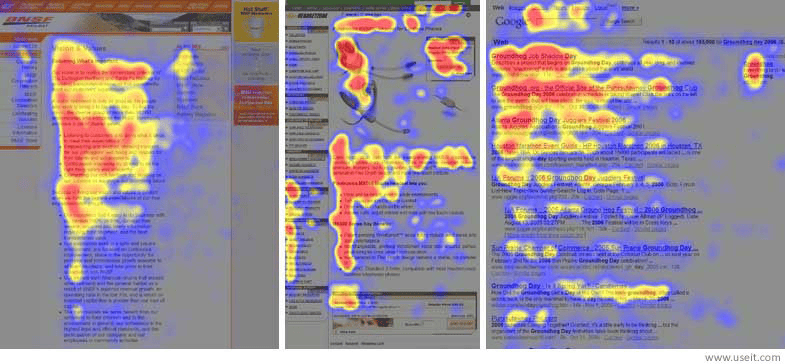
There are established ways to reduce the amount of attention a reader has to spend. One of them is the classic text structure: headline → teaser → introduction → body. How easy a text is to read and understand depends on the author and on how well they place “hooks” throughout the content—and how easily readers can connect those hooks to their existing knowledge. If a reader already has a large knowledge structure, one or two hooks may be enough. In a case study, that might be a results table and a screenshot that confirms the result. But if that knowledge structure is small or nonexistent—for example, the reader is not a marketer but a florist or a manual worker who never needed to build a marketing knowledge framework—then no matter how many hooks you provide, they may rely on a completely different reading structure. They may read only the conclusions or even just the first paragraph.
Encoding and Decoding in Case Study Structure
Every text has a structure and a genre. The structure is shaped by the genre. A case study does not require a rigid structure, but it does require a consistent one. That structure exists to transfer knowledge while minimizing the reader’s attention cost. Readers do not need to study every section from beginning to end. They may jump from the results table to the work process, then go back and read the introduction or the “About the Client” section. Everyone builds their own picture from the pieces they consider important.
A case study is a large amount of information, and processing and understanding all of it takes effort. So let’s look at how structure reduces that effort and helps readers focus.
Headline
The headline is usually the first thing that captures attention—or the second thing after the hero image, depending on the layout. It should essentially explain the entire case study. A good headline should be clear, easy to understand, and contain keywords that can help with search visibility. Ideally, it should also include numbers. Do not put misleading information in headlines and do not promise miracle solutions.
Headline punctuation. Do not use periods at the end of headlines, including H2s, H3s, and headings used for lists. The exception is when a headline contains two complete sentences. In that case, use a period after the first sentence but not after the second. Do not use question marks in case study headlines.
Headline Formula
A case study is not fiction, so headlines need consistency. At our company, we use one standard formula for all case study headlines. This makes it easier to navigate the blog, where dozens of case studies may appear on one page and readers need to quickly understand the client’s industry, the result, and the service we provided.
[By xx%, x times] [increased, decreased] [what: ROAS, CPL, traffic, conversions, etc.] for [industry]: [Google Ads, SEO] case study
Headline examples:
- Reduced CPL by 56% for VIP Tours in Orlando: Google Ads Case Study
- +127% Leads and −48% CPL for a Medical Center in California: Google Ads Case Study
- See more examples on the Case Studies page
When the headline formula does not work
There are several exceptions. First, anti-case studies and process-focused case studies where the main point was not the final result but testing a hypothesis. Second, cases that will not be published on the company blog but instead in media outlets or on social media, where the audience may be very different. Review the publication’s editorial policy or the audience of the platform. Look at which articles perform best and adapt your material. If mystery-style headlines work better, turn the headline into a quest. If the platform rewards provocative headlines, adapt the case accordingly.
Examples of provocative case study headlines
- How We Ran an Audit That Led to Half the Marketing Department Being Fired
- How to Quickly Sell Products With an 89% Margin
- Our Client Opened 100+ New Warehouses in Three Years Using Our Strategy
- The Client Wanted 30% Sales Growth and Got 300%—”We’ll Take It,” They Told Us
Illustrations and Screenshots
Use illustrations, GIFs, or video when you need to explain something, demonstrate a process, show results, or create an emotional response. If an illustration, GIF, or video serves no purpose other than decoration, remove it. Images should be at least 740 pixels wide. The exception is mobile screenshots. Group mobile screenshots in pairs so they look intentional on the page rather than sitting alone.
A lonely, tall screenshot creates a depressing amount of empty space around itself, so avoid using one by itself or combine several screenshots into one image.
Personal information must be covered with a black box or blurred on every screenshot. If the information is fictional and created only for an example, you do not need to hide it.
Personal information includes first and last names, usernames, phone numbers, account numbers, and card numbers. If a screenshot contains private client information that should not be disclosed in the case study—revenue, CPC, budget, and similar information unrelated to the specific case—it must also be hidden or blurred.
Add captions to illustrations. Do not place a period at the end of image captions. Take screenshots in English. Switch the software interface to its English version.
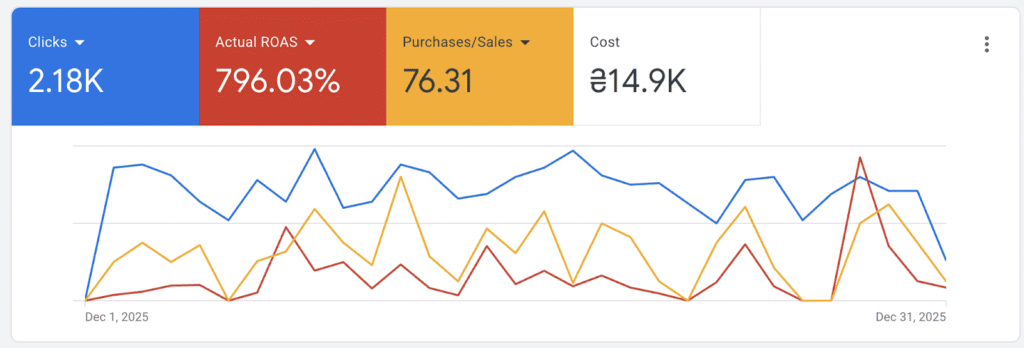
If the case study is for the Ukrainian market, confirm which currency should be used. Sometimes we make exceptions and show Ukrainian hryvnia, with the equivalent in U.S. dollars in parentheses based on the current exchange rate. The translated version should use the appropriate converted currency.
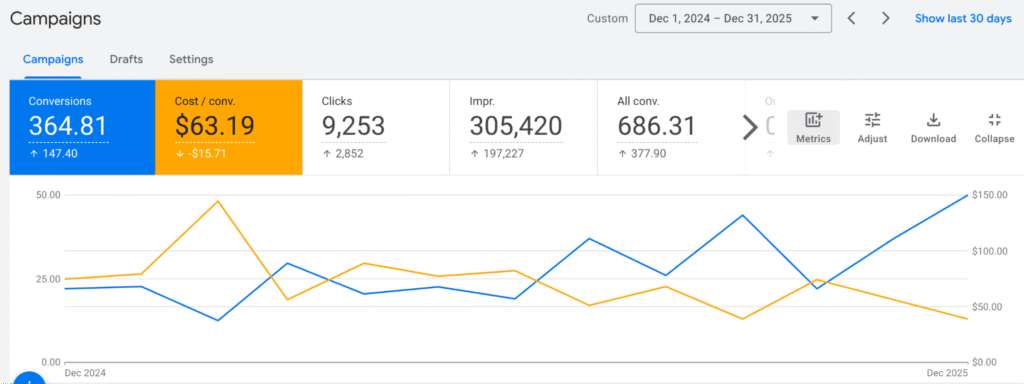
Charts in screenshots should go up, not down. End the reporting period at a peak whenever possible so the chart does not create the impression that everything collapsed after a certain date. Analytics systems often treat the current month as complete even when it is not, which can create an ugly drop at the end of the chart.
Results and Geography Table
The case study genre is about showing off, and nothing proves that the bragging is justified better than numbers. So show the results immediately after the introduction. For convenience, put the key client information into a table as well: service, industry, and target geography. If the location is narrow and specific, write something like United States, Florida or Ukraine, Odesa. If the targeting area is broad—more than three states or regions—use only the country.
| Google Ads | Essential Oil Manufacturing | Ukraine |
| Service | Industry | Target Region |
Limit the results section to three columns.
| Results | ||
| +10% | +1000% | +1000% |
| Budget | ROAS | Transactions |
For ecommerce, always include at least two numbers: how ROAS increased and how revenue increased. Optionally, include how customer acquisition cost decreased—traffic, ROAS, transactions.
Always use the word lead in case studies. Do not use wording that may become “application” in English translation when you actually mean a sales lead.
| Results | ||
| +10% | +100% | +1000% |
| Budget | Number of Leads | CPL |
For services, show how the number of leads increased and how cost per lead decreased. Optionally, include improvements in conversion to won deals or the number of closed deals—budget, leads, CPL.
Lead and Introduction
The case study preview is a short explanation of the problem, task, and result so the reader can quickly understand what the case is about. Although the introduction is designed to capture attention, many readers skip it and go directly to the results table, the paragraph with the outcomes, or even the conclusions. That is simply part of how case studies are read.
“The lead must be clear and easy to understand. While reading it, the reader should ask only one question: do I want to read this article? The answer will almost certainly be ‘no’ if the lead is ambiguous. It is also important not to overload it with unnecessary information—extra details, exact job titles, or anything else that can wait until the second paragraph or later”—Read a short summary of David Randall’s book for examples of effective leads. Mix different lead techniques so your case studies do not feel formulaic from the first paragraph.
Effective Leads
- Narrative—used for chronological storytelling, especially when the process matters more than the event.
- Anecdote—illustrates the main theme through an episode or short story.
- Delayed drop—the climax comes later after several paragraphs of setup.
- One-punch lead—compresses the core idea into one powerful sentence. Requires talent and experience.
- Summary lead—works well for complex events by highlighting the key points.
- Explanatory lead—introduces a topic or person like a “poster” for the article.
- Shocking mystery lead—opens with an eccentric line designed to grab attention.
- “Imagine this”—pulls the reader into the situation and makes them feel involved.
- Detail lead—focuses on a seemingly minor but intriguing detail to encourage further reading.
Weak Leads
- Question—a risky opening because readers may answer it immediately and lose interest. Avoid obvious or predictable questions.
- Joke—a popular but unreliable way to attract attention through humor. The joke needs to be relevant and make the reader want to continue rather than feel secondhand embarrassment.
- Philosophical lead—frequently attempted and rarely successful. Usually a deep-sounding but generic statement.
- False premise—a statement introduced so it can later be disproved in the article. Use carefully.
- Historical lead—opens with a historical fact or background information. It needs to be genuinely interesting to hold attention.
- Riddle—usually ineffective because you start playing cat-and-mouse with the reader from the first sentence. Save it for another part of the article.
While the reader’s attention is still fresh, show your tables. We usually include two tables in case studies—one with business information and another with results.
Client and Key Problem Section
This section introduces the main character of the case study—the client. The reader may also be a potential client, so this section helps them put themselves in the client’s position and understand whether the challenges in the case resemble their own. It also builds trust: “Wow, they work with clients like this. Maybe they can do the same for me.”
What to Write About the Client
You do not need to include everything. Choose the most interesting information while giving readers enough context to recognize similarities with their own business.
- Company name—unless there is an NDA—and industry.
- Geography: where the business operates.
- Unique characteristics and specifics.
- Company scale—number of offices, warehouses, revenue, employees, years in business, and so on.
- Example of an overly broad description full of filler: The company manufactures premium women’s underwear. Dozens of highly skilled employees work on every set.
- Improved example: Our client’s company manufactures innovative women’s underwear made from modified bamboo fibers and has operated in the premium lingerie market for more than five years. Last year, the company generated $98 million in revenue and employed more than 100 specialists.
- Company mission—only if it is actually unique, clearly communicated on the client’s website, and adds useful information rather than filler.
Never write negatively about the client, even if they were rude, made the work unnecessarily difficult, or disappeared without paying. The last example might justify an anti-case study, but generally speaking, criticizing the client will say more about you than it does about them. Readers may assume you are difficult to work with and that you could write about them the same way later.
How to Frame the Problem, Task, or Challenge
This is the narrative section about the task—or problem—the client came to you with. Simple and clear problems that any business can face work best: previous contractors wasted the budget, the advertising account was suspended, website pages dropped out of the index or never made it into the index, ads kept getting disapproved because Google repeatedly classified them under medical categories where advertising is restricted or partially prohibited, and so on.
Explain how everything worked before, what ads were running, what the budget was, and how many leads and clicks there were if it is an advertising case study. If it is an SEO case study, describe the traffic and its sources and the most visited pages. You can show charts to make the problem easier for the reader to understand.
Do not forget that you should write only about difficulties that do not make your client look stupid, as if they clicked around on their own and then nothing worked. For example, you should not write this: the client tried to set up advertising campaigns on their own, but it did not work very well, so they came to us because otherwise they would not have been able to handle it. Make sure the description of the task does not turn into criticism of the client. The client should always be presented only in a positive light. If they handled marketing themselves and did it poorly, keep it to a neutral statement that the client had been managing marketing independently but wanted to scale advertising, so they turned to specialists.
Build intrigue for the reader—write that things were not working well so you can later show what heroes you and the team were—you saved everything and improved it. Do not forget that the case study genre is about showing off. Explain why the client chose you to do the work. Describe the tasks as large-scale and complex, and explain that from the start you knew you could complete them and within what timeframe—something that takes others six months can be done by you in three months or even within the first month because you have the technology, experience, and team to do it. If there were no difficulties, do not invent problems that did not exist. Focus instead on the goals that needed to be achieved.
Even though the case study genre involves showing off, do not slip into forcing opinions or making generalizations.
- Forcing an opinion. This is a very difficult case study. We did a massive amount of work.
- Professional hints. The client changed two agencies and a freelance contractor but still did not get consistent results. We conducted an audit, created 20 additional landing pages, and distributed 300 press releases, more than 50% of which were published at no cost.
The logical continuation of the problem section is the goals and tasks that need to be addressed and the results the client wanted to achieve.
Key Takeaways and Expert Quotes
Key takeaways are the most important and interesting points in the text. They help hold the reader’s attention by emphasizing highlighted content. A key takeaway should be short—up to 5–10 lines.
If several employees worked on the project, ask them to provide comments—this will make the case study more engaging and substantial. You can also request comments from the client through the account manager if you first get approval from management and the project is not under an NDA. Ask 1–2 specialists and the project manager to provide comments, and also record a comment from the CEO.
If one of your colleagues is late with a comment for your case study—and you have already reminded them—but the case study needs to be approved for publication, do not delay or wait. As a last resort, the case study can be updated with the comment after it has been published.
Ask your colleague for a comment in a way that makes it easy for them to provide it: include a link to the project in the task manager, possibly links to audits, and a link to the relevant chat message—do everything so your colleague does not have to spend extra time on research or remembering the details.
An expert comment for a case study is something fundamentally new that adds to the case study: a new number, an approach that was not described, an insight, or a pain point experienced by the specialist who worked on the project. Vague information that could fit any case study and contains nothing useful specifically for this case study is not a comment, nor is information that relates directly to Google Ads in general rather than to the specific project. It is better to write one paragraph specifically about the project than three paragraphs filled with fluff.
| Not Good | Good Comment | Why |
|---|---|---|
| Google Ads recommendations can be considered universal because they are developed for millions of accounts at the same time. Therefore, they often cannot take into account all the specifics, pitfalls, and nuances of individual businesses. And what worked for one advertiser may work completely differently for you. For example, Google may recommend increasing campaign budgets, but it does not take into account the margins of the products you sell, business seasonality, lead quality, and other KPIs that are important to you. That is why our team strictly follows the rule “trust, but verify.” This is what the expert approach is built on—not ignoring recommendations, but deeply analyzing each one. We treat them as hypotheses that should be carefully researched and tested before putting them into practice. | Marketing Link has expertise in Home Improvements across more than 58 projects, which allows us to implement better strategies right away without spending a significant advertising budget and, most importantly—time—on testing. In this case, both priorities and the purchasing power of the target audience changed during the course of the partnership, especially in 2025, when strategies that worked in 2024 stopped working. We shifted our focus from overheated roofing leads and placed greater emphasis on restoration, because if a house is flooded or burned, the full range of services is needed there—from basements and walls to the roof and exterior. In remodeling, the team and I significantly changed the strategy, focusing nice-to-have home improvements on higher-income ZIP codes, and we also separately took into account the correlation that the ZIP code where a lead comes from during business hours is not equal to the ZIP code where the property is located. | The first comment is too broad and does not relate directly to the case study. If this were an article about Google Ads recommendations, it might fit there, but this is a marketing case study. An expert is someone who contributes something fundamentally new through their comment. The second comment is expert-level: you immediately see numbers, and those numbers are new to the case study. It is not a retelling of existing information—it is a fundamental addition to the case study with a new, fresh perspective and the pain points and positive experiences encountered by the specialist who worked on the project. |
| If you use one Performance Max campaign for the entire assortment, then after it accumulates enough data, analyze the results by product category. Categories that generated the most sales or have the best ROAS can be moved into separate campaigns and scaled. It is also important to regularly review how the budget is distributed between campaigns. If you see that one campaign consistently performs better, part of the budget can be shifted toward it while reducing spending on less effective areas. For seasonal products, we recommend launching ads before the season starts. This gives Performance Max campaigns time to learn and accumulate data so that when demand increases, they are already working as effectively as possible. | Based on my experience working with sex shops, I have drawn several conclusions. When adding products to Merchant Center, before approving them, Google scans the entire website, so you can get blocked for explicit content—therefore, pay attention to the images and make sure they are appropriate. Not all sex shop products pass moderation, but if the store specializes in shampoos and lubricants, there are usually no problems with such products. However, lubricants and cosmetics have low margins, so it is usually not profitable for clients to advertise these products. The client should understand the risks of being blocked when they want to advertise in Shopping results and should have a separate website or landing page that displays, for example, only lubricants or only cosmetics, without the rest of the products. | The first comment repeats the same problem: it does not relate directly to the case study. It could perhaps be a comment for an article about Performance Max. But it does not add new information to the case study—there are no numbers, no facts, no pain points or positive experiences, no insights. A good comment does not necessarily have to contain all of these points, but it should contain at least something from them. The second comment, although it does not contain specific numbers, relates directly to the case study and to an industry that is difficult to advertise. It contains insights, advice, and pain points—it is a warning comment, but specifically for a particular industry rather than something vague. |
Message Template for Asking a Colleague for a Comment
Hi, I’d really like to ask for your help, specifically to act as an expert for my case study on [Project Name]. This is an anonymous case study, and we only mention the industry).
I collected your messages from the chats to make it easier for you and so you would not have to spend time remembering the key points: [link to the task in the task manager]—task in the task manager
The comment should be short. There are several examples of expert comments in this case study that you can use as a reference: https://marketing.link/cases/increased-leads-for-a-california-medical-clinic-by-91-a-google-ads-case-study/
The comment will strengthen the case study with expertise, and since we worked on the project together, this is also our shared case study.
My case study is here: [link to the document]. I have already granted access. Please insert your comment after the Conclusions section.
The deadline is Wednesday, August 13, please, so we can publish it by the end of the week 🙂
Results
The results should exceed expectations. Write about this if the results truly went beyond the norm for the industry or the budget for such a client—in other words, if the results were above average compared with similar projects. If the results are closer to average, write that we assessed the situation correctly and were not mistaken, and that we have stable processes that consistently scale and can be forecasted well.
Readers are most interested in money. For example, because of our work, the client earns $5 million more per month, but this is always a trap. That is because we do not have access to the client’s bank accounts, and it is also almost never possible to publish such information openly. So you can show relative results: the number of transactions increased by 140%, profit doubled, and so on. Or if there was no advertising at all and the team set it up, everyone understands that leads will increase. But writing about how we created the strategy, how what we planned actually worked out, and how the growth of your metric was sustainable—that is what is really great.
If you are still working on the project, then the results will be interim results. For example, you have been optimizing the client’s account from 2023 to the present. Write that the number of leads increased by 230% and continues to grow. Clarify that you are continuing to work on the project and briefly describe future plans—the client is satisfied with the services and continues the partnership.
Do not include too many results at once because too many tables and numbers scatter attention—focus on the most important ones, then the result will be easier to remember and the case study will be easier to understand: we did this and this, and got this result—simple and transparent. Save the full list of achievements for the client report, and for your case study use the template provided in the “Case Study Outline” section.
Conclusions
The conclusions should summarize the content of the case study and at the same time can be a creative section. You can tell the reader about the next steps for solving the client’s tasks, explain how the reader can use your experience, and what lessons you personally learned from the project. Do not write long conclusions—two paragraphs are completely enough. Finish the case study with advice and a call to action—a marketing audit for the reader’s business if they want similar or better results.
Heading Structure
Follow the outline template from the “Case Study Outline” section below. Even if you have never written case studies before, by copying this outline, the case study will be complete and well structured. Start with the marketing audit and strategy, then write about analytics setup and move on to the work process. Depending on the type of case study, choose the SEO or paid advertising template. Finish with conclusions and expert comments.
Case Study Outline
This is a condensed version of the case study structure section you read above. The outline provided here repeats some information and is designed as a cheat sheet—for convenience.
- First paragraph—write the key numbers and the pain, sweat, tears, luck, selling your soul, and everything else it took to achieve them.
- Table with geography, industry, and service.
- Results table for ecommerce or services if the case study is about advertising.
- For ecommerce, there should always be at least 2 numbers, preferably three—traffic, ROAS, transactions, optionally: how customer acquisition cost decreased.
- For services—budget, number of leads, CPL, optionally: how conversion to won deal improved or how the number of won deals increased.
- Client. Describe the client’s business so readers can recognize their own business in the description as well.
- industry;
- how many years they have been in the market;
- when they contacted us and with what request;
- whether the client had contractors for this service before us or any other experience;
- what we offered the client: which service, what budget, what we wanted to focus on, why we proposed exactly that;
- goals (Challenge) and tasks (1–3 each);
- optionally: the client’s competitors, anything that may be useful to others, for example, if the CMS matters or if this is an industry that is difficult to promote—medical, adult, etc.
The structure that follows depends on the type of case study. Choose yours.
PPC, Paid Search, and Paid Social
- Marketing Audit and Strategy. Start with the initial audit and assessment of the challenges—how the partnership began, and immediately include a sentence about whether the goal was achieved and whether the client’s priorities may have changed over the years of working together. Write what we found in the initial audit. Open the audit that you or your colleagues completed at the beginning of the work—it lists all the shortcomings found on the project, forecasts, and the strategy for the first few months. Be sure to write about the great audits we conduct before starting a partnership and that they cost clients nothing because, in addition to providing services, we also help develop the market and provide consulting. Indicate what mistakes previous contractors made. Or, conversely, if we were the first, explain whether we launched the client into the market or perhaps set everything up from scratch: analytics, Search Console, advertising account, and so on.
If we created the account for the client from scratch, then name the case study section not “Marketing Audit” but “Marketing Strategy” and describe what strategy was selected at the start.
If several audits were conducted, or example, CRO and usability, then divide this section into two or three parts and briefly describe each audit.
- Analytics. We set up turnkey analytics for all clients. Describe exactly how analytics was set up for this client so readers are practically itching to submit a lead to us and competitors are kicking themselves because they also want to learn how to do this. Describe what was checked at the start, what was fixed, and what was set up from scratch.
- Account optimization—briefly describe what was achieved. The content will depend on the specifics of working with the client: a new brand on the market that you were launching, an established brand with a large budget, or perhaps a startup—the plan for this entire section depends on that.
- How the brand was launched, why these specific campaigns were set up, why this particular optimization strategy was needed, and so on.
- Which campaigns worked best.
- Why ongoing optimization is needed—what was set up and what solutions were implemented.
- Optimization specifics: signals, strategies such as advertising on competitors, budget adjustments, splitting PMax by product categories, and so on. Here it is important to emphasize the systematic nature of our work: after every change or new campaign, we check performance and test hypotheses.
- Top and bottom of the funnel—show this with a screenshot.
- Keyword collection strategy and a screenshot showing which keyword has a high cost.
- Add 2–3 screenshots showing improvements.
- Ongoing optimization. Write a list of the work we perform for the client on an ongoing basis.
- Challenges we encountered. For example, a lot of irrelevant search queries, invalid leads, seasonality, and so on, and how these problems were solved. Do not forget not to make the client look stupid, even if they made things difficult for us or clicked around in the account themselves—do not write about that, or frame the story so that we provide detailed consulting and handle all client requests with a professional approach.
- Results. Write how we managed to achieve what was planned, or perhaps even exceeded it. Do not be afraid to brag because a case study is exactly that kind of genre, and it requires the author to brag and be proud of themselves. Add a screenshot you are proud of from analytics or the ad account to support the numbers.
Format the results in a table like the example below.
| Before | Month X | Growth | |
| Clicks | 1087 | 2692 | +147% |
| ROAS | 48% | 767% | +1497% |
| Transactions | 2 | 90 | +4300% (44 times more!) |
- Conclusions. Write short conclusions—how the industry affects the result, what valuable insight can be taken from the case study, and how this affected the development of the client’s business. Conclusions can be creative, but keep them short—two paragraphs are enough.
- Expert comments from those involved in the process. Read more in the “Key Takeaways and Expert Quotes” section of this article.
SEO
- Marketing Audit and Strategy. Initial analysis and strategy: which region (geo) was selected, how competitors’ backlink profiles were analyzed. How competitors’ content was evaluated. Example of SEO case studies.
- Analytics: see the advertising section above, it is the same.
- On-page SEO. Write what principle was used to select content for pages and how the key pages were identified. How semantics were selected. How competitors’ semantics were analyzed. Add screenshots of competitor analysis from the file structure, screenshots of traffic growth or any other growth. Explain how the file structure was created and what it is.
- Off-page SEO. How backlinks were selected, what principle was used to choose websites, how many backlinks were acquired.
- Technical SEO: what platform the client uses and what it allows, provide a list of fixed errors, add screenshots of the technical audit.
- Challenges encountered. If there were any on the project, write about them, but for SEO this is not mandatory because they can be described in the relevant sections—on-page, off-page, and technical SEO.
- Results. Write how traffic increased, backlinks grew, and AI mentions increased. Add screenshots.
Format the results in a table and choose what actually improved.
| Before | Month X | Growth | |
| SEO YoY | 1087 | 2692 | +147% |
| AI Overview | 45 | 566 | +1497% |
| Transactions | 2 | 90 | +4300% (44 times more!) |
- Conclusions. Write short conclusions—how the industry affects the result, what valuable insight can be taken from the case study, and how this affected the development of the client’s business. Conclusions can be creative, but keep them short—two paragraphs are enough.
- Expert comments from those involved in the process. Read more in the “Key Takeaways and Expert Quotes” section of this article.
Case Study Preparation Checklist
- Choose a project and get it approved by management. After that, let your colleagues know that you selected this project so they do not suddenly decide to do the same thing. In other words: reserve it for yourself.
- Review the tasks in the task manager to build a complete picture of the project. Add links to the tasks in the case study draft—you will return to them while writing. There is no need to copy all tasks, only the most interesting ones. Later, remove them from your file before publication.
- Create a file in your folder with editing access for colleagues.
- Approve the main screenshot and the results table. Copy the outline template from this article and adapt it to your case study. The case study should start with what you are going to brag about: the key numbers. The first paragraph should contain the key information: look at how great we are and what we can do. All the following sections are essentially the story of what you and the team did to achieve the great results you wrote about in the first sentences.
- Write the section about the client, audit, and beginning—approve it with the editorial team or management—it is better to identify mistakes at the beginning and fix them than to rewrite everything from scratch later.
- Finish the rest of the case study. A tip for the introduction—you can write it last, which will be easier if introductions are difficult for you. Select screenshots and describe interim results in a table if relevant.
- Get comments from colleagues.
- Submit the case study for publication.
You Wrote the Case Study—What’s Next?
A case study for the blog is only the first stage. It can be published on external platforms. Adapt it for publication and briefly explain what the company does in general. The local audience may know nothing about you, so you need to introduce yourself. And be sure to add a link to the website or contact information so interested readers can contact you.
Types of Case Studies
A case study can be presented not only as a website page. You can create many different pieces of content from one piece of material, just as you can make several different dishes from one product. Imagine you have a bucket of peaches. You can make jam, or you can make several dozen other dishes from the same ingredients: jam, compote, sorbet, lemonade, smoothies, candied fruit, or even bake them with meat or make a charlotte. Your case study works the same way—it is a canvas for creativity.
- Long-form content—for a blog page.
- Lead magnet: a separate landing page—for promotion through advertising and SEO.
- Carousel or series of posts—for LinkedIn, Instagram, Facebook.
- Short notes—for social media, messengers, email newsletters.
- A separate case study slide—for a sales deck, pitch deck, or proposal.
- Guest article, PR material: a shortened or adapted case study—for publication on professional platforms, partner websites, and so on.
- Material for an award submission—many professional awards require the structure of a classic case study.
- PDF file uploaded to the website—for sending through email, social media, and messengers.
- Presentation, speech, report—for presentations, speaking engagements, social media.
- Infographic: charts and tables—for a proposal, portfolio, Upwork, Clutch, agency profile: a shortened version for a specific platform.
- Long video, webinar—for a YouTube channel.
- Short video—Shorts, Reels, TikTok videos.
- Animated infographic—case study numbers and charts in short video format.
- Audio case study.
Frequently Asked Questions
Case studies are written for several reasons at once: the team demonstrates expertise and the ability to achieve predictable results—this increases value in the eyes of potential clients, helps sell services at a higher price, and increases loyalty among existing clients. And all of this together works as a powerful marketing tool.
When you or the team did something unique—a strategy, implementation of an advertising campaign, achieved outstanding results, or all of the above—and something difficult for ordinary people to understand—increased sales, saved money, improved conversion, and so on. Or, conversely, made a mistake or tested a hypothesis that did not work and documented the results to help colleagues.
There is also the process case study genre, when the result cannot be expressed in numbers. For example, CRM setup or a technical audit—such case studies are called process case studies, where you are essentially describing not the result but the process. Here you can go into detail about challenges and provide a detailed description of the steps—this will help fellow marketers reproduce your case study and help clients understand how professional you are and how complex the work you do is. But even in such a case study, there should be conclusions about what existed before and what changed afterward. So there will still be numbers. There will also be a list of results. Add how much time the work took. Explain how this can and should be implemented in other businesses because this is not one-time work, but an entire process.
You should not write case studies for a typical project. For example, you conducted an audit—this is mostly a standard task that at most could become an article. However, if this is an unusual audit for your company and the client’s industry, you can write a case study—it will be a process case study, which was discussed in the previous question. You also should not write a case study if you cannot confirm its results—screenshots from analytics, client feedback, the business has closed, and so on.
Anti-case studies are creative genres. They do not need to be formatted like regular case studies. Almost all anti-case studies are anonymous, without identifying the client. The author of this article likes anti-case studies in the investigative genre, but they can also be presented as successful testing of a hypothesis that did not work out. In other words, the test was conducted professionally, the budget was used as intended, the campaigns were set up perfectly, but it simply did not work—and you understand why. For example, such a service or product may be too difficult for the market, or competitors may have entered the market during the launch who were willing to provide or sell something below market price. The main message of anti-case studies is that you describe how you understood the reason for the failure and why this could theoretically happen to your readers’ businesses. An anti-case study is a warning case study.
Examples of Anti-Case Studies
What Happens If You Accept All Google Ads Recommendations in the Account: A Client Experiment
This can happen: seasonality, experiments or hypothesis testing, launching new products. So there are two options: first, look in the account at the metrics that increased and build the case study around them, or choose a specific calendar period when no active changes were made and new products were not added. Another option is to wait until the metrics return to normal and work on another project in the meantime.
For case studies, the recommended length is at least 5,000 characters, but you should not make them too long either—they will be inconvenient and time-consuming to read. Shorten the strategy into a convenient list, keep only the important and interesting details, and focus on the results.
Usually, a case study takes no more than one working day. Break these hours into stages. For example, spend 1 hour gathering information: reading tasks in the task manager and previous audits. During the second hour, take screenshots from analytics and the advertising account. Then create the outline, write the first part, get it approved, and so on. You do not have to write the entire case study in one day, but plan your time so you can complete each stage. For example, if you allocate one hour for research, do not split this task into 2–3 stages, because you will spend twice or even three times as much time.
After 3–5 case studies, it will become clearer how to distribute your time more conveniently, and writing will no longer take as long. The first case study may be harder for you, but over time this task will become easier.
-
Tags
