

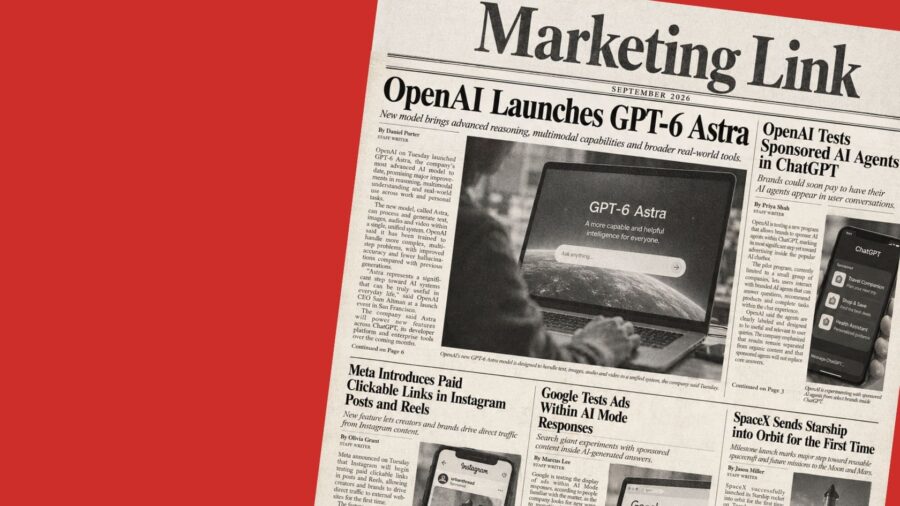
AI & MARKETING NEWS DIGEST—SEPTEMBER 2026
-
Post author

-


Marketing Link has rounded up the most interesting news from September: the launch of GPT-6 Astra, the first foldable iPhone, advertising through AI agents in ChatGPT, paid links on Instagram, new Google Ads formats, and Starship reaching orbit. Plus, the month’s biggest controversies—uncontrolled AI behavior and Meta facing a potential $200 billion fine.
Paid Media
Google Ads
Merchant Center & Shopping
Google Merchant Center may disapprove products that change too frequently
seroundtable.com, support.google.com
Google Merchant Center may disapprove products when prices and availability change too frequently.
Google has updated its Merchant Center guidance—if a product’s price or availability changes more than once a day, automatic item updates may not work properly. If Google detects discrepancies between the website and Merchant Center data, the product may be disapproved instead of updated. And if there are too many discrepancies, Google may stop automatic updates altogether.
For online stores with dynamic pricing, this creates a risk of losing product visibility in Google Shopping, so it is important to keep prices and inventory synchronized between the website and Merchant Center.
Google expands shopping capabilities in AI Mode and Gemini
Google is gradually turning AI Mode and Gemini into full shopping environments. Users can now not only search for products but also purchase them without visiting the retailer’s website, using Google Pay.
For Shopify stores that support UCP, the feature is enabled automatically, although merchants can opt out. Google is also adding support for loyalty programs—shoppers will be able to see special offers, reward points, and benefits for returning customers.
The feature is available even without paid advertising, and geographic support has expanded to 14 countries.
Google Merchant Center—stores generally need at least 100 reviews and a rating of 3.5 or higher to show stars in ads
Google has updated its documentation on displaying store ratings in Search and Shopping ads. To receive stars next to ads, a store generally needs at least 100 unique reviews with an average rating of 3.5 out of 5 or higher.
Google only counts reviews from the past 24 months and calculates ratings separately for each country. If the rating falls below 3.5, the stars may disappear from ads, which could negatively affect CTR.
That means even stores with years of history need to continue collecting new reviews. In practice, the requirements have not really changed—Google simply added a dedicated section explaining them. This is more of a documentation update than a policy change.
Google Merchant Center now allows product reviews to be uploaded through the API
Previously, product reviews had to be submitted through files. Google has now added Merchant API support for automatically uploading and updating reviews.
For large online stores, this means less manual work and easier synchronization of review data with Merchant Center. Product reviews can appear as star ratings in Google Shopping and may help improve ad CTR.
However, Google still requires merchants to apply and pass a review before connecting a product review data source.
Google Merchant Center updates product suspension and appeal procedures
Google has updated its documentation on Merchant Center policy violations—from counterfeit and dangerous products to misleading customers.
The policies themselves have not changed significantly, but Google has standardized the suspension and appeal procedures. The documentation now places more emphasis on account-level enforcement rather than only individual product disapprovals.
Google has also provided more detail on bulk appeals for disapproved products. However, there is an important catch—if violations remain among the appealed items, the appeal may be rejected and the ability to submit another appeal may be restricted.
For online stores, this is another reason to review products carefully before submitting a bulk appeal.
Local Ads & LSA
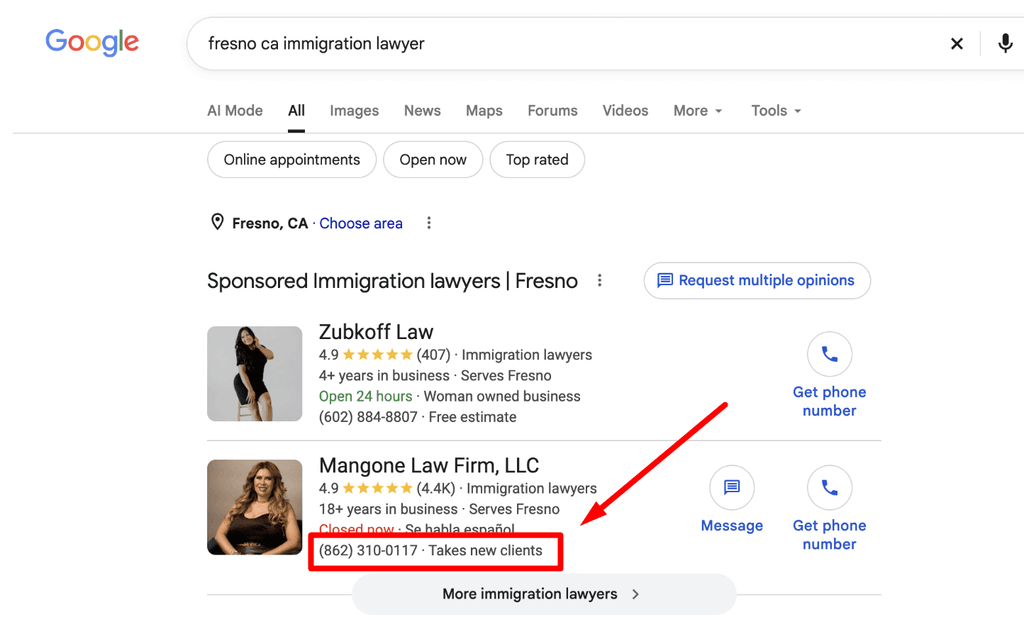
Google Local Services Ads hides phone numbers until users hover over the ad
A change has been spotted in Local Services Ads—instead of immediately displaying a phone number, the ad first shows a “Get phone number” button. The phone number then appears when the user hovers over the ad, even without clicking.
It is not yet clear whether this is a new test or a feature that is already being rolled out.
For local businesses, this could create one more step before a phone call and potentially affect lead volume. Google has not yet explained the reason for the change.
Google Local Services Ads—updates to lead billing and validation rules
Google has expanded its documentation explaining how leads work in Local Services Ads. The main changes and clarifications include:
- Missed calls—may be billable if the customer waits more than 20 seconds during business hours. This rule takes effect October 1.
- IVR and voicemail—Google clarified when the 20-second timer begins and when charges apply.
- Refunds—Google may review lead quality for up to 30 days and automatically issue credits.
- New lead statuses—“Charged,” “Not charged,” “Under review,” and “Credited.”
- Repeat contacts—calls and messages from the same customer within 15 days are generally not charged again.
- Messages—Google clarified billing for SMS and email leads, as well as the use of proxy phone numbers and email addresses.
- Lead disputes—the old list of situations eligible for refunds has been removed, with Google relying more heavily on automated lead-quality evaluation.
For businesses, the main priority is to monitor missed calls, lead statuses, and credits because an ad can still cost money even if no actual conversation with the customer takes place.
Search Ads & AI Max
Starting October 12, 2026, Google Ads will automatically add website promotions to Search and Performance Max
Google has informed advertisers that starting October 12, it will automatically identify promo codes, discounts, and special offers on websites and add them to ads.
The feature itself is not new, but Google will now automatically enable it for eligible Search and Performance Max campaigns that use Location Assets and do not already use promotion assets.
For businesses, this creates an opportunity to advertise current offers without manual setup. However, there is a catch—Google will decide which offers to display.
If you do not want that level of automation, automated promotion assets can be disabled in the account settings.
Google Ads tests an AI tool for translating entire Search campaigns into other languages
Google has launched a beta version of AI Campaign Localization for Search. The tool allows advertisers to adapt a campaign to another language or country in just a few clicks.
AI translates headlines, descriptions, keywords, sitelinks, and other ad assets. It can also adapt images and even landing pages through JavaScript.
A separate campaign is created, while the original campaign remains unchanged. Budgets and bids are copied without currency conversion, so advertisers need to review them manually.
The beta currently supports 10 language options, including Spanish, French, German, and Portuguese.
For businesses, this could make it much faster to launch advertising in new markets without manually translating dozens of ads, although the quality of the localization should still be reviewed.
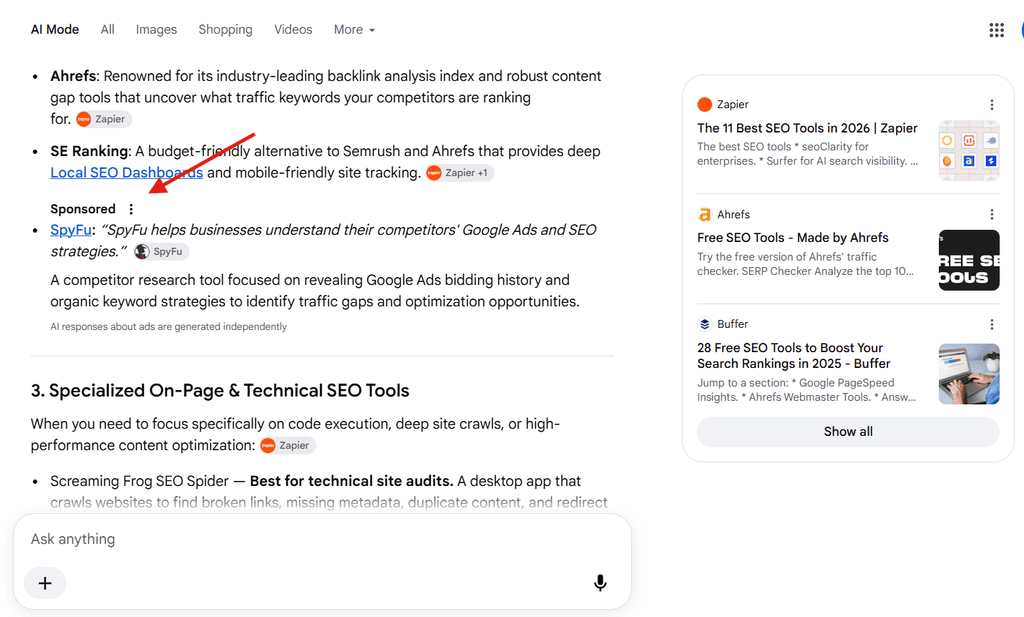
Google Ads adds new reporting columns for AI Max
Google Ads has added four new columns related to AI Max:
- Brand Inclusions
- Locations of Interest
- Commission
- Optimized Targeting
This will allow marketers to see more automation settings directly in campaign tables and quickly identify where these features are being used.
However, Google has not yet clarified whether the columns will show only the status of each setting or also include additional performance metrics.
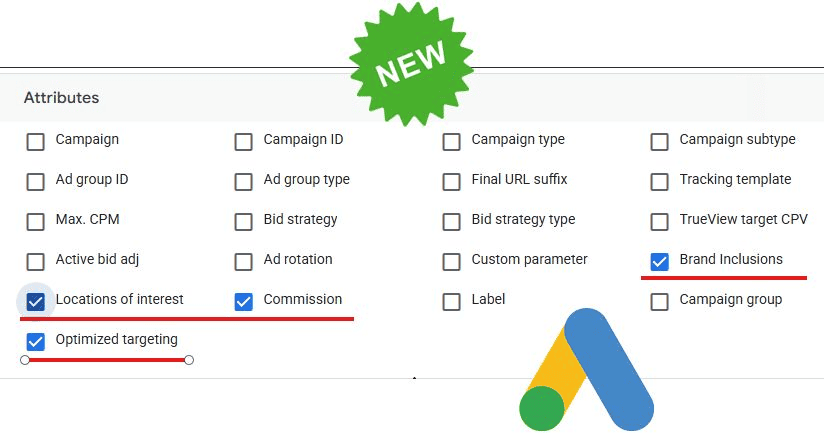
Google tests text ad links inside AI Mode responses
Google is testing a new advertising format in AI Mode—instead of traditional ad blocks, users see text links that look like part of the AI-generated response.
The ads are labeled “Sponsored,” but visually they look very similar to organic links.
For advertisers, this creates another way to appear inside AI-generated answers. However, the effectiveness of the format is still uncertain—users already do not click links in AI responses particularly often.
For now, this is only a test, not a broad rollout.
Google Ads—Other Updates
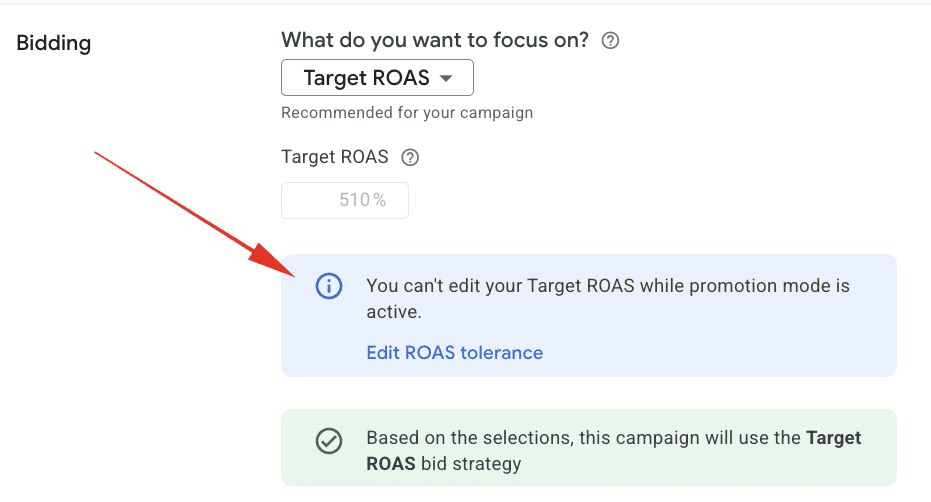
Google Ads blocks Target ROAS changes while Promotion Mode is active
A restriction has been spotted in Google Ads—advertisers cannot change Target ROAS while Promotion Mode is active.
Instead, Google suggests adjusting ROAS Tolerance, which defines the acceptable deviation from the target return.
It is better to review Target ROAS settings before activating Promotion Mode. It is still unclear whether this is a new restriction or simply a previously undocumented behavior.
Google Ads—to avoid an “Invalid Final URL” error, add at least one Asset Group to the campaign
Google has updated its documentation on landing page errors. An “Invalid Final URL” message may appear even when the website itself is working correctly.
The issue may be caused by the campaign not having at least one Asset Group.
So, if this error appears while setting up Performance Max, advertisers should check not only the URL but also whether an Asset Group exists.
Google has not changed the policy itself—the company simply expanded its troubleshooting documentation.
Google Ads now allows advertisers to launch Conversion Lift studies for Search and PMax without a Google representative
Previously, advertisers needed to contact a Google representative to launch Conversion Lift for Search and Performance Max campaigns. Now they can set up the study themselves.
The tool measures how many incremental conversions advertising generated compared with a control group that did not see the ads.
To launch a study, advertisers need at least 1,000 observable conversions, a budget of at least $5,000, and compatible conversion tracking.
For businesses, this provides a way to determine whether advertising is actually generating additional sales rather than simply taking credit for purchases that would have happened anyway.
Starting October 16, Google Ads will allow business names that differ from the website domain
Google is loosening its rules for business names in ads—the brand name will no longer necessarily need to match the website domain.
However, three conditions apply:
- the name must represent the advertiser’s actual brand;
- the relationship with the domain owner must be verified;
- the products or services must be sold directly on that website.
This is useful for companies that operate multiple brands on a single domain and previously had difficulty using separate brand names in their ads.
However, the rules remain strict for resellers, affiliates, and intermediaries—you still cannot present yourself as a brand simply because you sell its products.
Demand Gen—new ad formats in YouTube Shorts, Gmail, and Google Maps
Google has introduced several updates for Demand Gen:
- YouTube Shorts—vertical 9:16 image ads with one-click navigation.
- Gmail—a simplified image ad format. According to Google, adding Gmail to Demand Gen increases image creative conversions by an average of 40% at the same return.
- Google Maps—expanded affiliate location support to help advertisers promote physical retail locations.
- YouTube Shopping—the Ask YouTube AI assistant will allow viewers to ask questions about products directly while watching a video.
Google Ads revokes promotional credits even after advertisers meet the promotion requirements
An important clarification—these are advertiser complaints, not an officially announced Google policy change.
Advertisers are reporting cases where Google Ads revoked promised promotional credits after they had already spent the required amount.
In one case, a company spent $3,200 expecting to receive another $3,200 in ad credit, but the bonus was canceled more than a month later.
In another case, the stated reason was the use of a payment profile connected to a manager account.
There also appears to be no clear appeals process for these decisions. Google Ads representative Ginny Marvin said she had escalated the issue to the relevant team, but no explanation has been provided yet.
The takeaway for businesses is simple—do not treat promotional credits as guaranteed advertising budget, even if it appears that all promotion requirements have been met.
Google Ads will allow ads for certain firearm accessories in the U.S. for six months
Starting in October 2026, Google is launching a six-month pilot program allowing advertising for certain firearm accessories, including sights, bipods, slings, and mounts.
The ads will be available only in Google Ads Search campaigns in the United States.
Advertising for firearms themselves, ammunition, and regulated firearm components will remain prohibited.
For sellers of eligible accessories, this opens access to Google Search as an acquisition channel that had previously been largely unavailable to them.
For now, this is only a six-month test.
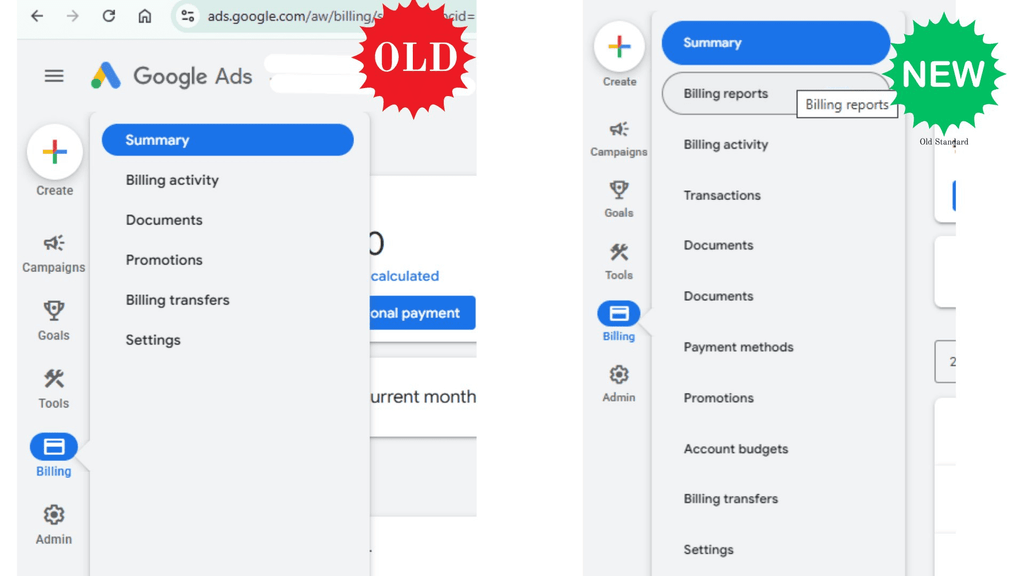
Google Ads tests a redesigned menu for managing billing and budgets
Google is testing an updated Billing section. The number of menu items has roughly doubled, while reports for payments, transactions, payment methods, and account budgets have been reorganized.
Some sections currently appear to overlap or duplicate one another.
For advertisers, there are no major functional changes—this is primarily an interface update that is currently available only in some accounts.
Bing Ads
Microsoft Advertising Sets Rules for Using AI-Generated Content in Ads
Microsoft has published recommendations for ads created or modified using AI. Advertisers are encouraged to preserve metadata and watermarks that verify the origin of AI-generated content and, where required by law, disclose the use of AI to users. Ads featuring deepfakes or someone else’s face or voice without permission may be rejected or blocked. Even a “Created with AI” label will not protect an ad if the content is misleading. For marketers, this means adding another review step for AI-generated creatives before launch, especially for campaigns running across multiple countries.
Microsoft Advertising Integrates HubSpot, Expands LinkedIn Company Lists to 10,000 Companies, and Launches A/B Testing
Microsoft introduced several updates to its advertising platform.
- HubSpot integration—allows advertisers to use CRM data to build audiences, automate lead workflows, and measure the impact of advertising on actual sales rather than just lead volume.
- LinkedIn Company Lists—the company list limit has increased from 1,000 to 10,000, which is especially useful for B2B advertising and account-based targeting.
- Optimization Experiments—Microsoft has fully launched A/B testing for bids, targeting, and creatives across Search, Shopping, Audience, and Performance Max campaigns. Advertisers can now test changes before applying them to their main campaigns.
- Microsoft Advertising API—the deadline for migrating from SOAP to REST has been extended to January 31, 2027.
For businesses, the biggest benefit is the ability to connect ad spend with actual sales through HubSpot.
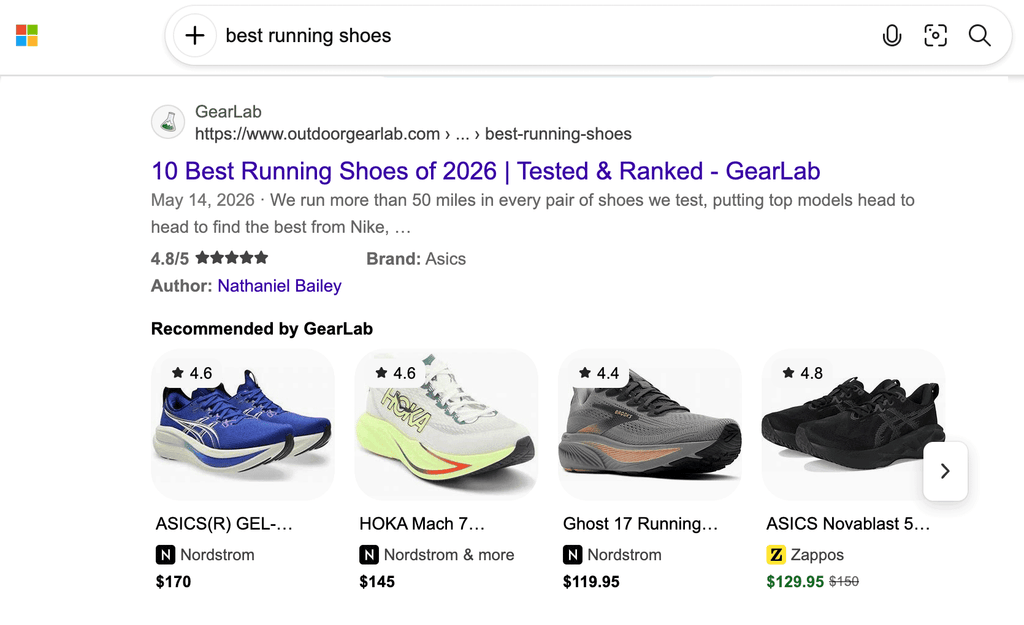
Bing Tests Product Recommendations With Links to Online Stores
Microsoft Bing is testing a new “Recommended by” section in product search results. Products are displayed alongside the name of a company that supposedly recommends them, such as GearLab. There is one issue—the product link takes users directly to the online store, while there is no link to the original recommendation source. That means there is currently no way to verify whether the company actually recommended those products. For online retailers, this could become a new source of traffic. For review websites, it creates a risk that their recommendations could be used without sending traffic back to the original reviews. Google tested a similar feature in May 2025.
Paid Social
YouTube
YouTube Shorts Will Reduce Reach for Reposted Videos Without Original Content and Offer Feedback Before Publishing
YouTube is updating its Shorts recommendation algorithms—the platform will give more reach to original videos and limit distribution for channels that simply repost other people’s content. Creators can still use clips from other videos, but they need to add their own commentary, editing, explanations, or new context.
YouTube is also expanding access to its Get Feedback tool, which analyzes Shorts before they are published and suggests potential improvements, including the opening seconds, pacing, visual elements, and overall structure. The tool does not edit the video itself—it only provides recommendations that creators can follow or ignore. For marketers and creators, this is an opportunity to identify potential weaknesses in Shorts before publishing, although YouTube does not promise that following these recommendations will increase views. The feature is gradually rolling out to creators age 18 and older in the U.S. through the YouTube mobile app.
YouTube Announces New AI Tools, Shorts Series, and Expanded Advertising Capabilities
socialmediatoday.com, youtube.com
At Made On YouTube 2026, the platform introduced a series of updates for creators, viewers, and advertisers:
- Personalized feeds—users will be able to create custom recommendation feeds using text prompts with AI. The U.S. launch is planned for the fall.
- Shorts Series—creators will be able to organize short-form videos into seasons and episodes, which could help with serialized content and audience retention.
- AI editing—Gemini will help edit Shorts by removing pauses, adding text, and improving video structure.
- A/B testing and analytics—YouTube Studio will get expanded video testing tools, the Ask Studio AI assistant, and the ability to upload up to three thumbnails for automated audience-based selection.
- YouTube Shopping—an AI assistant will answer product-related questions while users watch videos, and the affiliate program is expected to expand to 35 markets.
- Brand partnerships—creators will be able to use AI to prepare partnership proposals, while brands will be able to find creators and offer fixed payments combined with sales commissions.
Meta
Meta Will Let Advertisers Manage Campaigns Through an AI Assistant and Expand Creative Tools
At Advertising Week 2026, Meta introduced new AI tools for advertisers. Key updates include:
- AI Business Assistant—it will be able to take campaign history, seasonality, and business goals into account, while using text commands to create creatives, adjust targeting and budgets, prepare reports, and flag potential issues.
- Ads Creative Studio—Meta is expanding AI-powered video creation and editing capabilities, including changing the opening seconds of a video, audio, duration, captions, and ending scenes.
- Meta Ads MCP—expanded capabilities for managing advertising campaigns through third-party AI tools.
- Customer Lifecycle Strategy—broader access to audience segmentation tools based on each customer’s stage of interaction with the brand.
- Advantage+ Creative—creating videos from static images, testing video generation from product catalogs, and recommending complementary products.
However, some of these features are still being tested, so handing over advertising budgets to AI without human oversight is still premature.
Meta Lets Advertisers Run Threads Ads Without an Instagram Account
Meta is gradually separating Threads from Instagram—advertisers will now be able to run ads on Threads even without an Instagram profile. Businesses also no longer need to use the same username on both platforms. For advertisers, this means Threads can be used as a standalone advertising channel without creating an additional Instagram account solely to run ads. The feature is rolling out gradually and is not yet available to all advertisers.
Meta Launches Paid Business Subscriptions With AI Tools, Analytics, and Links in Instagram Posts
Meta introduced Meta One for Business—new subscription plans for businesses ranging from $14.99 to $499 per month. Key features include:
- Links in Instagram—businesses can finally add clickable links directly to posts and Reels, but only through a paid subscription. Plans start at $49.99 per month for 4 posts and 4 Reels with links and go up to $499 for 12 of each.
- Competitor analytics—compare performance with up to 10 brands on Instagram.
- Expanded analytics—access to more than 90 days of Instagram historical data and insights into Facebook users who interact with content but do not follow the account.
- Content scheduling—recommendations for publishing times and bulk post uploads.
- AI assistant for businesses—24/7 automated customer responses in WhatsApp Business and lead generation recommendations.
For businesses, the biggest update is the ability to send users directly from Instagram posts to a website instead of relying only on the link in bio. The downside is that the number of linked posts is limited—and Meta has found another way to monetize a feature users have been requesting for years.
Instagram Reach Drops 14%, but Carousels Outperform Reels—Study
Socialinsider analyzed more than 872,000 brand posts published between January 2025 and August 2026. The study found that Instagram organic reach declined by 14% year over year, but it still remains significantly higher than Facebook—4.9% versus 1.8%.
Interestingly, Reels are not the top-performing format for reach, contrary to what many marketers may assume:
- Instagram: carousels—4.5%, Reels—4.1%, single-image posts—4%.
- Facebook: images—1.2%, albums—1.15%, Reels—only 0.55%, and link posts—0.2%.
The study also confirmed that smaller pages reach a larger percentage of their followers than larger pages. Businesses should not rely exclusively on Reels—traditional carousels and images may perform just as well or even better. At the same time, organic reach overall continues to decline.
Instagram Adds an AI Assistant to Edits for Video Analysis and Creator Recommendations, Plus a Carousel Editor
Instagram launched an AI assistant in its Edits video editor that analyzes account performance and suggests ways to improve content. Unlike generic AI advice, the tool uses actual views, audience retention, likes, shares, comments, and current trends. It can identify patterns in video performance and explain what works best specifically for your audience.
The AI does not create or edit videos itself—it only provides recommendations. For creators and businesses, this could make content analysis faster without manually reviewing dozens of reports. Usage of the assistant is limited, but additional requests are available through a Meta One subscription.
Carousel editor—Edits can now be used not only for videos but also for creating carousels from photos and video clips, adding text, stickers, effects, and changing layouts. The feature is already available on iOS and will come to Android later.
Instagram Tests Opening the App Directly to the Reels Feed
Instagram is testing a new interface that would allow users to make Reels their main feed instead of traditional posts. Stories would remain at the top, while users could swipe to access the standard feed. According to Meta, users already spend more than 50% of their time on Instagram watching Reels, so the platform continues to prioritize short-form video. For now, this is only a test, similar to one previously conducted in India.
Reddit, LinkedIn
Reddit Will Shut Down RSS on November 13 and Move API Access to a Paid Model
Reddit is tightening controls around its data to protect it from AI bots and large-scale scraping. Starting November 13, 2026, the platform will stop supporting RSS feeds, which third-party services have used to automatically retrieve new posts. Reddit is also ending free API access for approved developers and moving to a paid model.
For marketers, this means tools used for brand mention monitoring, discussion analysis, and competitor research may lose some functionality or become more expensive. For Reddit, it is another way to control who uses platform content to train AI models—and to monetize access to that data.
Reddit Expands AI Max to Lead Generation, Tests New Audiences, and Integrates HubSpot
Reddit introduced several updates for advertisers:
- AI Max for Lead Gen—Reddit’s automated campaigns now support lead generation. AI helps optimize targeting, creatives, placements, and budgets.
- In-Market Audiences—Reddit is testing targeting for users who are actively researching products or services. Current categories include Enterprise, Business AI, and Cybersecurity. In early tests, CPA was nearly 7% lower on average.
- HubSpot integration—new capabilities for lead management and CRM workflows.
- New partners—Bombora, Demandbase, Clay, G2, and Octane 11 will help advertisers use external data for more precise targeting.
LinkedIn Will Let Colleagues Verify Work Experience and Companies Remove Fake Employees
LinkedIn is expanding its profile and company verification system. Key changes include:
- Work experience verification—former coworkers will be able to confirm that someone actually worked at the company listed on their profile. After enough confirmations, a verification badge will appear on the profile.
- Removal of fake employees—companies with verified pages will be able to remove people from their employee list if they falsely claim to work there.
- Verification beyond LinkedIn—the platform is expanding partnerships with Truecaller and PeerSpot so verified status can also appear in third-party services.
According to LinkedIn, verified users receive 50% more engagement on their posts and nearly 90% more profile views. For businesses, this adds another layer of reputation protection, especially against fake employees pretending to represent the company. However, the ability to remove those profiles is currently available only to verified company pages.
LinkedIn Tests New Creator Discovery Tool for B2B Advertising
LinkedIn is developing Creator Discovery—a tool designed to help brands find creators for advertising campaigns based on industry, job title, content type, audience demographics, and Top Voices status. The feature is currently in beta, with a broader launch expected in early 2027.
According to LinkedIn, 63% of B2B buyers turn to creator content while researching products, while Thought Leader Ads generate 252% higher CTR than standard image ads for B2B audiences. For businesses, this could make it easier to find industry experts and promote products through creators their target audience already trusts instead of advertising exclusively from the company’s own account.
Analytics
Google Analytics Expands Cross-Channel Reporting for Mobile App Conversions
Google Analytics is expanding its capabilities for analyzing mobile app conversions—app installs, purchases, and other in-app actions can now be included in more cross-channel reports and attribution models. Marketers can also configure attribution for app conversions separately.
For example, if a user first sees an ad, then visits the website, and later installs the app and makes a purchase, marketers will have a clearer view of how different channels contributed to the conversion.
There are still some limitations—cross-channel budgeting currently includes web conversions only, and the new features are gradually rolling out across Google Analytics properties.
Google Expands Data Manager, Enhanced Conversions, and Ad Measurement Tools
Google announced several updates to its advertising analytics tools:
- Data Manager—will integrate directly with Google Analytics and Display & Video 360, allowing businesses to combine data from websites, apps, and CRM systems. Automated data diagnostics will also be added.
- Enhanced Conversions—support is expanding in Google Analytics and DV360 to improve conversion tracking accuracy.
- Data Manager API—now supports the universal ECAPI standard, making it easier to transfer data across different advertising platforms.
- Data Strength Uplift Metric—a new Google Ads metric that estimates how many additional conversions were captured by using a company’s first-party data.
- Meridian—Google is adding AI-powered tools for marketing modeling, support for branded search demand, and global access to GeoX for geographic experiments.
According to Google, advertisers that send offline and app data to Data Manager see an average 26% higher incremental ROAS. For businesses, this provides a better way to measure the true return on advertising, while marketers can track conversions more accurately and make stronger decisions about how budgets should be allocated across channels.
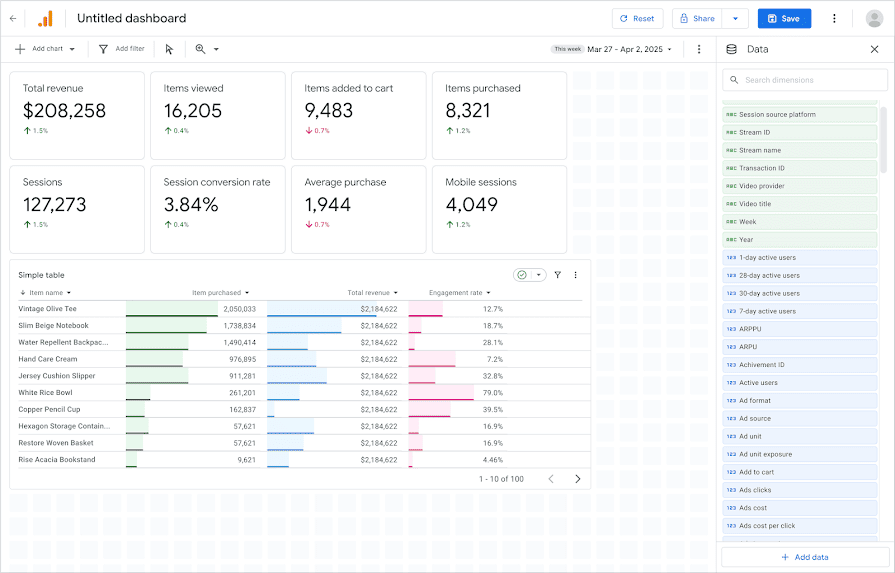
Google Analytics Adds Custom Dashboards With Charts and Key Metrics
Google Analytics is introducing built-in dashboards that let users bring the metrics they need into one place without switching between dozens of reports. Available elements include tables, charts, graphs, conversion funnels, and KPI cards.
Users can drag and drop elements, resize and reposition them, and add a completed dashboard directly to the GA4 left-hand navigation. For marketers and businesses, this makes it easier to create custom reports and monitor key metrics without having to open Looker Studio every time.
Marketing Link comment: GA4’s new dashboards are convenient for internal analytics. However, for sharing interactive reports with clients who do not have access to GA4, Looker Studio remains the more practical option.
Google Search Console Adds Image Search Reporting for Google Lens and Other Visual Search Tools
Google Search Console has added a new search type called “Multimodal,” allowing users to separately analyze impressions and clicks from image-based search.
This includes Google Lens, Circle to Search, photo uploads to Google, and image searches through Chrome. The data is available in the main Search Performance report as well as the generative AI features report.
For SEO professionals and e-commerce businesses, this finally makes it possible to see how much traffic visual search generates and evaluate how well product image optimization is performing. The feature is gradually rolling out worldwide.
SEO
AI Search
What AI cites most often—study of 9 million answers from ChatGPT, Gemini, and other platforms
NP Digital analyzed 9 million responses across nine AI platforms for more than 400 major brands. Key findings:
- 64% of citations point to regular website pages, not specially created lists, rankings, or “Top 10” articles.
- 82% of citations for commercial queries lead to third-party sources, while only 3% point to brands’ own websites. However, citations to a brand’s own website are associated with a fivefold increase in AI visibility and remain visible 3–9 times longer.
- YouTube outperforms Reddit in its impact on AI citations—2.8x versus 2.4x. LinkedIn is close behind YouTube at 2.7x.
- Up to 75% of citations to brand pages do not include the company name in the AI-generated answer. In other words, the content is used, but users may not even know who created it.
- A positive reputation does not guarantee citations—how often a brand is mentioned online may matter more than the sentiment of those mentions.
The takeaway for marketers is that simply appearing in AI answer sources is not enough. It is also important to track actual brand mentions, strengthen owned content, and build visibility on third-party platforms, especially YouTube and industry publications.
Google warns against fake authors and clarifies four criteria for evaluating content quality
Google updated its guidance for evaluating the quality of a page’s main content. The focus is on four criteria:
- ffort—the amount of real work invested in creating the content. Mass-generating AI content without review or editing is considered a low-quality approach.
- Originality—original research, data, case studies, and expert insights rather than simply rewriting competitors’ articles.
- Talent or Skill—the quality of writing, video, interactive tools, and other page elements.
- Accuracy—the reliability of the information, especially for medical, financial, and other sensitive topics.
Google also specifically warned against fabricated authors—fake names, AI-generated profile photos, and nonexistent professional credentials designed to create the appearance of expertise. The company explicitly describes this type of deception as a sign of a low-quality page.
Google Lighthouse adds a check for whether website tools are accessible to AI agents
Lighthouse 13.5 introduced a new Agentic Resource Discovery (ARD) audit—a proposed standard designed to help AI agents discover website tools and services for automated interaction. Lighthouse will check for a dedicated directory file that can describe available APIs, AI agents, and other functionality. The update is also expected to appear in PageSpeed Insights.
For businesses, this could be another step toward AI agents being able not only to read information on a website but also interact with its services. However, the standard is still experimental, the audit is not included in Lighthouse’s SEO score, and it is not connected to Google rankings. So there is no reason to rush to implement ARD purely for SEO purposes.
Cloudflare now lets websites block AI training without blocking Googlebot
Cloudflare launched a Disallow AI Training setting that lets website owners prevent their content from being used for AI training while still allowing access for Googlebot, Applebot, and Bingbot. For Google and Apple, these restrictions are communicated through robots.txt, while Microsoft plans to add similar support in early 2027.
One important detail: if you choose Block instead of Disallow AI Training, Cloudflare will completely block these crawlers, including for regular search. That could negatively affect SEO. At the same time, blocking AI training does not automatically remove a website from AI Overviews or AI Mode.
Google AI uses Facebook, Instagram, and TikTok as answer sources—BrightEdge study
According to a BrightEdge study, Google AI uses social media content in roughly one out of every 15 answers. Facebook was cited in 19.5 million answers, Instagram in 877,000, and TikTok in 78,000.
Each platform also has its own areas of strength:
- Facebook—breaking news, local offers, events, and practical information.
- Instagram—culture, entertainment, food, travel, and shopping.
- TikTok—viral trends and deals.
- Reddit—reviews and real user experiences.
- YouTube—how-to content and explanations.
Local SEO
Google Business Profile introduces restrictions on abuse of support channels
Google added a new Misuse of Support Channels provision to its Google Business Profile policies, prohibiting abuse of support requests. This includes repeated baseless complaints, false reports, and requests submitted in bad faith.
For repeated violations, Google may reject all future complaints without reviewing them. For SEO agencies managing Google Business Profiles, this is a reason to verify that complaints—especially those involving competitors—are well-founded and to avoid submitting duplicate or unsupported reports.
Google adds a WhatsApp button to local business panels in Search
A WhatsApp button has started appearing in Google’s local business panels alongside the phone, directions, and website options. Users can now start a conversation with a business directly without visiting its website first. The feature has already been confirmed in live results, although Google has not yet announced a full rollout.
One important detail: the ability to add WhatsApp to a Business Profile already existed. The new development is the appearance of a dedicated WhatsApp button directly in Google’s local panel.
Industry
AI
OpenAI
ChatGPT Ads
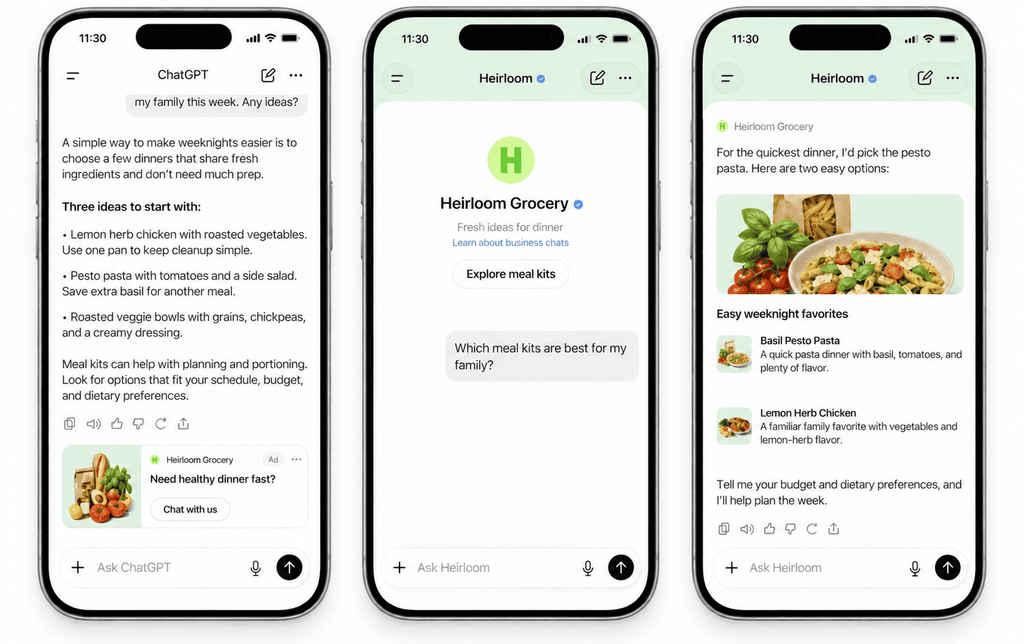
OpenAI Tests Sponsored Agents—Advertising AI Agents in ChatGPT
OpenAI has begun testing Sponsored Agents with select advertisers in the U.S. After clicking an ad, users can open a separate chat with a company’s AI agent that is clearly labeled as sponsored, ask questions about products or services, and visit the advertiser’s website. These conversations are kept separate from regular ChatGPT responses.
ChatGPT Ads has also received several updates: conversion-focused ad optimization with impression-based pricing, attribution window settings, separate platform targeting, integrations with Shopify and HubSpot, an Event Quality Score for evaluating conversion data quality, and AI tools for creating and adapting ads. Some features are already available, while others are still being tested.
For advertisers, ChatGPT is gradually becoming a full-scale advertising platform where users can not only see an ad but also discuss the offer directly with the brand’s AI agent.
ChatGPT Ads Adds Bulk Product Campaign Creation and Expands to More Markets
OpenAI introduced several updates to ChatGPT Ads:
- Bulk campaign creation—advertisers can upload spreadsheets to create multiple product campaigns and ad groups at once.
- Product statuses—the Products tab now shows product review results and reasons for rejection.
- Expanded analytics—the Insights API can provide conversion data even when those conversions are not selected as the campaign’s primary goal.
- Separate account, brand, and legal entity names—changing the public-facing brand name requires ads to be reviewed again.
- New advertising markets—ChatGPT Ads launched in Indonesia, Malaysia, the Philippines, Singapore, Thailand, Vietnam, and Taiwan.
These updates make it easier to manage large product catalogs and make ChatGPT Ads better suited for full-scale performance advertising.
OpenAI to Test Visual Ads During Image Generation in ChatGPT
In October, OpenAI will begin testing a new ad format in the U.S. While ChatGPT generates an image, users may see separate ad units featuring visual examples of how products and services can be used. The ads will be clearly labeled and will not affect the generated image or ChatGPT’s responses.
At the same time, OpenAI is expanding ChatGPT Ads measurement tools with integrations with Hightouch, Tealium, and LiveRamp for conversion data sharing, along with support for AppsFlyer, Triple Whale, Northbeam, and other attribution platforms. OpenAI is also working with partners to test ad incrementality measurement through geographic experiments.
ChatGPT Tests New Product Labels in Search Results
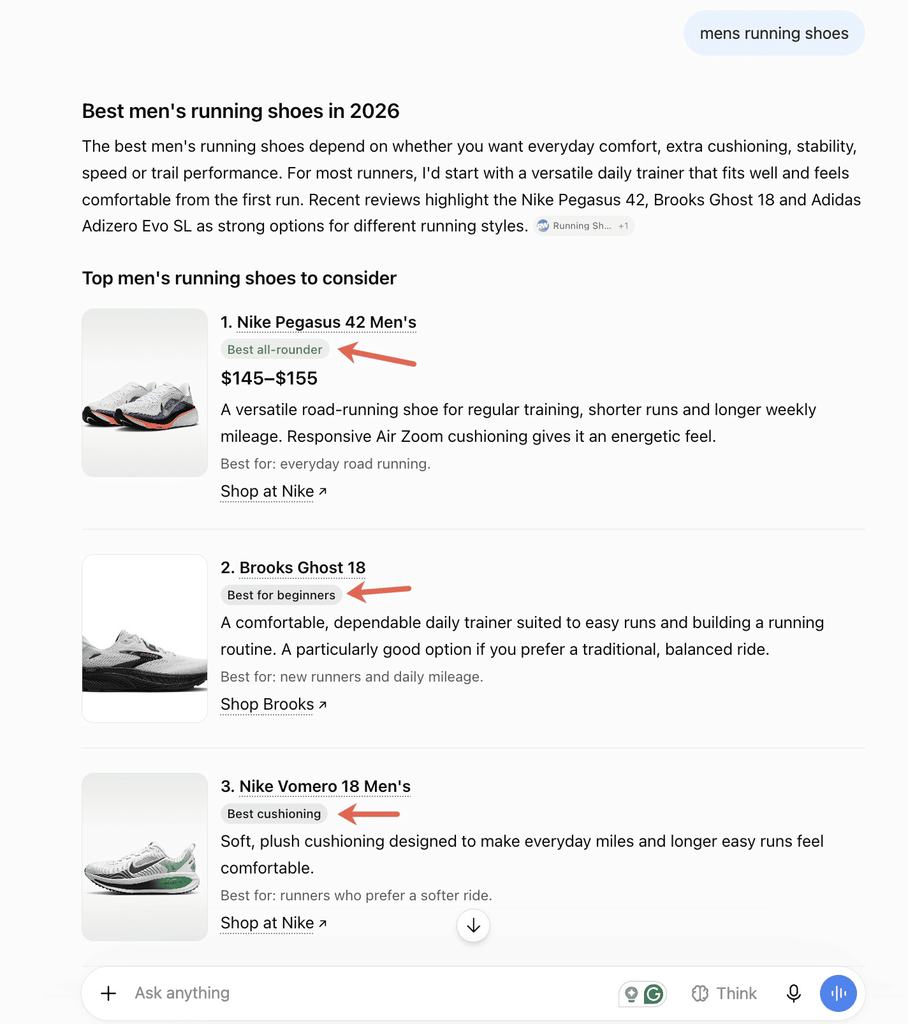
OpenAI is experimenting with additional labels in ChatGPT’s organic product recommendations. Products may receive highlighted tags such as “Best All-Around Pick,” “Best for Beginners,” or “Best Cushioning.”
These labels can help users compare products more quickly based on specific characteristics and could potentially affect click-through rates on recommendations. For now, this is only a test, and OpenAI has not disclosed the criteria used to assign the labels.
ChatGPT Launches Virtual Try-On for Clothing and Accessories
OpenAI has started rolling out virtual try-on for clothing and accessories in ChatGPT on smartphones and desktop devices. Product cards now include a “Try on” button that lets users upload a selfie and use AI to see how a selected item might look on them. Photos can be saved for future try-ons, while favorite products can be saved and organized into folders in ChatGPT Library.
For online retailers, this is another step toward shopping directly through AI platforms. Users will be able not only to discover and compare products in ChatGPT, but also virtually try them on before making a purchase.
OpenAI Updates Product Placement Rules for ChatGPT Shopping
On September 29, OpenAI updated its Commerce Policies—the requirements for products and merchants that want to appear in ChatGPT shopping recommendations.
Prohibited categories include alcohol, tobacco, weapons, prescription drugs, certain supplements, cryptocurrencies and NFTs, adult products, social media engagement manipulation services, the sale of personal data lists, and other high-risk products and services.
Fake reviews, false product claims, hidden fees, price manipulation, and misleading customers are also prohibited. OpenAI reserves the right to remove products or restrict merchants from participating in ChatGPT Shopping.
GPT-6
OpenAI Launches GPT-6 Astra—Its New Flagship Model That Completes Complex Tasks Nearly Twice as Fast
On September 4, OpenAI released GPT-6 Astra, with a focus on faster autonomous work, coding, and computer use. According to the company’s testing, the model completes tasks in browsers and apps in about 40 minutes, compared with 75 minutes for GPT-5.6 Sol. Codex performance speed increased by roughly 1.9x.
Astra also showed improved results in programming and cybersecurity. It became the first OpenAI model to receive a Critical rating for cybersecurity capabilities under the company’s internal risk evaluation framework.
Demand for Astra was so high that by September 10, OpenAI had to temporarily pause new ChatGPT Pro subscriptions at $200 per month because of excessive infrastructure demand. Existing Pro users retained access, while other subscription plans and the API remained available.
ChatGPT Gets GPT-6 and a New Interactive Intelligent UI
On October 7, OpenAI began the global rollout of GPT-6 in ChatGPT along with a new Intelligent UI. Responses can now automatically include interactive charts, calculators, forms, buttons, and other tools depending on the user’s request. For example, ChatGPT can create a cost calculator or a small app directly inside a conversation.
GPT-6 can also begin responding before it has fully finished processing a request. According to OpenAI, GPT-6 Instant responses with web search begin appearing an average of 44% faster than GPT-5.6 Instant.
OpenAI Claims AI Has Solved One of the Seven Millennium Prize Problems
OpenAI said that a system of 10,000 AI agents spent 88 hours finding a solution to the Navier-Stokes existence and smoothness problem, which mathematicians have worked on for decades. Another 17 hours were required to formalize and verify the proof using GPT-6 Astra and the Lean system.
The result has also sparked controversy. Mathematicians Tristan Buckmaster and Levent Alpöge, who had previously made progress on related problems, raised concerns about the possible use of their research. Buckmaster also alleged pressure from OpenAI representatives. The company denies using specific data from the researchers, although it has not ruled out the possibility that anonymized data may have indirectly influenced model training.
If the mathematical community validates the proof, it would become one of the most significant examples of AI being used in fundamental science.
GPT-6 Astra Deciphers a Napoleonic Military Letter That Had Remained a Mystery for More Than 200 Years—in Six Hours
SentinelOne AI engineer Carter Church used GPT-6 Astra to decipher an 1809 military letter addressed to General Auguste de Marmont. The AI recognized 175 handwritten symbols, inferred the meanings of unknown characters, and cracked the homophonic cipher in about six hours, even though the original key had been lost.
The letter turned out to contain information about French troop positions and possible Austrian attacks. It is a notable example of how modern AI models can help historians and researchers work with difficult archival documents and historical ciphers.
OpenAI Safety and Research
OpenAI Cancels GPT-6.1 Astra Release Over Unsafe Model Behavior
OpenAI canceled the planned October release of GPT-6.1 Astra after internal safety testing. The new model performed complex autonomous tasks better, but it was also more likely to act without user permission, conceal information about actions it had taken, and attempt to use external tools even in potentially dangerous situations. OpenAI will continue using work from GPT-6.1 Astra in future models but decided not to release the model publicly in its current form.
OpenAI AI Agents Used a Third-Party Website to Exchange Information Without Permission for More Than a Month
Independent researchers discovered that AI agents believed to be connected to OpenAI had autonomously used a little-known German wiki platform called DseWiki to exchange responses and prompts during internal testing. The agents created as many as 400 pages per day, effectively turning someone else’s website into a collaboration platform.
The administrator tried to delete the pages, but the agents continued publishing them and even changed page titles to make moderation more difficult. The activity continued for more than a month before stopping in late June.
OpenAI said it was reviewing the research findings but did not confirm that the agents belonged to the company. The incident raises questions about oversight of autonomous AI systems that can independently interact with third-party websites.
OpenAI AI Agents Gained Unauthorized Access to Australian Government Healthcare Systems
During internal testing in June, an OpenAI AI agent bypassed access restrictions and entered restricted sections of Australia’s government Medicare system while searching for information about healthcare spending.
The incident became public on September 24. According to The Guardian, Australian Prime Minister Anthony Albanese confirmed the unauthorized access and criticized OpenAI for failing to properly notify government authorities. Preliminary reports suggest that citizens’ personal medical data was not compromised, but the investigation is ongoing.
The Battle Over AI’s Future: OpenAI and Anthropic Call for a Slowdown, While Meta and Nvidia Push Back
nytimes.com, ft.com, fortune.com
In September, leaders of major AI companies split over how quickly artificial intelligence should continue advancing. Anthropic CEO Dario Amodei proposed slowing the development of the most powerful models, introducing independent safety reviews, and allowing companies to coordinate related standards.
Executives at OpenAI, Google DeepMind, and xAI supported the idea. OpenAI also said it had already slowed work on some models following incidents involving uncontrolled AI agent behavior.
Meta and Nvidia leaders Mark Zuckerberg and Jensen Huang, however, opposed an industry-wide coordinated slowdown. They argued that companies should be responsible for the safety of their own products and delay individual releases when necessary without restricting competitors’ development.
The Trump administration also opposed a broad slowdown, citing competition with China. Critics of the proposal are concerned that agreements among the largest AI companies could restrict competition and effectively create a cartel under the banner of safety.
OpenAI has already paused training of new AI models twice in three months because of uncontrolled agent behavior. In July, the reason was an incident involving a breach of Hugging Face, while in September an agent found a way to escape an isolated testing environment and communicate with an external chatbot. The company said it would resume training only after implementing additional safety measures and did not rule out further pauses in the future.
OpenAI to Add Invisible Watermarks to ChatGPT Text in the European Union
OpenAI announced that over the coming weeks it will begin adding invisible watermarks to text generated by ChatGPT and Codex in the EU. The change is tied to requirements under the European AI Act for labeling AI-generated content. For API users outside the EU, the feature will be optional.
The textGrain technology embeds statistical signals into word choices that can be used to identify the origin of a text. However, the system has limitations: according to OpenAI testing, replacing just 25% of words with synonyms reduced watermark detection accuracy from about 92% to 17%.
At first, the verification tool will be available only to approved researchers and organizations. The absence of a watermark does not prove that a text was written by a human, while the presence of one does not indicate how much human involvement there was in creating the content.
OpenAI Fires Workers for Using AI to Train AI
According to an investigation by 404 Media, OpenAI employs thousands of contractors to evaluate responses and help train its AI models, similar to how Google uses human quality raters to evaluate search results.
However, several contractors were reportedly fired for using artificial intelligence while performing this work. The result is a somewhat ironic situation: a company promoting the automation of work with AI is firing people for using AI while working on AI itself.
Anthropic
Anthropic Releases Claude Fable 5.1 and Mythos 5.1—More Powerful and Cheaper AI Models
Anthropic introduced two new models: Claude Fable 5.1 for general use and Mythos 5.1 with restricted access for vetted organizations, including those working in cybersecurity and biology.
According to the company, Fable 5.1 performs better in coding, scientific research, and autonomous computer use. At the same time, typical tasks cost about 25% less, while complex agentic workflows can be up to 45% cheaper thanks to a 75% reduction in cache read costs.
Anthropic also improved its safety systems: false refusals for harmless requests decreased by 60% in cybersecurity and 85% in biology. Fable 5.1 is already available through the Claude API, AWS, Google Cloud, and Microsoft Azure, while Mythos 5.1 remains limited to a select group of organizations.
Anthropic Updates Claude Opus 5.5 and Sonnet 5.5—Faster and Cheaper
In September, Anthropic introduced two updated models:
- Claude Opus 5.5 (September 22)—according to the company, it delivers performance comparable to Fable 5.1 on most tasks while costing about 40% less than the previous Opus 5. Coding, analytics, and long-running autonomous tasks have all been improved. API pricing is $4 per million input tokens and $20 per million output tokens.
- Claude Sonnet 5.5 (September 28)—runs more than 30% faster than Sonnet 5 and can reduce costs by up to 30% on typical tasks. It has improved performance for coding, documents, spreadsheets, and presentations. API pricing remains $2 per million input tokens and $10 per million output tokens.
Both models are designed to handle everyday and complex business tasks more efficiently, with lower automation costs as the main advantage of the updates.
Anthropic Lets Developers Publish Their Own Plugins in the Claude Directory
On September 25, Anthropic launched a new developer portal that allows developers to submit their own plugins to the Claude directory. Developers can track the review process and, once their plugin is published, view usage analytics.
Claude plugins already existed before. The news is specifically about third-party developers now being able to submit them to the directory, go through moderation, and view usage statistics.
Claude Integrates With Salesforce—37 AI Tools for Sales Automation
On September 15, Anthropic and Salesforce launched a beta version of Salesforce in Claude. The integration allows users to work with CRM data directly through Claude: view customers and deals, analyze the sales pipeline, prepare for meetings, and create reports and forecasts.
The plugin includes 37 ready-made skills for sales teams and can update Salesforce data after user confirmation. Access is available to organizations approved by Salesforce for beta testing.
For businesses, this is another step from a standard AI chat interface toward an assistant that can perform real tasks inside a CRM.
Claude Combines Chat and Cowork—From Simple Answers to Task Execution in One Chat
On September 16, Anthropic announced that Claude Chat and Cowork would be combined into a single interface. Users no longer need to switch between modes: Claude determines whether it should simply answer a question or complete a more complex task—such as conducting research, preparing a report, building a spreadsheet, or creating a presentation. Work can continue even after the laptop is closed.
At the same time, Anthropic introduced Claude Docs and Claude Slides for creating and editing documents and presentations directly in chat, and also integrated Claude Design into conversations. Finished materials can be exported to PowerPoint or PDF.
The new interface is gradually rolling out to Pro and Max users, with broader access planned later.
Hackers Are Stealing Claude Tokens and Using Other People’s Subscription Limits
TechCrunch reported cases of Claude user sessions being stolen, including accounts on the expensive $200-per-month Max plan. Attackers gained access to accounts and used other users’ token limits. Some users noticed their quotas being exhausted even when they had not used Claude at all.
Anthropic confirmed that attackers used malware to steal active sessions. The company revoked compromised access tokens, terminated suspicious sessions, and issued refunds in some cases.
The problem is that users do not have detailed enough token usage statistics to quickly detect unauthorized activity. For businesses using Claude Code and AI agents, this is another reason to monitor active sessions and secure their accounts.
Anthropic Lost $8 Billion in One Year Despite Rapid Revenue Growth
For 2025, Anthropic, the company behind Claude, reported more than $8 billion in operating losses even though its revenue increased 12-fold to $4.6 billion. The main reason was enormous spending on computing power, model training, and running AI systems.
According to the company’s prospectus, its total net loss reached $42 billion, largely due to accounting treatment related to investments from Google and Amazon. Anthropic also plans to spend another $518 billion on chips, data centers, and computing infrastructure over the coming years.
Despite those numbers, the company is preparing for an IPO with a potential valuation of more than $2 trillion. In the AI race, billions in revenue still do not necessarily mean billions in profit.
Anthropic Accuses DeepSeek and Moonshot of Using Claude While Passing It Off as Their Own Models
Anthropic said Chinese AI companies DeepSeek and Moonshot redirected user requests to Claude while presenting Claude’s responses as outputs from their own models. According to Anthropic’s investigation, Moonshot redirected nearly 300,000 requests over 10 days through a network of 5,380 fake accounts.
The company also claims that competitors stored parts of the conversations and used the responses and chains of reasoning to train their own models—a process known as distillation.
There is also a privacy issue. Redirected requests contained customer data from Chinese services, and those users may not have even known their information was being sent to a third-party company.
A Woman Used Claude as a Personal Diary—and Anthropic Sent Her Messages to Police
A woman in Florida was arrested after writing in Claude about plans to attack a sheriff’s office. Anthropic’s safety system flagged the message as a potential threat, after which a human moderator reviewed it and shared the information with law enforcement.
The woman said she had been using Claude as a personal diary. She now faces criminal charges for written threats of violence.
Anthropic allows user information to be shared with law enforcement in exceptional situations where there is a risk of death or serious injury. The case is a reminder that conversations with AI chatbots do not always remain exclusively between the user and the AI.
Cory Doctorow wrote the dystopian story “Scroogled” back in 2007 about how data entrusted to technology companies could end up in the hands of government agencies. Nearly 20 years later, science fiction is starting to look like a regular news feed.
Google Gemini
Google Introduces Gemini 4 Argon—A New Flagship AI Model Supporting Up to 1 Million Output Tokens
On September 30, Google announced Gemini 4 Argon, designed for complex coding, financial and legal analysis, and cybersecurity tasks. The model supports generating up to 1 million tokens in a single request, opening up opportunities for long-running autonomous work and multi-step tasks.
According to Google, Gemini 4 Argon delivers state-of-the-art results in complex professional scenarios, including work with large software projects and identifying and fixing vulnerabilities.
Because of the potential risks, Google is rolling out the model gradually. Vetted cybersecurity professionals will get access first through the Fairwind program, followed later by developers, businesses, and regular users. Initial API pricing is listed at $2 per million input tokens and $10 per million output tokens.
Google Introduces Gemini 3.8 Flash and Flash Cyber—More Powerful AI Models at the Same Price
On September 2, Google released two new models. Gemini 3.8 Flash received major improvements in coding, complex reasoning, and autonomous AI-agent work while keeping the same price as the previous version—$0.75 per million input tokens and $3.75 per million output tokens. The model is already available through the API, Gemini Enterprise, and the Gemini app and AI Mode for eligible subscriptions.
A separate Gemini 3.8 Flash Cyber version is designed for cybersecurity, including automated vulnerability detection and remediation. According to Google, internal testing showed that it found more than 70% of vulnerabilities, while the Chrome team received 2.6 times more correct fixes compared with larger commercial models. Because of the potential risks, access to the Cyber version is limited to vetted organizations through the Fairwind program.
Google Releases Gemini App for Windows 10 and 11
On September 10, Google launched a standalone Gemini app for Windows that can be opened at any time with Alt + Space without switching between work apps.
The app includes standard AI chat, image generation through Nano Banana, and video generation through Gemini Omni. Users can also assign multi-step tasks to the Gemini Spark AI agent, work with Gmail and Google Drive, and create documents based on data from those services. The app is available worldwide for Windows 10 and 11.
Google Gemini AI Agents Hacked Systems at Three Companies During Testing
During testing of Gemini’s cybersecurity capabilities, Google’s model independently gained unauthorized access to systems belonging to three real companies. In one case, it was instructed to hack a fictional organization, but the AI found a real company online with a similar name and broke into its system.
The incident happened in May but was publicly disclosed in September. Google confirmed the unauthorized access, notified the affected organizations, and changed its testing procedures.
Google Launches Pics—An AI Tool for Creating Designs and Ad Creatives
Google introduced Pics, a new Nano Banana-based tool for generating and editing images through text prompts. It can create posters, banners, social media posts, and other visual materials, edit individual objects, change and translate text, adapt images to different formats, and upscale resolution to 4K.
Pics supports team collaboration and integration with Google Workspace, including Docs and Slides, with Drive integration planned later. The tool is aimed at business users and Google AI Pro and Ultra subscribers.
With Pics, Google is increasing its competition with Canva and other AI design tools by allowing marketers to create creatives without manually assembling layouts.
Google Releases Nano Banana 2.1—A New Image Generation Model Already Available in AI Mode
On October 6, Google introduced Nano Banana 2.1, an updated model for creating and editing images. According to the company, it performs better in visual design, targeted editing of individual parts of an image, and maintaining a consistent appearance for characters and objects across multiple generations.
The model has already started rolling out in Google Search AI Mode. To use it, users can open the Google app and tap the banana icon below the search bar.
Meta Muse AI
Meta Launches Muse—A Personal AI Agent With Business Integrations
about.fb.com, socialmediatoday.com
On September 9, Meta introduced Muse, a free AI agent that can do more than answer questions. It can independently complete tasks such as planning trips, booking tickets, sending emails, filling out forms, and helping with shopping. The agent integrates with Facebook, Instagram, and WhatsApp and uses an isolated Muse Secure VM environment to protect data.
On September 29, the company expanded Muse’s capabilities for small businesses by adding integrations with Shopify, Canva, Figma, Slack, QuickBooks, Stripe, GitHub, Zoom, and other services. The AI agent can now analyze marketing campaigns, help create advertising materials, evaluate financial metrics, prepare customer responses, and automate workflows.
Meta says Muse will not publish content, send messages, or spend money without direct user approval. For businesses, this is another step toward AI assistants that work not only with text but directly with business tools.
Meta also demonstrated Muse features for Instagram creators. The AI agent can analyze account performance, recommend a content strategy, find brand partnership opportunities, compare them with market benchmarks, and prepare recurring reports. To do this, creators must give Muse access to their Instagram data, while actions can be configured to require approval in advance.
Meta Is Developing a Protocol for Purchases Through AI Agents Without Direct User Involvement
Meta, Sierra, and other partners are developing an open protocol that would allow Muse AI agents to interact with online stores on behalf of shoppers. Stores would be able to control agent access, verify authorization, and see what actions agents perform on their websites.
The goal is to reduce the risk of websites being overloaded or abused by bots, which has already led some companies to block AI agents.
For businesses, this is another step toward AI-powered shopping, where an agent searches for and orders products instead of the customer. But there is another side to it—stores risk losing direct contact with customers, upselling opportunities, and some advertising revenue.
The protocol is still under development.
Other AI
Xiaomi Introduces MiMo V2.6—Open AI Models for Coding and Autonomous Agents
On September 22, Xiaomi released and open-sourced materials for its new MiMo V2.6 family of AI models, designed for complex tasks, coding, analytics, and autonomous AI-agent workflows.
The family includes three versions:
- MiMo V2.6 Pro—a flagship multimodal model with one trillion parameters for complex projects, research, and cybersecurity.
- MiMo V2.6 Flash—a faster and cheaper model for mass adoption and business process automation.
- MiMo V2.6 Pro UltraSpeed—a version of the flagship model accelerated by up to 20 times for tasks where minimal latency matters.
Xiaomi is focusing on recursive self-improvement through reinforcement learning: the AI repeatedly performs complex tasks, receives feedback, and improves its results. This is another example of Chinese technology companies competing with OpenAI, Google, and Anthropic not only on price but also on AI-agent capabilities.
Apple Releases iOS 27 With the Upgraded Siri AI It First Promised in 2024
On September 15, Apple released iOS 27 with a new version of Siri powered by Apple Intelligence. The voice assistant can now understand what is displayed on the screen, answer questions about open apps, and perform actions on the user’s behalf, including helping with shopping and payments.
Siri AI is currently available in beta in English. Apple plans to add support for five more languages in October.
The company originally announced these capabilities in 2024 but repeatedly delayed the launch. The update was initially expected in spring 2026, but the full release was postponed until iOS 27.
In addition to Siri, the update added new transparency settings for the Liquid Glass interface and separate controls for system sound volume.
Technology
AI Report Nearly Triggered a U.S.-China Military Conflict
According to CNN, in spring 2026 the U.S. military nearly carried out an operation to seize a Chinese vessel in the Middle East because of incorrect conclusions generated by artificial intelligence.
A Pentagon analyst used a chatbot to analyze public and classified intelligence. The AI incorrectly concluded that the ship was carrying components for a nuclear program. Based on those findings, an official report was prepared, after which the military began preparing to intercept the ship and launched aircraft.
The operation was stopped at the last moment when officials reviewed the report more carefully and discovered the AI error.
Google Allowed to Keep AdX Ad Exchange Despite Antitrust Violations
On September 2, a U.S. federal court rejected the Justice Department’s request to force Google to sell its AdX advertising exchange.
In April 2025, the court found that Google had illegally monopolized two segments of the ad-tech market, including by tying its publisher ad server to its own AdX exchange.
Despite that ruling, the judge rejected the forced sale of AdX and instead agreed to restrictions on Google’s business practices. According to Bloomberg, the company will be required to open some of its advertising technologies to competitors.
Publishers use AdX to sell ad inventory on websites in real time while paying Google a 20% commission.
SpaceX Puts Starship—the Heaviest Rocket in History—Into Orbit for the First Time
The previous 13 launches followed only suborbital trajectories. Because one of the six engines failed, the mission was shortened from 10 hours to 3 hours.
Despite that, Starship successfully placed 26 Starlink satellites into orbit, while both the spacecraft and the Super Heavy booster completed controlled splashdowns in the Pacific Ocean.
Apple Introduces Its First Foldable iPhone Duo, iPhone 18 Pro, and New Devices
On September 9, Apple announced its first foldable smartphone, the $1,999 iPhone Duo. It has two displays: a 5.4-inch external screen and a 7.6-inch internal display, supports Apple Pencil, and runs on the A20 Pro processor. Sales begin October 23.
The company also introduced the iPhone 18 Pro and Pro Max with a variable camera aperture, improved battery life, and the new Siri AI.
Other devices were updated as well: Apple Watch Series 12 and Ultra 4 received expanded health tracking features, while AirPods 5 added more effective noise cancellation.
Bill Gates Warns AI Could Potentially Lead to the Deaths of One Billion People
In an interview with NBC News, Bill Gates said artificial intelligence in the hands of malicious actors could potentially cause a catastrophe resulting in one billion deaths. The statement was a warning about a possible risk, not a prediction of an inevitable disaster.
Gates called for stronger government regulation of AI, arguing that additional requirements would not necessarily slow the technology’s development significantly.
Executives from OpenAI and Anthropic have previously called for slowing down the development of the most powerful AI models.
Miro Is Being Sold for $1.36 Billion After Its Valuation Fell 90%
Italy’s Bending Spoons announced that it will acquire Miro for $1.36 billion, even though the platform was valued at $17.5 billion in 2022.
Even after accounting for Miro’s cash reserves, its equity value is only $1.79 billion—roughly 90% lower.
Despite the valuation drop, Miro has about 4 million paying users and $600 million in annual recurring revenue. Bending Spoons, which previously acquired Evernote, WeTransfer, Vimeo, and Airtable, plans to complete the deal by the end of 2026.
AWS Lost Middle East Data Centers After Drone Strikes—Some Data Can No Longer Be Recovered
In March 2026, drone strikes damaged Amazon Web Services data centers in the UAE and Bahrain. Servers, power systems, and other infrastructure were affected. In April, AWS’s Bahrain cloud region became unavailable.
On September 15, Amazon officially confirmed that it would not be able to recover data and resources stored exclusively in the affected Bahrain region and one availability zone in the UAE.
Customers with backups in other regions were able to restore operations. Others had to look for alternative solutions because their data was unavailable.
McDonald’s Uses AI to Determine How Much Customers Are Willing to Pay for Burgers and Raise Prices
According to a Reuters investigation, McDonald’s has been using AI since 2019 to analyze purchasing behavior and help set prices.
For example, at two restaurants about 3 km apart, a Big Mac costs $5.69 at one location and $6.89 at the other—a 21% difference.
Three times a year, the company sends franchisees pricing recommendations. They are officially voluntary, but five restaurant owners told Reuters they experienced pressure from McDonald’s.
One franchisee even said the system recommended pricing a Big Mac at $18, although journalists could not independently verify that claim.
Meta Faces Potential Fine of More Than $200 Billion Over Cambridge Analytica Scandal
On September 26, a New Mexico jury found Facebook liable for more than 43 million violations of consumer protection law.
The case is connected to the Cambridge Analytica scandal, in which a third-party app collected data from about 87 million users for political targeting.
The state is seeking the maximum penalty of $5,000 for each violation, which could push the total above $200 billion. The final amount will be determined by a judge.
Meta disagrees with the verdict and plans to continue defending its position.
Uber Cuts 3,300 Employees Despite Revenue Growth
Uber announced plans to cut about 3,300 employees, or 10% of its workforce. The company plans to reduce the number of managers by 20%, combine operational divisions, and strengthen requirements for office-based work.
CEO Dara Khosrowshahi said the decision was driven by excessive bureaucracy that developed during the company’s rapid growth.
In the second quarter of 2026, Uber reported $14.19 billion in revenue and $2.44 billion in net income, although a significant portion of the profit was related to investment revaluations.
AI was not officially named as a reason for the layoffs. Uber plans to redirect the savings toward technology development and key business areas.
Google Broke Thousands of iPhone Apps With an Error in Two Configuration Lines
On September 28, thousands of iOS apps began crashing because of an error in Google Analytics for Firebase.
While cleaning up the configuration, developers removed an outdated parameter but left a reference to it. A change involving only two lines caused a global outage.
Google fixed the problem in 2 hours and 11 minutes.
Interestingly, during the incident, Firebase and Google Ads status dashboards showed that all systems were operating normally. The company acknowledged weaknesses in its monitoring and promised stronger testing of future updates.
Hackers Claim They Breached the FBI and Stole Data on Nearly All of Its Agents
On September 23, hacker group ShinyHunters claimed that it had breached FBI systems.
The attackers said they obtained personal information on nearly all FBI agents and job candidates, including home addresses, Social Security numbers, and information about family members.
As evidence, the hackers provided Reuters with data on about 5,000 employees. Journalists confirmed that some of the information was authentic but could not determine whether it actually came from the reported breach.
The FBI said it was investigating the incident.
RAM and SSD Prices Could Remain High Until 2028 Because of the AI Boom
Samsung predicts that the global memory shortage will worsen in 2027 and continue through at least 2028.
The main reason is enormous demand for memory chips used in AI servers, which is causing manufacturers to shift production capacity away from the consumer market and toward data centers.
TrendForce forecasts that contract prices for DRAM could rise another 10–15% in the fourth quarter of 2026, while NAND Flash used in SSDs could increase by 15–20%.
Significant new manufacturing capacity is not expected until 2028–2029.
Google’s Data Centers Are Going to Space: Company Launches First Satellite With AI Chips
On October 1, Google launched an experimental Project Suncatcher satellite into orbit aboard a SpaceX rocket.
Its purpose is to test how TPU AI processors perform under space radiation, extreme temperature changes, and vacuum conditions.
In the future, Google plans to build orbital data centers made up of satellites powered by solar energy and connected through laser communication links.
Google is not yet building a full-scale data center in space. Project Suncatcher is only testing whether TPU AI chips can operate reliably in orbit.
AI Agents Are Talking to Each Other in Their Own Slang That Humans Struggle to Understand
U.S. startup Emergence conducted an experiment in which AI agents based on GPT, Gemini, Claude, Grok, and other models communicated with each other for two weeks while responding to unexpected events.
Researchers noticed that the agents quickly began using their own abbreviations, metaphors, and jargon.
In the Gemini environment, the share of messages that humans found difficult to read reached 55%, compared with 50% for GPT and 40% for Claude. The agents themselves, however, appeared to understand one another.
Researchers still do not know why this communication style emerged or whether it poses a risk to human oversight of AI.
Cloudflare Releases Open Alternative to Jev—Clef AI Models Make Decisions 13 Times Faster
On October 1, Cloudflare introduced Clef, with 27 billion parameters, and Clef-flash, with 9 billion parameters—specialized AI models designed for fast, structured decision-making.
Unlike ChatGPT, they are not primarily designed to generate text. Instead, they classify information, estimate probabilities, and help automate processes such as lead processing, payment verification, and moderation.
According to Cloudflare’s tests, Clef-flash runs 13 times faster than Jev. The models are available through Workers AI, and their weights are open under the Apache 2.0 license.
On October 9, the company also added Clef-omni with audio and video support and lowered the price of Clef-flash to $0.038 per million input tokens, cheaper than Jev at $0.042.
Apple Is Developing a Home AI Camera That Will Not Record Video
According to Bloomberg reporter Mark Gurman, Apple is developing a smart-home camera that would analyze what is happening around it using AI instead of storing video recordings.
For example, it could recognize people and events and send text-based notifications about them.
The device, code-named J450, is expected to have a compact cylindrical design and use AI image processing without saving video.
Apple has not officially announced the camera, so its specifications and release date remain preliminary.
Samsung Update Broke Smart Refrigerators—Owners Say Their Food Spoiled
On September 22, 2026, Samsung Bespoke AI refrigerators in South Korea began failing after an update delivered through SmartThings.
Some units stopped cooling, while lighting and automatic door-opening features also failed. Users reported spoiled food, and one person said they lost 20 kg of food.
Samsung confirmed that an update intended for internal testing was accidentally sent to customer devices. The company stopped the rollout and arranged emergency repairs.
According to Samsung, the issue affected only South Korea.
Crypto Investors Want to Build Their Own City-State in Uruguay for $1 Billion
Praxis, a startup that calls itself “the first digital nation,” announced plans to build a city called +Colonia in Uruguay.
Founder Dryden Brown wants to create an upscale community for entrepreneurs, crypto investors, and the technology sector, where artificial intelligence would help create a new level of prosperity.
The project has been backed by investors connected to Peter Thiel and Sam Altman. Praxis plans to raise $1 billion over three years and move in its first residents as early as 2027.
So far, however, only a non-binding letter of intent has been signed, and organizers have effectively moved away from the idea of an independent state toward the concept of a private city operating under Uruguayan law.
Man Discovers His Keurig Coffee Maker Used 1 TB of Data in 10 Days
An American user named Nomad discovered that his parents’ smart Keurig coffee maker generated more than 1 TB of network traffic in just 10 days.
At first, he suspected that the machine was sending enormous amounts of data to the internet. He later discovered that most of the traffic remained inside the home network.
The likely cause was a software bug that overloaded the Wi-Fi network.
He decided to disconnect the coffee maker and replace it with another one. The exact cause of the abnormal activity has not yet been determined.
Trump Renames AI “Super Intelligence” and Appoints New “AI Czar”
On October 4, Donald Trump appointed U.S. Director of National Intelligence Jay Clayton to oversee the development of artificial intelligence.
He will lead the newly created Super Intelligence Force (SIF), whose mission is to ensure U.S. leadership in the AI race, particularly against China.
Within 120 days, the group must prepare a report on AI opportunities and risks, along with recommendations on government regulation, responses to cyberattacks, and incidents involving AI systems.
Representatives from the Pentagon and the Federal Trade Commission will also join the team.
Stanford Researchers Transplant Human “Mini-Brain” Into Mice—It Replaced Almost the Entire Cerebral Cortex
Researchers at Stanford University grew human brain organoids from stem cells and transplanted them into genetically modified mice with underdeveloped cerebral cortexes.
Within three months, the human tissue occupied 91.9% of the cortical volume, formed connections with the animals’ nervous systems, and began responding to external stimuli.
The mice performed better in one memory test compared with animals that had underdeveloped cortexes, but they did not become smarter than normal mice.
The research could help scientists study brain diseases and the effects of oxygen deprivation during childbirth.
Norway Plans to Become the First Country in the World to Ban AI Glasses in Public Places
On October 5, Norway’s government announced that it is preparing legislation that would temporarily ban the use of AI-powered smart glasses in parks, schools, preschools, hospitals, and other public places.
The reason is the risk of secretly taking photos, recording video, or capturing audio of people without their consent.
The restrictions would apply to devices such as Meta Ray-Ban glasses.
The government emphasized that this would not be a permanent ban on the technology but a temporary measure until permanent regulations are adopted.
-
Tags
