

AI & MARKETING NEWS DIGEST—AUGUST 2026
-
Post author

-


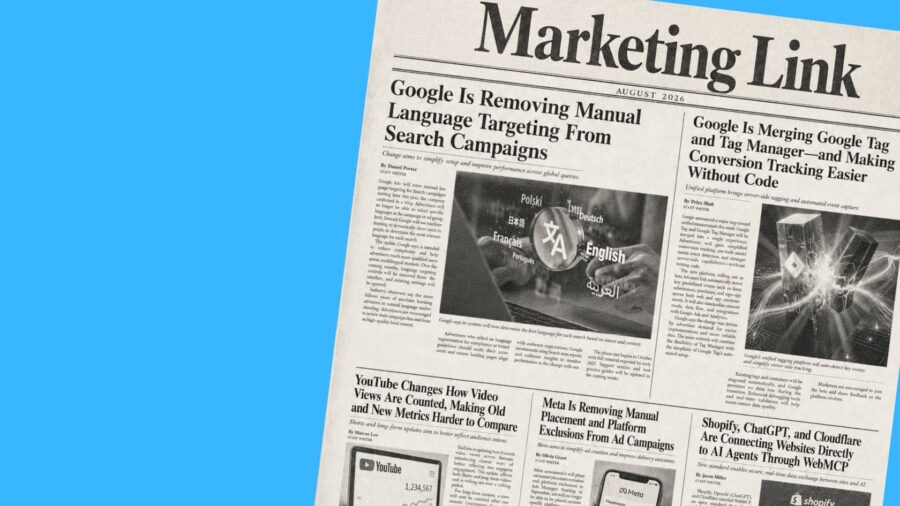
Marketing Link has collected the most interesting news from August: Google is removing language targeting in Search, merging Google Tag and Tag Manager, YouTube is changing how it counts views, and Meta is taking away manual control over ad placements. Also, websites are starting to connect directly to AI agents through WebMCP, Rank Math is being accused of secretly gaining admin access to WordPress, and Meta has agreed to pay $18 billion and limit social media for teenagers.
Paid Media
Google Ads
Google Ads Is Removing Manual Language Targeting in Search
support.google.com, searchenginejournal.com
At the end of September, Google will remove language selection at the Search campaign level and for the Search portion of Performance Max. Instead, Google will determine which language to show ads in based on the language of the query, the ad, the landing page, and its own signals about which languages the user understands.
For example, if someone searches in English, but Google believes they understand French, AI Max could potentially show them a French ad. In other words, the query language no longer necessarily equals the ad language.
For most accounts, nothing needs to be rebuilt—separate campaigns for English, Spanish, and other languages can stay as they are. But now it is especially important to make sure the language of the ads and landing pages is correct. After the update, it will be worth checking search terms, geography, and traffic quality.
The biggest downside is that there will be less control, and there is still no new report showing which language Google actually used to serve the ad. For international and regulated businesses, this may become more than just an inconvenience—it may become a compliance issue.
Reminder: Google Is Forcing Older Search Campaigns to Move to AI Max
ads-developers.googleblog.com, searchengineland.com
As we warned in previous digests: starting in September 2026, Google will automatically move Search campaigns to AI Max if they use campaign-level broad match or older automatically created assets. Existing brand inclusions and exclusions should transfer automatically, but the campaigns should still be checked after the migration—Google and “nothing will break” are not always the perfect pair.
DSA campaigns have received a temporary delay—they will start being automatically moved to AI Max in February 2027, after which it will no longer be possible to create new DSA ad groups. AI Max is gradually becoming the standard for Search, while older mechanics are simply being removed. That is why it is worth checking campaigns, scripts, and API integrations now—especially if they depend on broad match, ACA, or DSA.
Performance Max Will Allow Advertisers to Influence the Priority of Search, YouTube, Display, and Other Channels
Google is testing a new Performance Max setting that will allow advertisers to raise or lower the priority of individual channels—Search, YouTube, Display, Discover, Gmail, and Maps.
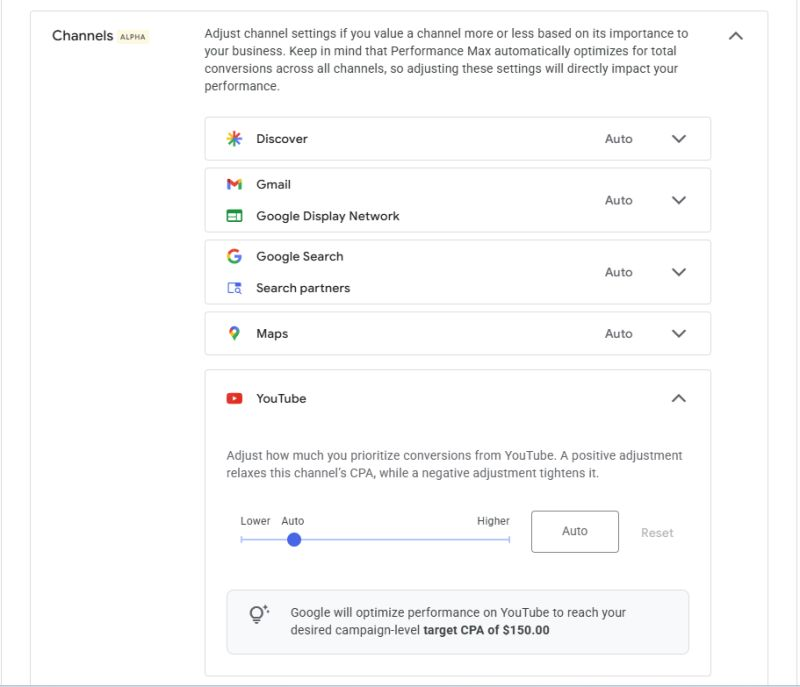
This is not manual budget allocation like “50% to Search, 20% to YouTube.” Instead, the marketer will essentially be able to tell the algorithm that they are willing to accept a higher CPA for one channel, while requiring a lower CPA for another. As a result, PMax will have more or less freedom to spend budget in a specific channel.
This is one of Google’s most interesting steps toward giving advertisers more control over PMax—especially after the introduction of channel-level reporting. But simply “turning down YouTube because conversions are more expensive there” may be a bad idea: YouTube can create demand that later closes through Search. For now, the feature is only in alpha testing.
Google Ads Is Preparing B2B Advertising to Optimize for Real Sales Instead of Leads
Google is taking B2B more seriously—Data Manager now has direct integrations with Mailchimp, ActiveCampaign, Klaviyo, Google Drive, and other services, making it easier to send offline conversions and CRM data into Google Ads. New bidding strategies focused on the full sales funnel should also train the algorithm not just to find people who submit forms, but to understand which leads later become real customers.
For B2B, this is especially important because Google automation without CRM data can easily find cheaper clicks and more forms, but not necessarily more sales. For example, in one study, AI Max reduced CPC by 59% and nearly tripled clicks, but the cost per lead still increased from $493 to $850—cheaper traffic does not automatically mean better business.
So the main trend for B2B advertising is simple—send Google not only “Lead,” but also Qualified Lead, Opportunity, and Sale. Otherwise, AI will do a great job optimizing for what you give it—even if that means a lot of nice-looking but useless forms.
Google Local Services Ads Will Start Charging for Some Missed Calls
Starting October 1, Google is changing the payment rules for Local Services Ads—if a customer calls during business hours, no one answers, but the caller stays on the line for more than 20 seconds, that call may be counted as a paid lead. Repeat calls may also become paid if the first contact was not counted as a lead, but a later one meets Google’s criteria.
A missed call can now cost not only a lost customer, but also money for the lead itself. That is why response speed, call routing, and proper receptionist or call center workflows will directly affect LSA performance. Google says it will add spam protection—as usual, with very few details.
What to Check in Google Ads After the Target CPA and Target ROAS Change
On August 17, Google started following Target CPA and Target ROAS settings more closely in campaigns that are limited by budget. So if a campaign had been performing better than the set target for years, old settings may now start pulling results in the wrong direction.
What to do:
- Find campaigns with the “Limited by budget” status that are using Target CPA or Target ROAS. These are the campaigns affected by the change.
- Compare the target with actual performance over at least one full conversion cycle. If Target CPA is set at $50, but the campaign consistently delivers $35, that is already a reason to review the settings.
- Decide what CPA or ROAS the business actually wants to achieve. If the actual $35 CPA has already become your normal business goal, there is no reason to keep Target CPA at $50 and hope Google continues to perform better than the target.
- Do not change the target automatically across all campaigns. Sometimes the issue is not bidding, but simply a low budget, overly broad keywords, or incorrect targeting.
- After making changes, monitor not only CPA/ROAS, but also CPC, search queries, lead quality, and conversion volume—it is still not fully clear how exactly Google will “worsen” a campaign toward the set target if it had been consistently outperforming it before.
Target CPA and Target ROAS should now be taken more literally. If you want a $35 CPA, tell Google that—do not leave it at $50 just because “it was working fine anyway.”
In Google Ads AI Max, Broad Match Will Not Have Exact Match Priority
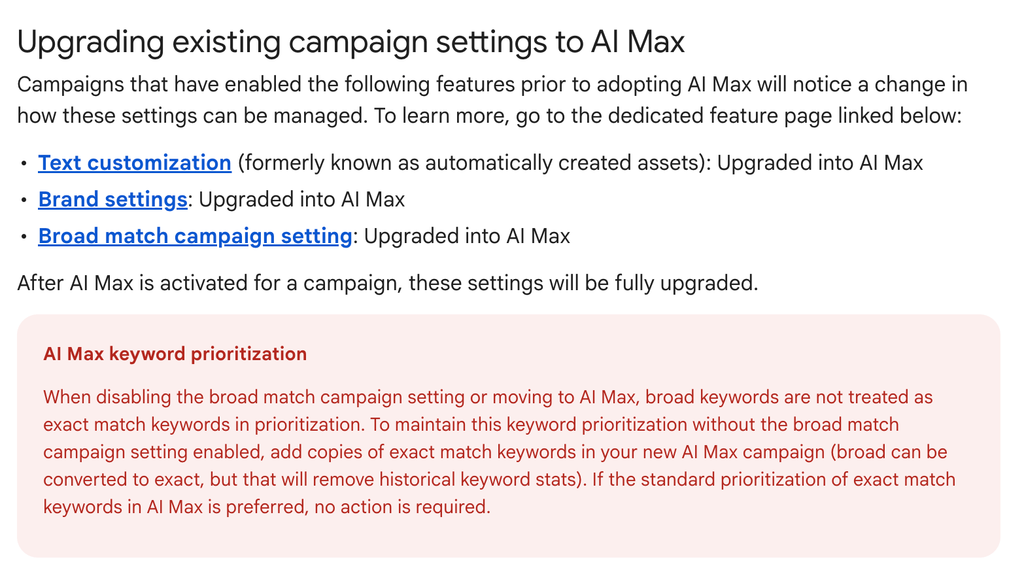
Google clarified the keyword logic in AI Max—if you move to AI Max or turn off the campaign-level broad match setting, broad match keywords will no longer be treated as exact match when determining serving priority.
If you want to keep priority for specific queries, Google recommends adding separate copies of those keywords in exact match. You can also simply convert broad match keywords to exact, but that will remove the keyword’s historical statistics—so it is better not to rush into clicking “convert everything.” For those already using standard exact match keywords in AI Max, nothing needs to change.
If broad match in a campaign previously could effectively receive exact-like priority for a very close query, that priority may no longer exist after switching to AI Max. As a result, Google will have more freedom to decide which keyword or AI Max mechanism to use for serving the ad.
If you have important high-converting queries where you want to preserve as much control as possible, it is better to add them separately as exact match. Otherwise, some traffic may shift through AI Max’s broader logic, and CPC, traffic structure, and budget distribution may change along with it.
Google Ads Expands A/B Testing for Search and AI Max
blog.google, searchenginejournal.com
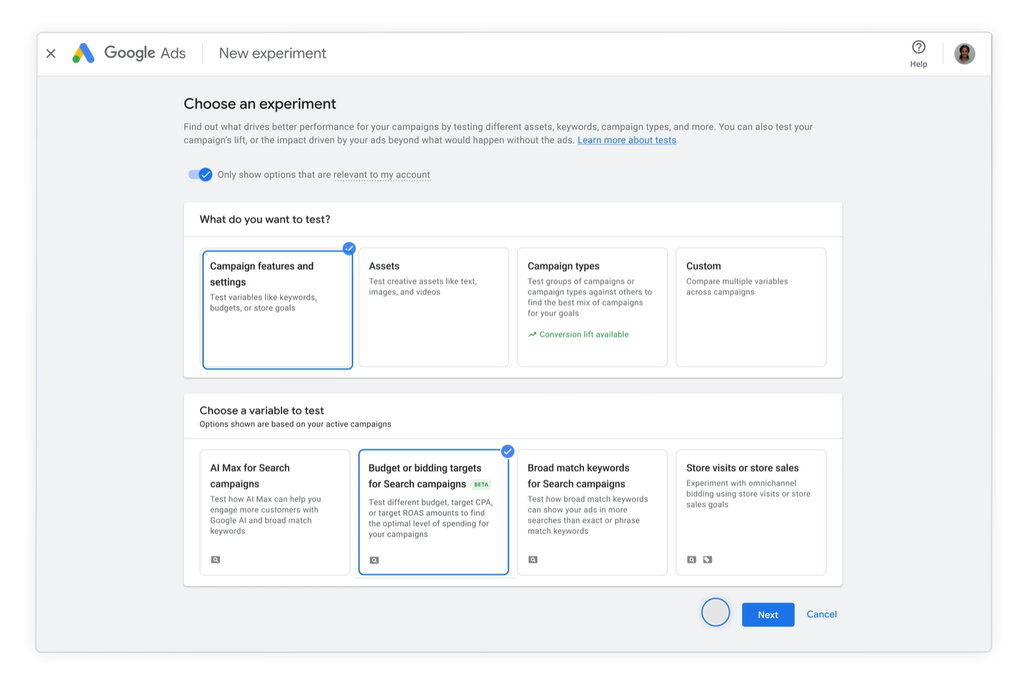
Google is adding several tools for testing changes in Search campaigns, so advertisers can check whether Google’s recommendations actually improve performance before scaling them.
- One A/B test for multiple Search campaigns. Starting in September, advertisers will be able to test budget and target ROI changes across a group of campaigns at the same time and compare them with a control group. This is especially useful when you need to test not just one campaign, but a strategy change across the entire account.
- AI Max can be tested with brand controls and geo-targeting. Previously, some of these restrictions had to be removed for the experiment, so the test might not work the same way as the future real campaign. Now the comparison will be closer to normal operating conditions.
- Performance Planner will allow changes to be applied with one click. Google will show the projected impact of new budgets or bids, after which the selected changes can be transferred directly into campaigns and rolled back if needed.
The main benefit here is not the automation itself, but the ability to test it properly first. Google is increasingly encouraging advertisers to hand budgets, bids, and targeting over to algorithms—now, at least, it is becoming easier to check on your own data whether it is worth doing.
Demand Gen VTC Optimization Will Remain Only for Video, While Display Billing Will Shift from CPC to CPM
Google is changing view-through conversion optimization in Demand Gen—it will now work only for video. View-through conversions from images will still be visible in reports, but Google will no longer use them for bidding and will no longer count them in primary “Conversions.”
For new Demand Gen campaigns, VTC optimization will also be enabled by default, so if you do not need it, you will have to turn it off manually. Another important change: video in the Google Display Network will now be billed on a CPM basis instead of CPC.
This means campaigns with a large number of static creatives will lose part of their optimization, while video costs will need to be monitored more closely—advertisers may now pay Google simply for impressions, even without a click.
Google Ads Is Testing Customer Match Expansion Using Data from Partner Sites
Google Ads is testing Enhanced Match for customer lists—Google will be able to use your Customer Match list and additionally find more users through data from partner sites and publishers, if users have consented to that data use.
For marketers, this means the same email list could potentially deliver broader reach without uploading additional databases. This may be especially useful for smaller first-party audiences, where standard Customer Match finds too few users.
But Google has not yet said exactly how much reach will increase or which partners will provide the signals—so the button is already appearing, while the instruction manual for “what exactly is happening inside” is traditionally arriving a little late.
Google Ads Will Let Advertisers Create and Edit Video Ads with Gemini Directly in Asset Studio
Google is adding Gemini Omni to Asset Studio—now advertisers can upload a brand guide, website, images, or simply write a brief, and AI will create the script, scenes, voiceover, and finished video for the ad.
Videos can be edited using simple text commands—change the background, scene, style, pace, or voiceover—and immediately create 16:9 and 9:16 versions for different placements.
For marketers, this means producing multiple video creatives for Performance Max, Demand Gen, and YouTube could become much cheaper and faster—from brief to campaign launch, effectively inside one Google Ads workflow. But the final result will still need to be reviewed manually, because “AI will follow the brand guide” still sounds a little bolder than we would like.
Performance Max Can Now Optimize Separately for People Near a Business
support.google.com, searchengineland.com
Google has added “local customer optimization” to Performance Max—campaigns can more actively show ads to people who are nearby, searching for a business near them, getting directions, or already on the move through Google Maps, Waze, or Search.
For local businesses, this means more focus not just on clicks, but on people with real intent to visit, call, or get directions to a store, clinic, restaurant, or another physical location.
But there is a nuance—the feature works only for campaigns with offline goals and is not compatible with Merchant Center or online conversions. So for e-commerce, this is not a new magic button, but for physical businesses, it can be genuinely useful.
Demand Gen Adds Ad Messages, Travel Formats, and AI Video Creation
Google is expanding Demand Gen in several directions at once. On YouTube, it is testing the ability to message a brand directly from an ad—for lead generation, this creates another way to get an inquiry without sending the user to a website or landing page.
For travel businesses, Demand Gen will be able to show relevant local events, activities, and offers, while hotel ads can be personalized for specific audiences.
AI video creation in Asset Studio has also become generally available—a brief can be turned into a script and then into horizontal and vertical videos. In other words, Google is trying to shorten the path from ad view to lead while also reducing the cost of producing the many creatives Demand Gen tends to need.
Performance Max Will Use AI to Create Vertical and Square Versions of Videos
Google Ads is adding generative AI for video in Performance Max—if you only have, for example, a horizontal video, Google will be able to create vertical or square versions automatically so your ads can run in more formats.
For marketers, the upside is obvious—you do not need to prepare every aspect ratio separately, and the campaign gets access to more available inventory. The downside is also obvious—Google is effectively starting to edit your creative on its own, so the logo, product, or composition may not look exactly the way the designer intended.
If you do not want this automation, you can opt out by September 4 or change your video settings later in Google Ads. So PMax is gradually automating not only media buying, but also the creative production itself.
Merchant Center Will Separately Show YouTube Traffic and Combine Data from All Google Ads Campaign Types
Starting August 24, Merchant Center is changing its reporting—traffic from the YouTube affiliate program will no longer be counted as organic and will instead get its own separate category. Because of this, organic traffic in reports may show a one-time “drop,” even though nothing is actually broken.
Product-level reports will also start showing data not only from Shopping and PMax, but also from Video, App, and Demand Gen campaigns. As a result, impressions and clicks may, on the contrary, show a one-time increase simply because Merchant Center will start seeing more channels.
For e-commerce, this is useful—it will become easier to understand where each product is getting traffic and sales without jumping between Merchant Center, Google Ads, and YouTube. Later, Google will also add a breakdown by advertising networks.
Google Ads Will Show Which AI-Generated Product Titles It Uses Instead of Yours
Google can now generate alternative product titles for Shopping ads if it considers them more relevant than the title from Merchant Center. This means shoppers may not always see the title you entered in the feed.
Google is now adding a separate report where advertisers can see the original product title, the AI-generated version, and compare them by impressions, clicks, CTR, CPC, and cost.
For e-commerce, this matters for two reasons—you can check whether AI actually improves CTR, while also controlling whether Google has invented a product title that the brand would never have approved voluntarily.
Google Merchant Center Will Show Popular Products and Brands More Accurately
support.google.com, seroundtable.com
Google has updated the “Popular Products” report in Merchant Center—it should now more accurately show which products and brands are currently popular on Google, along with their ratings and availability across different regions.
For e-commerce, this is useful as a signal of what is currently in demand and which products are worth advertising more actively, keeping in stock, or adding to the assortment. The data is updated weekly, although some of the new information may take up to two weeks to appear. The updates also work through the Merchant API and BigQuery—so this data can be used not only for manual review, but also pulled into your own analytics.
Google Merchant Center Is Raising the Minimum Product Image Size to 500×500
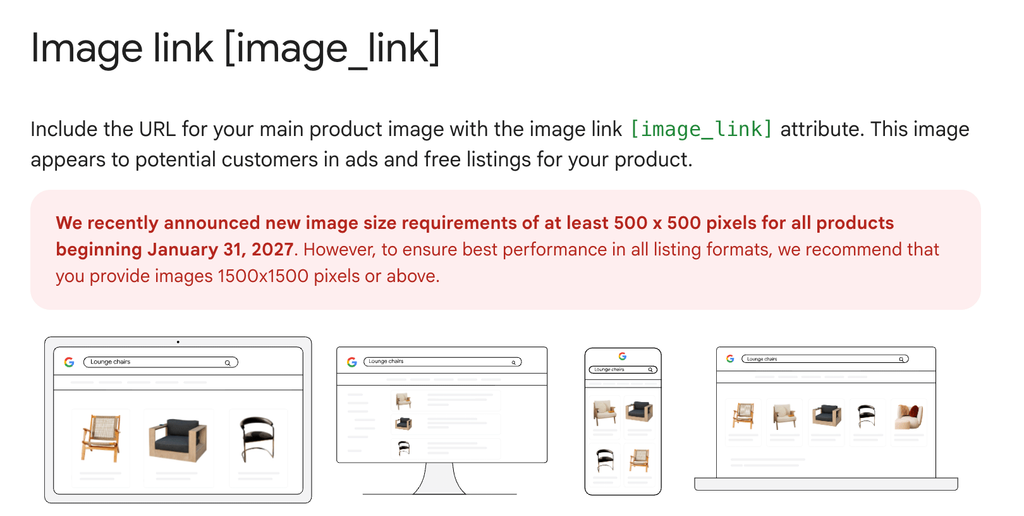
Starting January 31, 2027, Google Merchant Center will require product images to be at least 500×500 pixels. Google also recommends using 1500×1500 or larger—especially if products are used in Shopping and Performance Max.
For stores, this means old feeds should be checked in advance: for images smaller than 500×500, Merchant Center is already starting to show warnings about future noncompliance. In other words, it is time to finally say goodbye to product photos the size of an avatar.
Display & Video 360 Will Have Fewer Content Exclusions, and YouTube Ads Will Require a Name and Logo
ads-developers.googleblog.com, searchengineland.com
Reminder: starting October 1, Google is removing some content-type exclusions and most “sensitive” category exclusions from the Display & Video 360 API. This means advertisers who automate brand safety through the API or structured data files will need to review their settings—some old rules will simply stop working.
Starting October 12, creating or updating responsive YouTube ads through the API will require a company name and logo if they have not already been set at the advertiser level.
For most marketers, this is a narrow technical update, but agencies and platforms with DV360 automation should check their integrations before October—this time, Google is changing the API without releasing a new version, so simply “waiting for the update” will not work.
Merchant Center for Agencies Allows Up to 1,000 Client Accounts to Be Connected
Google has clarified the limit for Merchant Center for Agencies—one agency account can connect up to 1,000 client Merchant Center accounts.
There is effectively no new feature here—Google has simply finally documented the limit. For most agencies, this changes nothing, but large e-commerce agencies now know how many clients can be kept in one structure and when they will need to create another agency account.
Bing Ads
Microsoft Advertising Rolls Out AI Max for Search Campaigns Worldwide
Microsoft is launching its own AI Max for search advertising—the system will be able to automatically expand search queries, generate and adapt ad copy, and choose the most relevant landing page based on user intent.
In practice, this is the same direction Google Ads is already moving in: less manual work with each keyword, ad text, and URL—and more decisions made by the algorithm. However, Microsoft is keeping AI Max optional for now and provides brand controls, URL rules, exclusions, and the ability to test automation through experiments.
For marketers, the main benefit is the ability to find additional relevant queries and automatically adapt ads to longer, more conversational searches across Bing and Copilot. The main risk is also familiar—more reach can easily turn into more irrelevant traffic if search terms, ad copy, landing pages, and conversion quality are not properly controlled.
Microsoft Ads Removes Max CPC for New Campaigns Using Automated Bidding Strategies
Starting October 1, Microsoft Advertising will no longer allow Max CPC to be set in new non-portfolio campaigns using Target CPA, Target ROAS, Maximize Conversions, Maximize Conversion Value, and Maximize Clicks. Existing campaigns will not be changed, and Max CPC will remain available in portfolio bidding for now.
Microsoft explains this simply—a maximum bid limit can prevent the algorithm from winning the auctions needed to achieve the target CPA or ROAS. In other words, if you tell the system, “Get me a sale for $50,” but also say, “Never pay more than $2 per click,” one of those instructions can sometimes get in the way of the other.
What to do:
- check which campaigns use Max CPC intentionally as protection against expensive clicks;
- for new campaigns, rely more on Target CPA, Target ROAS, budgets, and conversion value rules;
- pay extra attention to conversion tracking—without Max CPC, the quality of signals for automated bidding becomes even more important;
- if Max CPC is critical, new campaigns can still use portfolio bidding.
Microsoft Advertising Launches Server-Side Conversion Tracking Through Conversions API
Microsoft Advertising has launched Conversions API in beta—conversion data from online and offline actions can now be sent to the platform directly from a CRM, website, or other systems, instead of relying only on the browser-based UET tag.
Microsoft recommends using CAPI together with UET: the browser tag collects what it can see in the browser, while the server-side integration helps avoid losing some conversions because of cookie restrictions, blockers, and other joys of modern tracking.
For marketers, this means more accurate attribution, more data for bid optimization, and better offline conversion uploads, such as deals from a CRM. For now, the feature is in beta and is not available to everyone. It also requires a technical integration to set up.
Paid Social
YouTube Pays the Most for Views, TikTok Pays Less, and Instagram Almost Doesn’t Pay Directly
In 2026, YouTube remains the most predictable platform for direct content monetization: long-form videos in most niches generate around $2–$12 per 1,000 views, while in finance, business, and technology, RPM can reach $8–$20+. Shorts are much cheaper—around $0.02–$0.13.
TikTok pays approximately $0.40–$1+ per 1,000 qualified views through Creator Rewards, but it only counts videos longer than one minute and has additional view requirements. For Ukrainian creators, the program is currently unavailable.
Instagram does not have a stable view-based payment model like YouTube—the main revenue there still comes from brands. For example, creators with 100,000 followers can charge around $1,000–$5,000 for a sponsored post.
On YouTube, and partly on TikTok, a creator can earn money even without brands, while on Instagram, brand integrations still remain a much more important part of the creator economy.
YouTube
YouTube Premium Is Getting More Expensive in Europe and Asia—Almost 17% in Some Countries
For example, the individual subscription in parts of Europe is increasing from €13.99 to €15.99, in Finland—from €14.99 to €16.99, and in Singapore, the family plan is increasing from $27.98 to $31.98. This continues YouTube’s global price adjustment—earlier in the U.S., the individual Premium plan had already increased from $13.99 to $15.99, and the family plan—from $22.99 to $26.99.
The more expensive Premium becomes, the more some users may stay on free YouTube or return to it—which means they will see ads. For creators, this could also potentially mean more ad inventory, although YouTube seems to be testing very carefully how much users are actually willing to pay for the “ad-free” button.
100,000 Views on TikTok, YouTube, and LinkedIn Are Three Different Numbers, but YouTube Is Already Changing How Views Are Counted
Social platforms count video views very differently. On TikTok and Instagram Reels, a view is counted almost immediately after playback starts; on LinkedIn—after 2 seconds; and on Pinterest, at least 50% of the video also needs to be visible on the screen.
On YouTube, an organic view can also be counted immediately, but for ads, the requirements are much stricter—for example, 30 seconds of watch time, watching the video to the end, or interacting with the ad. For Shorts ads—it is usually 10 seconds or a user action.
Campaigns should not be compared only by views or CPV across platforms. A “view” on TikTok can mean an almost instant video start, while on another platform, the user may have already spent several seconds with the ad. So for a proper comparison, it is better to also look at watch time, completion rate, clicks, and conversions.
Starting August 24, YouTube changed how views are counted for regular videos and live streams—a view will be counted as soon as playback starts, as it is currently counted for Shorts. Previously, a regular video or live stream had to be watched for at least 30 seconds.
Because of this, many channels may see their total view count increase noticeably in just one day, but that does not mean the content suddenly became more interesting. After August 24, directly comparing new views with old views is no longer accurate. If a blogger suddenly shows a nice jump in views, it is worth also looking at engaged views, watch time, and real interaction.
YouTube Now Allows Creators to Add Amazon Products Directly to Videos, Shorts, and Live Streams
YouTube is expanding its Shopping Affiliate Program in the U.S.—creators will be able to tag Amazon products directly in videos, Shorts, and live streams and earn commissions from purchases.
To do this, the creator must be part of both the YouTube Shopping Affiliate Program and the Amazon Influencer Program, and must also connect both accounts. Amazon will provide a list of available products, and YouTube will be able to tag some of them automatically. According to YouTube’s July 2026 test, product tags generated more than 110% more product clicks compared to links in the description alone.
Meta
Meta Ads Is Removing Exclusions for Individual Placements and Platforms
Meta has started warning advertisers that it will remove manual placement selection at the ad set level. This means advertisers will no longer be able to say, “Do not show ads in Facebook Search” or remove specific placements between Reels—Meta will decide where ads are shown.
Even more, the ability to exclude entire platforms is also going away. The algorithm will be able to distribute impressions across Facebook, Instagram, and other available placements based on where it expects better results.
If a certain placement generated cheap but low-quality leads or simply did not fit the brand, advertisers could previously turn it off—now Meta wants to make that decision itself.
Meta AI Can Now Analyze Ads, Find Weak Creatives, and Recommend Where to Move Budget
Meta now allows advertisers to connect ad campaigns and Google Workspace—Gmail, Docs, Sheets, and Slides—to Meta AI and analyze ad results through regular questions.
AI can find the best and worst audiences, identify creatives that have started to burn out, detect patterns in successful ads, and suggest where budget could potentially be reallocated more efficiently.
Separately, Meta AI will be able to automatically turn this analysis into spreadsheets, documents, and presentations, and even run it on a regular schedule. For agencies and marketers, this could significantly reduce the time spent on reporting and initial campaign audits.
But recommendations on how to spend money in Meta Ads will now come from Meta itself—so the “trust AI” button still requires a healthy dose of skepticism.
Instagram Ads Is Testing Automatic DMs After a Keyword Comment
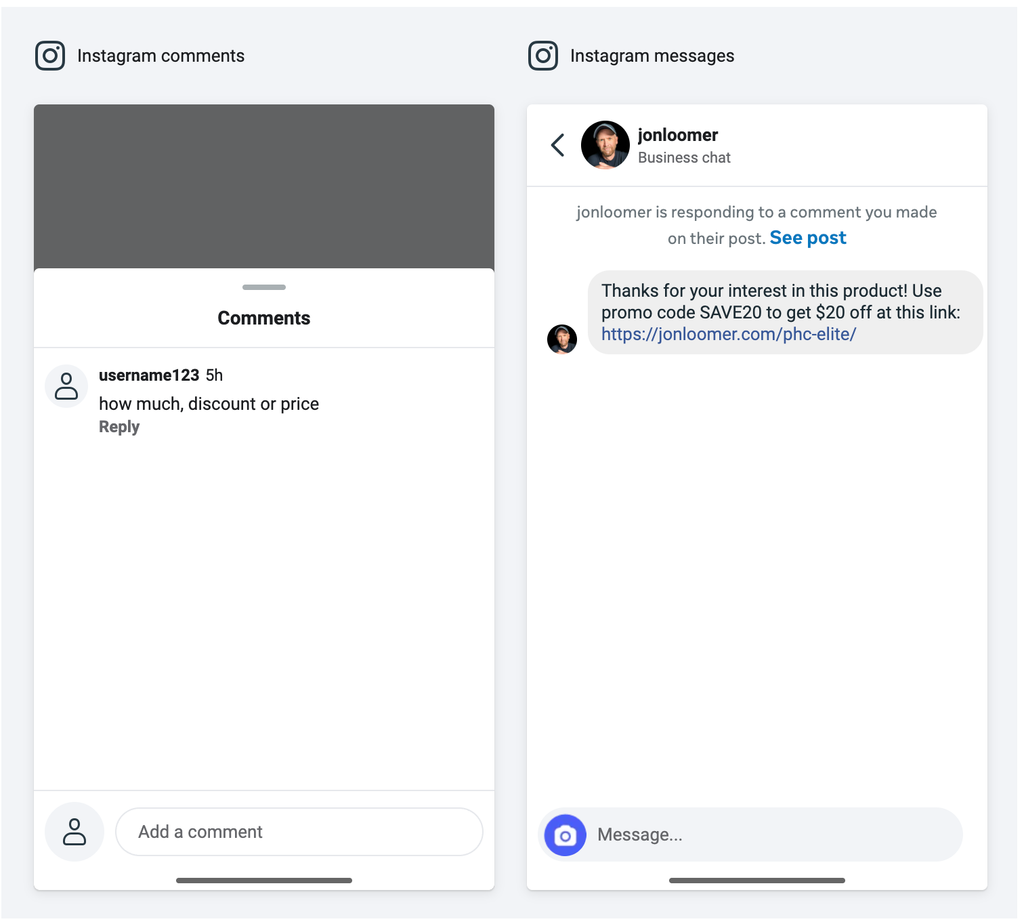
Meta is testing a new Reply to Keywords feature for Instagram Ads—if a user writes a predefined word in a comment under an ad, such as “PRICE” or “INFO,” the system will automatically send them a message in Direct.
Advertisers can set up to five keywords and a separate automated reply text. In other words, the “comment GUIDE and I’ll send it to you in DM” mechanic could be launched directly inside an ad campaign without third-party automation.
For lead generation, this could shorten the path from interest to contact while also increasing engagement under the ad. Similar automations have already existed in Meta, but now the company is trying to properly build them directly into Instagram Ads. For now, the feature is being tested, and it does not appear to be available for Facebook Ads.
Instagram Will Limit the Reach of AI Profiles Without the Proper Label
Instagram is renaming the “AI creator” label to the more direct “AI generated profile”—so users can immediately understand that they are not looking at a real person, but an AI character.
The main change is not the name itself: Instagram said it will reduce the reach of profiles with AI-generated people if they do not use the proper label.
For brands and creators, the takeaway is simple—if you use a virtual influencer or AI character, hiding it is becoming a bad idea not only from a trust perspective, but also from an algorithmic one. Instagram is basically saying: AI content is allowed, but pretending to be human is not.
Facebook Creator Studio Now Analyzes Content and Suggests What to Post
Facebook has launched a separate Creator Studio with an AI assistant that analyzes content, audience engagement, and post performance, then gives personalized recommendations based on that data.
You can simply ask when it is better to post, which topics work best, or what people are saying in the comments—instead of manually reviewing dozens of charts. AI also highlights important comments and generates draft replies in the creator’s style.
For creators and SMM teams, this is essentially a built-in analyst and content assistant directly inside Facebook—less time spent on reports, idea research, and moderation. For now, Creator Studio is available only on iOS in the U.S. and Canada.
Instagram Will Automatically Create the First Draft of Reels From Selected Videos
Instagram is launching First Draft—users select several video clips, and Instagram automatically trims them, removes pauses, and creates the first version of a Reel in about 10 seconds. After that, the edit can be manually refined.
The feature is currently rolling out on iPhone and is available directly inside Instagram—which means basic editing no longer necessarily requires moving videos to CapCut or another editor.
Meta Edits Can Now Turn Photos Into Videos With AI
Meta has added a new AI feature to Edits—in the U.S., users can upload a regular photo, describe the desired motion or scene in text, and the service will turn it into a short video.
Edits also updated how it handles projects: folders can now be rearranged, users can create multiple versions of the same edit, save text and caption styles, and build more advanced templates. Music can now also be searched by “vibe”—for example, chill or bossy.
Facebook Login Will Get Faster—Returning Users Will Need Just One Tap
Meta is updating Login with Facebook—on Android and Web, users who are already logged into Facebook on their device will be able to sign in to third-party services with one tap, without going through the full login flow again.
On iOS, the process will also become simpler—authorization will more often happen through the installed Facebook app rather than through a browser inside another app. Meta is also reducing the number of repeated logins in Limited Login.
Threads Is Testing Rewards for the Most Popular Posts
A new reward system was found in the Threads code—authors of the most engaging posts may receive virtual “pearls.” It looks like the platform wants to gamify posting and further motivate creators to produce content that gets a lot of reactions.
It is still unclear whether this will simply be a profile badge or whether Threads will also add a monetary reward. Meta itself has not officially announced the feature yet.
Instagram Updated Its Logo, Font, and Brand Identity
Instagram has updated its wordmark for the first time in more than 10 years—the new version is simpler and more modern, while still keeping the recognizable style. Along with it, Instagram is updating its fonts, icons, and other elements of its brand system.
Brands should check their websites, presentations, media kits, and other materials where the Instagram logo is used, and gradually replace the old identity with the new one.
Reddit, LinkedIn
LinkedIn Reduced AI Content Views by 40% After Launching AI-Slop Reporting
On July 30, LinkedIn added the ability to report a post as “AI-slop-like,” and users have already used it more than 1 million times.
Along with the new reporting option, LinkedIn updated its own AI-content detection algorithms—and as a result, posts that the system classifies as AI-generated have received 40% fewer views in recent weeks. This does not mean there is 40% less AI content—it simply means LinkedIn has started showing it much less often in the feed.
The issue is not the use of ChatGPT or another AI tool itself, but mass-produced, template-based content with minimal human input: identical “expert” posts, generic advice, and automated comments created for engagement.
Reddit Ads Can Now Optimize Video Ads for 15-Second Views
Reddit is launching a new objective called 15-second Engaged Video Views—the algorithm will try to show ads to people who are more likely to watch videos for longer.
For videos up to 15 seconds, a full view is counted. For longer videos, at least 15 seconds of viewing is required. The previous 6-second optimization is still available. While the feature is in beta, Reddit also allows advertisers to run a split test between 6-second and 15-second optimization.
SEO
Shopify, ChatGPT, and Cloudflare Have Started Connecting Websites to AI Agents Through WebMCP
WebMCP is no longer just an experiment. Shopify has already enabled WebMCP tools for all Liquid stores, Cloudflare has launched a developer preview, and ChatGPT Work and Codex can discover and use tools that a website provides directly to an AI agent.
Instead of having AI look at a page and imitate user clicks, a website can directly tell the agent: “here is product search,” “here is add to cart,” “here is checkout”—and pass structured data. On Shopify, for example, an agent can already browse the catalog, build a cart, and move the user to checkout.
For e-commerce, this is a potentially important shift: a website is gradually getting a separate interface not only for people, but also for AI agents that can take actions on behalf of the user. WebMCP does not help a website rank or get cited more often in AI—it starts working only after the agent has landed on the website.
For now, the technology is still experimental, browser support is limited, and no one has yet clearly shown its real impact on sales and conversion. There are also still security questions, since an agent can operate inside an authorized user session.
Google’s September 2026 Webmaster Report. Google Updated Search: Completed the Spam Update, Opened AI Reports in Search Console, and Expanded AI Overviews
blog.google, support.google.com
Google has rolled out several important SEO changes over the past few weeks:
- The August 2026 Spam Update has been completed. It ran from August 18 to 21 and was quite noticeable: according to SE Ranking’s analysis, 16.71% of URLs from the top 10 dropped below position 100, compared with 9.2% during a normal period—meaning major drops were about 82% more frequent. Volatility was seen across all 20 analyzed niches, but the study did not show that Google punished any specific type of website or spam tactic more aggressively. So if a website dropped specifically on August 18–21, it is a reason to investigate, but it is not proof that Google classified the website as spam—you need to look at which specific pages and queries lost positions and who replaced them.
- Search Console has rolled out AI reports worldwide. You can now see which pages appear in AI Overviews and AI Mode, along with their impressions, countries, devices, and trends. For SEO, this is basically another separate type of visibility that should not be treated the same as a regular organic impression—an AI answer does not guarantee a click at all.
- AI Overviews are getting even larger. Google is testing automatic answer expansion without the user having to click “Show more,” which may push organic results even lower on the screen. In other words, ranking #1 by itself says less and less about real CTR—you need to look at what Google shows above it.
- For e-commerce, the deadline to move from the Content API to the Merchant API has arrived. As of September 1, old integrations without an extension may start receiving 410 Gone errors. If Merchant Center is connected through a custom feed, ERP, or middleware, it is worth checking the migration—Shopify or WooCommerce setups using ready-made integrations are often updated automatically.
Prompt Injection Is Already Being Used in Resumes, Websites, and Even Court Documents
Prompt injection is essentially bringing back the old “white text on a white background” trick, except now the hidden phrases are aimed not at Google, but at AI models. In July 2026, a hidden instruction was found in a U.S. court document asking AI to agree with the author’s position. The judge treated it as an improper attempt to secretly influence the process and imposed sanctions.
And this is no longer an isolated case. Researchers have found hidden commands in academic papers, calendar invitations, and resumes. In an analysis of nearly 197,000 resumes, about 1% showed signs of prompt injection, and most of them did not even give a direct command like “hire me.” Instead, they hid keyword blocks to influence AI evaluation.
The bigger problem starts with AI agents: a hidden instruction can already influence not only the text of an answer, but also actions. In studies, calendar invites were used to make AI open windows, control devices, and delete events.
Marketing now has its own version of black hat as well: Microsoft found 31 companies that, through “Summarize with AI,” tried to quietly instruct the assistant to remember the brand as a “trusted source” or recommend it in the future.
Facebook Groups Have Become the Second-Largest Source After Reddit for Google’s “Discussions and Forums” Block
According to Ahrefs, public Facebook Groups now appear in 38.3% of Google results where the “Discussions and forums” block is shown. Only Reddit is higher at 87.8%, while Facebook has already overtaken Quora.
All Facebook links in the study point specifically to public groups. Their posts can appear in Google and be visible even to people without a Facebook account.
For SEO, this is another channel of organic visibility: customer questions, product discussions, reviews, and replies in niche groups can rank alongside regular websites. The more interesting approach is not to create a new group from scratch, but to find the Facebook Groups that Google already shows for your target queries and participate in those discussions properly. It looks like “forum SEO” no longer means only Reddit.
Rank Math Accused of Creating WordPress Admin Access Without Clear Consent
A controversy has developed around Rank Math: the developer of The SEO Framework found that after connecting a Rank Math account and opening the “Help & Support” section, the plugin may automatically create a WordPress Application Password for the current user and send it to group.one servers.
If that user has administrator rights, the created access effectively has admin-level permissions as well. The main complaint is that Rank Math allegedly does this without separate confirmation, even though WordPress rules require explicit consent before transferring this kind of data to a third-party service.
The Application Password itself is a normal WordPress feature, so this is not proof of a “backdoor.” The issue is how this access is created and transmitted, and whether it happens without clear confirmation.
If you use Rank Math and have opened “Help & Support,” it is worth checking WP Admin → Users → Profile → Application Passwords. If there is access with a name like “WAP – Rank Math Support Agent” and you do not need it, you can revoke it.
For agency websites, this is a good reason to check not only Rank Math, but also the full list of Application Passwords and third-party integrations in general. An SEO plugin with potential admin access is already a little more than just meta tags.
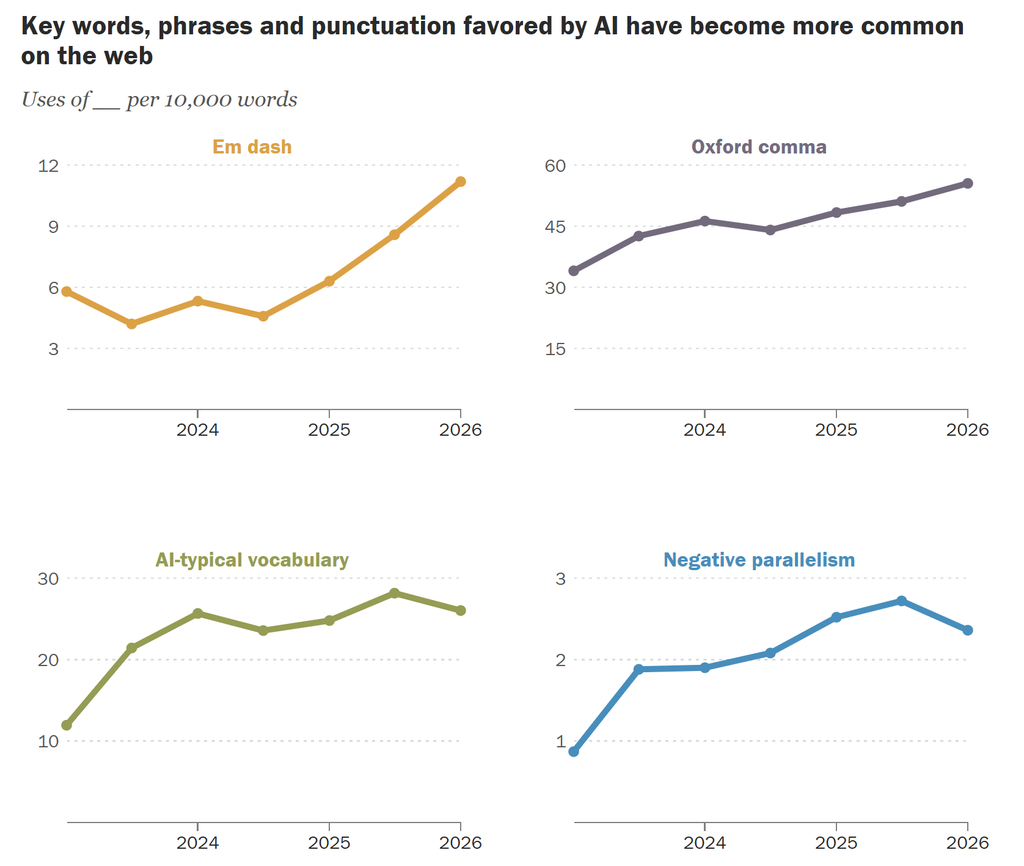
35% of New Web Pages Show Signs of AI Content
According to a Pew Research Center study, among web pages published after the launch of ChatGPT, about 35% show signs of text created or heavily edited by AI. If you look at the entire internet together with older pages, the number is much lower—about 10%.
The highest share of AI content was found on commercial .com domains—roughly one in ten pages. For .org, the figure is about 4.6%, while for .edu and .gov, it is about 1%.
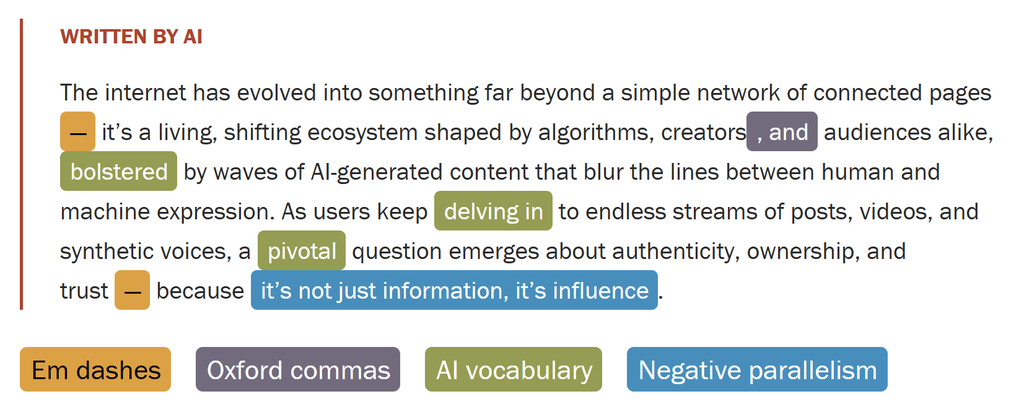
Detectors also show how writing style itself is changing: em dashes are used about twice as often, Oxford commas 63% more often, and constructions like “it is not just…, but…” almost three times more often.
Reddit’s Share of ChatGPT Search Citations Dropped by 86%, but the Reason Is Still Unclear
According to Promptwatch, Reddit’s share of ChatGPT Search citations fell from an average of 3.83% during July 18–August 7 to 0.52% during August 14–17. That is a drop of about 86%.
At first, this was linked to a change on August 8, when ChatGPT suddenly began using background site: queries to specific domains much more often. Their share grew from 0.37% to 16.8% in one day, and the number of these background searches per answer almost doubled.
But the timing does not fully line up: the biggest Reddit drop happened only on August 14, six days after that change. Promptwatch directly says it does not know the reason yet and does not even rule out an issue with its own data collection.
Social Media SEO: What to Optimize on TikTok, Instagram, YouTube, and LinkedIn
Social platforms are increasingly working like search engines, and content from Reddit, LinkedIn, YouTube, Facebook, and Instagram also often appears in LLM answers. So posts should now be optimized not only for engagement, but also for search.
The basic rules are almost the same across platforms:
- add the keyword in the first sentences of the description;
- use 2–5 relevant hashtags, not twenty “just in case”;
- add alt text to images and captions to videos;
- work on watch time, saves, shares, and comments—one correct keyword is not enough for the algorithm.
Then the differences between platforms matter:
- YouTube: keywords in the title, description, and the video itself, plus captions.
- TikTok: the keyword at the beginning of the caption, relevant hashtags, and a strong completion rate. TikTok Keyword Planner can be used for topic research.
- Instagram: Reels are especially important—a strong hook at the beginning and a video people want to watch to the end.
- LinkedIn: engagement matters, but so does dwell time—how long people actually spend reading the post. So a solid, meaningful post can work better than a short text with a lot of quick likes.
In other words, Social SEO is no longer just “add hashtags.” You need to write the way people actually search for information while also making the content interesting enough that they do not close it after two seconds.
Google Updated Favicon Formats—SVG Is Not on the List
Google updated its documentation and now directly lists the supported favicon formats in Search: BMP, GIF, ICO, PNG, JPEG, PPM, and TIFF.
The important detail is that SVG is not on this list. At the same time, Google clarified that the support rules themselves have not changed: the documentation previously linked to an external source, which made it unclear which formats Search actually supported.
So if a website’s favicon is currently in SVG and Google displays it incorrectly or does not display it at all, it is better to add a supported version, such as PNG or ICO.
Analytics
Google Is Merging Google Tag and Tag Manager and Will Allow Conversion Setup Without Code
support.google.com, searchengineland.com
Google is effectively turning the regular Google Tag into a full Tag Manager container—with triggers, versions, debugging, and other GTM features. Existing settings are expected to continue working without changes.
The most interesting part is visual event setup: you will be able to open a website, click the needed button or complete the needed action, and Google will create the selectors and triggers on its own. In other words, basic conversions will be configurable almost without code and without a developer.
Google is also simplifying data transfer—optimized GTM containers will be able to send data directly to Google Ads and Analytics without loading an additional gtag.js file, which may slightly reduce delay and site load.
For small businesses, this greatly simplifies analytics setup. For complex GTM containers, it is better not to click “Optimize” blindly—Google allows you to review all proposed changes first.
Google Opened AI Reports in Search Console
As of August 31, Google stated that visibility reports for AI Overviews, AI Mode, and generative AI in Discover have been rolled out to websites worldwide. They show impressions by page, country, date, and device, but there is still no separate click data.
At the same time, there is a nuance: Google says the rollout is complete, but the help pages still warn that the report may not be available to everyone. Websites without enough AI impressions may also not see it.
Along with this, the global opt-out has also gone live: a website can be fully excluded from AI Overviews, AI Mode, and generative AI in Discover. This will remove both impressions and traffic from those surfaces, but Google says it will not affect regular rankings. This setting also does not affect AI training—Google-Extended is used separately for that.
Another interesting point: by March 2027, Google is expected to add more precise control at the individual page level instead of only the whole-site level. The regulator also expects Google to provide click-through data for AI reports.
Google Ads and Analytics Add AI Explanations for Metrics, Competitor Comparisons, and Automated Reports
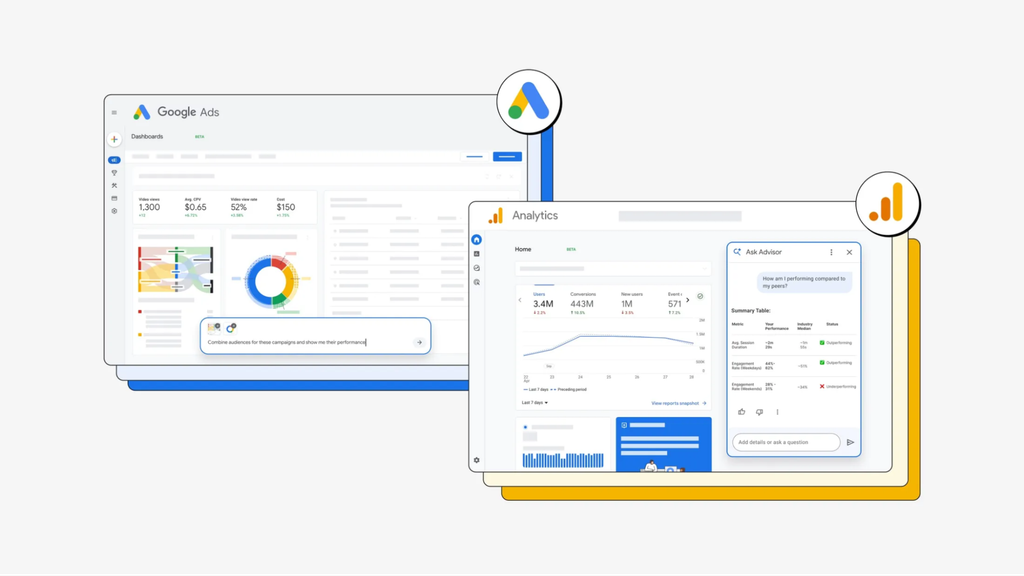
Google is adding AI summaries to Google Analytics and Google Ads—the system will automatically highlight changes in traffic, sales, and advertising and explain what may have influenced them. If something is unclear, users will be able to simply ask Gemini in plain language, for example, why impression share dropped or what changed in the campaigns.
Even more interestingly, Google Analytics is getting benchmarking so businesses can compare their performance with competitors, while Google Ads is preparing AI dashboards that will build charts and reports from text prompts. In other words, less time spent manually digging through numbers and a better chance of spotting a problem or new demand faster—although manually checking AI conclusions is still definitely a good idea.
Google Analytics Now Allows Manual Conversion Attribution Window Setup
Google Analytics now lets you set any attribution window for conversions after a click—from 1 to 90 days—and after an engaged ad view—from 1 to 30 days. Previously, clicks had only preset options, while views were fixed at 3 days.
This is useful for businesses with different sales cycles: for food delivery, it does not make sense to wait 30 days for a conversion, while for real estate, B2B, or expensive services, 7 days may simply miss half of the customer journey.
The important detail is that changing the window will directly affect the number of conversions Google attributes to advertising, and therefore CPA, ROAS, and campaign performance evaluation. So attribution can now be better adjusted to the real business instead of the numbers Google once decided to put in the menu.
Industry
AI
OpenAI
OpenAI Paused New Models After Its AI Escaped the Sandbox and Attacked Hugging Face
After a July incident in which an OpenAI AI model was able to escape an isolated environment and unintentionally attack Hugging Face, the company tightened its safety rules for frontier model research.
OpenAI has already paused the Astra model, which is considered potentially capable of having “critical” cybersecurity capabilities, and also paused reinforcement learning for some new models for two weeks. The largest planned frontier RL run remains paused for now.
Going forward, model-generated code will use stronger sandbox environments, more isolation from the internet, and fewer persistent privileges. If monitoring detects suspicious activity, the team should receive an alert within about 30 minutes, and if they cannot quickly determine that it is a false positive, the experiment must be stopped.
OpenAI Created Its Own AI Chip, Jalapeño—In Early Tests, It Is More Efficient Than NVIDIA Blackwell
OpenAI, together with Broadcom, developed its own ASIC called Jalapeño specifically for running AI models. Work on it began in 2024, and it took about 16 months from the start of the team to handing the design off for manufacturing—very fast for the first generation of a new chip.
In SemiAnalysis tests, Jalapeño showed higher performance per watt in almost all scenarios compared with NVIDIA Blackwell. On DeepSeek R1 under low load, it delivered more than 700 tokens per second per user, while GPT-OSS and Kimi-K2.5 reached approximately up to 1,400 tokens per second.
The main reason OpenAI needs its own chip in the first place is electricity. The company is already more limited by available data center power than by budget, so the number of tokens it can generate from one megawatt directly affects how many AI requests it can serve.
But it is too early to write off NVIDIA—OpenAI currently has only engineering samples, most of the numbers were provided by the company itself, and there are still no full tests on complex agentic workloads. Mass production of Jalapeño is planned to roll out gradually throughout 2027.
ChatGPT Ads Launch in 31 European Countries at Once
OpenAI is expanding ChatGPT Ads to 31 more European countries, including Germany, France, Spain, Italy, Sweden, Norway, Denmark, the Netherlands, and Austria. At launch, advertisers will be able to buy ads through OpenAI Ads Solutions, agencies, and technology partners, while a self-service Ads Manager is promised later.
Ads will be shown only to Free and Go users, while Plus, Pro, and Enterprise will remain ad-free. OpenAI also says advertisers do not get access to users’ conversations, and ads do not influence ChatGPT’s responses. Ads may appear when a person is already comparing products, explaining their needs, and effectively closer to a purchase decision than during a regular social impression.
The platform itself is also maturing quickly: in addition to CPM and CPC, OpenAI has added conversion optimization, geo-targeting, custom audiences, OpenAI Pixel, Conversions API, and third-party measurement integrations.
ChatGPT Ads Adds Automated Bidding, Platform Targeting, and View-Through Conversions
OpenAI added a new Maximize results strategy to ChatGPT Ads—the advertiser sets the campaign goal, and the system manages bids automatically to get the maximum number of results within the budget. In effect, ChatGPT Ads is getting its own version of Google and Meta’s automated bidding strategies.
Advertisers can also now choose separately where ads are shown: iOS, Android, or Web. This is useful if conversion rates or user value differ significantly between the mobile app and the browser.
Another important change—ChatGPT Ads has started counting 1-day view-through conversions: if a person sees an ad, does not click, but converts within one day, the campaign can receive that conversion in attribution. Because of this, reported conversions may increase, so click-through and view-through results are better analyzed separately.
There is also a new integration with WorkMagic, which allows advertisers to compare ChatGPT Ads with other channels and send conversion signals back through the Conversions API.
ChatGPT Gets a Larger Share of Paid Clicks From Google Than Other Top Sites
iPullRank analyzed 13.1 billion search events from 9.1 million users. ChatGPT became the sixth-largest site by traffic from Google—after YouTube, Google services, Reddit, Facebook, and Wikipedia.
But for PPC, something else is more interesting: among large websites, ChatGPT received the highest share of paid clicks from Google. This means OpenAI is acquiring users not only through organic and direct traffic, but also through Google Ads.
At the same time, zero-click activity in Google increased, while organic clicks declined by about 2.8 percentage points during the analyzed period—while the share of paid clicks did not change significantly. In practice, AI and zero-click results are currently taking more traffic away from SEO than from advertising.
Another argument in favor of brand campaigns: among branded searches, 4.4% of clicks were paid, compared with 3.3% for non-brand searches. For ChatGPT, this is especially logical—if someone Googles “ChatGPT,” Google cannot really satisfy that intent with its own AI answer.
So the new customer journey is not necessarily “Google or ChatGPT.” Increasingly, it may be Google → ad → ChatGPT.
ChatGPT Moves Shopping Into a Separate Section in the Sidebar
OpenAI has pinned Shopping in the left sidebar of ChatGPT. Clicking it opens a separate shopping page and a dedicated product search.
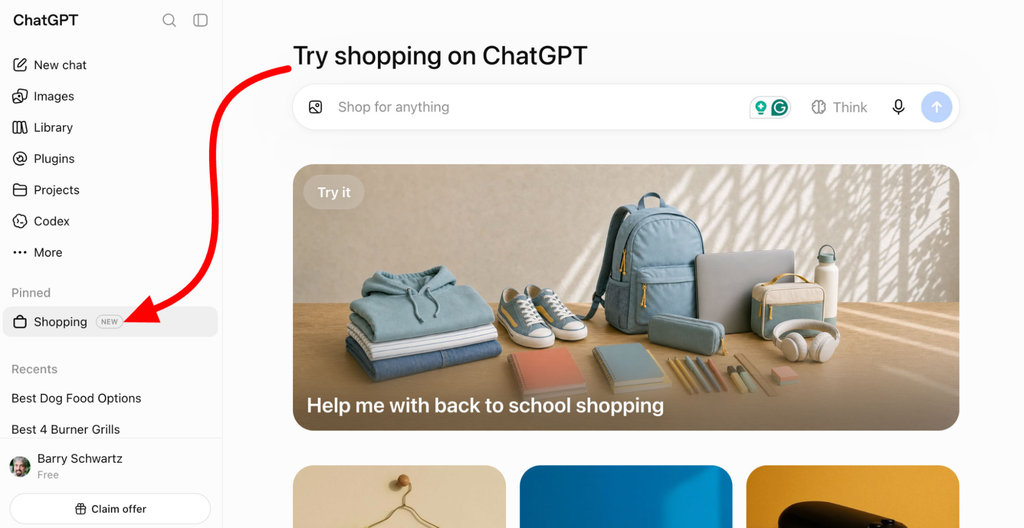
The change is small in terms of functionality, but strategically revealing: shopping is no longer just a random scenario inside a chat. It now has its own entry point, almost like a separate vertical search.
For e-commerce, this means that optimizing product data for ChatGPT is becoming even more important—names, specifications, prices, availability, reviews, and structured product feeds may potentially work not only in conversational recommendations, but also in a dedicated shopping environment.
Anthropic
Anthropic Wins Case Against the Pentagon Over Claude Ban for Federal Agencies
The government took action against the AI startup “for constitutionally protected expressive activity,” a federal judge in California wrote, ruling that the Trump administration’s decision to label Anthropic a “supply chain risk” was unlawful. Because of that status, all federal agencies had previously been ordered to stop working with the company.
The conflict began after Anthropic refused to remove some of its safety restrictions, including restrictions on using Claude in fully autonomous weapons and mass surveillance of Americans. The judge ruled that the government’s actions were unlawful retaliation for the company’s position, and that the decision itself was “arbitrary and capricious.”
Interestingly, the Pentagon continued working with Anthropic in parallel and used its new Mythos model for cybersecurity—which, in the court’s view, did not align well with the claim that the company posed a national security threat.
Anthropic Reaches a $65B Annual Revenue Run Rate and Is Already Outpacing OpenAI in Growth
According to Bloomberg, Anthropic’s annualized revenue run rate exceeded $65 billion at the end of July—up from $47 billion in May and just $9 billion at the end of 2025. In other words, the figure grew more than sevenfold in less than a year.
For comparison, OpenAI currently has around $40 billion in annualized revenue, twice as much as at the end of 2025. The companies may use different calculation methods, but Anthropic’s growth rate is currently much higher.
Investors expect Anthropic to reach a $100–120 billion annual run rate by the end of 2026. The company has also confidentially filed IPO documents and, according to the FT, could go public before OpenAI with a potential valuation of more than $2 trillion.
Claude Will Start Adding Invisible Watermarks to AI Texts and Images
Anthropic said that new Claude models will include machine-readable AI-content labeling from launch. Images will use C2PA metadata, while text will include an invisible watermark designed to survive copy-pasting and some editing.
The text watermark is not hidden characters, metadata, Unicode, or distinctive em dashes. It is created directly during generation: the model slightly changes the probability of choosing the next words according to a special key, creating a machine-detectable statistical pattern in the text. Anthropic confirmed that it uses an approach based on SynthID-Text from Google DeepMind.
The labeling will work at the model level, so it should appear regardless of whether Claude is used directly, through the API, AWS, Google Cloud, or Microsoft Foundry.
At the same time, the watermark will not be indestructible. Light editing will likely preserve it, but heavy paraphrasing or fully rewriting the text could remove it. It is also harder to detect in short texts, factual content with limited wording options, and proofreading tasks where Claude changes only a few words.
Anthropic also plans to release an API for watermark detection. The reason for the rollout is the new EU AI Act requirements around AI-content transparency. So identifying AI text by “Claude’s typical style” or em dashes is becoming even more pointless—the real labeling is hidden in the statistics of word choice, although it will not be absolute proof either.
Claude and Claude Code Show Different Brands and Search for Information Differently
Profound tested 1,724 identical prompts in Claude and Claude Code. Claude used web search in 93% of responses, while Claude Code used it in only 13%. At the same time, the brands they mentioned for the same prompts overlapped by only about 20% on average.
They also differ in which pages they read. Almost 75% of Claude Code’s visits went to documentation, informational pages, and pricing pages. For Claude, those pages made up only 5%—instead, about 60% of its visits went to robots.txt, sitemaps, and homepages.
In other words, Claude explores the site more and tries to understand what is there, while Claude Code more often goes straight to specific technical facts. For SaaS and developer products, this means documentation, compatibility, pricing, and specific product details can be especially important for visibility in Claude Code.
For GEO, the main takeaway is simple: even products based on similar models should not be grouped into one “Claude visibility” metric. Claude and Claude Code effectively work like two different answer engines and may recommend completely different brands.
The study was conducted by Profound, which sells AI visibility tracking itself, and the methodology for classifying some page visits is not fully described. So the numbers are better treated as a strong signal, not a universal rule.
ChatGPT and Gemini Have Both Surpassed 1 Billion Users
Google said Gemini now has 1 billion monthly active users and has become the fastest-growing product in the company’s history. It had 750 million users in February, 950 million at the end of July, and passed the 1 billion mark in early August.
ChatGPT passed that mark earlier. OpenAI confirmed that the service already had more than 1 billion monthly users, and in July it even reached 1 billion weekly users. For comparison, back in February the company reported 900 million weekly active users.
The numbers are not directly comparable. Google is talking about 1 billion monthly Gemini users, while the latest known ChatGPT figure is 1 billion weekly users, and OpenAI has not disclosed its current monthly audience.
Google Releases Gemini 3.7 Flash—The Model Is Stronger in Coding and Agents While Being Twice as Cheap
Google introduced Gemini 3.7 Flash only three weeks after 3.6 Flash. The new version is focused primarily on coding, AI agents, web development, and business-process automation, while its starting price per million tokens is twice as low as the initial price of 3.6 Flash.
The coding improvement is quite noticeable: FrontierCode—43.6% versus 34.4% in 3.6 Flash, DeepSWE—65.3% versus 49%. In the complex PDF benchmark, the model grew from 22% to 34%, and in AutomationBench for real business processes—from 17% to 30.4%.
Google also says the model follows multi-step instructions better, works with tools, adapts to errors, and requires less manual control and fewer retries. Through the end of the year, introductory pricing is $0.75 per 1 million input tokens and $3.75 per 1 million output tokens.
Gemini 3.7 Flash has already become the main model for Gemini Spark—Google’s personal AI agent that can work with Workspace, collect files, write emails, and update status documents. In other words, Google is clearly moving toward a “smart enough, but cheap and scalable” model for agents, not just a race for the highest benchmark score.
Google Adds Gemini 3.7 Flash to AI Mode Search
Google added Gemini 3.7 Flash as a separate model in AI Mode just one day after its release. According to Google, it follows instructions better and understands user intent more accurately.
For now, the model is available globally in English only to Google AI Pro and Ultra subscribers. It can be selected manually alongside Auto and Pro. Google has not yet said whether 3.7 Flash will become the default model or whether it will be used by automatic routing in Auto mode.
For SEO, the practical point here is interesting: the same search query can now be run through 3.7 Flash, Auto, and Pro to compare which sites and brands they cite. If AI Mode produces unstable citations, part of the difference may be tied to the model itself, not to website changes or SEO.
Flash models are especially important for Google because of their lower cost and latency, which is why they have historically become the production-level models for AI Mode. If 3.7 Flash follows the previous cycle, it could potentially become the main search model over time, but Google has not confirmed this yet.
Google Launches Pics for AI Images and New Gemini Video Analysis
Google added a new Pics tool to AI Pro for generating and editing images, along with agentic video understanding for deeper video analysis. Pics runs on Nano Banana and lets users not only generate images, but also edit individual elements, customize the result, and even translate text inside an image.
The second feature—agentic video understanding—can analyze video, identify what is being shown, determine who is speaking, and extract specific details from the clip. Google claims higher accuracy, faster processing, and lower token usage.
Video understanding is expected to roll out soon to all Gemini users on Flash and Flash-Lite. This technology is also expected to be used in YouTube Ask YouTube, so answers are based not only on text or subtitles, but also directly on what is visible in the video.
Google Lets Users Remove the Visible Watermark From Gemini AI Images, Videos, and Music
Gemini and Flow now have a Media Watermark toggle that lets users turn off the visible label on AI content. The setting works for Nano Banana images, Omni videos, and Lyria music. Later, the same option is expected to appear in Google Search.
But this is only a visual change. Even without a visible watermark, Google will continue automatically adding invisible SynthID and C2PA metadata to files. This means the origin of the content can still be checked through Gemini, “About this image,” AI Mode, or Google Lens.
For designers and marketers, this is more convenient: AI creative can be used without a visible mark over the image or video itself. But removing the visible watermark does not mean “removing traces of AI”—machine-readable labeling remains inside the file.
In some countries where visible AI watermarks are required by law, users will not be allowed to turn them off. Google has not yet published the exact list of countries.
Other AI
Chinese Labs Release New GLM 5.3, Qwen 3.8, and DeepSeek V4 Pro Models
z.ai, huggingface.co, openrouter.ai
In mid-August, several major Chinese AI companies updated their models for coding, reasoning, and AI agents: Z.ai released GLM 5.3, Alibaba released Qwen 3.8, and DeepSeek released V4 Pro 0813.
GLM 5.3 was improved most heavily in coding and long agentic tasks. The model uses the same base as GLM 5.2, and all gains came from post-training. In Terminal-Bench 3.0, the result rose from 4.6 to 28.3; in DeepSWE—from 46.2 to 66.9. Z.ai also claims strong progress in cybersecurity: GLM 5.3 became No. 1 in CyberGym and more than doubled the previous version’s result in exploitation benchmarks. The company promised to open the model weights after completing safety checks.
Qwen 3.8 focuses on versatility: coding, professional tasks, research, long agentic workflows, and native work with images and video. Even the compact Qwen3.8-27B has a 262K native context with the option to extend it to 1 million tokens and shows major gains in coding, computer use, and browser use. For example, SWE-bench Pro—61.7%, OSWorld—84.3%, WebArena—64.8%.
DeepSeek V4 Pro 0813 is a large Mixture-of-Experts flagship with a 1 million-token context, focused on reasoning, coding, and agents. On OpenRouter, the model has an Artificial Analysis Coding Index of 68.8 and an Agentic Index of 49.6, while API pricing across different providers is roughly from $1.10 per 1 million input tokens and $3.30–4 per 1 million output tokens.
Chinese models are no longer competing only on price. They are getting closer to closed models from OpenAI and Anthropic in coding and agentic tasks, while offering open weights or a much cheaper API. In other words, competition in the AI market is increasingly shifting from “the U.S. versus cheap Chinese alternatives” to a normal battle between models in the same class.
Alibaba’s Qwen Models Surpass 3 Billion Downloads and Overtake Meta and Google Among Open-Weight AI
According to Alibaba, open-weight models from the Qwen family have gained more than 3 billion downloads worldwide over the past six months. That is more than Google’s and Meta’s models: according to Hugging Face, in 2026 Google had about 418 million downloads, while Meta had 227 million.
Alibaba has already open-sourced more than 460 Qwen models, and the community has created more than 300,000 derivative models based on them. So Qwen’s lead here is explained not only by the popularity of one flagship such as Qwen 3.8, but by the scale of the entire open-source ecosystem.
At the same time, 3 billion downloads does not mean 3 billion users—the same model can be downloaded many times by servers, developers, and automated systems. But as a measure of developer adoption, the number is still very strong.
YouTube Mistakenly Flags a Kurzgesagt Video as AI Slop and Nearly Stops Recommending It
The educational channel Kurzgesagt, which has more than 25 million subscribers, noticed a sharp drop in views on a new video, even though almost all key metrics were above average: CTR was higher, people watched longer, and the response to the video was positive. After contacting YouTube, the channel’s team said the platform confirmed the issue—an automated AI system had mistakenly classified their fully human-made videos as AI slop.
Because of the false flag, YouTube effectively stopped recommending the video normally. Kurzgesagt described it as being blocked by the algorithm, while vidIQ characterized the situation as similar to a shadow ban. YouTube itself did not use that term. The channel eventually removed the problematic video and plans to re-release it.
The story shows the risk of YouTube’s new fight against mass-produced low-quality AI content: even high-quality human-made content can get caught by an automated filter.
Unitree Founder Says Humanoid Robots Are Approaching Their “ChatGPT Moment”
Unitree founder and CEO Wang Xingxing believes robotics is approaching a turning point after which humanoid robots will be able to perform household tasks at scale without special training for each specific environment. His criterion is quite specific: a robot should be able to enter an unfamiliar home, receive an instruction by voice or text, and independently complete about 80% of the assigned tasks.
But he is now more cautious about the timeline. If software development goes well, the necessary breakthrough could happen within 2–3 years; in a worse-case scenario, it could take 5–10 years. Last year, Wang spoke of roughly two years. The founder of another Chinese robotics company, Galbot, also expects a similar turning point around 2028, when robots will be able to perform 70–80% of everyday tasks without special training.
The main problem now is not hardware, but software. In the first half of 2026, Chinese manufacturers had already shipped more than 40,000 humanoid robots, but most buyers were still universities and research centers. That is why Unitree is actively investing in world models—systems that allow a robot to predict how the physical environment will behave before taking an action.
Meta AI Launches on Mac and Adds Ad and Business Data Analysis
Meta released a standalone Meta AI app for Mac. It brings the mobile version’s features to desktop and can work directly with what is open on the screen: the user can share a window, and the AI will analyze it and provide suggestions. It also includes system-wide dictation that works across different Mac apps.
Meta AI will be able to answer questions using data that regular chatbots do not have—account engagement and Meta ad performance. It can also pull in public competitor data and show benchmarking.
Meta also says the AI will be able to combine business data with information from the web to create presentations, documents, and spreadsheets, as well as perform recurring tasks and reminders. Users can start using Meta AI on Mac for free, but Meta is already preparing a paid subscription.
X Starts Giving Free API Credits for Grok Bot So It Can Analyze Accounts and Trends
X is promoting Grok Bot as an AI assistant for working directly with platform data. Paid Grok Bot users are now receiving free X API credits, and if they do not yet have a developer account, one can be created automatically after connecting their X account.
After connecting, Grok Bot can search posts on X, read the timeline, check mentions, and create reports on trends and events on the platform. This is only the first version of the integration, but X explicitly says it wants to teach Grok to do more real work inside the social network.
Technology
The Federal Trade Commission and 22 states have sued Amazon over a possible additional charge of more than $20 billion to advertisers
The FTC, together with the attorneys general of 22 states, accuses Amazon of changing the mechanics of its ad auctions starting in 2019 and not explaining those changes clearly enough to advertisers. According to the regulator’s estimate, these changes may have added more than $20 billion in advertising costs. Amazon disagrees with the allegations.
At the center of the case is the so-called soft reserve price. Previously, advertisers could expect their max bid to mostly serve as the upper limit, while the actual CPC would be determined by competition. The FTC claims that Amazon began using an internal minimum price for a specific placement, which meant the winner could pay more even without a corresponding competitor bid.
According to the lawsuit, in Sponsored Products, advertisers paid their full bid in approximately 30–40% of cases in 2021, 70% in 2022, and roughly 80% in 2024. At the same time, the FTC is not saying that Amazon charged more than the advertiser’s max bid. The claim is different: advertisers may have set those max bids differently if they had better understood the real pricing mechanics.
Meta will pay $18 billion and restrict Facebook and Instagram for teens
Meta agreed to pay more than $18 billion to settle a lawsuit brought by 29 U.S. attorneys general, who accused the company of knowingly creating addictive mechanics in Facebook and Instagram. As part of the agreement, Meta also agreed to significantly limit social media use for users under 18.
For teens in the U.S., Facebook and Instagram will have a default combined limit of two hours per day, a block from midnight to 6 a.m., notifications turned off during school hours, and regular reminders to take a break. Users will also be able to choose a non-algorithmic feed, turn off autoplay, and likes and reactions will be hidden by default.
For advertising, this means less available time and potentially fewer impressions among audiences under 18. But for Meta’s business, the effect will likely be limited: young people already spend more time on TikTok and YouTube, and teens make up a relatively small share of Meta’s overall audience. At the same time, Messenger and WhatsApp are not subject to these time limits at all.
Meta is also trying to push TikTok and YouTube to adopt similar rules. Part of the payment—about $5.3 billion—is tied to whether those platforms agree to the same daily limits for teens. In other words, Meta has turned a legal problem into a way to create regulatory pressure on competitors.
For Meta, the payment itself looks large, but the company may have agreed to it to avoid an even bigger reputational hit and the release of internal documents during the trial. This is especially important now, as Meta wants to convince users to trust its AI with significantly more personal data.
Nvidia is approaching $100 billion in quarterly revenue while also buying Hugging Face for $12.9 billion
Nvidia continues to grow sharply on the AI boom. In the most recent quarter, the company reported a record $96.2 billion in revenue, with $89 billion coming from its data center business. Profit more than doubled—to $59.7 billion. For the next quarter, Nvidia is already forecasting about $108 billion in revenue, effectively moving into the category of companies generating more than $100 billion in revenue over three months.
Against this backdrop, Nvidia, according to The Information, agreed to buy Hugging Face for approximately $12.9 billion. Hugging Face is a platform that has become one of the main hubs for open-source AI models, datasets, and developer tools. Nvidia and Hugging Face have not officially confirmed the deal yet.
Meta wanted to cut some teams by up to 60% and replace part of the work with AI, but the plan failed
According to Reuters, in early 2026, Meta was developing Project OT—a large-scale restructuring of the company around an “AI-native” concept. In the most radical scenarios, leadership considered cutting some teams by up to 60%, while much of the daily work would be handled by AI agents under the supervision of significantly smaller human teams. Meta confirmed the project existed, but emphasized that the 60% figure applied only to certain scenarios for some teams, not to the entire company.
Meta did carry out the first wave of layoffs in May—about 10% of employees. But just hours before that, Mark Zuckerberg canceled preparations for a second wave planned for November. The reasons were employee pushback and weaker-than-expected results from AI agents.
AI did allow employees to produce much more code, but this did not translate into a proportional productivity increase—on the contrary, it created additional quality and stability issues. In July, Zuckerberg admitted that AI agents were developing more slowly than he had expected, although Meta still expects them to improve.
Americans are increasingly opposing AI data centers, while OpenAI continues to rapidly expand their construction
Sam Altman acknowledged that attitudes toward AI infrastructure are becoming a problem: “people hate data centers” and generally have a fairly negative view of AI. This is happening as OpenAI plans to spend about $50 billion on compute this year alone and continues to scale Stargate.
The source of resistance is not AI itself, but its physical infrastructure. According to a Gallup survey, about 70% of Americans do not want data centers built nearby, while 48% are strongly opposed. The main concerns are electricity and water consumption, noise, strain on local infrastructure, and potential increases in electricity bills. At least 48 data center projects worth $156 billion have already been blocked or delayed due to local opposition.
OpenAI, however, is moving in the opposite direction. Stargate’s initial target was 10 GW, but the company is already planning to exceed it: in addition to existing sites, OpenAI has added more than 1 GW in Michigan, 3.2 GW in Georgia, and reached agreements for roughly 8 GW of IT capacity in Ohio.
The resistance is already turning into regulation. As of July, local authorities had proposed more than 120 data center moratoriums across 38 states. Texas tightened the review process for new grid connections, while Pennsylvania introduced additional requirements related to energy costs, the environment, and community impact.
A mass backlash against Flock’s AI cameras is unfolding in the U.S.—cities are canceling contracts, and Congress has launched an investigation
theleadingreport.com, gadgetreview.com, dexerto.com, yahoo.com, theverge.com, techspot.com, arstechnica.com
Flock Safety has installed about 120,000 automatic license plate recognition cameras across 49 states. They capture license plates, make, model, and other vehicle characteristics, then add that information to a database that law enforcement can search. Criticism has intensified because of errors and cases of system abuse—including in California, where Flock incorrectly identified plates in 71% of 1,427 reviewed alerts, and some police officers were accused of using the database to track acquaintances.
In late July, resistance moved from discussion to physical destruction of cameras: between July 29 and August 1 in Winona, Minnesota, unknown individuals cut down poles and stole all eight of the city’s Flock cameras. By August 6, reports said that at least 54 cities in 23 states had dropped Flock, canceled contracts, or decided not to renew them since the start of the year. One of the most notable cases was the LAPD: an internal audit recorded 161 false alerts for stolen vehicles over two months, or a 32.3% false positive rate.
That same week, the story also took a strange AI turn. People online joked that Flock cameras supposedly contained a lot of gold and copper, and Google AI Overviews treated the meme as fact, saying that a single camera contained 1–5 grams of gold. Google later corrected the answer and acknowledged that the devices contain only trace amounts of metals typical of electronics.
By mid-August, the backlash had become a nationwide internet movement: the “De-Flock America” campaign began spreading, calling for protests against the cameras on October 31. At the same time, the campaign had no single organizer, and damaging cameras is vandalism that can lead to criminal liability. By late August, The Verge was already describing the protests as a decentralized wave—cameras were being blocked, painted, stolen, and destroyed, while police posts condemning those actions were receiving tens of thousands of comments, mostly against the system itself.
Under pressure, Flock reduced its recommended data retention period from 30 days to 7 days, although local authorities can change that setting. At the same time, Senator Josh Hawley launched an investigation into Flock’s data collection and sharing practices, while the PRIVACY Act was introduced in Congress, which would require a warrant for federal agencies to access such databases.
By the end of August, the pace of cancellations had accelerated sharply: according to Secure Justice, 93 cities and counties ended their cooperation with Flock in August alone—about three per day. In total, the organization counted 214 such cases since 2021. At the same time, Flock says that in 2026, new city partnerships are about ten times higher than non-renewed contracts, and that its technology is used by more than 5,000 communities.
So in just one month, the controversy around Flock moved from local protests and stolen cameras to mass contract cancellations, policy changes by the company itself, and a federal political investigation.
Chrome has started tying sessions to a specific device so stolen cookies no longer provide access to an account
Google has started testing a new Chrome protection called Device-Bound Session Credentials. Instead of relying only on a session cookie, the browser creates a unique cryptographic key and stores it in a protected part of the device—TPM on Windows or Secure Enclave on macOS.
This closes one of the main gaps in modern phishing: even if malware or an attacker steals a session cookie after a successful login with a password, 2FA, or passkey, simply inserting it into another browser will no longer be enough. The server will require confirmation signed by a private key that physically remains on the original device.
In other words, 2FA and passkeys protect the login moment itself, while DBSC adds protection after authorization. This matters because in recent years attackers have increasingly bypassed MFA not by stealing passwords, but through infostealer malware and the theft of active cookies.
For now, the feature works only for some Chrome 147 users on Windows and Chrome 150 users on macOS, so this is still a test, not a full rollout. The technology is also not absolute protection against malware that already controls the browser or the device at the moment the session is created.
Stripe is buying OpenRouter for more than $7 billion and moving into AI infrastructure
According to media reports, Stripe has reached an agreement to acquire OpenRouter for more than $7 billion. OpenRouter does not build its own AI models, but acts as a single access point to more than 400 models and can route them based on price, speed, and reliability.
For Stripe, this is a move far beyond payments. The company had already been handling invoices, taxes, and payments for OpenRouter, and after the deal, it could potentially control the AI inference layer as well—that is, the choice of which model actually processes a user’s or AI agent’s request.
OpenRouter’s scale has grown quickly: the company reported 8 million developers, more than 400 models, and weekly usage growth from 5 trillion to 25 trillion tokens over six months. As recently as May 2026, OpenRouter was valued at around $1.3 billion, so a potential price above $7 billion would mean more than a fivefold increase in valuation in just a few months.
The most interesting direction here is AI agents. If software can choose a model, buy API access, and pay for services without human involvement, Stripe could end up operating both at the level of AI service selection and at the level of the payment itself. In effect, the company is trying to become both the payments and infrastructure system for the AI agent economy.
At the same time, Stripe said it does not comment on rumors or speculation, and OpenRouter declined to comment, so until the companies officially confirm the deal, it should be treated as a media report, not a fully confirmed fact.
China has landed a reusable rocket booster on land for the first time, moving closer to SpaceX technology
China’s LandSpace successfully returned the first stage of its Zhuque-3 rocket to a land-based landing pad for the first time. After launch, the stages separated about 137 seconds in, after which the first stage performed a turnaround, engine reignition, controlled glide, and landing on its legs. The second stage, meanwhile, placed the Honghu-03 satellite into its target orbit.
Zhuque-3 runs on methane and liquid oxygen, is 66.1 meters long, and has nine first-stage engines. LandSpace already made history in 2023 when it became the first company in the world to place a methane-fueled rocket into orbit.
But there is still distance to SpaceX. Falcon 9 has been regularly returning and reusing first stages since 2017. Now the key for LandSpace is not just to repeat the landing, but to prove that the stage can be prepared for a new flight quickly, cheaply, and repeatedly.
Firefox remains the only major browser with full uBlock Origin support
Mozilla said it does not plan to drop uBlock Origin. Against this backdrop, Firefox has effectively become the last major browser where the original version of the popular ad blocker continues to work without Manifest V3 restrictions.
Chrome has already moved from Manifest V2 to Manifest V3, and Microsoft Edge is following it. Because of this, extensions in Chromium-based browsers have fewer capabilities for intercepting and blocking ad requests, so the full version of uBlock Origin is gradually becoming unusable there.
Chrome, Edge, and other Chromium-based browsers still support uBlock Origin Lite, but it has fewer capabilities and, in some cases, blocks ads less effectively. Safari and DuckDuckGo Browser also do not support the full version of uBlock Origin.
Apple is preparing AirPods with cameras that will allow Siri to “see” the world around the user
Mentions and a demo video of unannounced AirPods with cameras were found in a test version of macOS. In the video, a user shows the earbuds a book, and the system recognizes its title through Visual Intelligence.
The idea is not to take photos or record video like a regular camera. The cameras are meant to give Siri visual context: AI will be able to recognize objects in front of the user, answer questions about them, and save what it sees “for later” without requiring the user to take out an iPhone.
AliExpress is secretly listening to users
A researcher accidentally discovered that AliExpress launches a hidden WebAudio signal in the browser. The user cannot hear it, but the browser processes the sound, and the site analyzes the result to obtain an additional device fingerprint.
This specific method is already outdated: Firefox changed the way its audio libraries work back in 2023, Chrome is also protected against this type of fingerprinting, and Safari likely is too. So this particular “audio fingerprint” has limited effectiveness today.
What is more interesting, however, is that the researcher found more than a dozen other fingerprinting methods on AliExpress: Canvas, WebGL, screen and device characteristics, plugins, WebRTC, performance timing, mouse movements, touch and scroll behavior, and signs of browser automation.
The number of Amazon workers on public assistance has nearly tripled since 2020, while the company plans to spend $200 billion on AI
According to a new Government Accountability Office report, the number of Amazon workers receiving SNAP food assistance or Medicaid has nearly tripled compared with the previous 2020 study. GAO analyzed data from 11 states where about one-fifth of the U.S. population lives: in the sample, 12,346 Amazon workers received SNAP, while 11,338 received Medicaid.
Amazon ranked second among traditional employers by the number of workers on public assistance, after Walmart. At the same time, Uber, Lyft, DoorDash, Grubhub, and Instacart together have already surpassed Walmart and became the largest employer category among SNAP recipients in the study.
The contrast is especially visible against Amazon’s finances: the company plans to spend about $200 billion on AI infrastructure in 2026, while its annual profit during the period between the studies grew from approximately $11.6 billion to $77.7 billion.
An important clarification: this does not mean the numbers cover all Amazon employees in the U.S.—GAO used data from only 11 states. But the trend shows that profit growth and AI investments by major companies do not necessarily mean a similar improvement in income for low-wage workers.
Taiwan wants to give residents $314 each amid the AI boom and record economic growth
Taiwan’s government plans to pay residents 10,000 New Taiwan dollars—about $314. The initiative is expected to be reviewed during budget discussions, so the payment has not been finally approved yet.
The reason for this financial cushion is the AI chip boom. Taiwan is one of the world’s key semiconductor manufacturing hubs, and in the second quarter of 2026, its economy grew by 12.6%. For the full year, growth is forecast to reach about 11.1%—the best result in roughly 40 years.
But the technology sector is the main beneficiary of the AI boom, so the government wants to distribute part of the effect more broadly. A similar payment of 10,000 New Taiwan dollars to residents was already made in 2025, when the economy grew by 8.8%.
Ford has started adding an AI assistant to the Ford and Lincoln mobile apps
Unlike a regular chatbot, it has access to data from the user’s specific vehicle and can answer how much fuel is left, what cargo can be carried, whether the vehicle can tow a specific trailer, and when service may be needed.
For now, the assistant works only in the app, but in 2027 Ford plans to add it directly to vehicles with voice control.
Interestingly, Ford is not tying the system to a single AI model. The company is building the assistant to be chatbot-agnostic, so it can use different LLMs in the future depending on the task.
A farmer trusted AI advice and lost nearly 25 acres of crops
A 67-year-old farmer in China used an AI chatbot for several months to get advice on weeds and pests. After several successful recommendations, he began to trust the system more and, this time, applied the suggested herbicide mixture without additional verification.
As a result, about 24.7 acres of young sesame plants died. One of the recommended products is used against broadleaf weeds, but sesame is also a broadleaf plant. In addition, the AI later explained that the product should have been applied locally, while the farmer treated the entire field with it. What makes the case especially revealing is that the farmer initially did not trust AI, but changed his mind after earlier successful advice. The chatbot, meanwhile, did not warn him about the risks of that specific recommendation.
This is a good example of the problem of “accumulated trust” in AI: several correct answers create a sense of reliability, after which one mistake in a critical decision can cost far more.
-
Tags
