

WHAT ARE CONVERSIONS?
-
Post author

-


A website conversion is the percentage of visitors who complete a target action. It’s an important metric that affects business profitability. It can apply to different platforms and sales channels, but most often refers to website conversions. A conversion action can be buying a product or service, filling out a lead form to subscribe to a newsletter, booking a spot for an online event, and more.
What Is This About
- What are conversions in online marketing?
- Why increase the conversion rate?
- Where to start improving conversions?
- Methods to improve website conversions
- Conclusions
What are conversions in online marketing?
A conversion is a desired action by a potential customer. It is not always a purchase. The list of possible conversion actions is quite large:
- registering for an event
- clicking a PPC ad
- subscribing to a newsletter
- replying to an email or sales offer
- completing a quiz or survey
- following a social media page
- commenting on or sharing a post
- sending a direct message
- watching a video
- installing a program or mobile app
- making a phone call
- ordering a product or service
In general, any lead form submission—no matter the goal—can be considered a conversion. That’s because the user shares their contact info, most often an email address. A marketer’s job is to create offers that generate as many conversions as possible. At each stage of user interaction, the offers can be different. In the beginning, a conversion is usually submitting an email or other personal info, and it usually ends with a purchase and payment.
You can track conversions using tools like Google Analytics or Facebook Pixel. The choice of analytics platform depends on the promotion channel. For example, email campaigns use analytics from services like MailChimp and others.
The conversion rate is calculated by dividing the number of completed target actions by the total number of visitors, then multiplying that number by 100. The result is shown as a percentage.
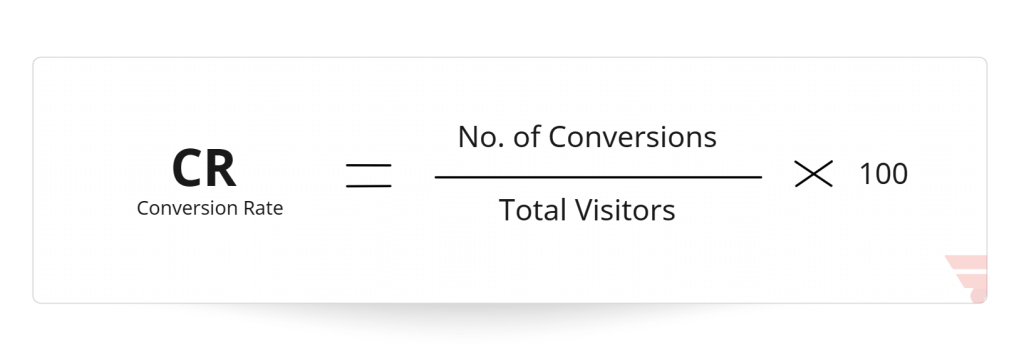
For example, if you get 20 conversions from 2,000 interactions, the conversion rate will be 2%, because 20 ÷ 2000 × 100% = 2%.
Conversion marketing affects all stages of the customer lifecycle. A high conversion rate at one stage of the sales funnel helps the potential customer move to the next stage. For content creators and bloggers, success may mean subscriptions, downloads, and more.
“Conversion marketing focuses not on bringing more traffic but on converting existing traffic. It requires proactive engagement with users using real-time analytics.”—“Conversion marketing,” Wikipedia
A good conversion rate is a relative term because the number depends on the business industry and the channel or platform used. For example, a consulting landing page will usually bring more leads than an online store that sells high-cost items like power generators or designer furniture. The word “conversion” can mean different things—for one business, it may mean online purchases with payment; for another, it could be the percentage of sign-ups for a free consultation.
“A 2023 survey by Ruler Analytics showed the average conversion rate across 14 industries was 2.9%. But a ‘good’ conversion rate depends on your industry, niche, goals, traffic channel, and audience demographics, among other factors.”—“Conversion Rate Optimization (CRO): 8 Ways To Get Started,” Ben Cotton, HubSpot
According to different sources, a “good” website conversion rate ranges from 2% to 5%. Some industries, like industrial equipment, have low-performing websites that serve more as brand and product information pages than online stores. Others, like electronics or business services, often show higher conversion rates.
The main goal in calculations is to understand your niche’s average level and improve your own conversion rate based on business goals at each stage of the sales funnel.
Why increase the conversion rate?
Analyzing your conversion rate helps improve your website—its usability, design, and technical features. You’ll be able to update key pages, choose the right offers, write stronger headlines, and create simple, user-friendly lead forms.
Why is conversion improvement important?
- Conversion analysis helps identify issues on the site, like broken lead forms. This way, you can get more leads and orders without needing extra lead generation.
- Conversion optimization improves the user experience, lowers bounce rates, and increases the chances of visitors returning. It also has a positive effect on SEO.
- Focusing on conversions lets you improve your product and marketing materials through testing and experiments with website elements, emails, and more. You can create strong lead magnets and make your offer truly unique.
- You’ll be able to use fewer channels and save time and money on ads if your site, social media page, or another platform has a high conversion rate.
- When visitors convert on your site, they enter your CRM system. This helps you target them more effectively as they move through the marketing funnel.
In general, all conversion-focused actions help attract more customers, boost sales, and grow your company’s profit. Instead of chasing reach, you get the most out of the visitors or followers you already have.
“Use conversion tracking in your account to measure conversion rates and ultimately use that data to make advertising decisions.”—“Conversion rate: Definition,” Google Ads Help
The higher the conversion rate, the less money you need to spend on marketing to attract new customers.
An example that shows the importance of conversions is growing a personal blog on Instagram. Advertisers look at stats—the actions your followers take. If you have 50,000 followers but no engagement (only 20 likes and 2 comments), no one will want to work with you. But a blogger with a small, active audience that converts and clicks story links can succeed.
Another example is an email with a webinar invite. If you send 10,000 emails and 500 people click the link and register, the conversion rate is 5%. Next time, you can test the subject line or first paragraph, offer a discount or gift, and avoid spending money on growing your email list.
Conversion rates show how well segmentation works. Knowing this rate helps create better campaigns for targeting specific users by location, interests, and more.
📌 Read the article: What Is Cross-Marketing?
Where to Start Improving Conversions?
Conversion rate optimization (CRO) is a set of actions to increase conversions. The goal is to grow the number of visitors who become customers. It includes analyzing user behavior and removing barriers that stop users from completing actions on the site.
There are many ways to improve conversions, but preparation must come first. A detailed analysis helps you see what’s stopping potential customers and what works best in your niche.
Step 1: Set Your Goals
CRO can help you reach different goals:
- increasing sales
- gaining more social media followers
- growing your email list, and more
Having a goal at each stage of the sales funnel helps you stay focused on what matters.
Step 2: Set Up Analytics
Google Analytics and other analytics tools help you understand how your efforts affect conversion numbers. This includes setting up funnel events—the steps users take to reach a specific goal. It helps track user behavior and find weak spots on your site, platforms, or marketing channels.
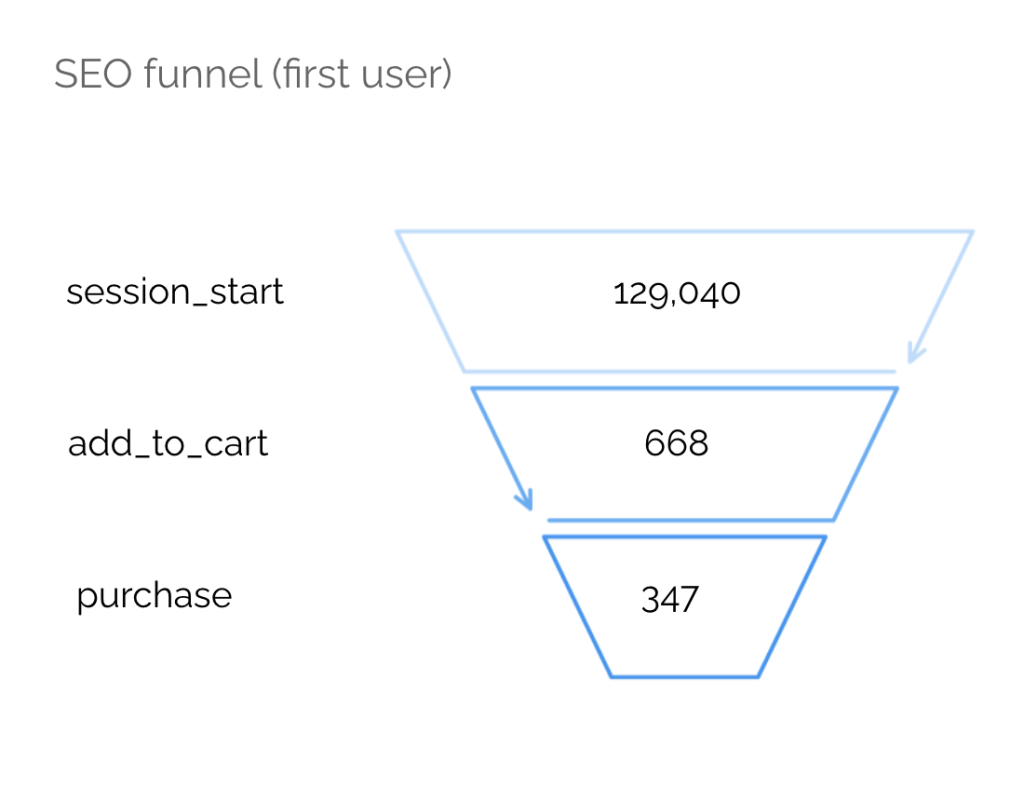
An important part of analytics is regularly reviewing user sessions to find ways to improve the user experience.
You can analyze how users view different pages and interact with site elements, like lead forms. Besides site analysis, this helps measure the results of your ad campaigns.
Step 3: User Surveys
You can run surveys through email, messengers, social media, or directly on your site using quiz marketing. The answers you collect help form ideas to improve the user experience and better understand your target audience.
Step 4: Competitor Analysis in Your Niche
Looking at leaders in your field helps you achieve better results. These can be companies in related industries or international brands. The goal is to find out what strategies lead to high conversions. Use that information to improve your website, landing page, or any marketing tools you use most.
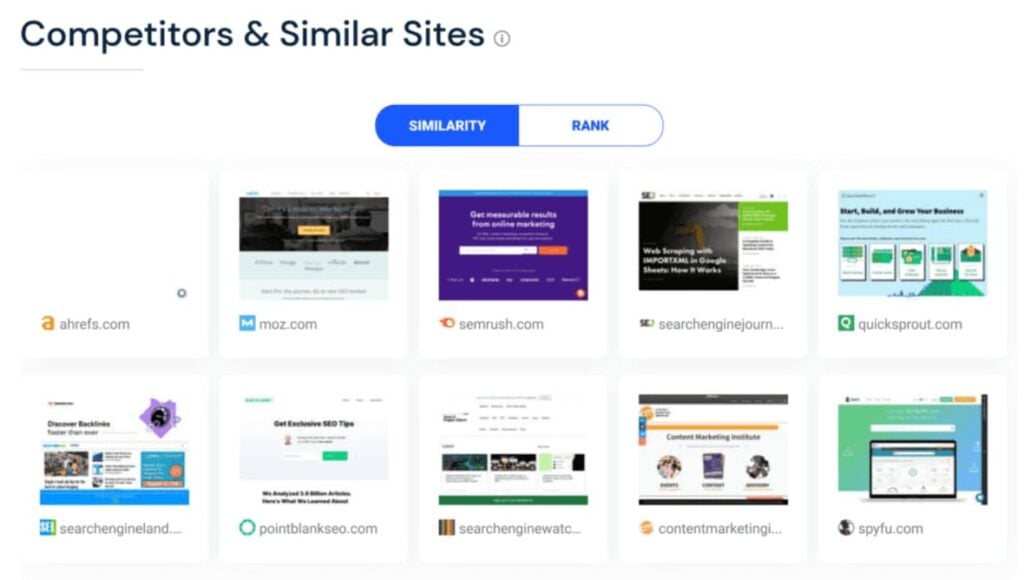
For example, if you know a company has a successful email campaign, subscribe to it, research how it works, and see how you can apply it in your own business. You can use competitor analysis tools like SimilarWeb to compare your site with others in your niche.
Step 5: Create Hypotheses
Hypotheses are the foundation for building a strategy to improve conversions and make changes to your site. You’ll also need Google Analytics to form them. This analytics tool can show at which stage users drop off in the conversion journey. For example, if many users start an order but don’t complete checkout, you can assume that simplifying the order process may improve conversions.
Step 6: Set Up Testing
Once you’ve listed your hypotheses, you can begin testing them. A/B tests let you compare different headlines, CTAs, lead forms, and other site elements to see which works best. As a result, you can make informed decisions about what changes to implement.
There are many A/B testing tools, including Optimizely, VWO, Crazy Egg, and AB Tasty. AB Tasty can test both websites and mobile apps.
Before testing, decide which conversion you want to improve. It’s best to focus on one thing, like purchases or newsletter sign-ups. After testing, make a list of potential changes to fix the issue.
Start by improving things that are easy to fix. This saves time and money—the problem might be a dull button or broken form, not the site’s entire design.
Website Conversion Optimization Methods
For most websites, the goal is to increase online orders. So CRO focuses on guiding visitors to complete the checkout and payment steps. For example, if a customer leaves items in their cart, offer a special deal like free shipping.
Amazon is a strong example of an online store with easy navigation, well-organized product catalogs, helpful recommendations, detailed product pages, and a clear cart. It gives personalized product suggestions based on past purchases and user interests. Product pages include descriptions, user reviews, video overviews, and a one-click buy option—all of which simplify the order process.
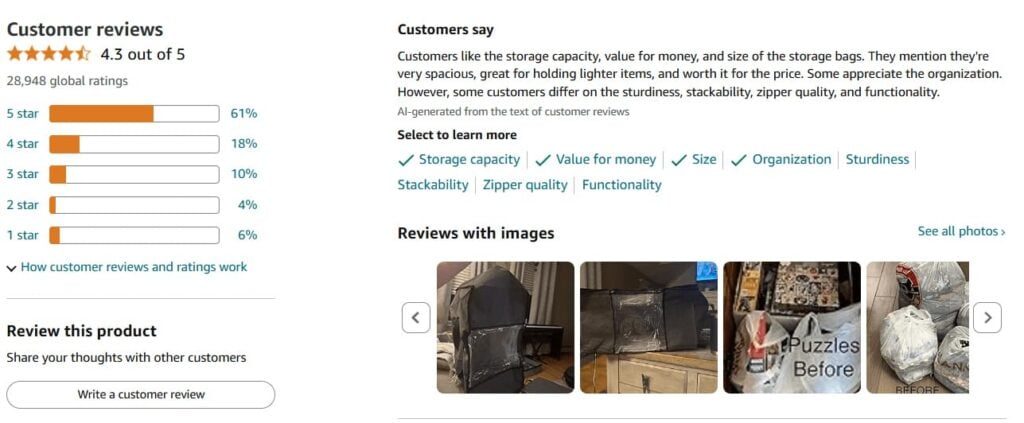
To receive personalized suggestions, users need to register, which counts as a free conversion by sharing their data.
Here are some of the most popular and universal actions for increasing a website’s conversion rate:
- Use the AIDA model (Attention, Interest, Desire, Action) to design the user journey through the conversion funnel—not just for websites, but for any user-facing content.
- Improve content with detailed product descriptions, quality images, and videos.
- Offer multiple contact options, especially live chat. The chatbot’s first message can include a greeting and a question to start the conversation.
- Make navigation simple and clear, with categories, subcategories (if needed), filters, sorting, and a search bar.Show logos of well-known clients or partners.
- For eCommerce: allow one-click buying, comparison features, and a wishlist option.
- For services: use widgets like calculators or selection tools.
- Publish customer reviews.
- Include clear info about shipping, returns, and exchanges.
- Use pop-ups and repeated lead forms with just a few fields. A Quicksprout study found that reducing form fields to three ensures a minimum 25% conversion rate.
- If aiming for cross-sells, add product recommendations to each product page and the cart.
- Use multi-tier pricing, simplify pricing pages, and for some industries, allow installment payments.
- Add CTAs to blog posts.
- Highlight offers or lead magnets on every page, such as a discount or a free eBook.
On Neil Patel’s website, visitors are offered to create a free account and use a range of SEO-related tools.
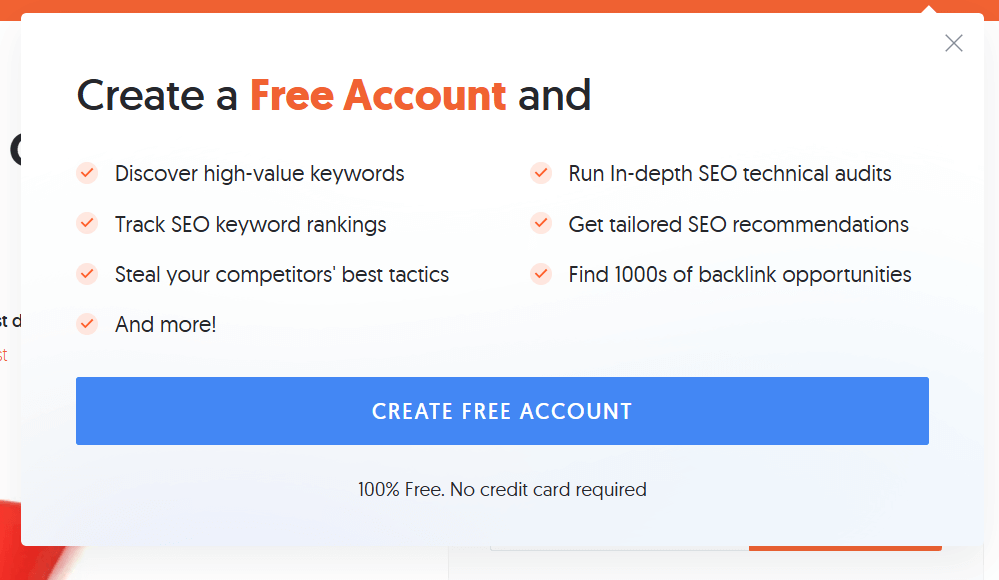
Overall, this site is filled with strong offers and features that boost conversions. Another way to attract customers and collect data about the target audience is a quiz-style form that offers a traffic growth planner.
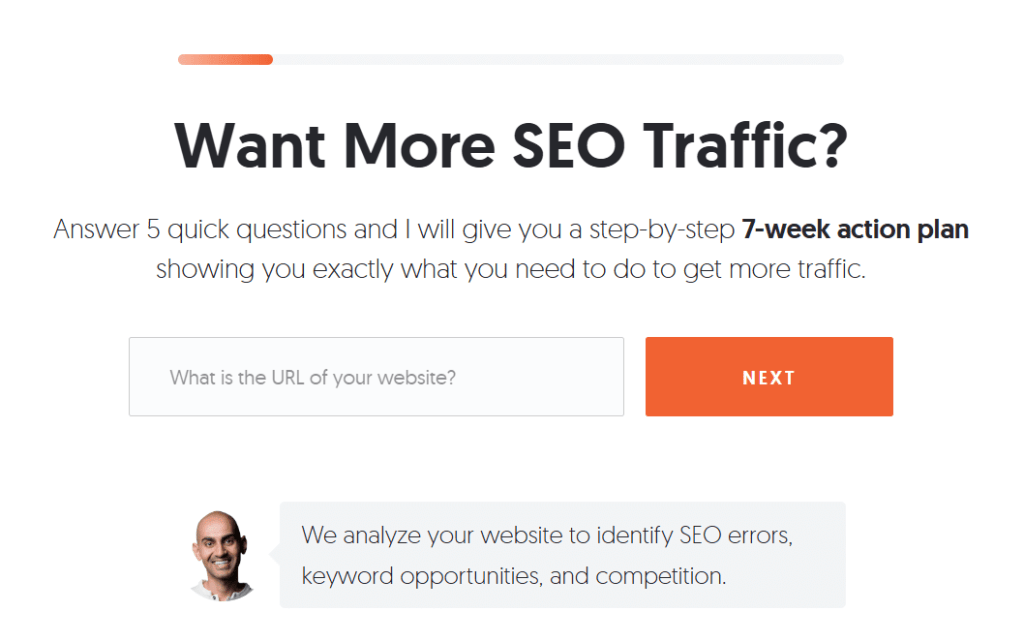
Use active verbs in your calls to action, like “buy” or “join.” Write offers so visitors clearly understand the benefits they’ll get after submitting the lead form: “Subscribe to the newsletter and get weekly expert guides and useful resources.”
Technical details also play a key role. Sometimes low conversion rates are caused by simple issues like a broken lead form or slow page speed. A study by Portent showed that to keep a good conversion rate, pages should load within 0 to 4 seconds. You can check this with the PageSpeed Insights tool.
Forms and web pages must display correctly on all devices and in all major browsers. More than half of internet users shop online from smartphones, so this needs attention. Make sure mobile navigation is smooth on screens of all sizes.
Conclusions
A conversion is any target action. It can be a purchase, signing up for a consultation, completing a survey, and more. A good conversion rate means a high return on investment. The definition of a “good” conversion rate varies by industry. On average, a “good” website conversion rate is between 2% and 5%.
Identifying and regularly improving conversions is a practical approach. For example, it’s much easier and more cost-effective to make a few small changes to the homepage than to build a new site or do a full redesign. Analytics and hypothesis testing help find details that affect your ability to attract your target audience and the overall success of your business.
You can increase conversions in many ways, such as using retargeting on Facebook and other platforms, or sending emails about abandoned shopping carts. Google Analytics tracks website conversions, while other platforms and tools have their own ways to measure this.
Conversions show whether a potential customer is moving down the sales funnel. CRO (conversion rate optimization) helps you get the most out of your traffic or followers and reduce the need to invest in attracting new customers.
FAQ
A conversion is a desired customer action, such as a purchase or a sign-up.
To increase your website’s conversion rate, you should define your goals, set up an analytics tool, review competitors, and create a list of hypotheses for improvement. Then, test those hypotheses.
CRO (conversion rate optimization) is a set of actions aimed at increasing your conversion rate.
-
Tags
