

REDUCED CPL BY 56% FOR ORLANDO VIP THEME PARK TOURS: GOOGLE ADS CASE STUDY
-
Post author

-


Running Google Ads for VIP tours means constantly competing for high-value customers in a highly competitive market. In this case study, we show how we cleaned up traffic, restructured the Google Ads account, and increased lead volume by 2.5x while reducing CPL by 56%—without significantly increasing the budget.
Google Ads
Service
VIP Tours
Industry
United States
Target Region
Results
+9%
Budget
+153%
Lead Volume
-56%
CPL
Client
Our client is an Orlando, Florida-based company that organizes private VIP tours at Disney World, Universal Orlando, SeaWorld, and other theme parks. The team helps families and travelers navigate the parks with less time spent waiting in lines, plans itineraries, and handles the details of the experience.
Despite strong service and positive customer reviews, the client’s Google Ads performance was inconsistent. They came to us to increase lead volume and improve traffic quality.
Marketing Audit
Google Ads Account Audit
Before we started working together, we conducted a complete audit of the Google Ads account.
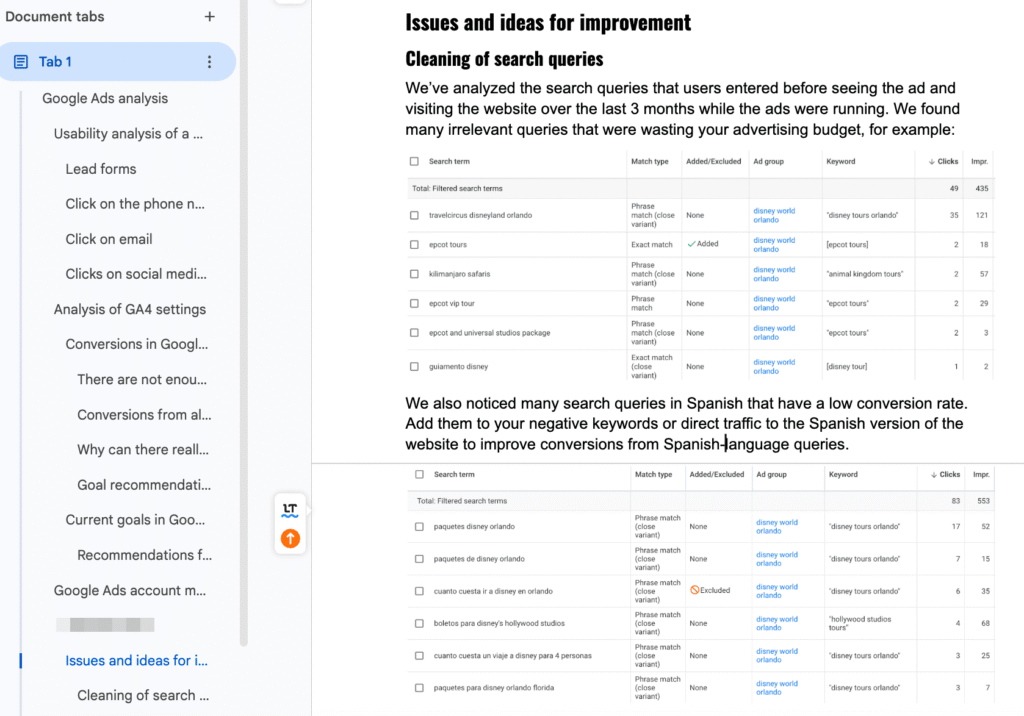
The account had previously been managed by another agency. Their optimization was mostly limited to occasional budget changes and adding a few negative keywords. It created the appearance of ongoing work but did not produce meaningful growth.
During the audit, we identified the following issues:
- ads were running on Search Partner websites that generated low-quality traffic;
- the account structure was disorganized;
- keywords were missing for several important theme parks;
- there were too many irrelevant search queries;
- ad copy was weak and lacked clear value propositions, numbers, and calls to action;
- there was no dedicated branded campaign;
- there was no display remarketing campaign.
As a result, a significant portion of the budget was being wasted.
Website Usability Audit
The client’s website did not reflect the quality of the service and fell behind competitors in both design and usability. That is why we also conducted a website usability audit. Even well-optimized advertising may fail to deliver results if the website does not build trust or guide users toward conversion.
We provided the client with clear recommendations to:
- standardize fonts and visual styles;
- optimize images;
- strengthen trust elements, including awards, reviews, and tour photos;
- make calls to action and contact elements more prominent;
- improve the overall page structure.
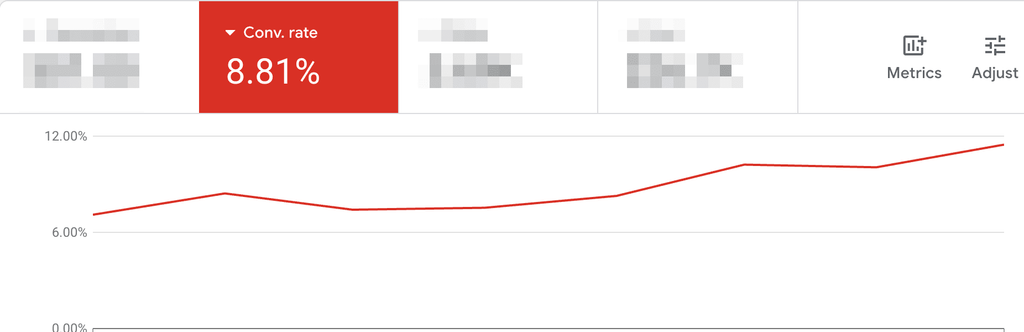
The client gradually implemented all of the recommendations. Combined with our ongoing campaign optimizations, this helped increase the conversion rate from 7.1% to 11.47%.
Analytics
We also reviewed and fine-tuned the client’s entire analytics setup. Without accurate data, it is impossible to properly evaluate performance or manage advertising effectively.
- Removed duplicate Google Tag Manager and Google Analytics 4 tags.
- Eliminated duplicate conversions.
- Kept only high-intent actions as primary conversions—website form submissions and calls from ad extensions lasting more than 60 seconds.
- Changed conversion counting to one conversion per session instead of one conversion per event.
- Added new microconversions to better understand user behavior.
- Set up remarketing audiences with different engagement windows.
As a result, we obtained cleaner data and improved the quality of the signals used by Google’s algorithms.

Expert Comment
At the beginning of our partnership, the client was cautious about working with a new team because of a negative experience with previous contractors. So we did more than optimize the campaigns—we explained every action and discussed all major changes in advance.
We also spent time explaining how negative keywords work. We showed that they do not restrict advertising—they help remove irrelevant search queries and make better use of the budget.
This approach gradually built trust. The client could see the logic behind our decisions and better understand how each optimization affected performance.
Anna Ovchinnikova, Account Manager at marketing.link
Optimization
After fixing the analytics setup, we moved on to changes within the Google Ads account.
Turned Off Search Partners
We disabled ads on Google Search Partner websites and focused the budget entirely on Google Search, where traffic quality was significantly higher.
Updated the Keyword Strategy
We fully optimized the keyword set in each campaign:
- paused underperforming keywords;
- removed keywords that did not match the campaign intent;
- added new high-intent keywords;
- duplicated phrase-match keywords as exact match to gain better control over traffic and improve Quality Score.
Cleaned Up Search Terms
We carefully reviewed search terms across all campaigns for the previous several months and added irrelevant queries that were wasting budget as negative keywords.
Created an Account-Level Negative Keyword List
We also created a global negative keyword list at the account level to block informational and noncommercial searches, as well as queries related to services the client does not provide.
The list included terms such as: free, photo, video, tickets, hotel, reservation, advice, tips, and others.
Improved Ad Copy
We completely rewrote the ad copy:
- added Dynamic Keyword Insertion;
- strengthened messaging with specific benefits, numbers, and trust factors;
- expanded the number of descriptions to the maximum available.
As a result, the ads became more relevant, CTR increased, and cost per click decreased.
Optimized Ad Assets
We added several new sitelinks, descriptions to existing sitelinks, new callouts featuring key business benefits, and structured snippets. This made the ads larger, more informative, and more visible in search results.
Launched Two New Campaigns
We created two new Search campaigns for VIP tours at SeaWorld and Magic Kingdom, which had not previously been advertised.
We built highly relevant keyword lists, added negative keywords, wrote stronger ad copy, configured additional technical settings to improve traffic quality, and launched the campaigns.
Launched a Branded Search Campaign
We created a dedicated Search campaign targeting the client’s branded keywords. This helped us:
- protect the brand from competitors bidding on the same searches;
- generate additional low-cost conversions;
- improve the learning signals for automated bidding algorithms.
Launched a Display Remarketing Campaign
We launched a display remarketing campaign to keep the brand top of mind. This is especially important in the VIP tour niche because customers rarely make a decision immediately. They compare options, discuss the trip with family members, and often return to book later.
Ongoing Optimization
After fixing the critical issues and implementing the new setup, we moved into weekly optimization. Our ongoing work includes:
- reallocating budgets between campaigns based on performance;
- pausing underperforming keywords;
- reviewing search terms and adding irrelevant queries as negative keywords;
- adding strong, relevant search terms to campaigns as new keywords;
- expanding the shared negative keyword list;
- adjusting bidding strategies when needed;
- modifying bids based on location, time of day, device, and audience;
- checking ads and all assets for disapprovals;
- improving ad quality;
- reviewing Google recommendations and implementing only those that can realistically improve performance.

Expert Comment
After the initial setup and ongoing optimizations, we ran into an unexpected issue: one day, the campaigns stopped receiving impressions completely. The reason was a classic Google Ads problem—ad disapprovals.
We immediately started investigating what had triggered the issue and removing the problematic content. Thanks to a systematic approach to troubleshooting situations like this, we were able to restore the campaigns relatively quickly.
After that, we made changes very carefully. Whenever campaign adjustments were needed, we introduced them gradually to avoid forcing the algorithms back into a major learning phase. This was important because before the suspension, the campaigns were already generating high-quality, qualified leads.
Challenges We Faced
Ad Disapprovals
The biggest challenge was the sudden disapproval of all ads in the account due to “Malicious Software” and “Compromised Site” statuses.

We first submitted an appeal to determine whether the disapproval had been caused by an automated Google error. It did not resolve the issue.
We then tested every possible level where the problem could have originated: ad copy, keywords, and the website itself.
We tested:
- new ads with neutral copy;
- different keywords without park names or other potentially triggering terms;
- different final URLs.
Ads pointing to another domain started receiving impressions, confirming that the issue was website-related.
We conducted a complete technical website audit, reviewed the infrastructure in detail, and found the root cause: one old subdomain—which we had not even known existed—had been compromised by attackers and used to host gambling-related pages.
We:
- removed the malicious content;
- closed the security vulnerabilities;
- provided the client with security recommendations;
- resubmitted the ads for review.
The campaigns resumed running shortly afterward, and the client experienced almost no noticeable interruption in lead flow.
This situation clearly demonstrates our approach. We take responsibility not only for the ads themselves but for the final business outcome, which means addressing problems at every level when necessary.

Expert Comment
A user who sees an ad does not know the company yet. They have only a few seconds to decide whether to click through to the website or keep scrolling. At that moment, the ad copy needs to quickly explain why this particular company is worth choosing.
In the VIP tour niche, generic phrases such as “high-quality service” or “personalized approach” are not enough. It is better to communicate specific value right away: “private park assistance,” “help planning your route,” or “less time waiting in lines.”
These benefits align more closely with the expectations of a high-value audience and help attract more qualified clicks.
Myroslav Lychak, PPC Specialist at marketing.link
Unqualified Leads
In December 2025, during peak season, the client began receiving a large number of unqualified leads related to third-party bookings, reservation changes, and other issues unrelated to the services they provide.
We analyzed the search terms and found that part of the budget was being spent on users looking for official Disney resources or competitors’ services who mistakenly clicked through to the client’s website.
We expanded the shared negative keyword list by adding searches associated with official Disney resources and competitor brand terms. We also pinned the company’s name in the ads so users could clearly understand whose website they were visiting before clicking.
The total number of conversions decreased slightly, but lead quality improved significantly.
Results
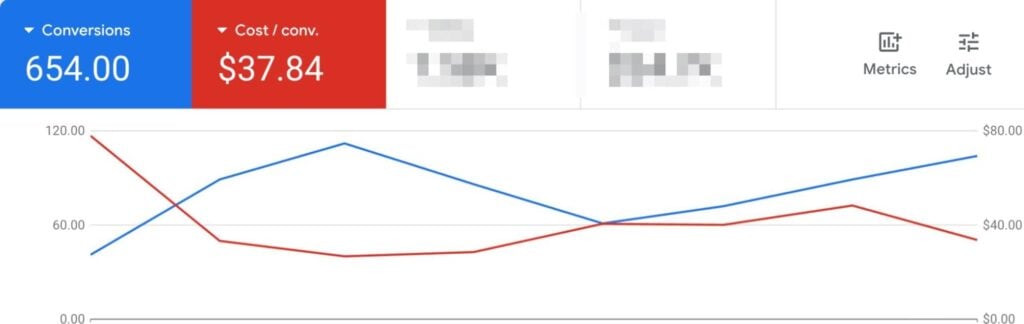
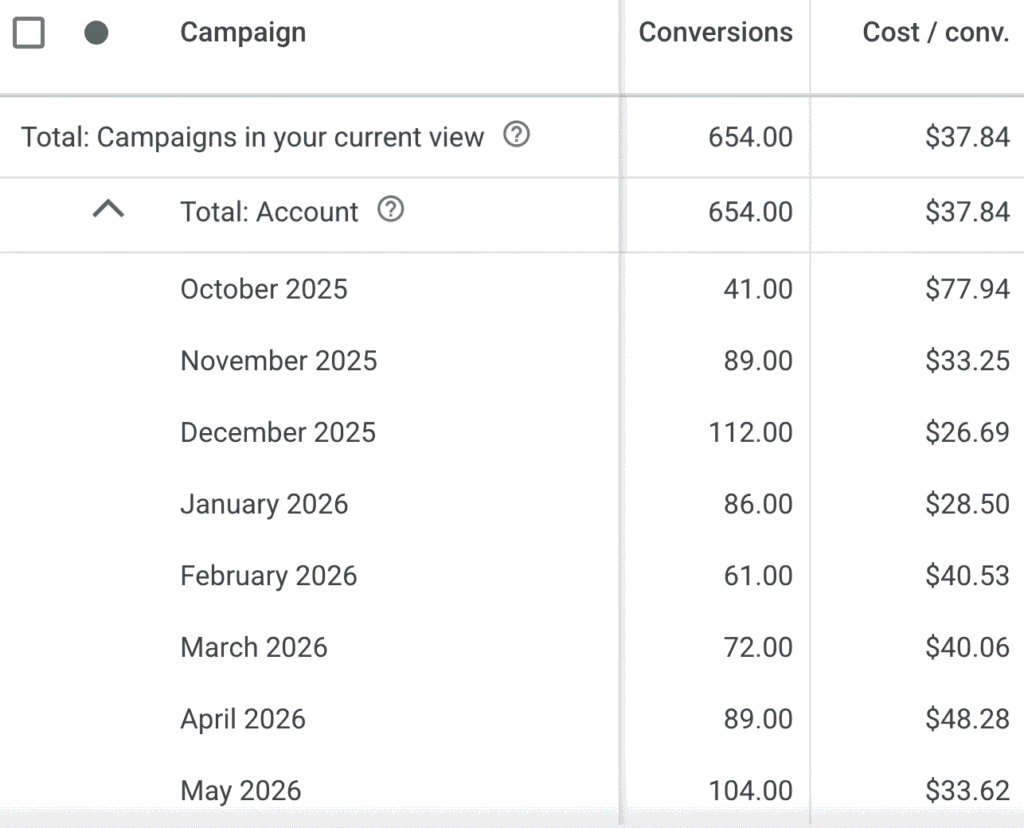
Comparing the beginning of the engagement in October 2025 with May 2026, we achieved the following results:
- Increased lead volume by 153%—from 41 to 104.
- Reduced CPL by 56.86%—from $77 to $33.
- Increased the budget by only 9%.

Expert Comment
The entertainment industry—especially nationwide promotion of specialized tour services—requires a systematic approach to advertising, analytics, scaling, and strategy.
We successfully bring customers—not just clicks or leads—to both local and nationwide service businesses.
Conclusions
VIP tours are a niche where the goal is not simply to generate more leads—it is to attract people who are genuinely looking for private assistance inside theme parks. Otherwise, the budget can easily be spent on users looking for tickets, official park services, or related offerings.
In this project, we improved advertising quality at every stage—from search queries to the website experience. With only a minimal increase in budget, we increased lead volume by 2.5x and cut CPL by more than half.
Request a Personalized Consultation for Your Business
-
Tags
