


HOW TO PROPERLY RAISE PRICES FOR CUSTOMERS?
-
Post author

-


In any business, prices increase from time to time. This often depends on outside factors like the country’s financial situation, higher costs for materials or shipping. Many customers will keep buying from their favorite stores or working with companies they trust even if prices go up fast. Whether you keep your customers or lose them depends on how you raise prices.
What This Is About?
- Why raise prices?
- How to tell customers about price changes?
- Structure of a price increase message
- Conclusion
Why Raise Prices?
No matter your business, sometimes you will need to raise prices. Loyal customers will understand if the change is fair and not too big. Most people know how the economy works and check the market for products and services they use.
If prices in your industry have been rising for years and you’re still the cheapest because you’re afraid to lose buyers—it’s time to change. A business needs to make money. Too low prices might seem like dumping to others. Think about the value of your product and make sure the new price fits it—then tell your customers clearly.
Common reasons why businesses raise prices:
- Increased costs for production or raw materials. Even if you provide services—like website development or professional photography—your expenses may go up for things like software, cloud storage, and so on.
- Price increases due to organizational processes and facility rent. Online stores can often save money in this area, but you’ll still need a storage space for products. Even if you work from your own location, you still have to pay for electricity, internet, and other expenses.
- Sometimes a company makes price changes due to scaling. For consumers, this isn’t an obvious reason—because, essentially, nothing changes for them. If you’ve opened a physical location or started targeting a more affluent audience, you’ll need to make an effort to keep your existing customers, which will be discussed later in the article.
- Product improvements. If you’ve taken many professional courses over the course of running your business—or trained your staff—that’s a valid reason to charge more for your services. This also applies if you’ve decided to use higher-quality materials or more advanced and complex technologies, purchased new equipment, and so on.
- Industry trends can also be a reason to raise prices, even if your business hasn’t gone through major changes in production or other processes. To stay competitive in the market, review your competitors’ pricing and keep track of whether your company is still offering competitive value.
Break-even analysis. Neil Patel recommends using it to understand how price changes affect your business:
“When you raise prices, you lower the number of units you need to sell to break even. The warning is to remember what people expect when they pay more—the higher the price, the better the product or service they expect.”—“How to Run a Break-Even Analysis for Paid Marketing,” Neil Patel
Before updating prices on your website or other platforms, tell your team. Everyone who works with customers must know the reason for the change and be able to explain it.
📌Read the article: Customer Acquisition Cost: A Critical Business Metric
How to Tell Customers About Price Changes
Update prices on your site and platforms in time. Even a small delay can cause confusion.
Peloton shows a great pricing structure. The company offers different bikes with big price differences. Each customer can pick what suits them. This helps reach more customers and increase total sales.
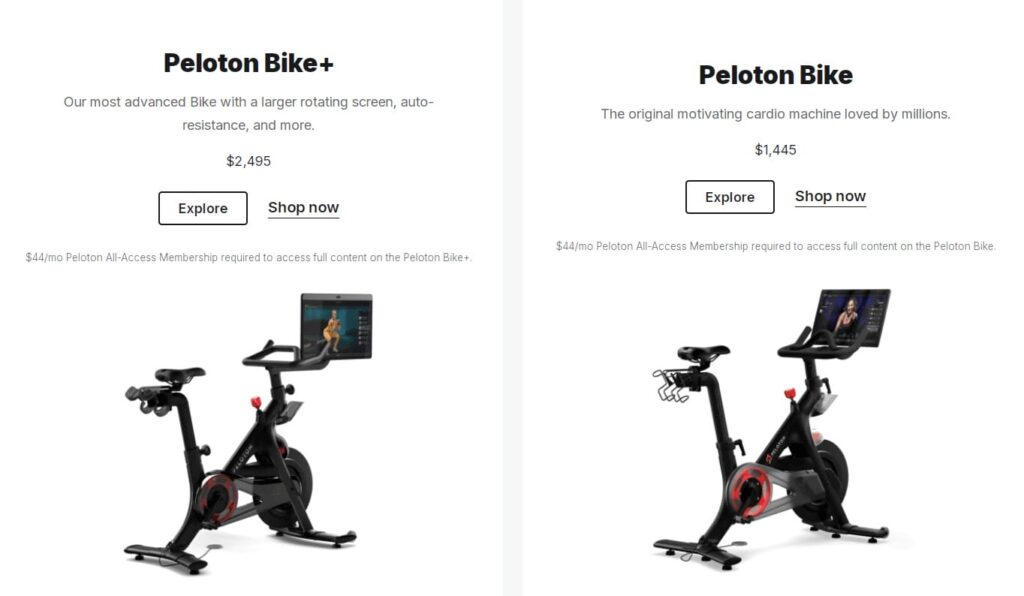
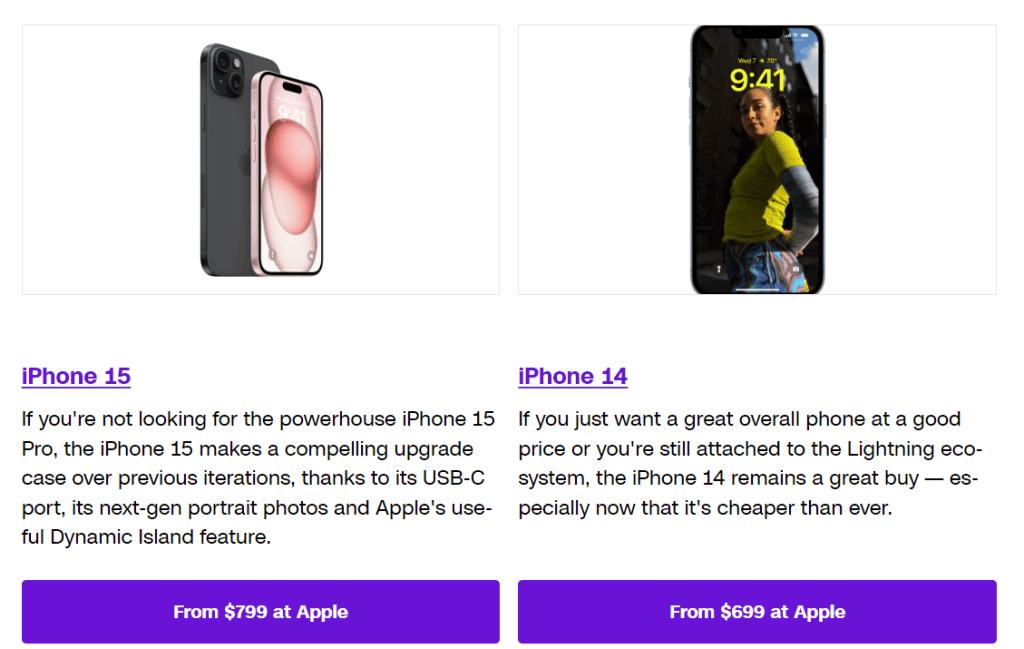
“The good-better-best product marketing strategy offers three levels of one product at rising prices. This helps attract new customers and increases spending from those who want more.”—“9 Product Marketing Strategies That Will Get You More Sales,” Neil Patel
Flexible pricing helps keep customers even when prices go up. Let’s look at more key tips:
- Give early notice
- Raise prices only for new customers
- Remind about product value
- Add benefits
- Improve service
- Explain the reasons
- Offer bonuses
- Choose the right time
- Make bundles
- Change content
- Be direct
- Plan ahead
- Reach new customer groups
Give Early Notice
Tell customers before prices go up. This gives them time to adjust and builds trust. If you don’t, they may leave.
“It’s not fair if a customer suddenly finds out the price went up. Review who uses that product and send a price increase email. If possible, send a personal message.”—“How to Let Customers Know About a Price Increase,” Swetha Amaresan from HubSpot
Offer people a chance to buy before the price change. Some may still leave, but different price options can help you keep them.
Raise Prices Only for New Customers
This works for B2B or some services. For example, if you manage social media or offer therapy, it’s okay to raise prices only for new clients. You can also set a time when the old price stays the same.
Everyone else should be aware of the new prices: firstly, it will increase trust in your company, create a sense of specialness, and secondly, you will be able to avoid misunderstandings if a new client comes to you on the recommendation of a friend who uses the service at the old price. Be sure to let regular customers know that they are treated in a special way: “Because we value you as a loyal customer, your price will remain the same for the next 12 months.”
Remind About Product Value
When telling people about the price change, focus on what they get—not just features, but benefits. Let them know quality is growing too.
Add Benefits
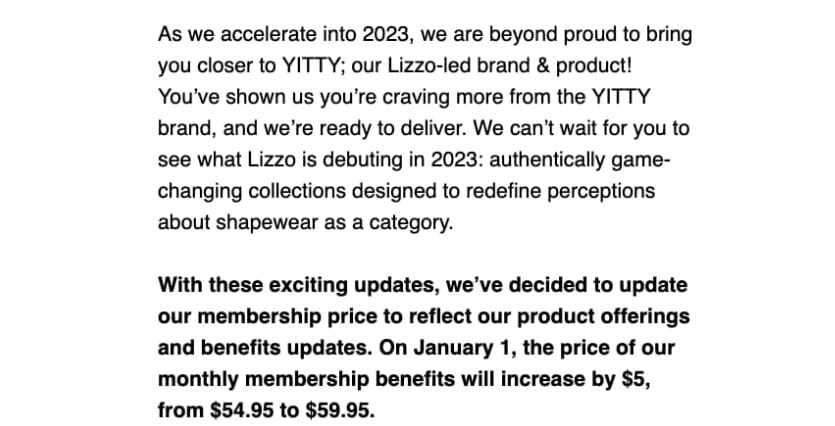
Fabletics told VIPs their price was going up $5 but focused on what new value they would get.
Fabletics notified its VIP members of a $5 increase in their membership fees, but focused on the additional benefits that customers would receive.
Improve Service
If possible, make service better too. Faster shipping, longer warranty, or support chatbots help.
Explain the Reasons
Don’t go into too much detail—just enough so people don’t think you’re making excuses. For example, bakers can say ingredients cost more. A marketer might say they took an expensive course.
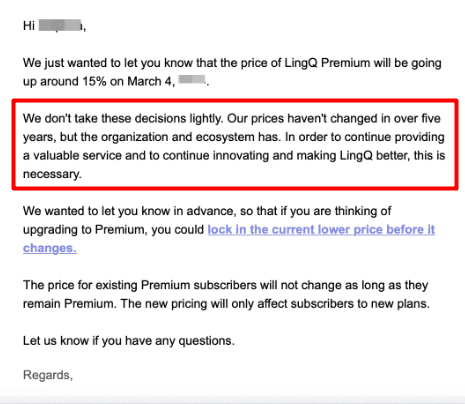
Offer bonuses
Customers may find it easier to accept a price increase if they receive something as a gift. It’s great if you can offer something small but useful or pleasant along with the main product or service. It can be an additional mini-course for an expensive online training course or gift wrapping and a tasty “compliment” for an online clothing store. It is advisable to reward your regular customers with bonuses that only they have access to.
Choose the right time
The moment when you change prices matters. Make sure that your customers are currently satisfied with your products and that there is no excessive negativity about your brand on social media and other platforms. Keep an eye on reviews to make sure that consumers have no doubts about the quality of goods or services and are willing to pay more.
Create package deals
The reaction to price increases can be much calmer if you offer a set of products or a set of services. For a hair salon, this could be a free hair wash and styling to increase the price of a haircut. If a car service raises the price of all services, it can offer customers “Winterization” and “Summerization” packages at a discount.
Experiment with content
If we’re talking about HoReCa, you can review the list of services or—for a restaurant or coffee shop—the portion sizes. Regular customers can easily notice this, so changes should be made transparently and, at first, mentioned or written about. Another option is to adjust the price based on the new size. For example, a sushi bar might increase the number of rolls in a set but slightly raise the price while replacing an expensive ingredient with a quality alternative. This should also be mentioned on the menu.
For retail, playing with numbers can be one of the effective ways to change prices. Create additional package sizes if you’re selling product bundles (like DIY kits).
Call things by their names
Don’t use euphemisms—it annoys customers. It’s better to write and say “price increase” than “changes in pricing.” If a cookie now contains palm oil instead of butter, it should be clearly stated. For some customers, this will be a reason to look for products with more expensive ingredients, even at a higher price.
Plan your next steps
There’s a risk that after you’ve made a major effort to raise prices and kept most of your customer base, external factors may force you to revise pricing again. You can’t predict the future cost of raw materials, rent, certain equipment, etc., in a few months or years. Of course, a SWOT analysis can help identify some threats or opportunities, but you won’t be able to foresee everything.
That’s why, before raising prices, consider not only the current situation but also the possible cost increases—so you won’t have to notify customers of another price hike soon after.
Additionally, it’s important to anticipate possible objections. Have a brainstorming session with your team to explore potential negative reactions and ways to handle them. Along with the specialists who communicate directly with customers, you can develop an effective price increase strategy—for example, by offering relevant bonuses or even creating a full loyalty program.
Reach new customer segments
Eventually, you’ll need to consider targeting a new audience that has more purchasing power. If some of your old customers leave because of higher prices, new buyers can help make up for the losses.
In any case of changes for customers—including price increases—it’s best to personalize the messages you use to inform your customer base. For example, with online services, people who use the free version of a product won’t be interested in a paid plan that now costs even more. On the other hand, business clients might find an extended feature set valuable, even if the total price is fairly high.
Give customers a chance to contact your company’s managers with any questions related to payment. Sometimes it’s the lack of information—not the product’s cost—that drives customers away. That’s why it’s especially important to focus on customer communication during times of change.
📌Read the article: Price Segmentation: Benefits, Examples, Strategies
Price Increase Message Structure
HubSpot offers a price increase notification email template. It’s universal and follows a clear structure.
- Personalized greeting.
- Main message and the reason for the price increase.
- A list of benefits related to the price change.
- Information about the effective date and a note that orders or contracts made before this date will be honored at the current rate: “Since the increase will take effect on [Date], all [Orders/Contracts] made before then will be fulfilled at the previously agreed rate.”
- A thank-you for continued support and cooperation, along with contact information for feedback.

Below are some extra tips on how to write a price increase letter.
Be brief and clear
Start with the key information—whether it’s a social media post or an email. Clearly state what the new price will be and when the change takes effect. Your explanation should be short but well-reasoned.
Don’t apologize
Everyone has the right to raise prices—from freelancers to global corporations. If a business owner starts apologizing, customers may think they’re unsure about the decision, and that makes the change seem unjustified. Don’t give anyone a reason to doubt the value of your offer.
Be reasonably emotional
While apologies aren’t needed, your message shouldn’t feel cold either. Use your brand’s tone of voice, speak directly to a specific customer segment, and—if it’s a message or email—use the recipient’s name. It’s great if you include words of appreciation, showing that you value the person as your customer.
Send follow-up messages
Emails often end up in the spam folder or go unread. That’s why it’s better to create a series of two or three messages.
Include a call to action
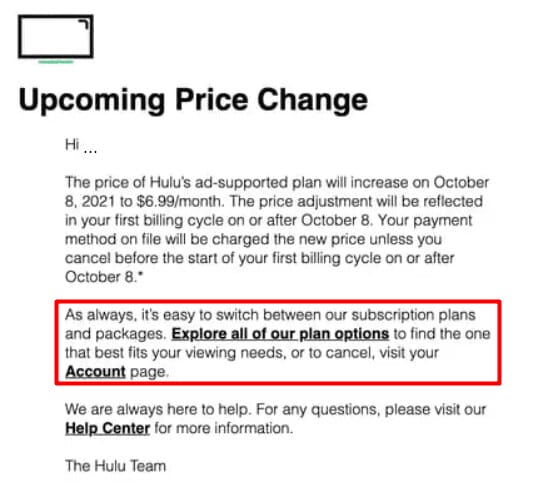
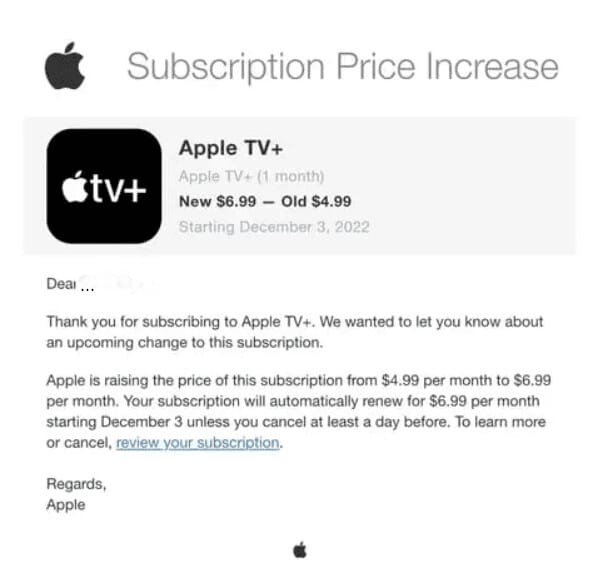
This could be an invitation to learn more or get a bonus. For subscription-based services, you can encourage the recipient to review their plan—like Apple did in its email about the Apple TV+ price increase from $4.99 to $6.99.
Try to retain customers
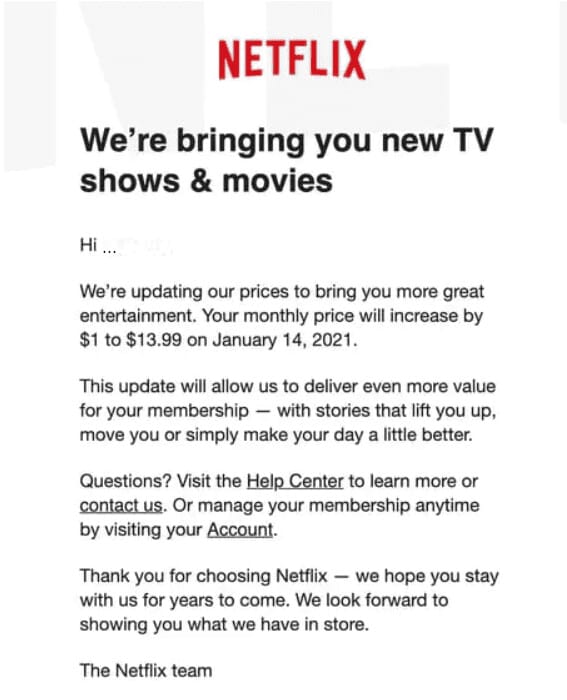
Of course, customers should have a choice, and persuading them to stay might feel unnecessary. Still, it’s worth reminding them of the product’s value and the benefits they’ll lose if they stop working with your company. That’s what Netflix did in its price increase email—they included a list of new releases and reminded users why the product is worth it: “This update will allow us to bring even more value to your membership—with stories that lift you, move you, or simply brighten your day.”
Don’t share too many details
This point relates to the advice about being brief and easy to understand—and about avoiding unnecessary apologies. Customers don’t need to know every root cause and nuance of your business. It’s unnecessary to share issues with suppliers or staff turnover. Your job is to state the facts and explain the reasons briefly but clearly.
Upwork shared new pricing on its website. The text includes information about temporarily keeping the rate for a certain group of clients: “For those currently working on projects at the 5% level of our existing tier structure, we’re happy to honor these rates through the end of 2023.”

Below the main announcement, the author included answers to questions about what the changes mean for clients and freelancers, as well as a link to the forum.

Overall, email newsletters, mobile app notifications, and SMS are the best ways to inform customers about price increases. You can retain some customers by sending a series of emails that offer attractive purchase options, added value like useful content, or personalized discounts. If the recipient hasn’t unsubscribed from the mailing list, keep them in the database—over time, their purchasing power or opinion of your product may change, and there’s always a chance that customers who stopped buying will return.
Conclusions
Prices go up for many reasons. The most common ones include increased costs for production, raw materials, or facilities, product improvements such as higher staff qualifications, certain industry trends, and business scaling.
To avoid losing customers, you need to manage price increases properly. It’s important to notify them in advance, give loyal customers a limited-time option to continue purchasing at the old price, and explain the reasons clearly and briefly. You can also create bundled offers, special sets, and experiment with bonuses and loyalty programs to retain customers and prevent widespread backlash.
No matter how well you communicate the new prices, some negative reactions from your customer base are to be expected. Make sure your sales and customer service teams are aligned—everyone in the company should understand the changes and the reasons behind them.
The best and most universal approach to raising prices is focusing on the improved quality of your products or services. In that case, your true customers—your target audience—will stay with you.
FAQ
Let customers know that prices will be going up soon, and if possible, temporarily keep the old pricing for loyal customers. Remind them of the benefits they get from your products or services. Offer bundled deals or packages to present the new prices as attractive. Reach new customer segments and be prepared for some customer loss.
A price increase announcement or email should include a personalized greeting, information about how much prices are increasing and when, the reasons behind the change, a reminder of the product’s value, a thank-you for support and partnership, and contact details for feedback.
-
Tags
