

PRICE SEGMENTATION: ADVANTAGES, EXAMPLES, STRATEGIES
-
Post author

-


Price segmentation is based on how much customers are willing to pay for a product or service. Some consumers are more price-sensitive, while others are ready to pay more if they get extra value or an exclusive solution. According to CFO, price segmentation can increase a company’s profit by up to 60%.
Proper price segmentation considers the real needs and abilities of the target audience, so this pricing strategy helps keep customers. They choose the best option for themselves from several choices, which is convenient and profitable for both the company and the consumers.
What is this About?
- What is price segmentation?
- Price segmentation strategies
- Examples of price segmentation
- How to implement price segmentation?
- Conclusions
What is Price Segmentation?
Audience segmentation is important for personalization in marketing. If you know which customer categories your business needs, segment your prices based on those user groups. The right pricing increases reach and is especially important for service businesses and SaaS companies, where you can experiment with features, number of users, and other product options in different pricing tiers.
“Based on customer segmentation, price segmentation helps you understand a customer’s willingness to pay based on a specific set of characteristics. This requires subtlety, because you can’t directly say that less price-sensitive customers should pay more than more price-sensitive ones; instead, you need to connect price segmentation with needs.”—Taking A Page From Netflix: Using Price Segmentation To Boost Revenue, — Forbes
Usually, marketers and business owners start using price segmentation when they face problems. It can happen due to customer loss after price increases, stronger competition, price dumping by new market players, lower spending ability of the target audience, or just lower demand because of outside factors. You can keep your customers and attract new ones if you offer them options.
Instead of sticking to one high price or constantly giving discounts and losing profit, focus on customer behavior and adjust to it. Pricing segmentation meets market needs and prevents your company from surviving only on sales and special deals. Use the willingness of some customers to pay more and get more value — this will help balance what you don’t earn from lower-priced tiers.
What are the Benefits of Using Price Segmentation?
- You will make money from every market segment.
- You will identify the unique pain points of each target segment and understand what to offer, to whom, and when.
- Price differentiation aligns your company with changing customer preferences and fast-changing market conditions.
- You will grow your target market — just like popular brands such as Netflix or Disney Plus. They used geographic pricing to do this. Choose your own pricing segmentation strategy — we’ll cover them later in the article.
Start with customer segmentation. It means fully understanding your target audience — based on how they behave on your website and social media, demographics, psychology, where they live, and their experience with competitors’ products.
This works great for streaming services like digital TV, internet providers, and mobile carriers. Group users by the day and time they use the service, their preferred video quality, age, gender, and more. A one-size-fits-all pricing model only works for startups, small businesses, or solo experts — and not even for all of them. At some point, you’ll realize that it’s time either to raise prices and say goodbye to some customers or to split your users into segments and create personalized offers.
Price segmentation increases customer value because it helps you make more money from the customers who bring in most of your profit — while still keeping the ones who pay the least. Resources are used wisely, and price matches quality.
📌Read the article: Price Discrimination: Degrees and the Nature of the Concept
Price Segmentation Strategies
There are five main types of price segmentation:
- User-based pricing segmentation
- Usage-based pricing segmentation
- Value-based price segmentation
- Location-based price segmentation
- Demographic-based price segmentation
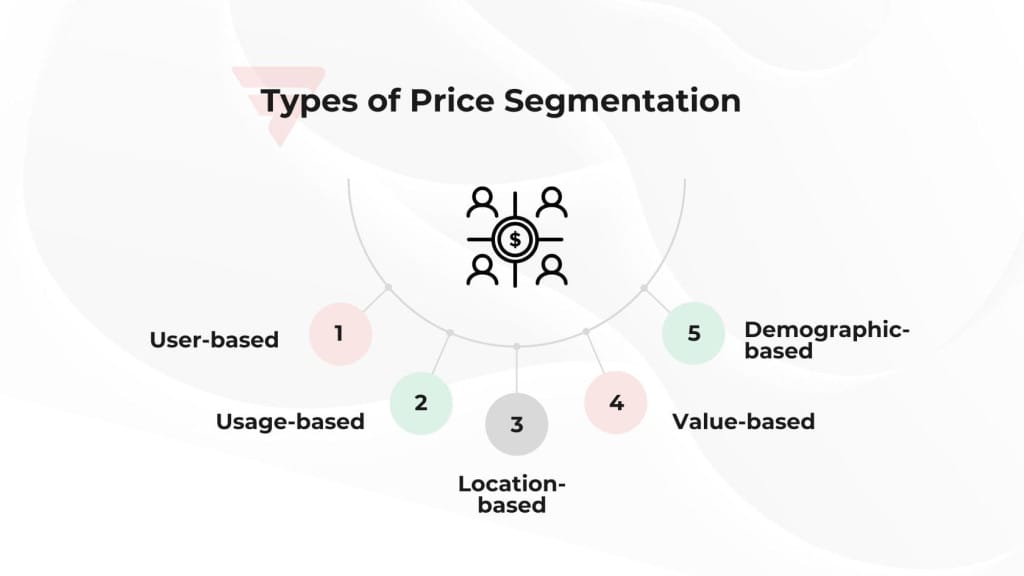
Let’s look at each of these pricing strategies in more detail.
User-based Pricing Segmentation
Software developers, online services, and mobile apps often use this type of price segmentation. Users choose pricing plans that match their budget and the number of users they need. Some people just want to sign up and use the software by themselves, while others prefer a family plan or want to use the service for business. As a result, price expectations will be different for each user group.
This pricing method works well for both small startups and well-known global companies. Make sure users can choose their own feature package (or service type), and increase or decrease their plan whenever they want.
Usage-Based Pricing Segmentation
This strategy is based on how much of the service, software, or product a user consumes. For example, the number of gigabytes in Google One storage. It’s especially useful for companies whose customers have very different needs. One person might only use cloud storage for a few documents, while another stores video archives. Usage-based pricing is flexible, and users can move between segments over time.
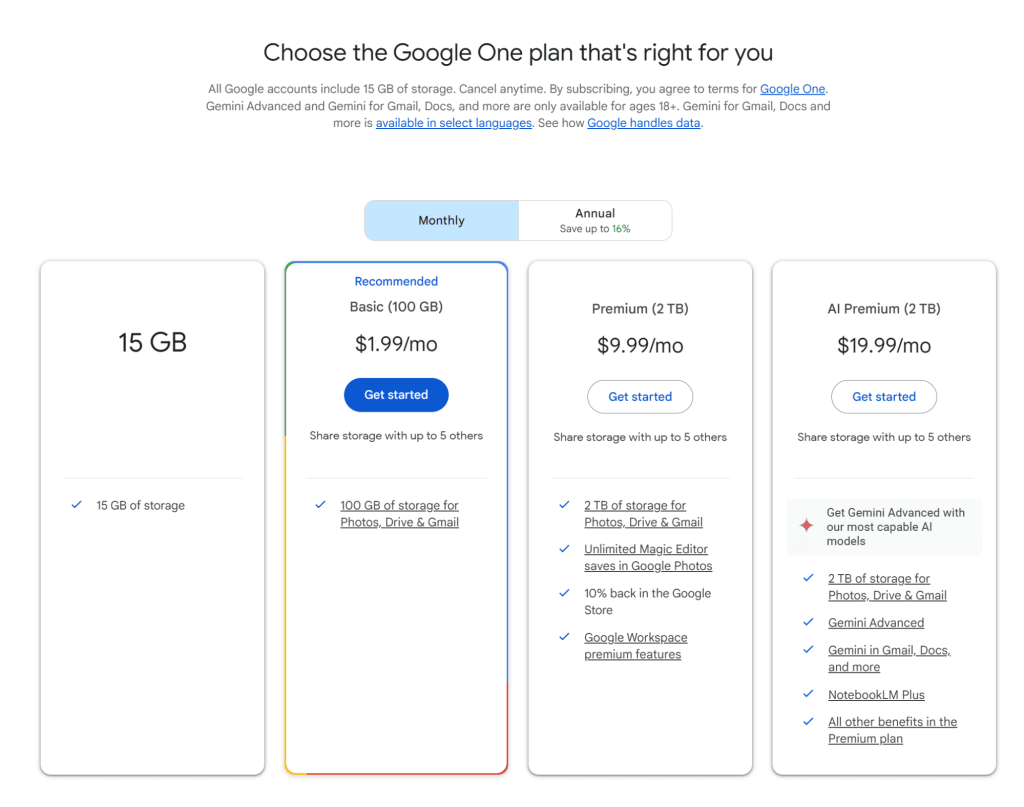
Google focuses on increasing the average order value, but the LTV (lifetime value) is more important for the company. Once a user starts paying, they are offered the next tier — just a little more expensive. There is a discount for the premium plan and a free trial for the AI Premium plan.
By the way, Google One combines usage-based segmentation with pricing based on the number of users. For the Standard and Premium plans, users are invited to “Share your storage with up to 5 other people.” The AI Premium plan adds extra value: “Get Gemini Advanced with our most powerful AI models” and more features.
Value-Based Price Segmentation
This type of segmentation offers a popular basic set of services (“best value for the price”) along with a minimum and maximum pricing plan. It’s very important to highlight the product’s strengths and the benefits users get when they choose a more expensive option.
When starting this strategy, divide your target audience into groups based on the problems they face with your service. Matching the offer to customer needs — and not pushing the highest plan to those who don’t need it — makes your product more competitive. The key is helping customers understand your pricing and what’s included.
Location-Based Price Segmentation
Location-based price segmentation focuses on where your customer lives. It’s useful for international companies that want to enter new markets. Besides customer behavior, mindset, and needs — consider their buying power. For example, Netflix charges more in the EU than in India.
This strategy can also help small and medium-sized businesses — like those in hospitality. Coffee at the same café may cost more in the capital city than in a small town. This depends on how much customers are willing to pay, the competition, and customer traffic. To succeed with location-based pricing, do thorough market research and consider the economic conditions in the region where you want to grow.
Demographic-Based Price Segmentation
When we talk about the target audience profile, the first things that come to mind are age, gender, income, profession, and job title. These demographic features are the base for the fifth price segmentation strategy.
A freelancer will need different features than a company owner with 50 employees. Self-employed professionals don’t need many tools required for team collaboration. This applies beyond SaaS companies. Often, psychologists, coaches, and accountants offer different prices for personal vs. business clients. This may look similar to pricing based on the number of users, but here the focus is on the nature and complexity of the needed service or features.
Examples of Price Segmentation
A common and simple example of price segmentation is movie or theater ticket prices based on seating location, comfort, and distance from the stage. Another everyday example is the evening markdowns on bakery items or perishable goods in supermarkets.
In 2022, netflix introduced its ad-supported pricing tier.
Before that, Netflix had three pricing tiers based on the number of devices allowed and the quality of streaming (HD, Full HD, or Ultra HD). For many years, Netflix offered ad-free streaming and kept customers by providing continuous service.
When fewer new subscribers signed up, Netflix realized that revenue would eventually fall. This made the company look more closely at its customer profiles and meet the needs of a market segment that wanted a lower-price subscription, even with ads.
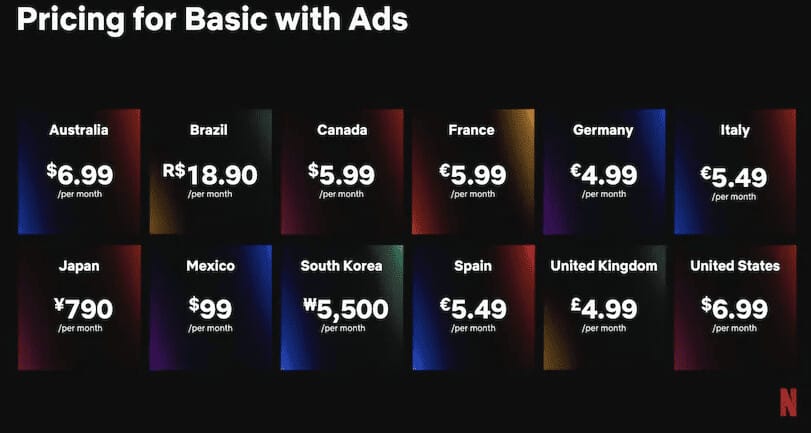
The cost of the basic plan already varied by country based on users’ purchasing power. The plan was launched after a sudden drop in the service’s popularity. At that time, Netflix lost over 1 million subscribers in the U.S. and Canada. The company first ended the basic plan for new and returning users in the U.K., Canada, and the U.S.
Showing ads went against Netflix’s original values, but it didn’t hurt the brand’s reputation. In 2023, the streaming platform said it earned more per account on the $6.99 ad-supported plan in the U.S. than on the $15.99 standard monthly subscription.
In 2024, prices for all plans went up, but not everywhere — only in the U.S., Canada, Portugal, and Argentina for now. Netflix now expects its profit to grow in 2025 to $44 billion, thanks to an increase in paid subscriptions.
Overall, Netflix sets subscription prices based on streaming quality, the number of users on an account, seasonality, and location. It also offers a free trial period.
The next example is Microsoft. The company offers its products across many industries, so there are many audience segments, and they are very different. That’s why Microsoft spends time identifying customer segments and creates specific offers for each user type. First, it segments them by usage (home vs. business).
Microsoft also considers price-sensitive customers like college students. They get a 50% discount on the “Personal” plan. $3 per month is Microsoft’s lowest price, and this cost is covered by revenue from family and business customers.
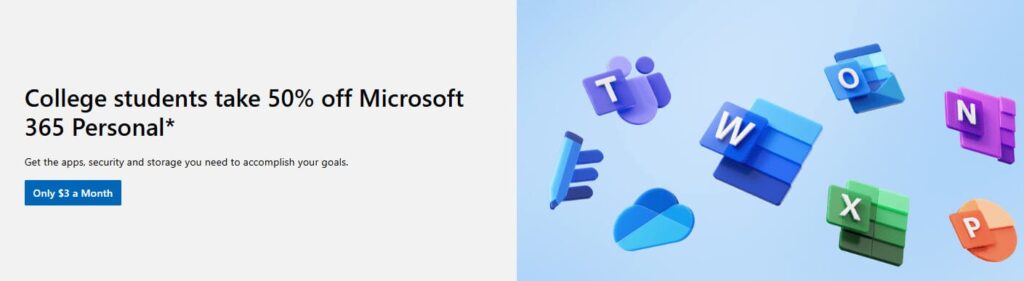
Microsoft’s website also offers a free version of Microsoft Teams for students and teachers. This is not only for reaching more users but also for building a strong brand image. Offering special prices to users with low purchasing power builds loyalty, shows company values, and helps Microsoft stand out from competitors.
Microsoft 365 “Business Basic,” “Business Standard,” and “Business Premium” are higher-priced plans. Their features match business needs and are worth the cost. These include professional email with a custom domain, unlimited users, easy control over access and devices, and enhanced security. Most of these features aren’t necessary for personal or student use. For example, students don’t really need meeting recordings, transcripts, or scheduling tools.
Microsoft offers plans for home and business use with different user counts and feature sets. Prices also vary depending on whether the subscription is monthly or yearly. Users get a discount for choosing the yearly plan.
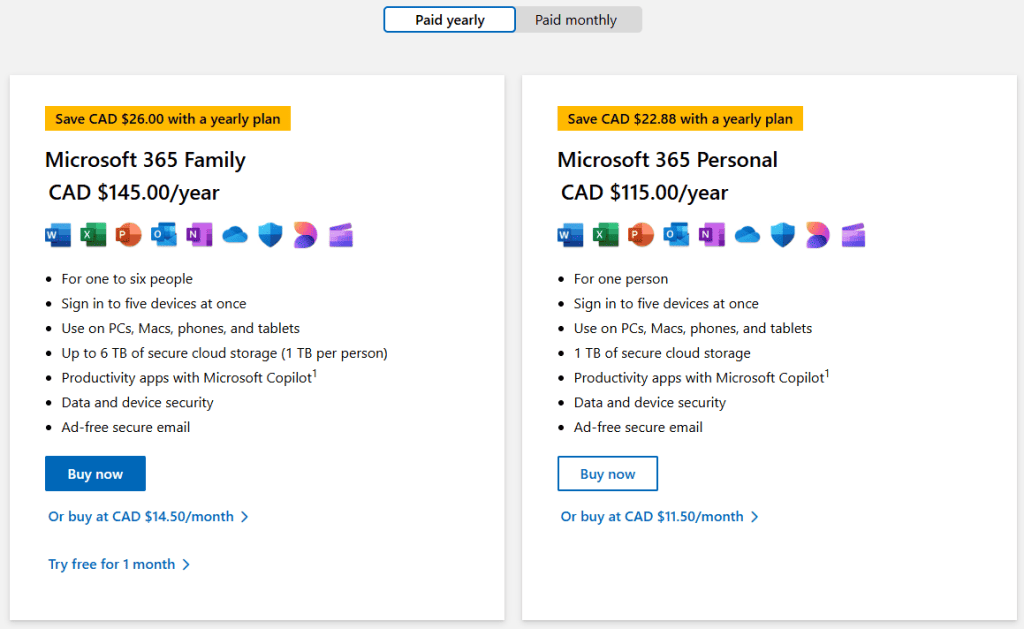
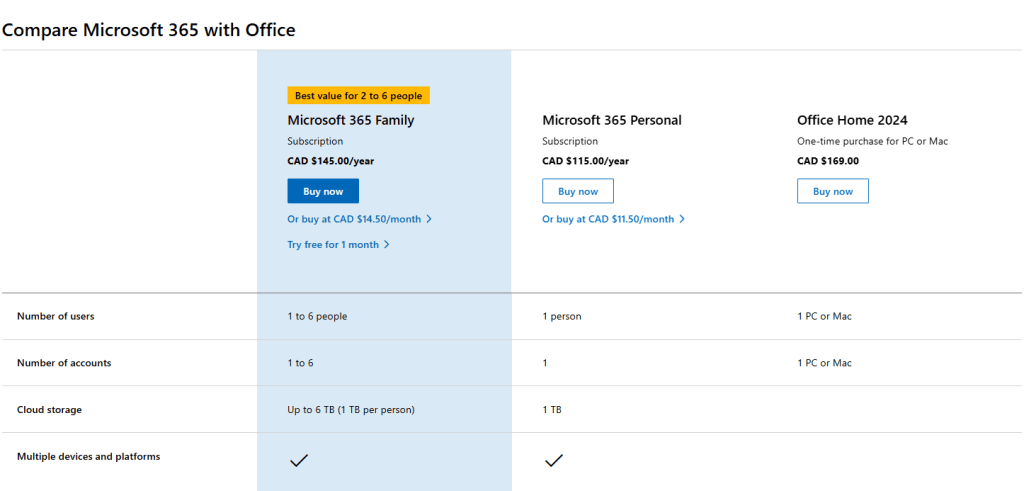
The website compares Microsoft 365 with Office. Clearly explaining the pricing with examples helps customers understand the value of more expensive plans. It also reduces customer questions and saves time for sales reps. It’s important for users to know what they’re paying more for and how it helps them.
Dropbox is a cloud storage and file syncing service. It uses a usage-based pricing strategy. The cost depends on business size. Its monetization strategy includes usage customization — users can choose if they want more than just storage.
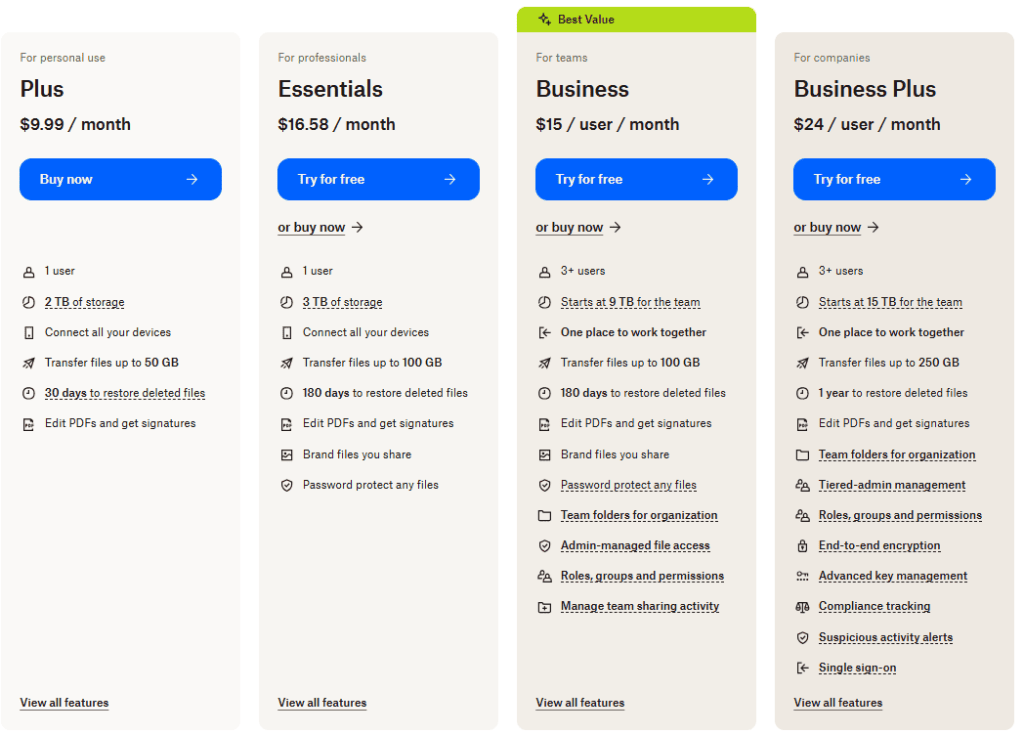
Popular platforms often offer a free trial or a completely free version as the first step in the sales funnel. Over time, loyal users may upgrade their plan. Even if they don’t, they promote the brand, stay active online, and recommend the service to friends.
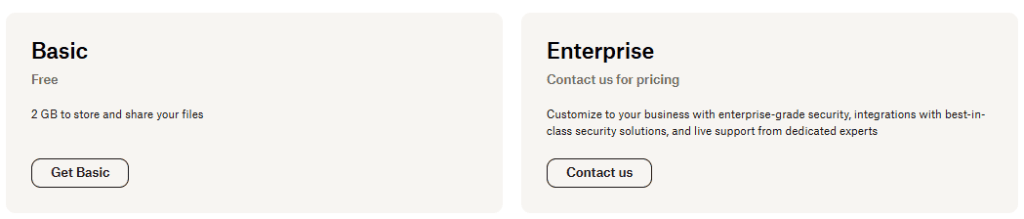
The audience segment that values a personal approach needs custom pricing. For entrepreneurs or large business clients, Dropbox and similar services offer custom plans with no listed price. After contact, sales reps prepare a tailored quote based on the client’s needs.
DeepL Translator offers free translation for one user with a limited number of translations, a Starter plan for personal projects (up to 5 users), an Advanced plan (professional tools and shared glossaries for teams), a full-featured Ultimate business solution, and a special “Let’s Talk” plan for companies.
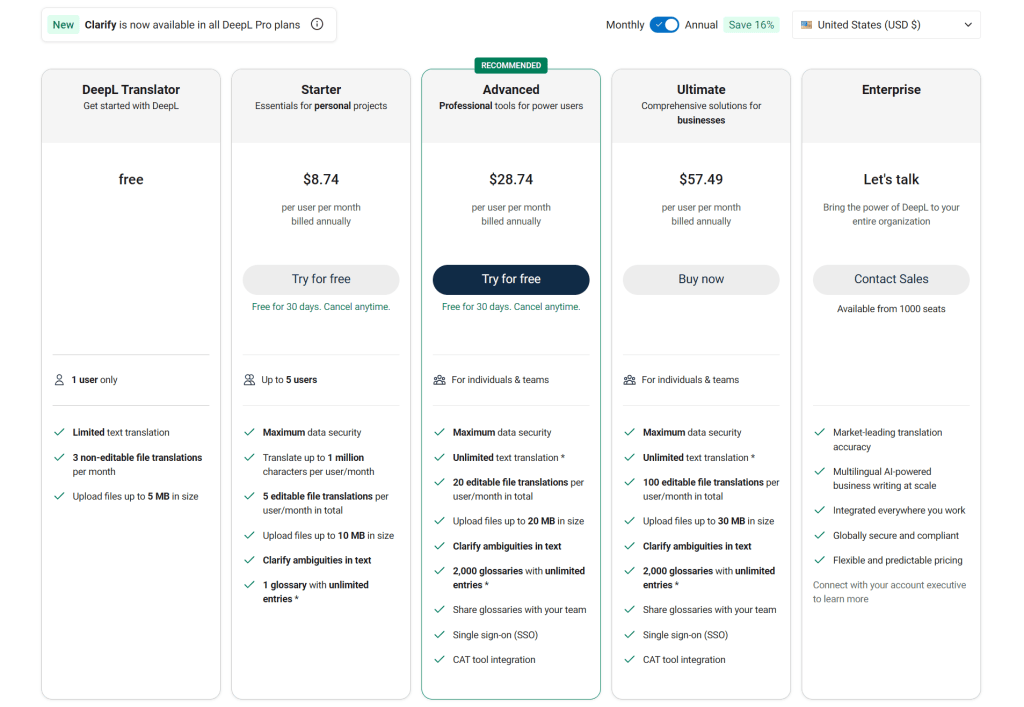
Pay attention to the highlighted recommendation. Users can try the Starter or Advanced plan for free for 30 days.
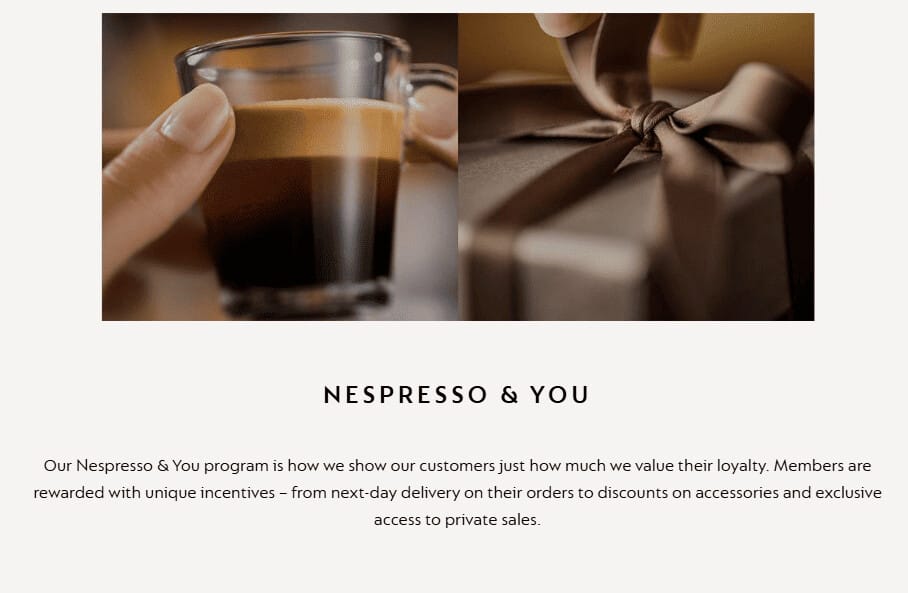
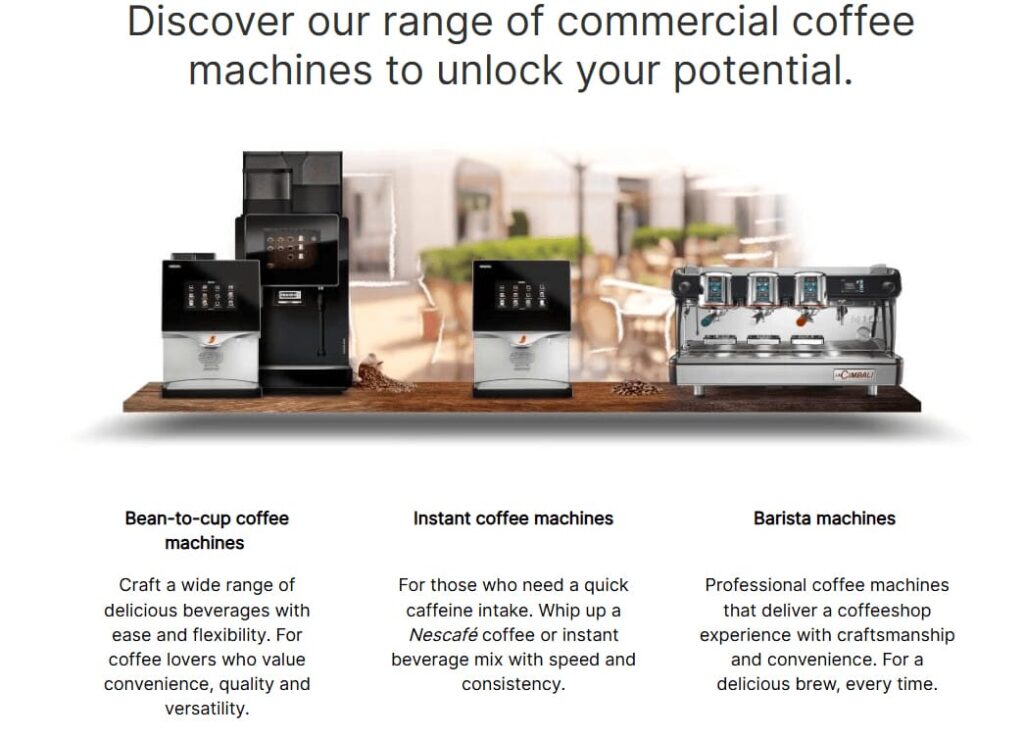
Pricing segmentation isn’t just for SaaS companies. Nestlé offers budget coffee like Nescafé Classic and premium products like Nespresso. For the premium line, the company offers bonuses and deals, like the Nespresso & You program. Members get perks like next-day delivery, discounts on accessories, and exclusive access to private sales.
Nescafé also segments its audience — for example, it offers coffee machines in different price ranges.
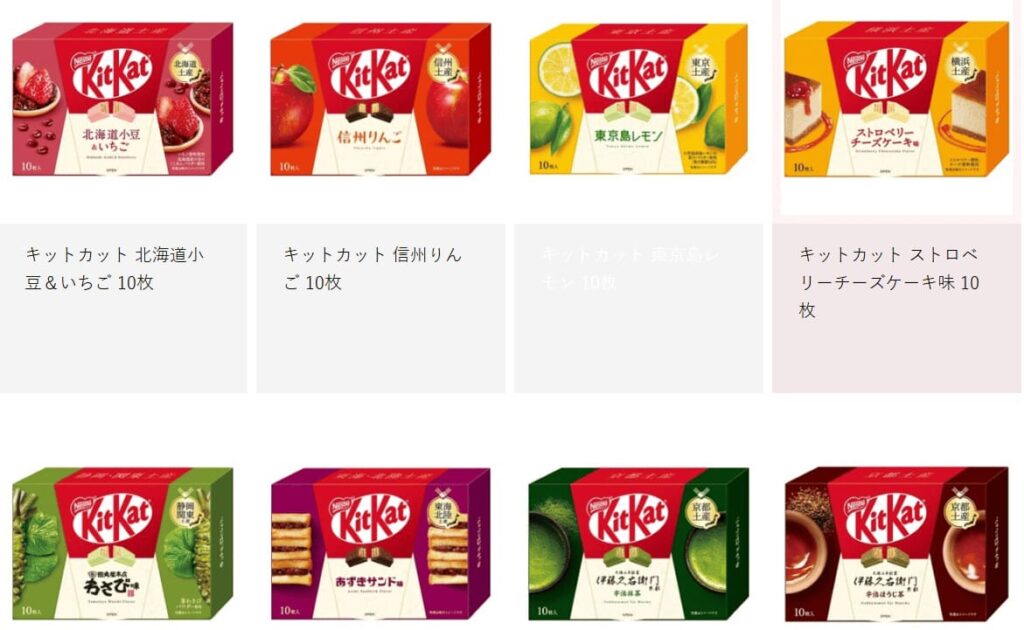
Premium items and exotic flavors are hard or impossible to find in countries with low purchasing power. A good example is KitKat. The brand has over 300 flavors. Have you ever tried sakura-flavored KitKat? Or strawberry cheese flavor? It would be fun to try, but you won’t find them in most local supermarkets.
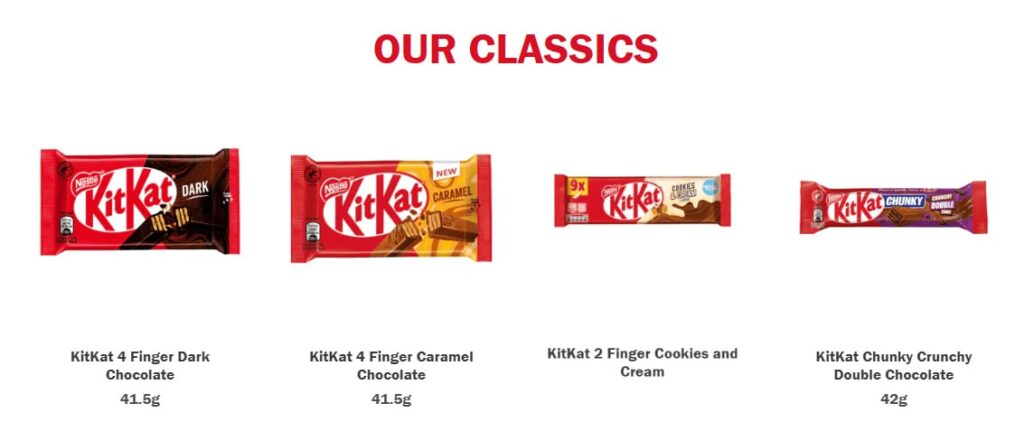
This happens because there’s high demand for exotic flavors and strong interest in unique KitKats outside of Europe. The E.U. usually gets the classic versions because of consumer preferences. Manufacturers study which flavors will sell best in each region, what prices people are willing to pay, and then create the right product line.
While sweet lovers in Japan enjoy green tea KitKats…
… in Europe, people eat classic chocolate, caramel, and hazelnut flavors.
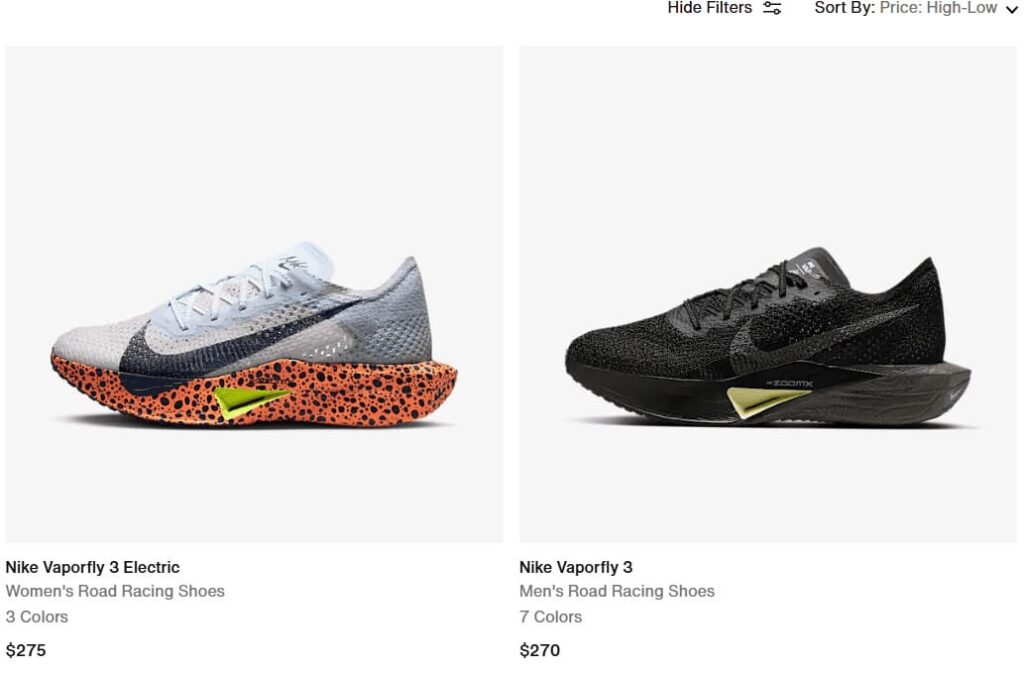
Nike offers sneakers in a wide price range — from $50 to $300.
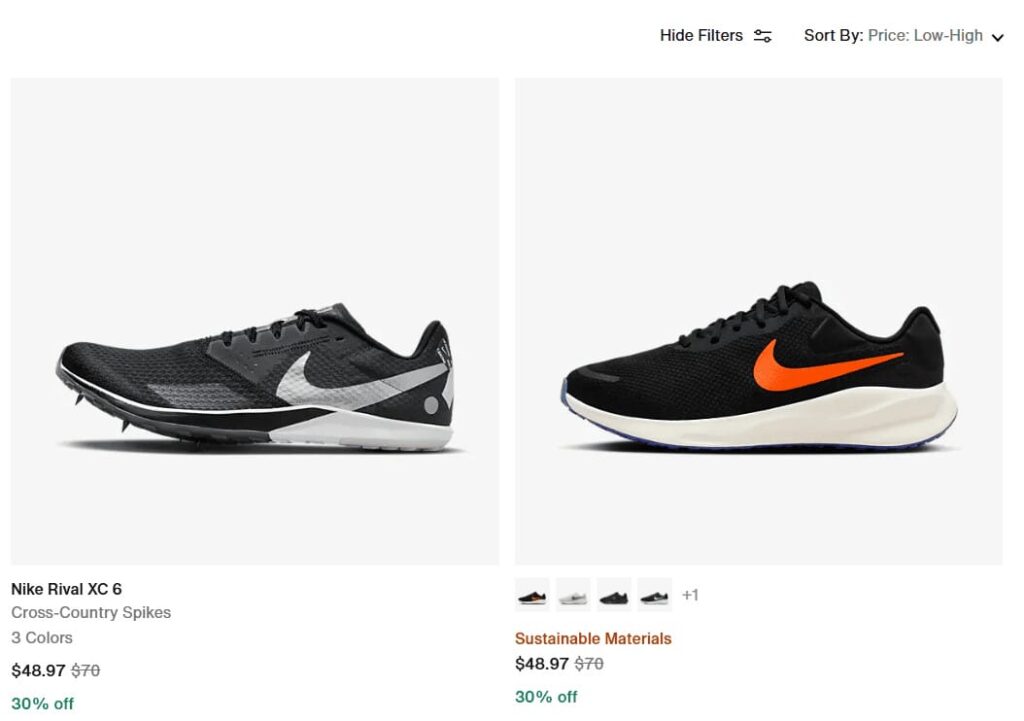
The brand proves you can run “in luxury.” Of course, it’s all relative. But you can clearly see a big price difference between shoes that look very similar from the same brand. All you have to do is use the filters in the catalog and compare.
How to Implement Price Segmentation?
If you provide services or have a wide range of products, and some customers always ask for discounts while others are ready to pay more for unique quality or exclusivity, you should use price segmentation. Prepare well for the changes and don’t forget to notify and adjust your customers.
Let’s look at the stages of price segmentation.
📌Read the article: Customer Acquisition Cost — A Critical Business Metric
Market Analysis and Customer Profiling
Study your target audience on social media, forums, with focus groups, surveys, and by talking to customer service managers. Understanding customer behavior patterns is the base of a price segmentation strategy.
Then create detailed profiles for each target segment — list their pain points related to the product, their goals, and preferences. The more data, the better — so you’ll need as much analytics as possible.
Choosing a Price Segmentation Strategy
Will you price based on the number of users, product features, or value? Or maybe location or demographics of your target customer matters more? Choose a pricing segmentation strategy that works both for your business and for your customers.
Creating Product Pricing Tiers or Packages
Match your product or service features with customer needs and willingness to pay. Analyze which customer segment dominates — focus on it first, and let other pricing options stay additional for now.
It’s important to clearly define your offers for each segment and explain what each option means. For each tier, create a unique selling proposition, list of benefits, and a lead magnet or special offer. Your sales team should know every detail of the price plan differences. It’s very important that they don’t artificially raise prices or push premium packages to lower-segment customers. Don’t annoy people — respect their time and financial situation.
Monitoring, Analytics, Optimization
Track your KPIs, monitor customer responses, and keep an eye on market changes. Adjust your strategy and combine different types of segmentation if it makes sense.
If you’re worried price segmentation will scare off customers, keep your old pricing for loyal clients. Keep working to make your offers match real customer needs. Use follow-up questions — for example, in email surveys or quizzes on your site — to better understand each potential client.
And remember, price segmentation improves customer experience if all user groups are treated equally. Prove that every pricing level meets real needs and no one is just trying to sell the same thing for more money.
To avoid reducing the average check per customer, add limits on downgrading from higher to lower tiers. For example, a mobile provider can show budget plans in the app only to new users. Those who pay more can access more features at better value — but clearly explain that lower pricing isn’t available. The same goes for other industries: remove the ability to choose a different price than what you planned. Instead, offer limited-time deals or added benefits.
Conclusions
Price segmentation means setting different prices for different segments of your target audience. Airplane tickets are divided into economy, business, and first class — each with its own subcategories. The same approach works in many industries, especially for SaaS companies, online services, and subscription-based offers.
Pricing can follow different segmentation strategies — based on number of users, product capabilities, value, location, or customer demographics.
Frequently Asked Questions
Price segmentation is a pricing strategy that creates different prices for different segments of the target audience.
The connection is that price segmentation is based on the needs and abilities of different parts of the target market.
To apply price segmentation, identify the needs of different customers and set prices to match them.
The most common types are economy, mid-range, high-end, and premium segments.
To determine your company’s pricing segment, analyze your customer profile — including their ability to pay — and run surveys, A/B tests, and other research to build the best pricing plans.
-
Tags
