


HOW TO CREATE A MARKETING STRATEGY FOR A BEAUTY SALON
-
Post author

-


Marketing for a Beauty Salon: Focus on Customer Retention. The goal of any beauty salon owner is to build a reputation that makes everyone want to book with their stylists—but not everyone can get an appointment due to high demand. Clients have to get in line, book a month in advance, just to secure time with their favorite stylist at their favorite salon. However, to achieve this level of demand, the marketer or business owner needs to work hard at the beginning by attracting a significant number of ideal, loyal clients.
What Are We Talking About?
- Market analysis, target audience and USP development
- What Should a Beauty Salon’s Website Look Like?
- Combine Different Customer Acquisition Channels
- Conclusions
Market analysis, target audience and USP development
Locals might know that you offer manicures, makeup, or hairstyling. But how do you get people to come from the other side of a large city? How do you make visiting the salon every few weeks a regular part of almost every client’s life who has visited even once?
Forget about promoting solely through posting photos of the backs of heads, hands, or other body parts of clients. Photos of work in this industry are essential, but first, they need to be of very high quality and not too generic. Second, they are only a small part of the marketing strategy.
Create an authentic brand, show people the faces of the owners, the specialists, and showcase the techniques, materials, and the overall atmosphere in the salon. Remember, many visitors will come not just for the result, but for the emotions. Therefore, it’s worth the effort to make the salon feel warm, aesthetically pleasing, and unique.
The salon’s atmosphere plays a key role in building connections with clients. Details don’t decide everything, but they can create a welcoming environment where clients can relax and feel special. Offer complimentary coffee, provide comfortable waiting sofas, and let clients unwind with fresh and engaging magazines.
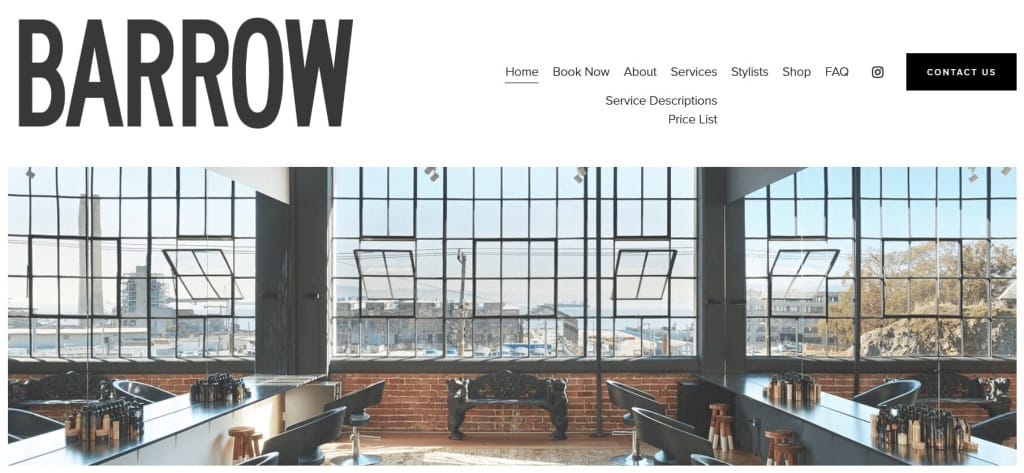
A salon like Barrow in San Francisco showcases a stunning interior and a great location. They clearly have a lot to show, which might be why the company focuses the website’s attention not on a portfolio—as most competitors do—but on the overall experience.
First, define who you want to attract. Creating a customer profile is the foundation, the first step in building any marketing strategy—and beauty salons are no exception. To analyze your target audience, answer questions about gender, location, workplace, age, income level, and preferences of a typical client. The more characteristics you consider, the better.
A married woman might recommend a trusted men’s manicure or pedicure specialist to her husband. For women with children, the availability of a play area and a children’s hairdresser can be significant.
If you’ve decided on the main services of your salon, think about positioning and the concept of your beauty business. Target audiences for luxury and budget salons have different triggers, so you’ll need to appeal to different emotions and use different advertising methods.
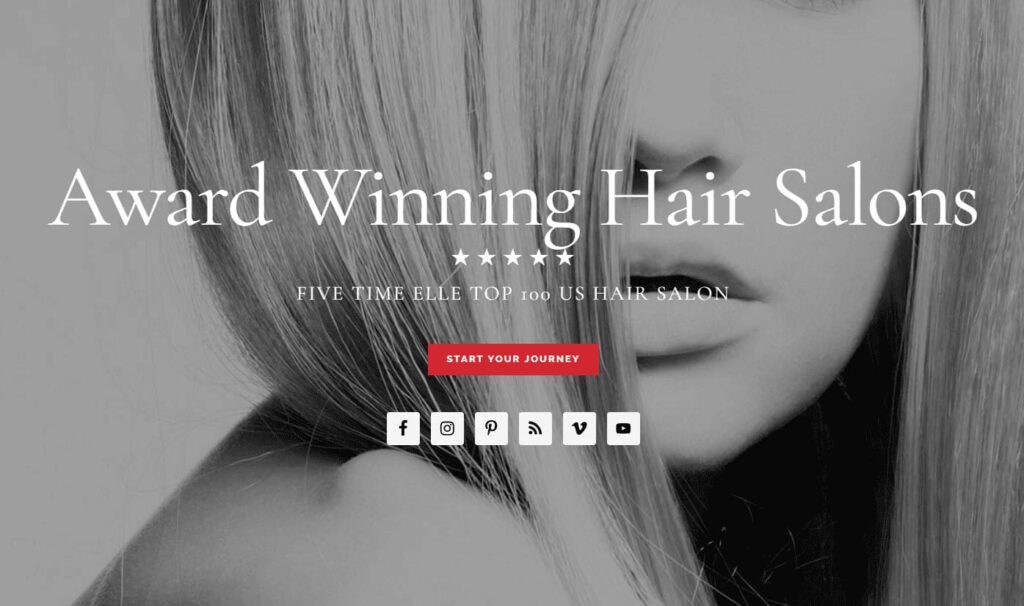
Share your story, showcase your strengths and business achievements. The beauty industry is highly competitive, so it’s important to focus website visitors’ attention on one or several unique features of your salon. For example, the hair salon The Upper Hand highlights on the main screen of its homepage that it has awards and is listed in the top 100 salons in the US. This positioning itself attracts high-paying clients who value the status of any establishment they visit or the company they choose to do business with. The unique selling proposition is reinforced by a compelling call to action on a contrasting button: “Start Your Journey.”
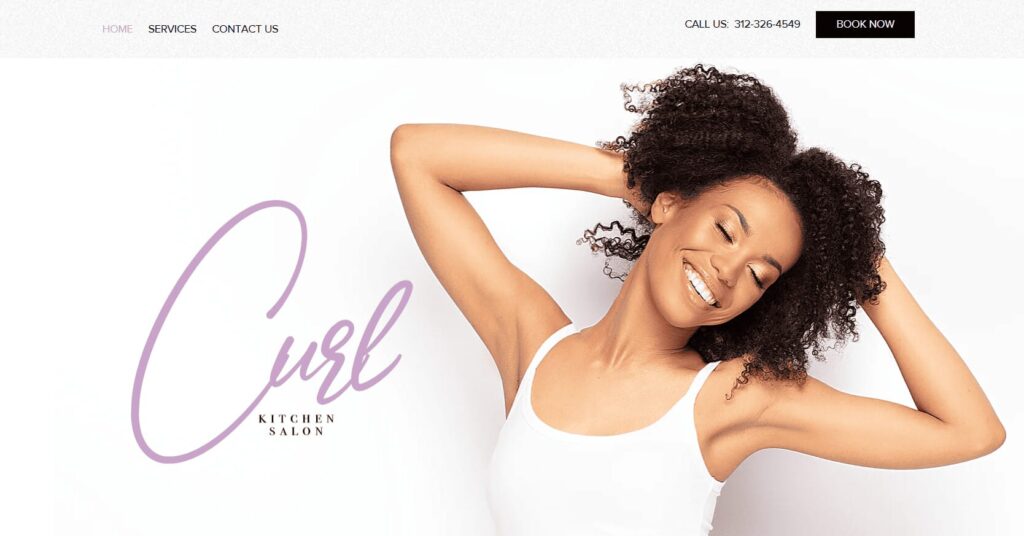
Creating a unique and distinctive concept is supported by a stylish interior, new and currently less-known services, and the use of beauty products that are hard to find in other nearby salons. A good way to stand out is to narrow down the target audience and focus on one or a few services or on serving a specific segment of the target audience. Curl Kitchen, a hair salon in Chicago, emphasizes that they are experts in curly hair care. This narrow specialization reduces the reach but distinguishes the company from competitors. The approach is aimed at attracting only the target clients.
Sometimes, a brand’s concept can be based on its story. When visitors know that a lot of resources went into creating their favorite beauty salon, they become more loyal. To achieve this, it’s effective to use a personal brand by sharing the founder’s journey on social media, the website, and even during conversations with customers.
In the era of visual content and social media, clients are likely to appreciate having a selfie zone. Dedicate a small space in the salon where clients can take photos after their treatments. It could be a wall with the salon logo or a special background with a hashtag or the salon’s name. You can encourage clients to leave reviews tagging your page, even if they just take a mirror selfie.
Over time, it’s important to determine how many people regularly use the salon’s services and to calculate metrics like average check, LTV, and the ratio of one-time to regular visits. Maybe most clients prefer visiting the salon at a specific time of day or on certain days of the week. In that case, make sure there are enough resources to provide proper service.
Based on the marketing plan and strategy, a loyalty program can be developed. You can identify a range of additional services and decide whether to introduce discount cards, gift certificates, and other incentives.
It’s essential to understand which services are the most popular and which are not in demand at all. Gaps in the master’s schedule between clients can negatively impact the salon’s reputation, so consider the staff’s workload and their speed of work. Pay attention to customer feedback regarding the duration of each procedure. It’s frustrating when everything is perfect, but clients choose the salon across the street because they do a manicure in one hour while it takes three hours at your place.
The next crucial step in strategy development is competitor analysis. Study the offerings of other beauty salons, especially those that are not in direct geographic competition with you. Regularly reviewing the international market for services related to yours will keep you informed about trends and allow you to be the first to offer something new in your city or even country.
In addition, thorough competitor analysis helps you properly set your prices or adjust existing ones. The beauty industry is not static—the situation constantly changes, so it’s essential to monitor competitors at least once a quarter. Identifying their strengths and weaknesses allows you to carve out your own niche.
Ask yourself what is valuable to your target audience and what needs are not sufficiently met in other salons. For example, if you’ve noticed that some clients are businesswomen who take calls and answer messages during manicures and pedicures, make sure there are conveniently placed outlets near the chairs and that the salon has fast Wi-Fi. Offer coffee and a snack to the “early birds” who come in before 8 a.m. to take care of themselves.
You can also engage two masters simultaneously to serve clients who come in for two different treatments and want to get everything done as quickly as possible. For example, the brow artist can tint the brows while the nail technician applies polish.
The marketing strategy for a beauty salon should also consider pricing specifics. It’s great if your pricing is flexible. Allow different segments of clients to make a choice regardless of their purchasing power. Of course, you can exclusively target elite clients, but in that case, the service quality and brand reputation must be top-tier.
To set the right prices, you first need to evaluate the cost of each beauty service in your area. Also, consider factors such as rent (if the premises are not owned), consumable materials, staff salaries, operational software costs, marketing and advertising budgets, and the potential monthly net income. Of course, these calculations can be refined after a few months of operation, but it’s essential to include the main expenses in the pricing even before the salon opens.
“After launching, your biggest expense is people. There are two ways to compensate stylists. In the commission-based model, each specialist receives a percentage of what they bring in. Commissions typically range from 35% to 60%. Some salons use a graduated commission scale to incentivize specialists to bring in more clients. For instance, a stylist may keep 40% of the first $1,000 they bring in per week and an additional 5% for every $1,000 thereafter.
…The second option is the ‘booth rental’ model. Here, the salon owner acts as a landlord, charging specialists a set ‘rent’ each week for using a chair. As for marketing goals, they all revolve around developing well-positioned services and products that stand out against potential competitors’ offerings.” How To Run A Beauty Salon: Costs,—Maureen Farrell, Forbes Staff
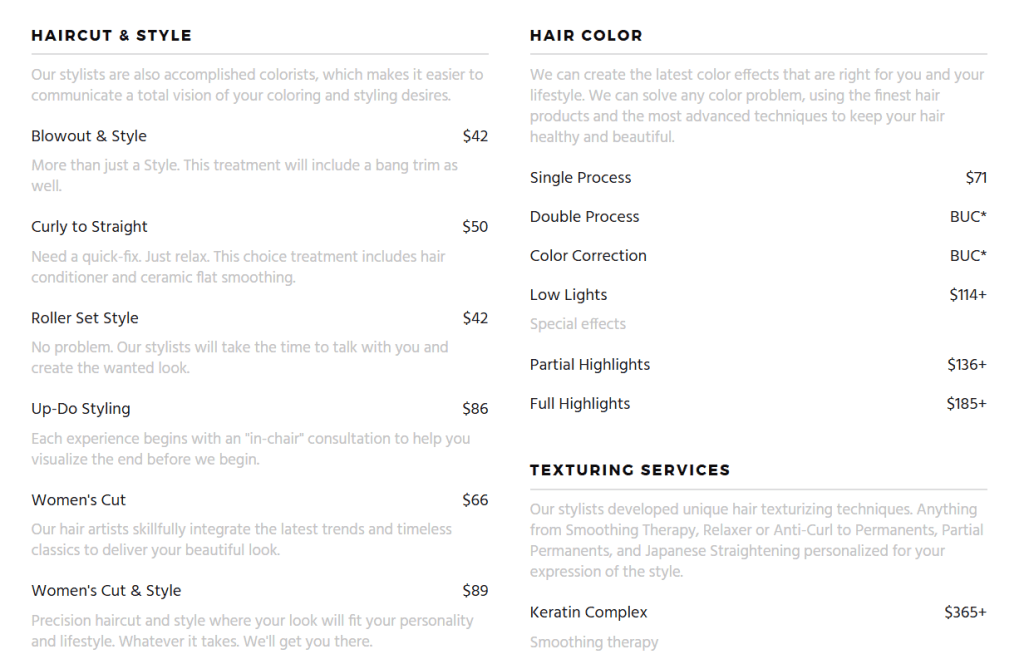
Add a pricing section to a separate area on your website, in Instagram’s saved stories, and anywhere else where potential and existing clients will connect with you. Include prices under the service descriptions, wherever they are posted. Hiding the cost of procedures creates distrust and frustration, just like in most other industries.
Before creating a marketing strategy, it is important to identify what unique features of your beauty salon can set you apart from competitors, what main value can be offered to the client, and what range of services will never be provided. For example, a lash lift specialist can emphasize that they focus on natural looks and do not offer eyelash extensions but only provide lash lifts using the best products.
Think about whether you would like to earn additional income by selling retail care products. This type of salon activity can not only increase profits but also attract clients. Let your staff subtly mention the branded products they use during services.
📌 Read the article: Marketing for a flower shop
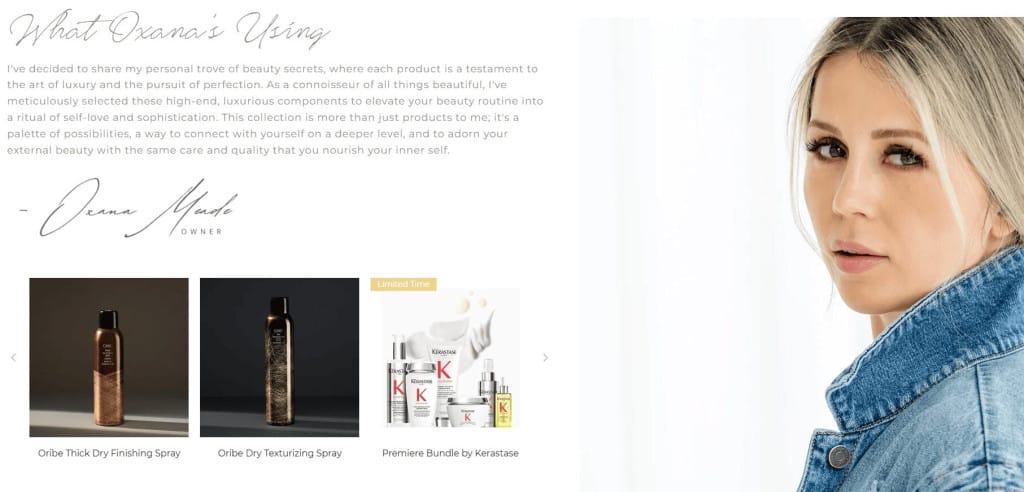
A business owner should set two main types of goals—marketing goals and business goals. Marketing goals focus on building brand awareness and creating a community of loyal customers. Business goals, on the other hand, are about increasing sales and profitability. Choose a model for working with employees.
If you want to position yourself as a leader in your industry and attract high-paying clients, consider implementing an internal training program. On platforms where you promote your salon, talk about how you are “growing” experts.
Even after your staff reaches the desired skill level, continue to organize workshops for them and showcase the training process in press releases on external platforms and your social media. Later, you can expand to full-fledged training courses, as this will help establish you as a guru in the field. This will increase the desire for many to book services with you and boost the number of referrals and mentions on social media. And in this industry, word-of-mouth marketing works very well.
What Should a Beauty Salon Website Look Like?
According to multiple surveys, around 80% of consumers prefer booking services online. That’s why the booking form is the most important element on a beauty salon’s website. Its importance can only be compared to the portfolio, as the quality of services in this industry is often judged based on visual content.
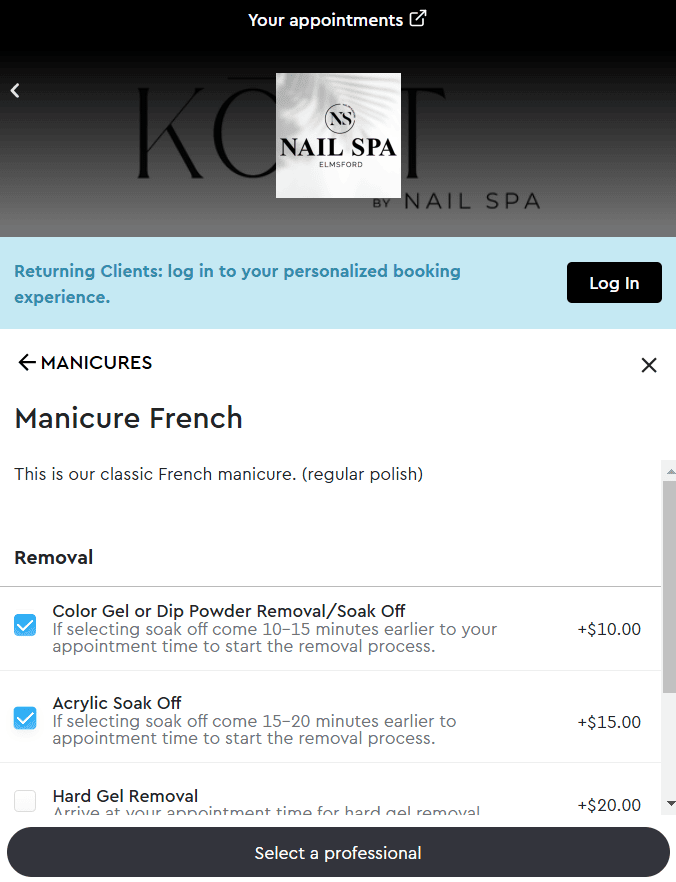
There are many programs that can help you set up online booking. This way, you don’t have to handle appointments manually or look for open “time slots,” as it can be nearly impossible when you have a lot of clients.
One example of such software is Mangomint. The online service has a wide range of features, including sending text messages, an intelligent waitlist, quick booking, and more. It can also be integrated with many other business platforms.
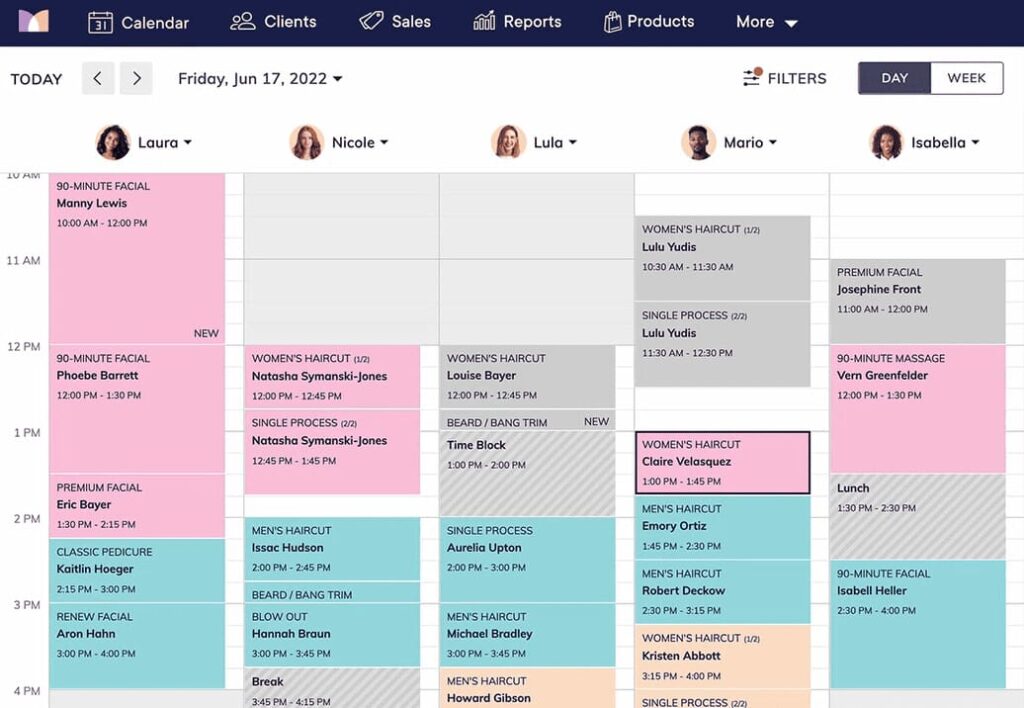
Among other automation tools, it’s worth mentioning GlossGenius, Vagaro, Boulevard, Booker, Integrica, and more. Online booking allows clients to schedule appointments anytime, even outside the salon’s working hours, helping to increase salon revenue. Additionally, many online booking systems provide automatic reminders via email or SMS. Some systems integrate with marketing tools, enabling targeted email campaigns and special offers to the customer base.
The structure, design, usability, responsiveness, and speed of a website impact brand image and site conversion. Let’s explore some interesting references for inspiration if you’re planning to create a new website or redesign an existing one.
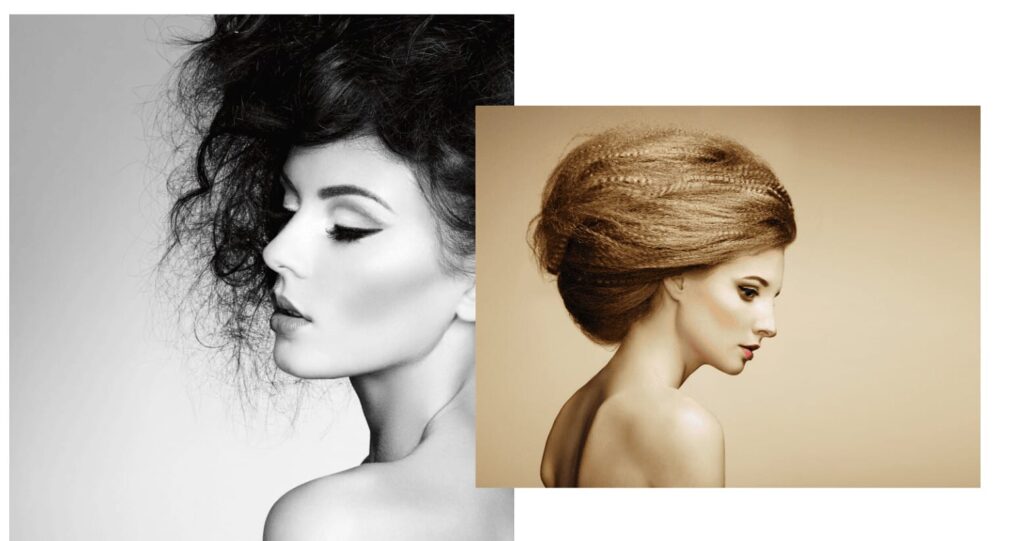
Tiara, a company from Illinois, invites clients to its salon through a minimalist website designed in a clean, understated style. Text is kept to a minimum, while full-screen photos dominate the layout. The images showcase representatives from various target audience segments—elegant women, young girls with bold makeup, smiling kids with cute hairstyles, and sophisticated men. Navigation between slides is achieved by scrolling through the page.

On the left side of the page is a menu. In the service categories, you can find a clear division by body parts and face.
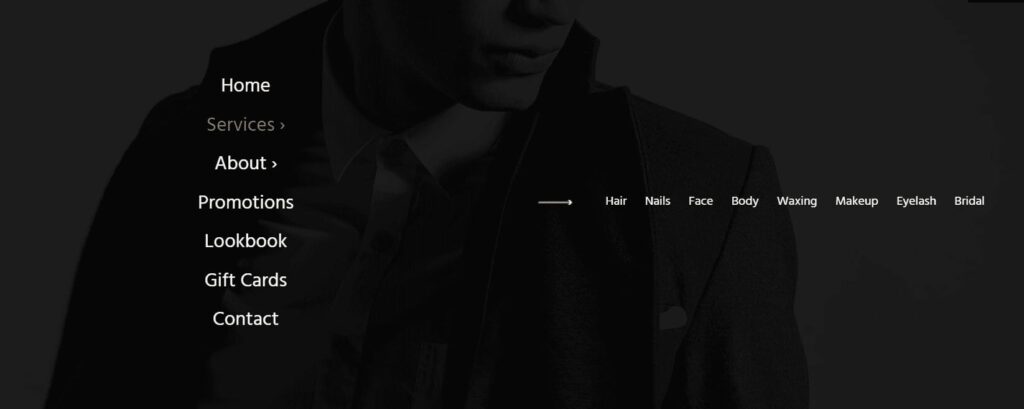
The salon’s portfolio is a real masterpiece. There are surprisingly few photos of the works, but the design is worth taking an example from. The scrolling technology is repeated here, as on the main page, thanks to which the user scrolls down and the slides change.
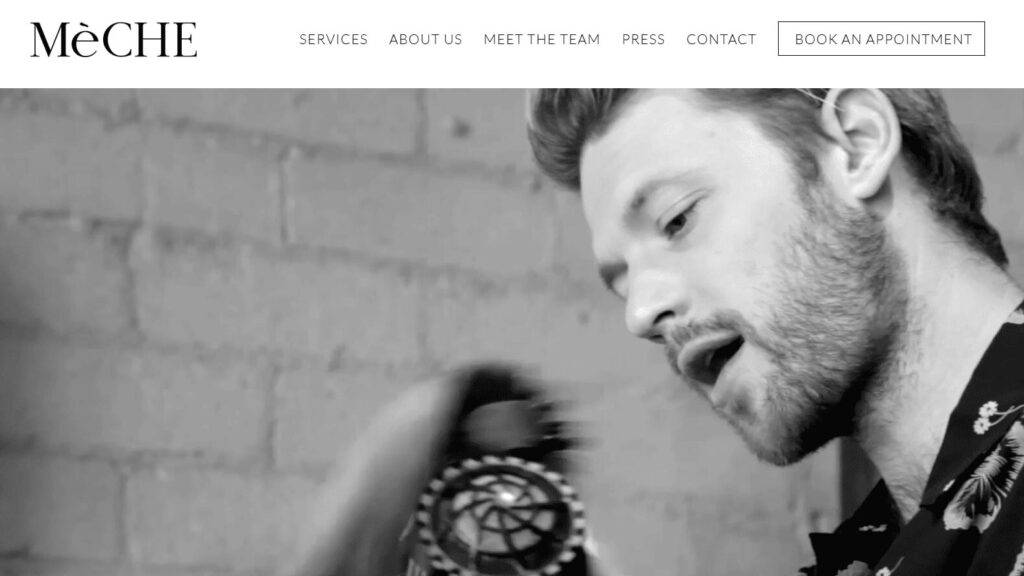
Meche Salon, located in Los Angeles, uses videos in several areas on its website. Visitors can see what the salon looks like inside and get to know the owners in the “About Us” section. Showing the work process in the beauty industry is a great way to build trust with potential clients. You just open the website, see a happy woman getting her hair done by a smiling stylist, and you already want to repeat that experience and book an appointment.
Combine different customer acquisition channels
A marketing strategy for a beauty salon should not be generic. Staying aware of trends and observing successful examples can help you choose what best fits your business and creatively adapt successful ideas. Of course, there are essential tools that every entrepreneur in the beauty industry needs. However, many successful businesses operate without a website and attract clients solely through social media—at least at the start.
Drive Paid and Free Traffic to Your Website
If you do have a website, launch Google Ads to reach people searching for salons in your area. Add your business to Google My Business to improve visibility in local search results. Remember that the top spots in Google search results are usually reserved for paid ads, so consider using PPC during periods of low client interest in your services. Make sure you have good reviews on Google My Business, Facebook, and Yelp.
If you’re not in a rush to attract many new website visitors but want to grow steadily and confidently, focus on search engine optimization (SEO). SEO isn’t just about keyword articles—it also includes website loading speed, ease of use, and ensuring that page content matches user queries. In your blog, you can publish industry news, salon updates, helpful content, guides, and case studies.
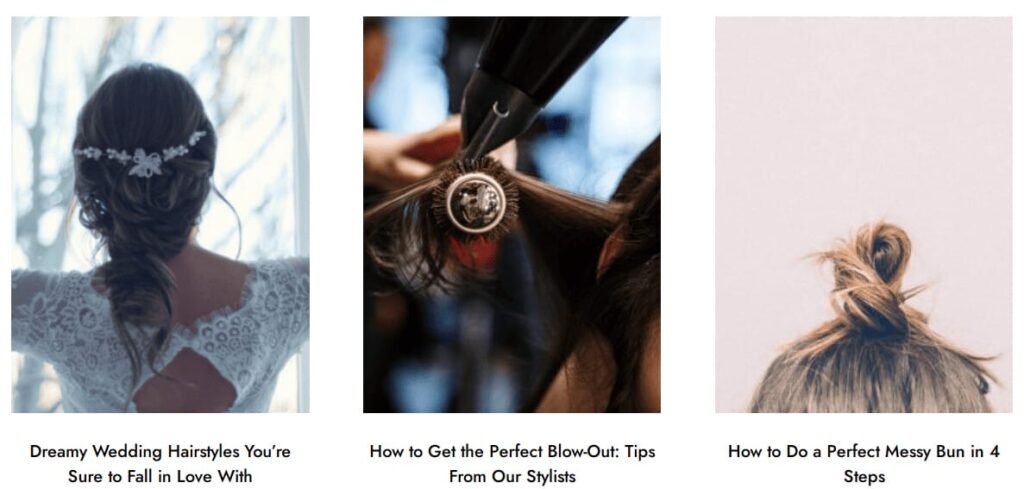
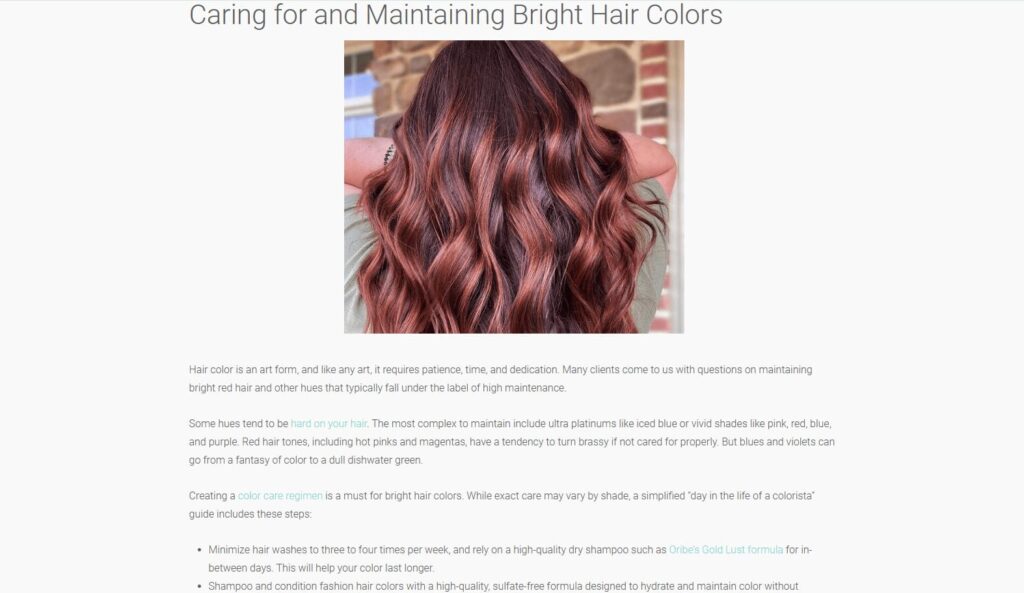
Remember that your articles should include subheadings, bullet or numbered lists, images, and internal links.
Showcase Your Beauty Salon on Social Media
Social media is a powerful tool for beauty salons because it helps build a community of brand ambassadors and loyal followers. Plus, Instagram, Pinterest, and other social platforms are perfect for showcasing your work and giving a glimpse into the salon’s vibe.
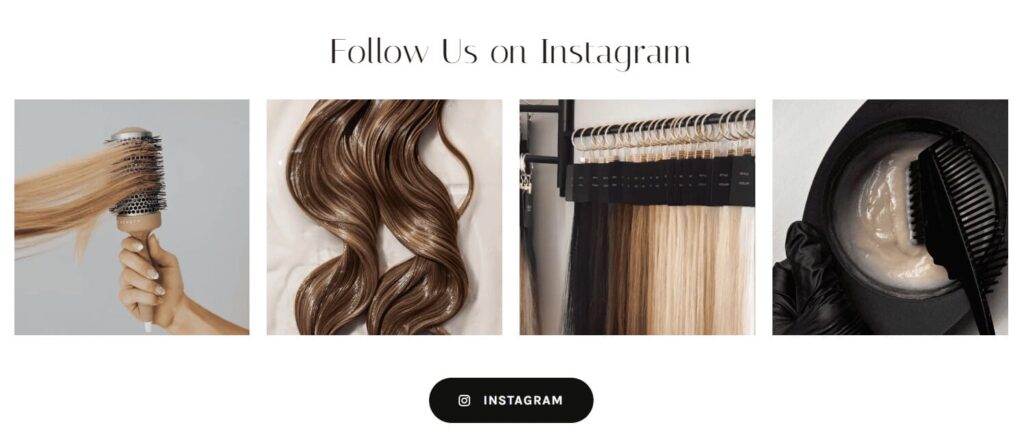
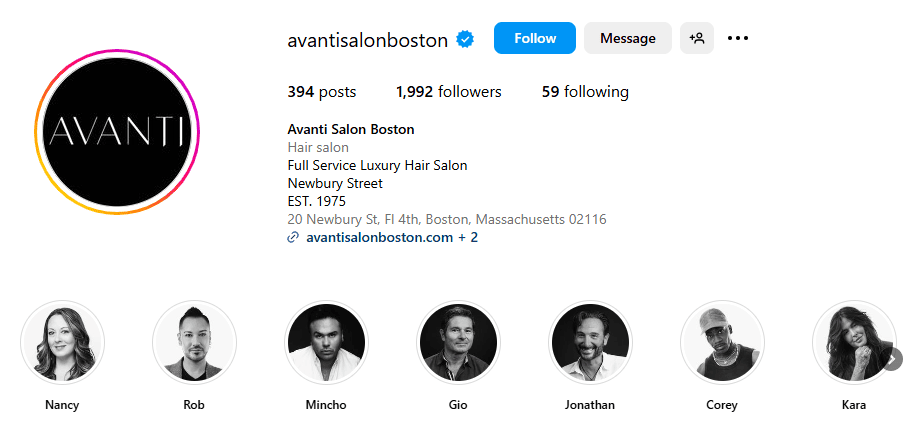
Avanti, a Boston-based salon, encourages visitors to follow its Instagram profile directly from the homepage of its website.
In the company’s profile, we see saved stories with the salon’s experts. It is immediately clear that the staff is the greatest value for the brand. And it inspires trust. It’s a good move, considering that people buy from people, and the best way to improve customer loyalty is to introduce customers to employees and show them behind the scenes.
Social Media Content Ideas for Beauty Salons
- Before and After: Show photos of client transformations and the results they achieve during their visit to the salon.
- Customer Reviews: Encourage satisfied clients to share their experiences on your social media pages and repost tagged posts and stories.
- Behind the Scenes: Showcase your specialists at work, the beauty products you use, and give a virtual tour of your salon.
- Promotions: Share information about special offers, updates, discounts, and more.
- Industry News and Events: Share updates about events your salon is participating in, like charity events or master classes.
The best social media marketing strategy for beauty salons is collaborating with local micro-influencers. Reach out to bloggers with 3,000–30,000 engaged followers.
Stay on Their Mind with Email Marketing
Launch holiday, seasonal, or personalized promotional offers. For example, you could offer a discount during the week before a regular client’s birthday.Consider your current goals. If your goal is to increase brand awareness, you can offer a discount for a tag and review. If the objective is to boost the average order value, introduce a “Service Package Discount” campaign.
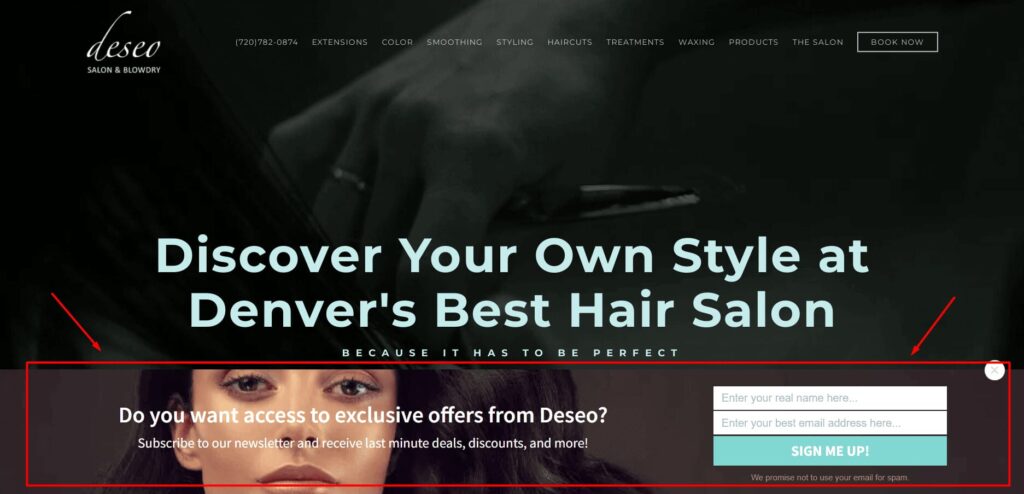
To build a mailing list for email or text marketing, collect clients’ emails or phone numbers. You can also use popular messaging apps for this purpose.A Denver-based salon, Deseo, placed a lead form on their website to expand their potential client base. The company promises subscribers attractive offers in exchange for their email addresses.
Keep Your Beauty Salon Clients
Implement a referral program and always rebook clients during their visit. At the end of the service, simply ask: “When is the best time for your next appointment?”
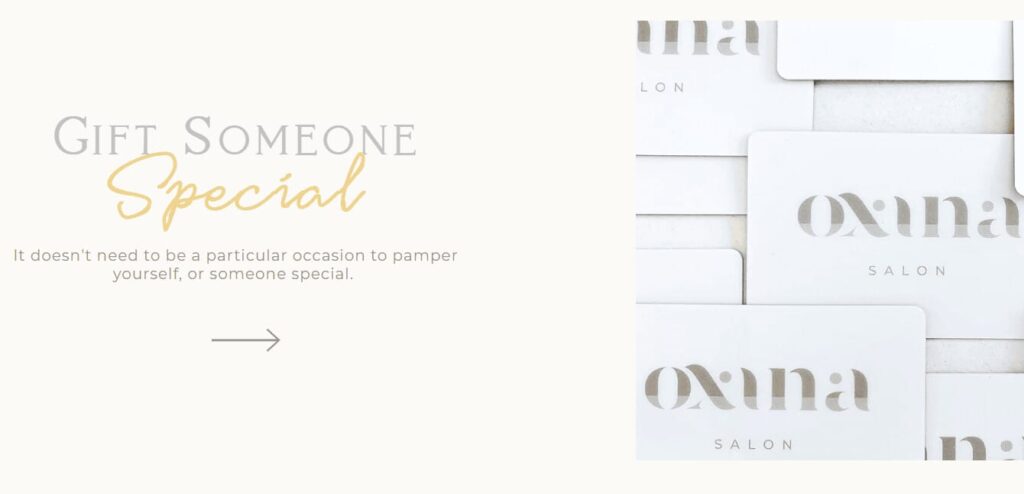
Gift cards can boost sales during the holiday season when everyone is looking for practical gifts for their loved ones.
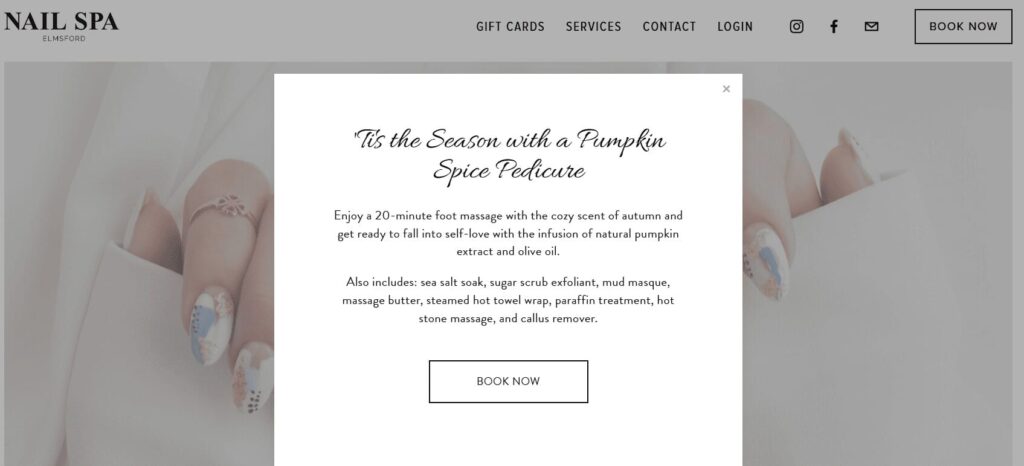
Introduce seasonal offers. Change them from year to year so that customers are always in anticipation of something exclusive, as Nail SPA Elmsford does.
In many automation programs, you can set up automatic reminders about bookings after a meeting or after a specific period. Give gifts to your regular customers. This can include points for each visit, referral bonuses, and so on.
“Promote new products and services with gifts. Every time you add a new product or service to your salon, the best way to create excitement is by giving away gifts. Social media offers you plenty of opportunities to turn your giveaways into exciting online events, polls, surveys, and daily posts, and, of course, to announce the winners.”—Four Social Media Marketing Ideas For Salon Owners, Chelle Neff, Former Forbes Councils Member
Host exclusive events to present new services, with a photo zone and gifts.
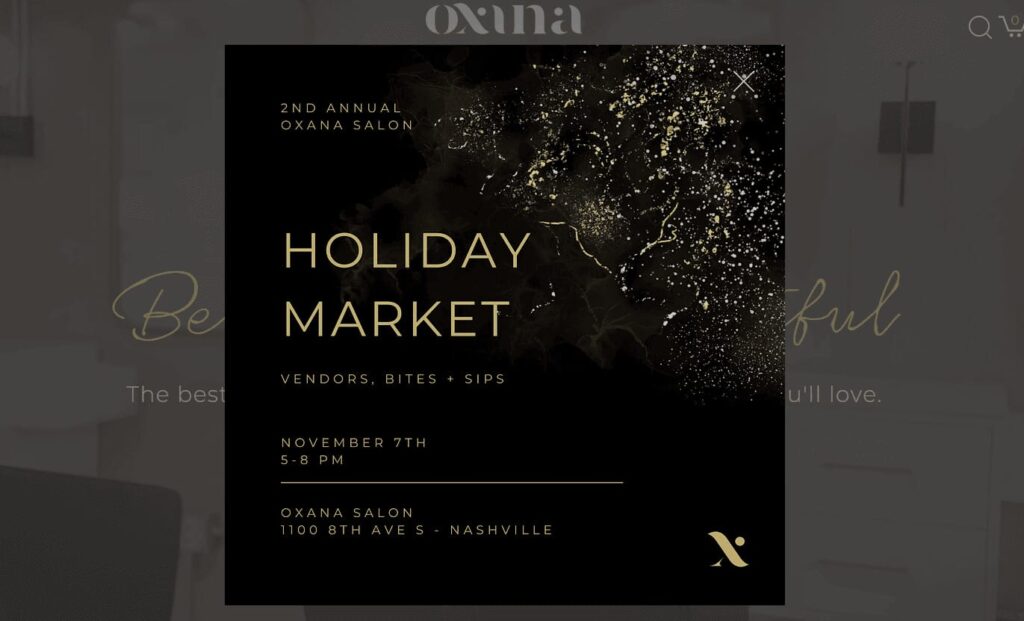
You can offer some services through a subscription. This business model helps you keep customers for a longer time. Update your range of products, expand the color palettes for nail polishes and hair dyes—surprise your clients so they won’t even think about going to another salon, even if it’s closer or cheaper.
Conclusions
A marketing strategy for a beauty salon should be as creative as the business itself. Your target audience wants aesthetics and comfort, so focus on these when developing your business concept.
At the start, you can use only social media to attract clients and showcase your work. Creating a website will help you reach a larger audience through PPC and automate interactions with visitors through online booking. The goal of the salon owner (or their marketer) is not just to attract many clients but to build a “core” audience—people who will come back to you again and again.
Answers to questions
To promote a beauty salon, it is best to use a combination of strategies, such as working with influencers, social media targeting, creating and promoting a website through PPC, automation, and analytics. Important areas also include managing reviews, building a brand reputation, and loyalty programs.
To set up online booking, choose one of the tools like Mangomint, GlossGenius, Vagaro, Boulevard, Booker, Integrica, and others.
-
Tags
