


BY 115% INCREASED THE NUMBER OF LEADS FOR AN ENT CLINIC IN THE U.S.: A GOOGLE AND MICROSOFT ADS CASE STUDY
-
Post author

-


This case is about working with paid search advertising in the U.S. medical niche: a highly competitive local market, strict ad platform moderation, and external economic factors that directly affect patient behavior.
We show how, through a systematic approach, deep analytics, and consistent optimization, we stabilized advertising campaigns and scaled lead generation for an ENT clinic operating in one of the most competitive medical markets in the region.
Google Ads, Microsoft Ads
Service
Medical services—otolaryngology (ENT)
Category
Georgia, USA
Target region
Results
+115%
Number of leads
-8,66%
CPL
Client
Our client is a specialized ENT clinic that has operated in the local market since 1989 and is one of the leading otolaryngology centers in the northern part of Fulton County, Georgia, USA. The clinic has a team of experienced physicians, a wide range of procedures, and an established reputation among local patients.
Despite strong expertise and a stable offline presence, the management came to us with a clear request: strengthen the online channel and make Google Ads a more controllable and predictable source of leads. Previous advertising campaigns did not deliver stable results—the number of leads fluctuated, and the cost of acquiring them gradually increased, which made further scaling more difficult.

Audit
At the start of our cooperation, the client’s Google Ads account was already being managed by another contractor. Therefore, the first step was to conduct a detailed audit of the entire advertising account—its structure, budgets, search queries, bidding strategies, and algorithm performance. The analysis revealed a number of systemic issues that directly affected ad performance and limited the ability to scale.
We identified the following main shortcomings:
- Loss of branded traffic. The campaigns barely covered branded queries, allowing competitors to capture the warmest and highest-converting audience.
- Incorrect budget allocation. Inefficient campaigns were receiving inflated budgets, while better-performing areas were underfunded.
- Internal competition between campaigns. Multiple campaigns were showing for the same search queries at the same time, which led to traffic cannibalization, higher CPC, and distorted analytics.
- Weak signals for algorithms. Due to the chaotic account structure, incorrect keyword match types, and an unstable flow of conversions, automated strategies were learning incorrectly and performing inconsistently.
- Lack of display support. The top of the funnel was completely missing—Display or Discovery campaigns were not being used to generate demand and strengthen brand reach.
We also analyzed the search terms separately. The situation turned out to be critical:
- a significant share of informational and non-commercial queries;
- a large volume of competitor traffic;
- the presence of clearly irrelevant and “junk” queries.
Taken together, these factors were not only wasting budget inefficiently, but also sending mixed signals to the algorithms. As a result, the cost per lead increased, and the opportunities for stable optimization were limited.
Analytics
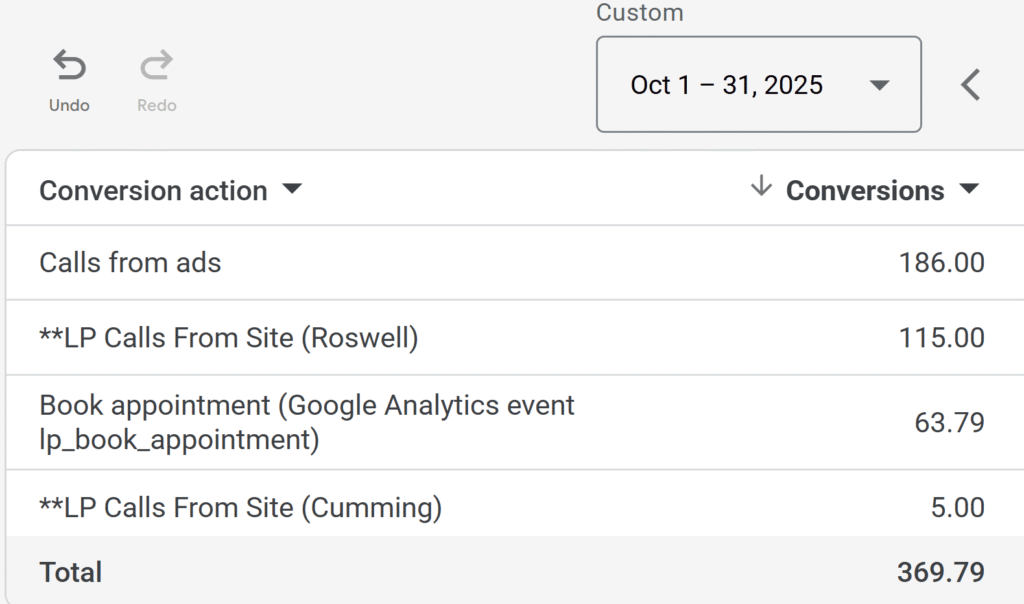
A separate challenge at the start was analytics and the quality of conversion data. During the audit, we found that not all possible conversions were being tracked in the account. Calls were being recorded, but leads from the website were not. As a result, the real effectiveness of the advertising campaigns was underestimated, and some valuable actions were not being captured at all in either Google Ads or Google Analytics 4.
Because of this, the algorithms were not receiving a sufficient number of correct signals, which significantly limited the opportunities for optimization and scaling.
At the start, only phone conversions were set up in the account:
- calls from ads;
- calls from the website for two offices—Roswell and Cumming.
At the same time, the contact form submission event was completely missing, even though it is one of the key actions for a medical business. Because of this, Google Ads could not correctly identify users with high intent, and automated strategies were effectively operating on incomplete data.
For local medical clinics, accurate tracking of all valuable interactions is critically important, because conversion signals are the foundation of:
- proper learning for automated bidding strategies;
- identifying audiences with strong commercial intent;
- accurate CPA calculation and analysis of the effectiveness of the entire funnel.
That is why we put analytics in order and fixed critical gaps:
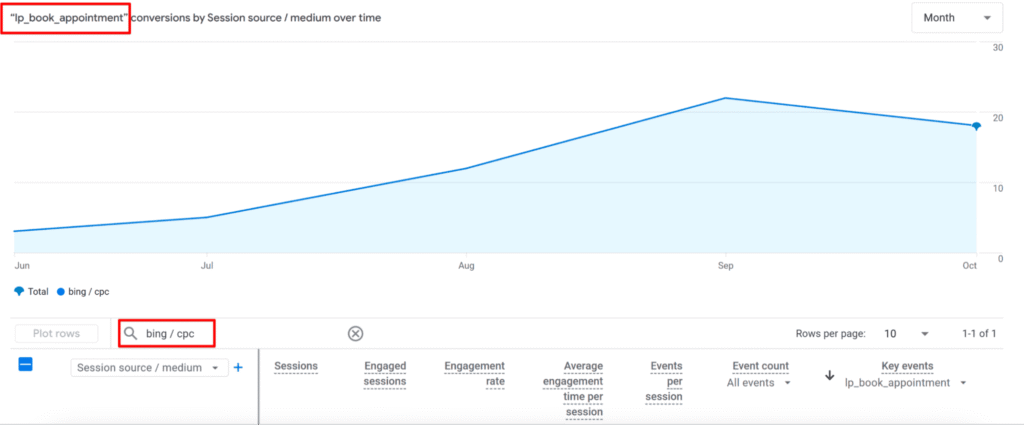
- added the missing appointment booking event lp_book_appointment;
- organized call conversions separately for each office;
- set the correct conversion priorities for Google Ads algorithms;
- configured audiences of visitors to key pages in GA4 with different time windows.
As a result, the account began receiving clean, complete, and accurate data—the foundation without which stable optimization, predictable results, and further ad scaling are impossible.
Read on the blog: Marketing strategy for a fence manufacturing business
Initial optimization
The medical field is one of the most sensitive categories for Google Ads: strict moderation, increased attention to wording, content restrictions, and regular ad reviews. That is why we planned the first month of work as carefully as possible.
The situation was further complicated by the fact that the previous contractor had suddenly and without warning completely stopped all advertising campaigns. This created risks of losing algorithm learning, bid strategy degradation, and unstable account behavior after relaunch.
So our key task at the start was not to “rebuild everything from scratch”, but to gently stabilize the account, provide the algorithms with the right signals, and avoid any moderation triggers.
We deliberately focused on basic, safe, but critically important optimizations that form the foundation for further scaling.

Expert Comment
A common mistake contractors make is adding only one specific word to negative phrases.
Conditionally, if you add what Google suggests, [John Jarboe]—then by default it will be added only as exact match and at the ad group level. Even if you change it to the campaign level or even to a word list—keywords like “John Jarboe MD Atlanta” are already considered different by Google. That is exactly why our specialists add it twice: to negatives, they immediately add the exact keyword at the general list level, as well as the two broad words John—if there are no such people at our clinic—and Jarboe. We often reach the limit of 10,000 negative keywords, and we also know how to deal with that.
If you are looking for those who have more than 60 Healthcare websites in their portfolio, you have come to the right place—leave us a request.
What we did at the initial optimization stage:
#1. Reallocated budgets based on data and signals
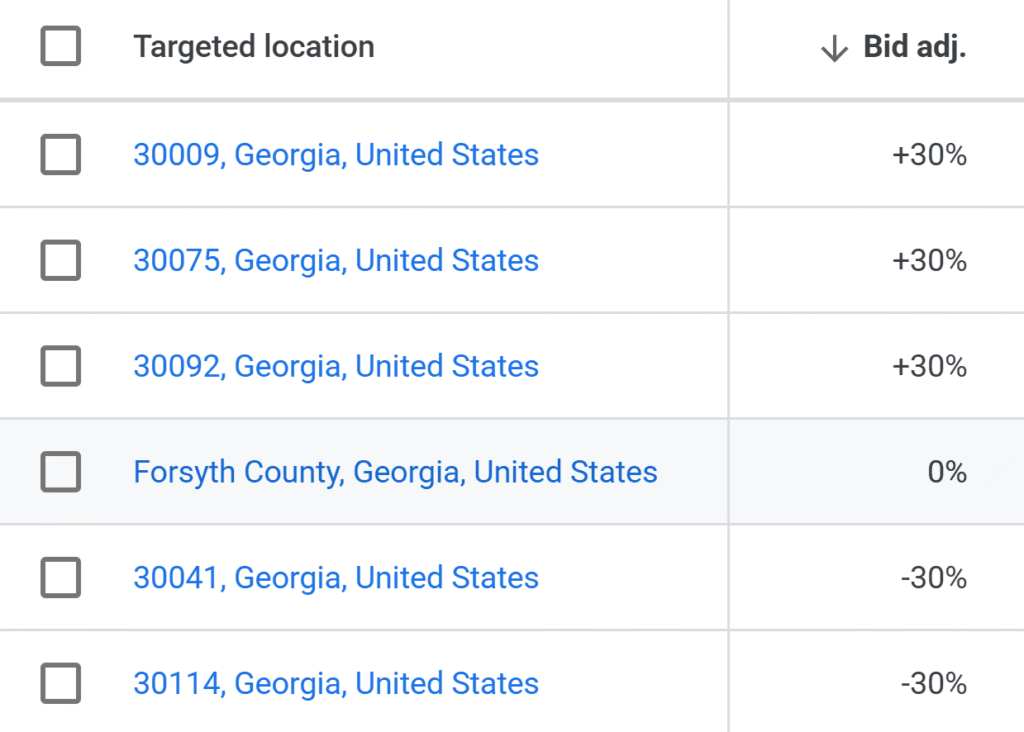
As a first step, we analyzed all available conversions by cities and districts, created a detailed GEO report, and identified the locations with the highest lead quality. We also took into account the client’s internal analytics regarding the socioeconomic differences within Fulton County.
The region has clear segmentation:
- north Fulton—areas with higher income levels, stable purchasing power, and a greater willingness to invest in private medical services;
- southern areas—locations with lower income levels, a lower likelihood of conversion, and significant distance from the clinic.
After aligning with the client, we:
- increased bids in areas with stable conversions and high traffic quality;
- reduced or completely turned off GEOs that were not delivering results or were too far away;
- focused budgets on segments where purchasing power and real intent to book an appointment at the clinic overlap.
This approach immediately reduced budget waste and redirected it to the highest-performing locations.
#2. Cleaned up search terms and removed irrelevant traffic
One of the key tasks was a deep cleanup of search terms. We:
- excluded informational queries with no commercial intent;
- added competitor queries as negative keywords when they consistently failed to convert;
- removed queries from other cities that were irrelevant to us.
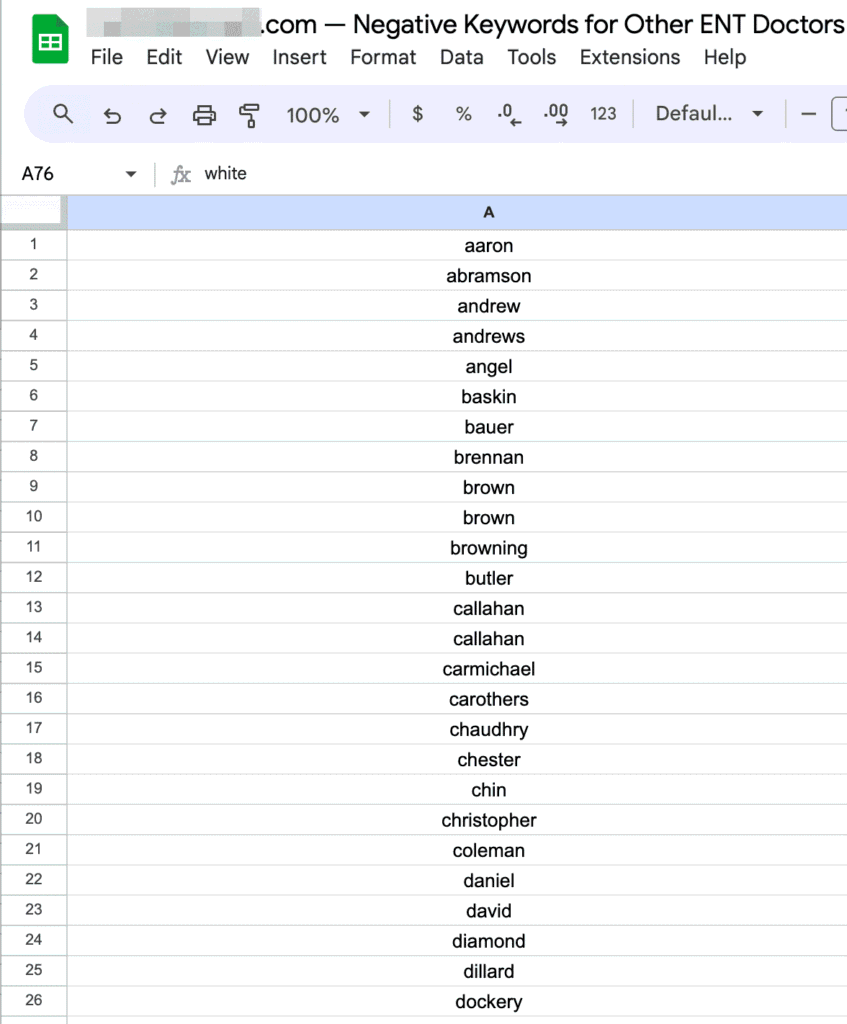
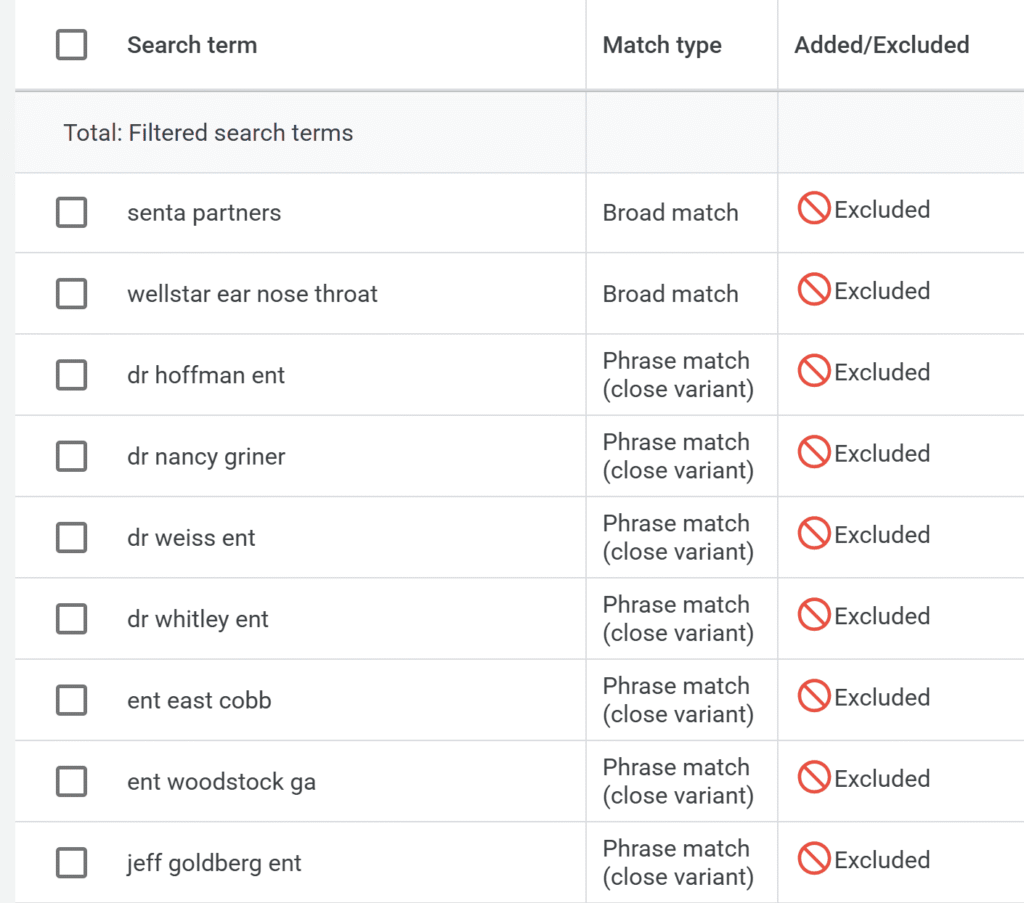
We placed a separate focus on queries containing the first and last names of other ENT doctors in the region. The analysis of search terms showed that these queries were consistently draining the budget and generating no conversions. Users were searching for a specific doctor or a competitor’s clinic and were not willing to consider an alternative.
We reviewed these queries in detail across each campaign, after which we:
- completely blocked this type of spend, which had no commercial return.
- compiled a full list of competitor doctors’ first and last names in the region;
- added them to a separate shared negative keyword list at the account level;
#3. We implemented cross-negative keywording of search terms across campaigns
During the analysis, we found that different campaigns were showing for the same actual search queries. This led to:
- internal competition;
- higher CPC;
- distorted statistics;
- confusion in algorithm learning.
Typical issues:
- general campaigns were capturing local queries with city names and “near me”;
- local campaigns were receiving overly broad general queries;
- high-intent local traffic was being duplicated across campaigns.
To restore a clear structural logic, we implemented cross-negative keywording between campaigns:
- in general campaigns, we blocked all city names, local modifiers, and “near me”;
- in local campaigns, we excluded broad general terms;
- we clearly separated branded, non-branded, and doctor name queries.
As a result, each campaign started working only with its own intent type, without overlapping traffic capture. The structure became transparent, manageable, and stable for the algorithms.
#4. We improved the ad copy
Given the sensitivity of the medical niche, we did not change ads that had already passed review long ago and were delivering results. Instead, we applied a controlled approach:
- we left the existing ads unchanged;
- we added one new ad variation to each group for testing;
- we built the structure so that testing would not affect the continuity of delivery.
This allowed us to gradually improve the ad copy without losing campaign stability.
#5. We updated the ad extensions
We reviewed all active campaigns, updated the ad extensions, and supplemented them with relevant additional links, callouts, and structured snippets. As a result, CTR and traffic quality increased without the need to change the campaign structure.
#6. We processed Google recommendations
We analyzed all Google Ads system recommendations:
- incorrect and undesirable ones—rejected;
- useful ones—implemented manually.
Separately, we turned off:
- automatic ad text expansion;
- automatic URL parameter setting.
This allowed us to maintain full control over the signals received by the algorithms.
#7. Set up remarketing audiences
We created key remarketing audiences in GA4, laying the foundation for future media campaigns.
#8. Adjusted target CPA in bidding strategies
We made targeted adjustments to target CPA in the campaigns—not sharply, but within a safe range. This made it possible to either lower the actual CPA or get more traffic while maintaining efficiency.

Expert Commentary
After conducting the audit and developing the strategy, we primarily focused on gradually implementing changes in the campaigns. The medical field is very sensitive, and any abrupt actions can lead to a noticeable drop in results. Therefore, during each optimization, we followed the principle of “no more than 20% of changes at one time.” This made it possible to track in a timely manner the impact of changes that did not produce the desired effect and to adjust the strategy without harming the account’s stability.
Careful processing of search queries is the key to reducing wasted spend and attracting higher-quality traffic. That is why we confidently removed everything irrelevant—including the names of doctors from other medical institutions and informational queries.
We also completed cross-negative keywording between campaigns to avoid internal competition and ensure proper algorithm training.
While reviewing the keywords in the campaigns, we decided to take an unconventional approach. For example, we kept active keywords with stable conversions that included the last name of a doctor who had previously worked at the clinic but later retired.
The combination of these actions, as well as the further scaling of the campaigns, made it possible to achieve exactly the result the client expected—an increase in the number of leads and a reduction in CPL.
Anna Ponomaryova, PPC Specialist at marketing.link
First Month Results
The first month became a stage of stabilization, cleanup, and proper account preparation for scaling. We avoided abrupt algorithm retraining while also removing key technical limitations.
The account received:
- clean and manageable traffic;
- correct GEO priorities;
- updated and stable ads;
- high-quality negative keyword lists;
- prepared remarketing audiences;
- a reliable foundation for further, deeper optimizations.
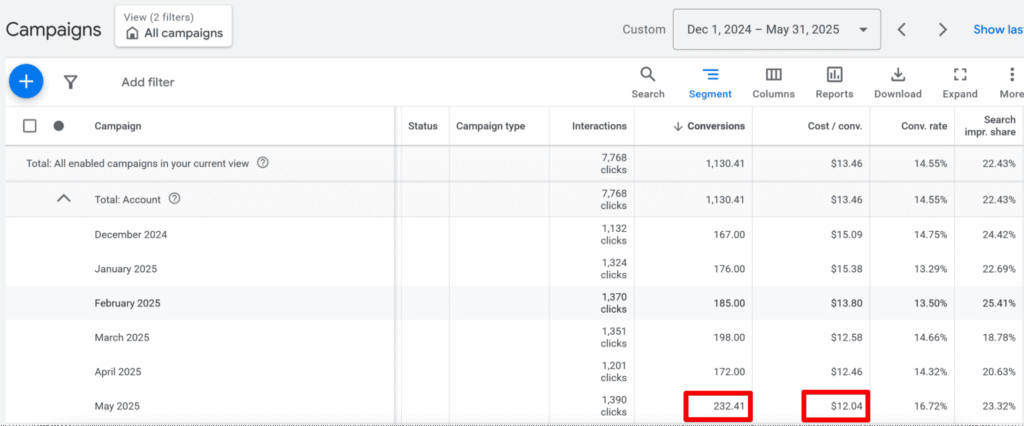
Already in the first month of work, we achieved improvements in key performance indicators after the initial optimization. The number of conversions increased by 34.88%—from 172 to 232—while the average CPA decreased by 3.37%—from $12.46 to $12.04.
Regular Optimization
The medical niche is dynamic, competitive, and especially sensitive to changes in the auction. To maintain stable results and a controlled cost per lead, a Google Ads account requires not one-time “tweaks” but systematic, regular optimization. This is exactly the foundation we maintain on an ongoing basis.
Below are the key areas of our weekly work.
#1. We adjust budgets according to performance and the spending plan
Every week, we analyze the actual performance of each campaign; CPC dynamics; the level of competition in the auction; and scaling potential.
Based on this data, we reallocate budgets to strengthen campaigns with the best CPA; reduce budgets where efficiency is declining; and ensure that actual monthly spend aligns with the client’s approved budget.
No overspending or chaotic changes—only controlled, predictable work.
#2. We adjust target CPA and manage bidding strategies
We regularly adjust target CPA, working with algorithms as carefully and predictably as possible.
When traffic volume is limited and the actual CPA is within the acceptable range, we gradually raise the target CPA to expand reach without losing efficiency.
When the actual CPA exceeds the acceptable level, we gradually lower the target CPA, tightening the system and reducing acquisition cost.
All changes are implemented in small steps, without abrupt moves and without disrupting algorithm learning.
#3. We analyze search queries and systematically clean irrelevant traffic
Every week, we thoroughly review search queries and:
- remove informational and non-commercial queries;
- block recurring “junk” terms;
- filter out irrelevant geo queries;
- remove phrases that spend budget and do not generate conversions.
#4. We continuously expand negative keyword lists
We maintain a large and continuously updated negative keyword list, adding irrelevant service categories; competitor queries; informational wording; and all variations of unwanted search terms.
This prevents irrelevant traffic from reappearing and allows the budget to be used more efficiently in the long term.
#5. We optimize keywords
We regularly pause ineffective keywords, add new keywords based on real search queries, and expand semantics in areas with confirmed potential.
#6. We adjust bids based on behavioral factors
We analyze performance by geolocations; device types; time of day; and audience segments. Based on this data, we adjust bids to improve spending efficiency and traffic quality.
#7. We monitor and process Google recommendations
We do not apply Google Ads recommendations automatically. Useful solutions that genuinely improve performance—we implement; harmful ones or those that conflict with the strategy—we reject. A controlled approach is always more effective than blind automation.
#8. We clean ad placements in display campaigns
We regularly remove low-quality and suspicious placements in GDN that generate invalid traffic, optimizing the quality of display reach.
#9. We implement the client’s individual business requests
We promptly integrate all of the client’s business priorities into the account structure, adapting campaigns to the business’s current objectives.
For example, we created a separate search campaign for the city of Alpharetta as one of the key priority areas, and we also optimized branded campaigns for searches by the clinic’s ENT doctors’ last names: we kept keywords only for those specialists for whom the client wanted to increase patient flow, and added separate additional sitelinks with their landing pages.

Expert Commentary
Before turning to Marketing Link, the client had worked with many contractors whose work did not deliver the expected results.
When we started working together, the first thing we focused on was optimizing the ad account, because it was in chaos. We thoroughly and carefully cleaned up the search queries, boldly excluding everything that was not directly related to the client’s business, reviewed the keywords in the campaigns that had already been set up, and built a semantic core to set up campaigns for the different service areas the client provides.
In addition, we also carried out other important work, such as restoring LSA accounts to increase the number of leads.
Professional and regular campaign optimization is the key to getting qualified leads in the service industry.
Scaling
Microsoft Ads as an Additional Growth Channel
Alongside optimizing Google Ads, we initiated the integration of Microsoft Ads as an additional lead generation channel. The goal was to expand reach and test a less competitive environment.
For the medical niche, Microsoft Ads offers a number of practical advantages:
- softer moderation;
- lower competition in the auction;
- more affordable CPC;
- a more loyal audience;
- higher conversion rates.
Before launching the scaling process, we audited the existing Microsoft Ads account. As a result, we found that the campaigns had not been updated for a long time and no longer aligned with the current Google Ads logic.
Specifically:
- no new ad groups had been added;
- keywords had not been updated to reflect current demand;
- relevant negative keywords were missing;
- changes in geotargeting had not been taken into account;
- outdated ad extensions were being used.
We carried out a full synchronization of Microsoft Ads with Google Ads:
- aligned the campaign structure;
- added up-to-date keywords;
- implemented current negative keyword lists;
- updated geo settings;
- brought ad extensions up to date.
Since the account already had historical data, we did not relaunch it from scratch. Instead, we carefully brought the system to a manageable and predictable state, after which we conducted testing and launched ongoing traffic quality monitoring.
As a result, Microsoft Ads became a stable additional source of leads, complemented Google Ads, and helped reduce the average patient acquisition cost without sacrificing traffic quality.
Budget Increases
In August 2025, the client approached us with a new business request: to increase the number of leads and fill the schedules of newly hired doctors. This was a direct indicator that the current advertising strategy was working steadily—doctors had high utilization, the medical staff had increased by 25%, advertising was delivering a high-quality flow of leads, and the business was ready for further growth.
After a joint discussion, the client decided to increase marketing spend.
An important point: we never scale by sharply increasing the budget within one or several campaigns. In most cases, this approach leads to algorithm instability, re-learning of bidding strategies, and loss of result stability.
Instead, we applied a controlled, phased, and strategic approach, combining vertical and horizontal scaling.
Scaling Strategy in Google Ads
Vertical Scaling
Instead of concentrating the entire budget increase in one direction, we redistributed investments across all active campaigns based on their actual performance:
- increased budgets in campaigns with a stable acquisition cost and a predictable conversion volume;
- in campaigns with borderline performance, budgets were increased only slightly;
- in segments with weak or unstable returns, budgets were left unchanged.
At the same time, we analyzed auction statistics, impression share, and actual spend for each campaign, and in segments with room for growth, we raised the target CPA to increase the volume of high-quality traffic without losing control over conversion cost.
This approach allowed us to expand reach and increase the number of leads without destabilizing the algorithms and without sharp spikes in performance.
Horizontal Scaling
In addition to working with budgets and bidding strategies, we created a separate search campaign for a broader, high-volume keyword cluster related to sinusitis treatment.
This made it possible to:
- reach a new segment of the audience;
- generate an additional, controlled flow of leads;
- expand semantic coverage without risk to existing campaigns.
Scaling Strategy in Microsoft Ads
Microsoft Ads required a different approach to scaling because, at that point, only the strongest and already proven campaigns were active in the account, additional directions had not been used before, and the overall structure was much more compact compared to Google Ads.
Our next steps were aimed at careful expansion:
- we moderately increased budgets in the campaigns that were already running;
- reviewed and adjusted the target cost per conversion where it opened up growth potential;
- launched several new campaigns from Google Ads to cover additional search segments without overloading the budget.
Difficulties We Encountered
Display remarketing, which was effectively replaced with keyword targeting
As part of the standard process, we planned to launch display remarketing—showing ads to users who had already visited the clinic’s website. This format is usually used to bring back a warm audience: to remind them about the brand, strengthen trust, and encourage them to book an appointment.
However, in the medical niche Google applies stricter restrictions not only in search campaigns, but also in the display network. Because of privacy policies, the handling of sensitive data, and restrictions on personalized content, classic display remarketing is often not allowed to run.
In this case, the restrictions were as strict as possible: all attempts to launch standard display remarketing ended in disapprovals, and the campaigns were not allowed to run regardless of the settings and creatives.
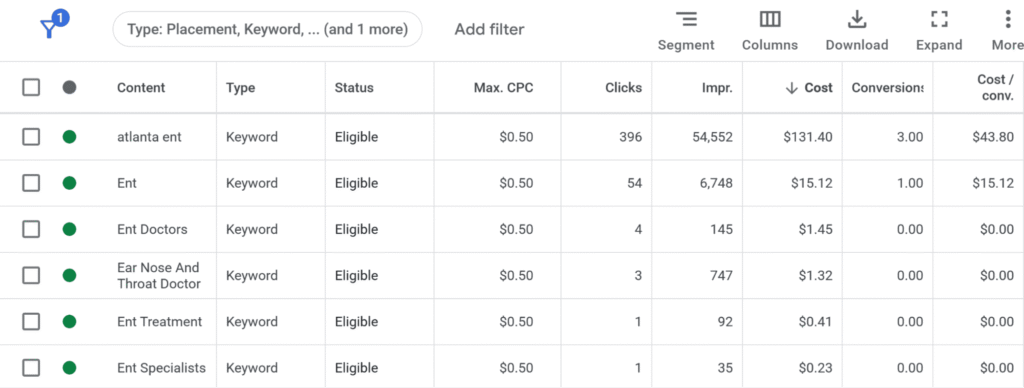
To avoid being stopped by these restrictions, we used an alternative approach—keyword targeting in the display network. Banner ads were set up to appear on websites where the page content mentioned:
- ENT-related terms;
- ENT diseases;
- symptoms and treatment approaches.
In this format, the ads are shown not based on audience signals, but according to the content of the page. In practice, this means they were seen by users who at the moment of the impression were already reading or viewing materials on relevant medical topics. This ensured better relevance of impressions, a more natural perception of the ads, and proper operation within Google’s policies for the medical niche.
As a result, the campaign worked steadily, delivered additional traffic, expanded reach, and strengthened the brand’s presence, while also generating conversions at an acceptable cost for the display format. In this way, we compensated for the inability to use classic remarketing and achieved an additional effect without violating the platform’s requirements.
Decline in demand for ENT services due to external factors
In the fall of 2025, the client came to us with a request: the number of actual bookings and final patients had decreased compared to the same fall period in 2024, despite an increase in advertising budgets.
We conducted a full analysis of the situation: we checked the performance of Google Ads campaigns, Google Analytics data, behavioral metrics, traffic structure, as well as the proper functioning of the website and booking forms. Based on the analysis, no negative changes were found on the marketing side. On the contrary, over the year:
- traffic volume increased;
- behavioral metrics improved;
- the number of conversions increased;
- the cost per lead decreased.
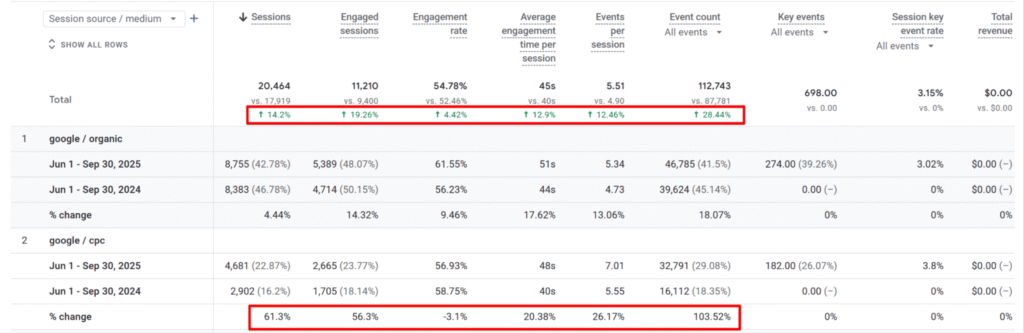
This made it possible to clearly establish that the decline was not related to the quality of the advertising or to our actions as the contractor.
The decrease in the number of actual patients was caused by external factors—the economic situation in the region and changes in the medical insurance system. In 2025, patients more often began postponing visits to an ENT doctor because of higher out-of-pocket costs, reduced insurance coverage, and overall financial caution.
Thus, the problem arose not at the traffic acquisition stage, but at the decision-making and payment stage. The ENT line of service directly depends on insurance conditions and is especially sensitive to such changes.
On our side, we proposed solutions within advertising tools that could affect the number of real bookings even in conditions of reduced patient purchasing power. First, we strengthened the focus on branded campaigns—for the clinic’s name, as well as the doctors’ first and last names—while also expanding the geography of ad delivery. Branded demand is already formed, so such campaigns consistently deliver high conversion rates and a controlled cost per lead even when geo-targeting is expanded.
Second, in non-branded campaigns we focused only on the ZIP codes and areas that had historically shown the best conversion from lead to actual booking and doctor visit. This made it possible to maintain advertising efficiency and avoid spreading the budget across locations with low return in a difficult economic environment.
Read the guide: Launching campaigns in Google Local Services Ads
Results
Despite challenging external conditions, intense competition in the medical niche, and restrictions from advertising platforms, during the first 6 months of work we achieved results that are atypical for the scaling stage.
In most cases, when expanding advertising activity, the cost of acquiring a lead increases due to higher competition in the auction and the need for more aggressive bidding strategies. In this project, we took a different path—we scaled only controlled and proven directions, maintaining a balance between volume and efficiency. This became possible thanks to regular optimization and work with data.
As a result:
- the number of leads increased by 115,12%—from 172 to 370;
- the cost of acquiring a lead decreased by 7,78% —from $12.46 to $11.49.
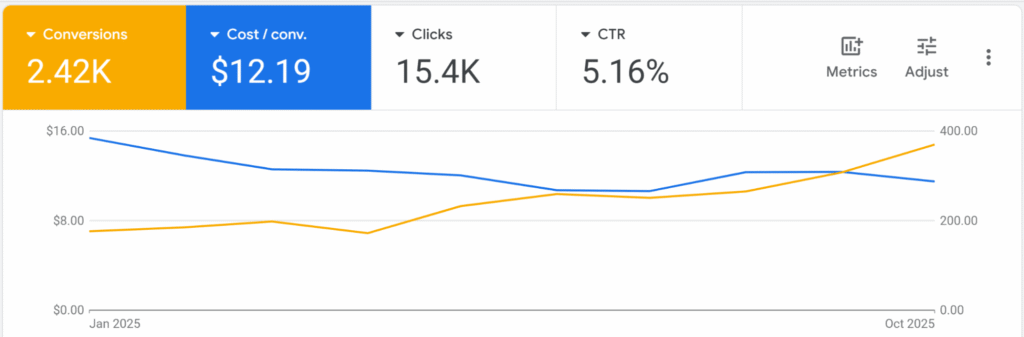
The advertising system withstood scaling without losing stability and predictability: the volume of conversions grew without the increase in lead cost that is typical of scaling, which ensured a manageable and predictable flow of leads for the business.
Conclusions
This project showed that in the U.S. medical niche, it is important not to “push budgets” but to work systematically with the account and data. We did not pursue sharp growth, since in the medical niche aggressive scaling often has a negative impact on the stability and predictability of results. Instead, step by step, we brought order to the campaigns and ensured steady, even growth in results, scaling only what was actually working.
And even when economic factors began to affect patient behavior, the advertising system remained stable and controlled. This is exactly what became the foundation for further cooperation. Given the market situation, the client also decided to add SEO—as an additional long-term channel that works in conjunction with paid advertising and strengthens the clinic’s overall marketing strategy.
Order an individual consultation for your business
-
Tags
