


BY 4× INCREASED THE NUMBER OF LEADS IN GOOGLE ADS FOR THE HOME REPAIR AND REMODELING NICHE (ALABAMA, USA)
-
Post author

-


Over six months, we managed to increase the number of leads from Google Ads by 4× in one of the most competitive service niches in the U.S.—remodeling and home repairs. The secret lies in deep sales funnel analytics, regular and meticulous ad optimization, and a clear focus on business results.
Google Ads
Service
Remodeling and Restoration
Themes
Alabama, USA
Promotion region
Results
+300%
Number of leads
-55,96%
Google Ads CPL
Client
The client is a leading service company that specializes in repairs and restoration of damaged residential properties in Birmingham, Alabama. The company has been successfully operating in the market for over 15 years. Its core values are quality and a personalized approach to each client—the company takes all client needs into account and provides custom services.
The client has two separate websites, each focused on a different service area. This made analytics and performance evaluation more complex for our team and required more time for research. However, my colleagues and I saw this as a professional challenge and successfully handled it—below we explain exactly how.

Marketing Audit
Advertising Account Audit
Before we started working together, the client’s advertising was handled by different specialists—agencies, an in-house team, freelancers, and even the company director. Due to the lack of a unified strategy, the results remained unstable.
That is why at the beginning of our cooperation, we conducted a deep audit of the client’s two advertising accounts. The goal was to get a complete picture of current performance, identify bottlenecks, and define potential growth opportunities.
A thorough analysis of account structure, campaigns, and analytics settings allowed us to identify key issues that were holding back results.
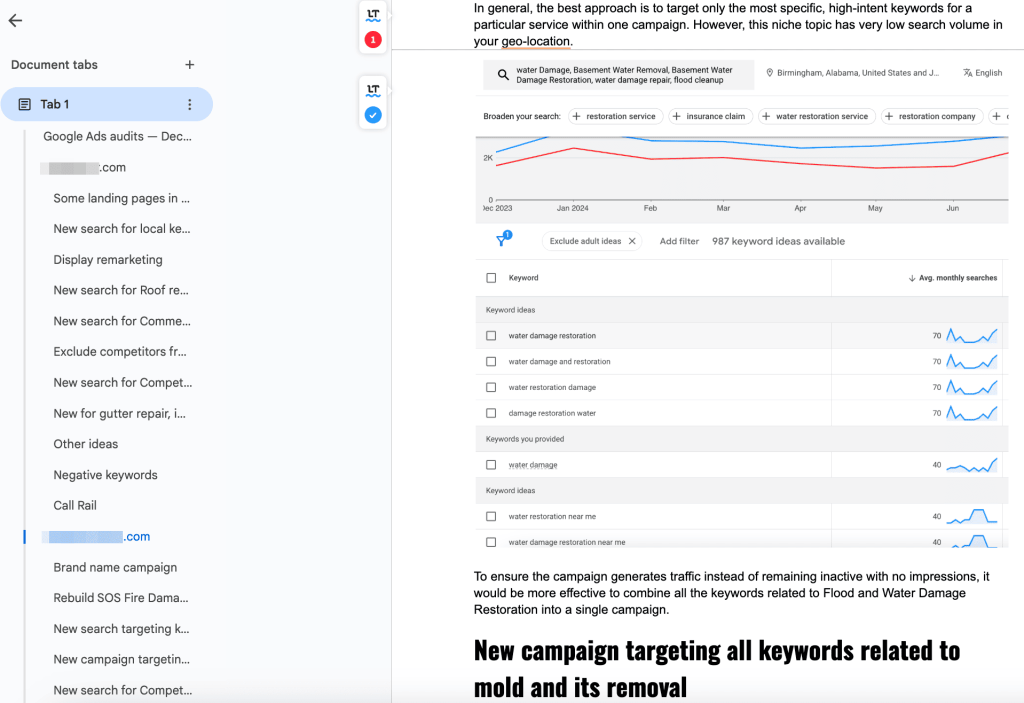
Recommendations for the Google Ads Account
Based on the audit, we implemented clear recommendations.
- We regrouped keywords within campaigns and ad groups so they were organized by a shared theme and led to more relevant landing pages, helping improve ad quality scores and conversion rates.
- We created separate branded search campaigns for both websites to avoid losing high-intent users and to protect the brand from competitors in search results.
- We launched display remarketing campaigns to re-engage users who had already interacted with the websites.
- We developed new search campaigns for the client’s priority service areas.
- We fully and correctly set up analytics with tracking for all conversion types—calls and form leads—to enable accurate optimization moving forward.
- We implemented the CallRail call tracking system to monitor both the volume and quality of incoming calls.
CRO audit of the website
Ad performance directly depends on the website as well. Even perfect ad settings will not work if the pages are not conversion-focused or are slow.
That is why, in addition to optimizing ad accounts, we provided the client with practical recommendations to improve the website—so that ads and the website work as one system and convert traffic into leads as efficiently as possible.
List of recommendations after the CRO audit
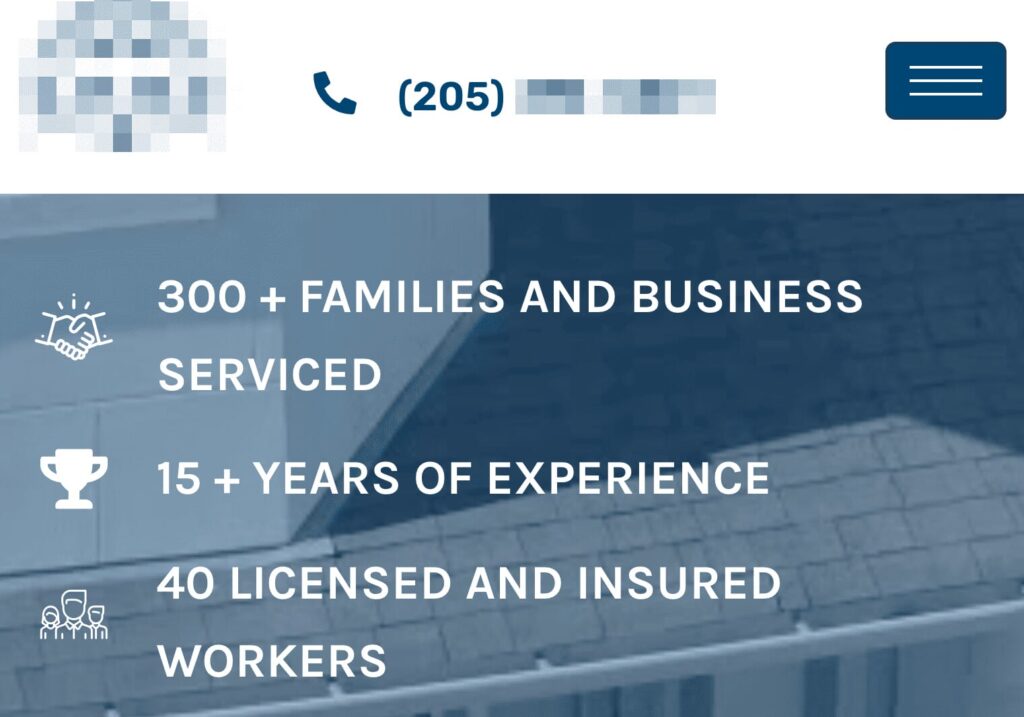
- Create separate landing pages for each service direction, and for those services where pages already existed—update them by adding more details and specifics, and structuring the content.
- Optimize texts and headlines for key search queries so that the pages fully match user intent.
- Add clear competitive advantages, case studies, and company information.
- Place customer reviews to increase trust.
- Add a fixed top bar with a one-click call button so users can contact the company instantly.
📌 Read on the blog: Marketing strategy for a fence manufacturing business
Analytics
Google Analytics 4
As a first step, we focused on analytics. Because without clear and accurate analytics—any optimization turns into guesswork.
During the audit, we found that in one of the ad accounts only duplicated forms on the website were being tracked, which showed an unrealistically high number of conversions—clearly, the data was incorrect. In the second account, analytics was not working at all, and no user interactions were being recorded.
First, we identified the main lead generation channels for this business:
- phone calls from potential clients
- form submissions through contact forms on the website
To track users’ online activity, we checked, updated, and properly configured Google Analytics 4 for both of the client’s websites, specifically:
- installed correct tracking codes on all pages;
- eliminated duplication and conflicts between different analytics scripts;
- removed outdated codes from the old Universal Analytics;
- set up remarketing audiences;
- configured tracking for all key events on the website—form submissions, phone clicks, and interactions with CTA buttons;
- imported all conversions into Google Ads;
- categorized conversions into primary ones (for system learning and campaign optimization) and secondary ones (for additional traffic and user behavior analysis).
CallRail
We paid special attention to the CallRail system, which was used to track phone calls. It was already connected, but the integration with GA4 and Google Ads was only partial—some calls were being lost, and traffic source data was shown inaccurately.
We fixed everything, adapted it to our needs, and added important settings.
Key CallRail settings
- We removed filtering for certain phone numbers so that all calls, without exception, are sent to GA4 and Google Ads for a complete view of performance.
- We set up dynamic number insertion on the website—so phone numbers automatically change for each session, which ensures accurate tracking of the source of every call.
- We created separate tracking numbers for calls coming from ad extensions and Call Only campaigns.
- We added separate numbers for two Google Business Profile accounts and Local Services Ads to clearly separate call sources.
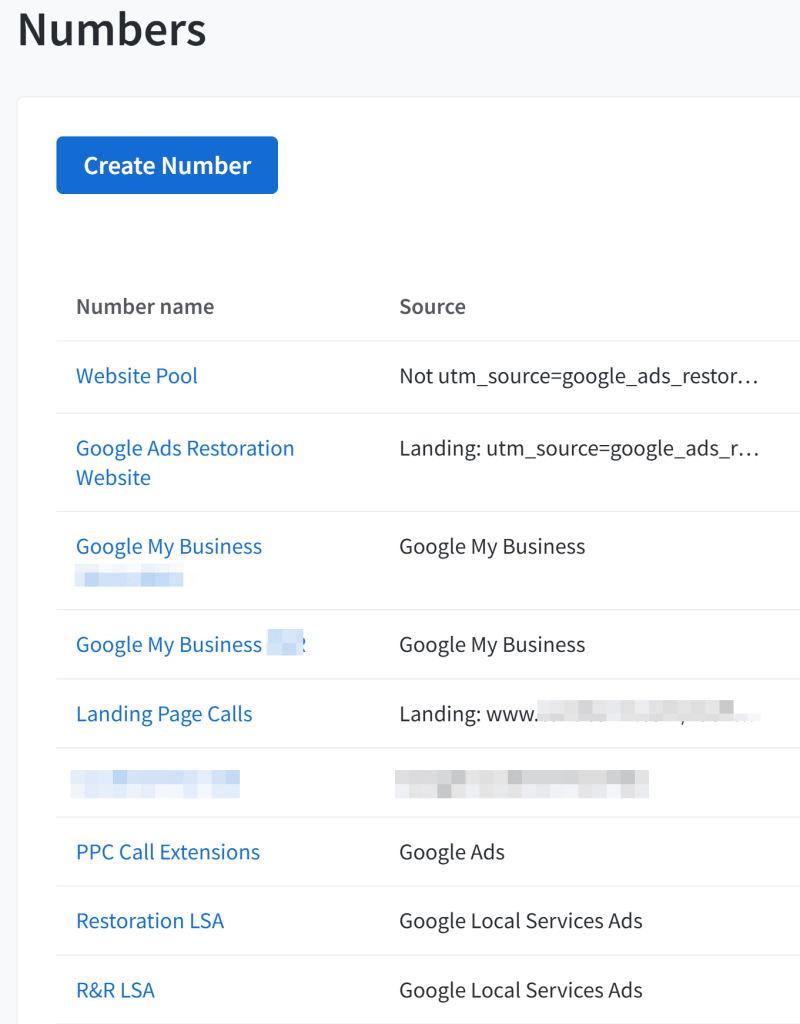
One of the challenging points was that the CallRail code for dynamic call tracking was installed on both websites at the same time. At that moment, the client was not planning to expand the subscription, so we found a solution: for the second website, which received traffic from Google Ads, we created a separate static tracking number. To allow CallRail to correctly distinguish this traffic, we added a special UTM tag to the URL, which was applied in the settings of all campaigns.

Expert Commentary
At Marketing Link, we have expertise in the Home Improvements industry across more than 58 projects, which allows us to implement the best strategies immediately without spending a significant advertising budget and, most importantly, without losing time on testing.
In this case, during the collaboration, both priorities and the purchasing power of the target audience changed—especially in 2025, when strategies that worked in 2024 stopped working.
We shifted our focus from overheated roofing leads to a stronger emphasis on restoration, because when a house is flooded or burned, it involves a full range of services—from basements and walls to the roof and exterior.
In the remodeling segment, our team significantly adjusted the strategy—moving away from nice-to-have home improvements and advertising to more financially capable ZIP codes. We also separately accounted for the correlation that the ZIP code from which a lead comes during working hours is not always the same ZIP code where the property is located.
It was especially positive to see a real challenge—a lack of available staff on the client’s side due to the increased lead flow, as well as an improvement in the conversion rate to won deals from our traffic.
At the time of writing this case, we are already changing the CRM, consulting on implementation, and starting SEO + AI promotion work in 2026.
Optimization
Initial Optimization
In the first weeks after the start of work, we focused on the most critical optimization areas—those that could most quickly deliver real improvements in advertising performance.
The main steps of the initial optimization included:
#1 Keyword Optimization
We checked whether all main campaigns had targeted and high-converting keywords. Where they were missing, we added new commercial, relevant keywords with high potential.
All keywords were changed from broad match to phrase match and exact match for better control over search query quality and to increase the conversion rate.
We also regrouped keywords by service direction—separated different service categories within two accounts and built a clear, logical campaign structure.
#2. Search Queries and Negative Keywords
We conducted an in-depth analysis of search query reports across all campaigns. As a result, we removed all irrelevant phrases and added to the shared negative keyword lists all terms that indicate informational or non-commercial intent—for example “DIY”, “examples”, “how to”, and similar. This helped stop wasted spend on non-target search queries.
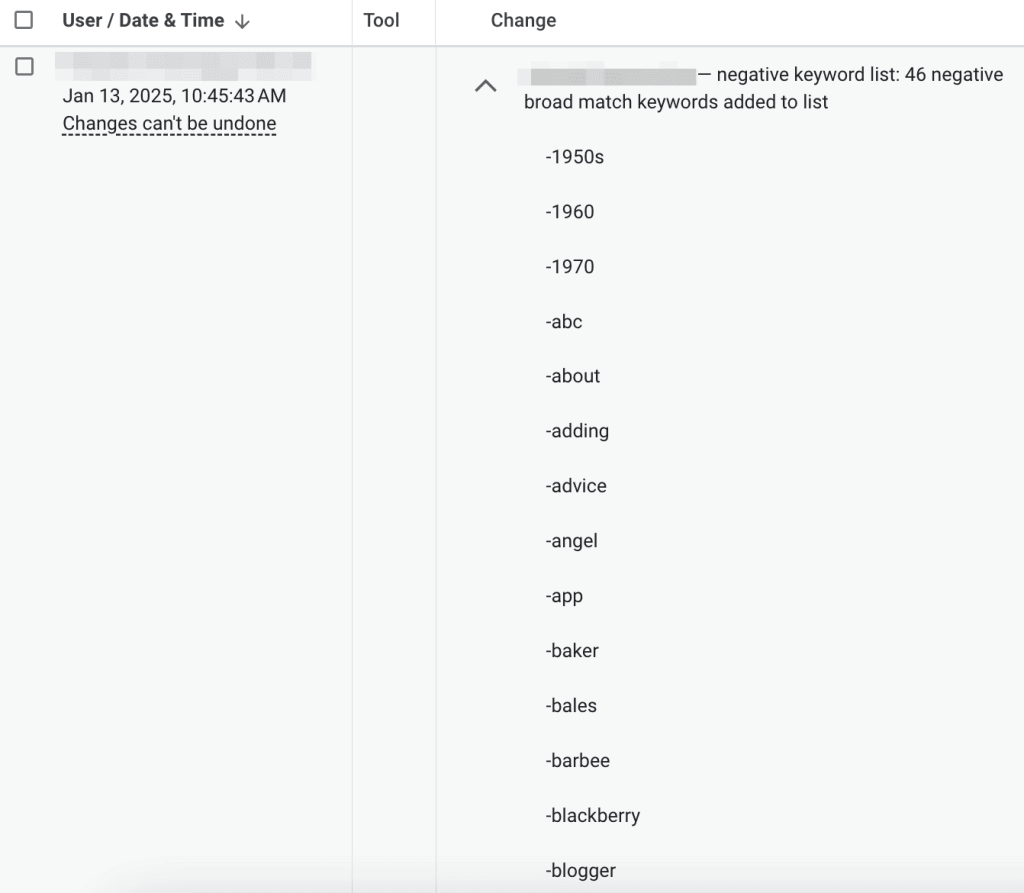
In addition, we carefully reviewed the old negative keyword lists and removed potentially useful queries that could have been limiting ad impressions for relevant search phrases.
#3. Relevance of landing pages
We identified a critical mistake made by the previous contractors—most ads were directing users to the homepage instead of separate landing pages for each service.
We also found a technical bug—in some ad groups, URLs were set both at the ad level and at the keyword level at the same time. Since Google prioritizes the keyword-level URL by default, users were being sent to the wrong pages.
We fixed all these issues, updated the URLs, and set up the correct routing logic so that each ad now leads to the relevant service page.
#4. Brand campaign optimization
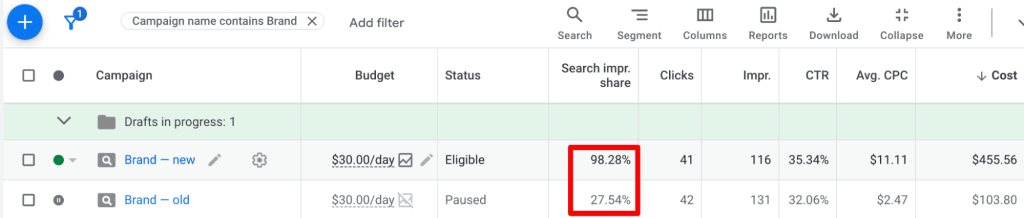
We created a copy of the old campaign and made several critical changes
- expanded ad delivery to run 24/7;
- removed device-type restrictions;
- removed audience interest exclusions;
- disabled ads on search partners.
The result—impression share for branded queries increased from 27.54% to 98.28%.
#5. Budget Reallocation
We optimized the budget distribution between campaigns, taking into account their performance and the client’s business priorities.
#6. Bid Strategy Adjustments
Outdated bid strategies were replaced with more effective ones focused on conversions.
#7. Geo-Targeting
We significantly narrowed the targeting areas so ads are shown only in the cities and districts where the client actually provides services. Previously, the geography was too broad, which caused distant traffic not to convert.
#8. Ads
We conducted an audit of all advertising ads. The texts were weak, short, and too generic—lacking specifics, emotion, and trust elements. We fully rewrote them, making each ad more informative, noticeable, and action-driven.
We added key details that increase CTR and conversions—numbers, years of experience, guarantees, city mentions, and clear calls to action. We also included motivational triggers—free consultations, project cost estimates, and similar offers.
As a result, the ads now look more professional, build more trust, and better match users’ search intent.
#9. Ad Extensions
We updated and optimized all ad extensions—refreshed outdated ones, added new types that were not used before, and properly connected the client’s Google Business Profile accounts with Google Ads to display addresses in ads. As a result, CTR and ad quality scores increased significantly.
#10. New Campaigns
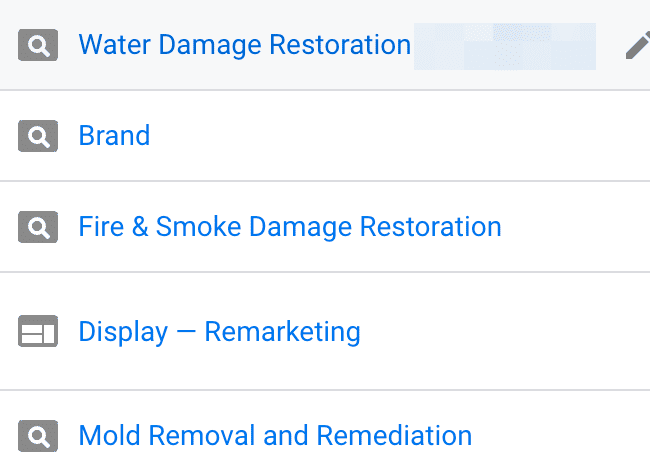
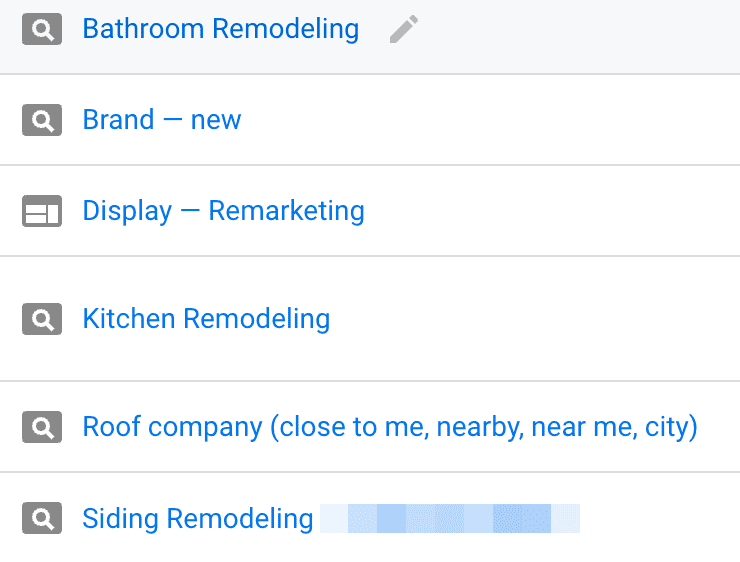
We created a series of new campaigns focused on key and profitable business areas and also launched display remarketing to bring back users who had already visited the website.
Results after 2 months
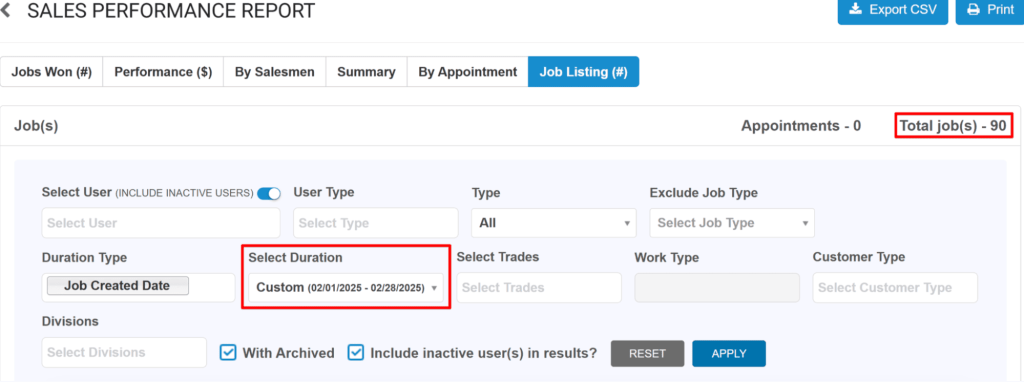
Just two months after the start of optimization—the number of high-quality leads recorded in the CRM increased by 2.5×:
— from 34 in December 2024 (at the start of cooperation):
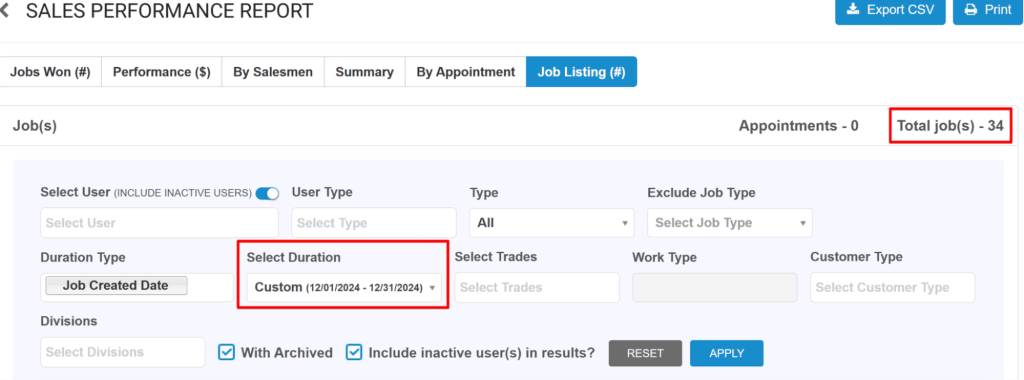
— to 90 already in February 2025:
Regular optimization
Every week, we carried out a comprehensive review and optimization of the advertising accounts to maintain stable performance, respond quickly to changes, and gradually improve results. The optimization included:
- redistributing budgets between campaigns depending on the number, quality, and cost of leads;
- analyzing search queries that triggered ads, with continuous addition of relevant queries as new keywords and exclusion of non-target ones;
- systematic expansion of negative keyword lists to prevent budget waste;
- adjusting bids and bidding strategies;
- optimizing display remarketing—removing irrelevant placements and narrowing targeting;
- turning off ineffective campaigns, ad groups, and keywords;
- adjusting bids by geo-location, device type, and audience.
Systematic work with the accounts made it possible not only to maintain stable results, but also to gradually strengthen them.

Expert comment
Before contacting Marketing Link, the client had worked with many contractors whose efforts did not bring the expected results.
When we started working together, the first thing we focused on was optimizing the ad account, as it was in chaos. We carefully and thoroughly cleaned search queries, confidently adding negative keywords for everything that was not directly related to the client’s business, reviewed keywords in already configured campaigns, and built a semantic core to set up campaigns for different service areas provided by the client.
In addition, we performed other important tasks, such as restoring LSA accounts to increase the number of leads.
Professional and regular campaign optimization—is the key to generating qualified leads in the service industry.
Anna Ponomaryova, PPC Specialist at marketing.link
Testing and Other Supporting Campaigns
Google Ads
The main campaigns delivered stable results, so we started testing other ad formats—to understand what else could work even better for this business. As part of these tests, we:
- launched Call-Only campaigns focused on users who are ready to call right away without visiting the website;
- tested broad match keyword types to collect the maximum number of new search queries and identify additional growth opportunities;
- tested ZIP code targeting to focus the budget on the most profitable areas with the highest return from advertising;
- enabled ads on the Google Search Partners network—this option did not meet expectations, so after analyzing the data, we turned it off;
- tested income-level targeting by launching separate campaigns for the top 10% highest-income users in the region;
- launched Performance Max campaigns after the accounts had accumulated enough conversions for the algorithms to learn; at the same time, we continuously monitored lead quality, since this campaign type can naturally generate a lot of irrelevant inquiries, and we quickly adjusted the settings when needed;
- added search campaigns for new service areas and separately for competitor keywords;
- when the number of leads and calls started to grow significantly, the client came to us with a new task—to find staff to expand the team. We set up a separate recruitment campaign focused on people looking for jobs in this field. This helped the business quickly find new employees without the need for third-party recruiting services.
LSA (Local Services Ads)
We paid special attention to checking and restoring the client’s LSA accounts. One of them had stopped showing ads for some time—as it turned out, the reason was a missing connection between the Local Services Ads account and the Google Business Profile. We restored this connection.
After that, LSA ads started working fully and became another stable source of leads.
Next, we made key updates:
- set precise geo-targeting;
- selected relevant services that the client actually provides;
- updated images, callouts, and business hours;
- provided recommendations on working with reviews in Google Maps, since this factor significantly affects rankings and ad visibility in LSA.
After implementing the main changes, we did not stop—LSA does not work on a “set and forget” principle. While this format does not require classic work with keywords, search queries, and ads like Google Ads, it does require ongoing management, analysis, and adjustments.
What We Do on an Ongoing Basis in LSA
- analyze performance by ZIP codes and focus the budget on the best-performing areas;
- test new service categories to find additional growth opportunities;
- monitor moderation, document validity, and photo updates;
- check lead quality and dispute invalid leads;
- track updates to rules and algorithms to ensure the account runs smoothly at all times.
We covered optimization, ranking, and key aspects of working with Local Services Ads in more detail in a separate in-depth guide.
📌 Read the guide: Launching Campaigns in Google Local Services Ads
Challenges We Faced
Fake inquiries
A few months after launching the ads, the client began to notice a sharp increase in spam—specifically fake leads coming through contact forms and calls from unqualified contacts. This negatively affected the statistics, complicated the work of the sales team, and distorted the data used for optimization.
To fix the situation and ensure that Google Ads algorithms were learning only from real and valuable conversions, we kept only phone calls as primary conversions.
We also carried out deep technical optimization of all campaigns, using our proprietary anti-fraud tuning—a time-tested set of settings that effectively filters out low-quality and fake traffic.
Comprehensive anti-fraud measures in Google Ads
- We disabled Google Search Partners to avoid clicks from questionable placements.
- In geo-targeting, we set the option “Presence—People in or regularly in your targeted locations” so ads are shown only to users physically located in the target area.
- We added all other cities, states, and countries to exclusions as an additional safeguard, so Google would almost certainly not show ads outside the selected geo.
- We set the browser language to English only.
- We excluded the “Unknown” categories in age and gender settings so ads are shown only to clearly identified users.
- We adjusted Performance Max budgets, reducing their share to a safe level, as this campaign type most often attracts questionable traffic.
- We added additional audience refinements based on topical interests in campaigns with high search query volume to narrow targeting.
- We improved the website form security system—in addition to standard CAPTCHA, we implemented filtering based on negative keywords and message patterns commonly used by bots.
This helped reduce the number of invalid and low-quality leads to almost zero.
Analytics challenges
The client’s CRM platform did not have a technical integration with Google Ads and could not pass information about lead quality, qualification, or payment amounts. This created a data gap and made it impossible to accurately assess which campaigns were actually bringing in customers.
This became a real challenge for us—because without clear analytics, any optimization turns into guesswork.
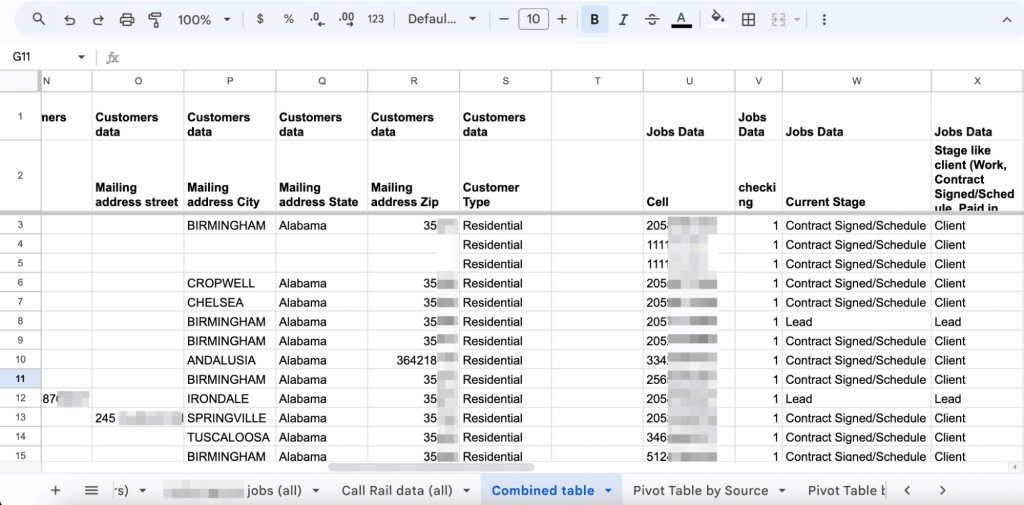
So we decided to develop our own custom solution. We manually connected all data sources—exporting information from the CRM (all customers and paid jobs), from CallRail (all calls and tracking numbers), and from advertising accounts. We then combined all this data into a single Google Sheet, linking everything by phone number using XLOOKUP.
Based on this, we built several pivot tables—by traffic sources, campaigns, tracking numbers, and campaign names.
This approach allowed us to accurately determine which sources and keywords actually bring the most valuable customers—those who not only call, but also purchase the service.
As a result, we gained a clear view of the real performance of each campaign, which allowed us to optimize budgets and direct them toward the channels that generate maximum revenue for the client.

Expert Comment
In addition to the chaos in the accounts left by previous contractors—including tracking issues with duplicated forms on the website that showed many unrealistic conversions and caused premature excitement, irrelevant landing pages, and missing analytics—we also faced fake leads that distorted the data and overloaded the sales team.
We found a solution to this issue—instead of relying entirely on forms, we kept only calls as primary conversions, and implemented specific anti-fraud optimizations that improved future results.
Companies with long-established, active LSA accounts hit the jackpot. Today, setting up LSA from scratch is a difficult task due to strict moderation of reviews and documents, and you can spend a lot of time updating a Google Maps profile—and still end up getting suspended.
For service-based clients, we aim to achieve the best results through search campaigns, but for older, well-performing accounts, we also experiment with Performance Max—very carefully and in a controlled way.
Results
Just six months after the start of the collaboration—thanks to in-depth ad setup, custom approaches, continuous analytics, and regular optimization—we achieved impressive growth in results.
At the beginning of the work, in December 2024, the client was receiving an average of 34 highly qualified leads per month, while already in June 2025—136, with the same advertising budgets. See the before-and-after screenshots.
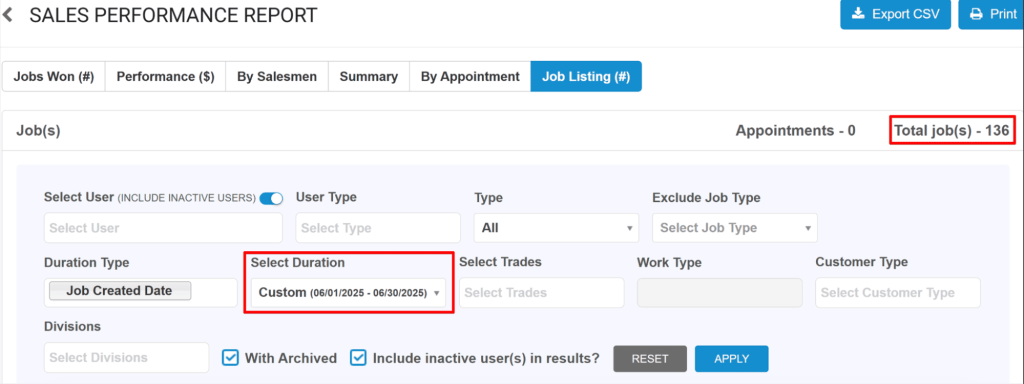
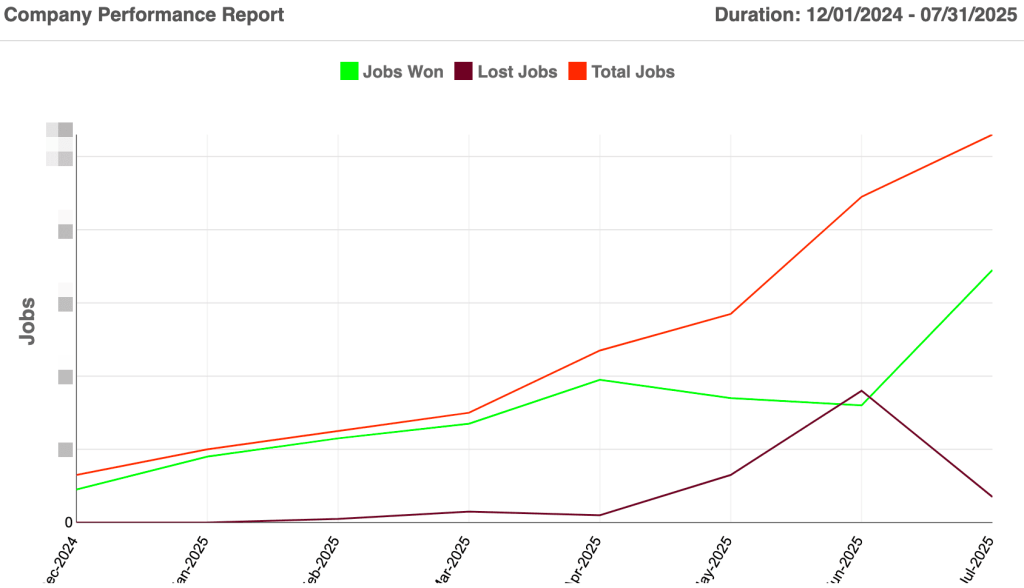
We not only delivered a 4x increase, but also continue to consistently maintain this performance going forward.
In addition, thanks to our work, the client began receiving orders with a higher average ticket value. At the start of the collaboration, in December 2024, the average service value was $8,625. By June 2025, it increased by 48.41%—to $12,800. That is, we removed low-cost one-time services from advertising, such as “wall painting” and “molding installation”, and shifted the focus to full remodeling, as well as fire and flood restoration. At the same time, we did not lose order volume and reduced the acquisition cost—for our team, this is a great result.
Conclusions
Promoting a local service business in the U.S. requires deep expertise, an analytical approach, and constant attention to detail. The best results are delivered by a comprehensive strategy that combines Google Ads, Local Services Ads, and an optimized Google Maps profile.
It is critically important that all optimization and budget reallocation decisions are based on real CRM data—taking into account the number, cost, and quality of leads, the average ticket value, and profitability metrics.
This data-driven approach allows not only reducing the cost per lead, but also steadily increasing business profit, while maintaining high advertising efficiency in the long term.
Order an individual consultation for your business
-
Tags
