

2.5X MORE LEADS AND -47% CPL FOR A US CLINIC: HOW TO RUN GOOGLE ADS UNDER STRICT MODERATION
-
Post author

-


How to Get 2.5x More Leads While Increasing the Budget by Only 29% in the Endocrinology Niche (USA)—When Google Ads Blocks Remarketing and Rejects Ads
In this case study, we show how we rebuilt a Google Ads account for a clinic in California. We eliminated chaos in the keyword structure, fixed analytics issues, learned how to work within moderation restrictions, and turned Google Ads into the main lead generation channel.
This case study will be useful for businesses in highly competitive niches, where every decision impacts results and every mistake quickly “eats up” the budget.
Google Ads
Service
Medical Services—Endocrinology
Industry
USA, California
Target Region
Results
+29%
Budget
+150%
Leads
-47%
CPL
Client
Our client is a highly specialized medical center in California. The clinic removes thyroid nodules without traditional surgery. Their treatment methods leave no scars, and patients return to their normal lives almost immediately after the procedure. That is why the clinic is known far beyond the state.

Before working with us, the client managed Google Ads independently: adjusting budgets, adding new campaigns, and accepting Google recommendations. As a result, the ads generated only around 8 leads per month and did not use the account’s full potential.
We started the collaboration with clear goals:
- increase the number of leads searching for an alternative to surgery;
- reduce the cost per lead.
Marketing Audit
At the beginning, we conducted a detailed audit of the Google Ads account and identified multiple issues limiting campaign performance:
- incorrect budget distribution between campaigns;
- use of irrelevant keywords;
- insufficient number of high-intent keywords;
- almost no negative keywords;
- weak ad copy;
- low Performance Max campaign efficiency;
- no branded search campaign;
- no display advertising.

We defined priorities, created an action plan, aligned the strategy with the client, and started the work.
Analytics
At the start, we thoroughly audited the entire analytics system. We identified technical issues—some conversions were duplicated, certain events were firing incorrectly, and the logic behind some goals was flawed.
Because of these issues, Google Ads was receiving incorrect signals and optimizing bids improperly. We fixed all errors, removed duplicate conversions, and tested data transmission in Google Analytics 4 and Google Ads.
After that, we kept only the actions that bring the highest business value as primary conversions:
- form submissions;
- calls from ads.
We moved micro conversions to secondary conversions. They helped us better analyze user behavior but were not included in campaign learning and optimization.
After correcting the analytics setup, we were able to clearly understand which campaigns were generating leads and at what cost, and which campaigns were wasting budget.
Optimization
We did not rebuild the account from scratch. At the start, it already had historical data and a basic structure, so we decided not to lose the accumulated data. Instead, we strengthened the campaigns that were already performing and removed everything that was reducing efficiency.
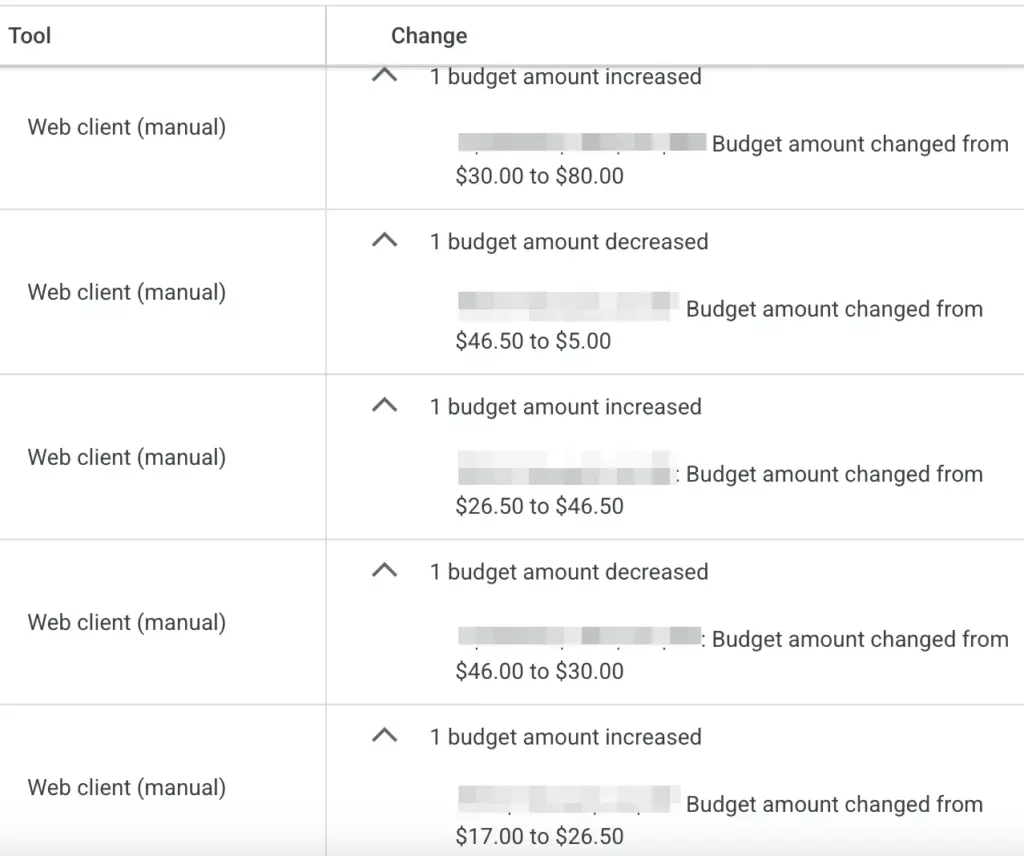
Budget redistribution
First, we identified which services generated the highest revenue for the clinic. After that, we increased budgets for priority campaigns and reduced spending in areas where the cost per lead was too high.

Expert Commentary
One website, two fundamentally different services—RFA for thyroid nodules and Thyroid Artery Embolization for goiter. They sound similar, but the audiences, search queries, and landing pages are completely different. The biggest mistake most contractors make here is mixing all keywords into one campaign and then wondering why costs are high and lead volume is low.
There are tons of informational, non-targeted queries, while PMax in this highly specialized field tends to hallucinate more than free AI tools—on top of the chaos with bidding strategies and the lack of regular optimization.
Set it up and forget it—it becomes extremely expensive for a highly specialized medical center in California, not to mention the constant battle with moderation issues and false suspension reasons. Of course, the client is certified, backed by research, insured, and operates an online clinic in Beverly Hills, but according to Google—it’s a pharmacy, and we successfully proved otherwise, while occasionally reminding Google about it.
A 2.5x increase in the number of inquiries with the same budget is rewarding like nothing else.
For medical niches, especially in the U.S.—it is critically important to work on optimization carefully and systematically. Even one checkbox in the wrong place can easily reduce performance by 20%.
And to make sure every checkbox is configured correctly—not only according to Google guidelines, but also based on hands-on experience with dozens of medical clinics—submit a request! We’ll help you become more efficient.
Optimized Geotargeting
We analyzed where the leads were coming from and excluded regions that were not generating results. The main budget was focused on areas near the clinic to reach an audience more likely to book an appointment.
Disabled Performance Max
This campaign was showing ads mainly on YouTube and the Display Network but was generating very few leads.

We turned it off and shifted the budget to search campaigns. This gave us more precise control and higher-quality traffic.
Cleaned Up and Restructured the Keyword Strategy
We reviewed all keywords and completely rebuilt the structure:
- removed overly broad and irrelevant keywords;
- added new high-intent relevant keywords;
- implemented cross-negative keywords between campaigns;
- for phrase match keywords, we created duplicates in exact match;
- regrouped keywords into more logical clusters.
As a result, the account structure became clearer for the algorithms, keyword quality scores improved, and ad rankings increased.
Eliminated Irrelevant Traffic
Phrase match keywords were bringing in a large amount of irrelevant traffic. We carefully reviewed recent search queries and added the following to negative keywords:
- informational phrases;
- research-oriented queries;
- queries containing competitor brand names;
- queries containing low commercial intent terms such as medicines, tips, life after, etc. These were also added to the account-level negative keyword list to prevent future appearances.
As a result, the budget stopped being spent on non-target audiences.
Adjusted Ad Scheduling
Each campaign had different ad scheduling settings. Some campaigns were even running overnight.
We aligned the ad schedule with the clinic’s business hours so managers could respond to leads more quickly and improve lead-to-patient conversion rates.
Optimized Bidding Strategies
We reviewed the suitability of bidding strategies in each campaign and made the following changes:
- for campaigns with limited budgets, we set Maximize Conversions;
- for campaigns with sufficient historical data, we switched to Target CPA;
- for certain services, we kept manual bidding.
Launched a Branded Search Campaign
We created a separate branded search campaign for the clinic’s branded keywords, which provided three major benefits:
- we secured top positions in search results for branded keywords and protected the brand from competitors;
- we generated additional leads;
- we provided the algorithms with new high-quality audience signals.
Improved Ad Relevance and Quality
We completely reviewed the connection between “search query—ad copy—landing page.”
The old ads used generic messaging and barely explained why patients should choose this clinic specifically. We updated the headlines, changed the core messaging, and emphasized the key benefit: treatment without surgery, scarring, or hospitalization.
We also:
- added specific facts and supporting points to the ads;
- integrated keywords into the ad copy;
- matched each keyword group with a more relevant landing page;
- aligned the messaging between the ads and the website.
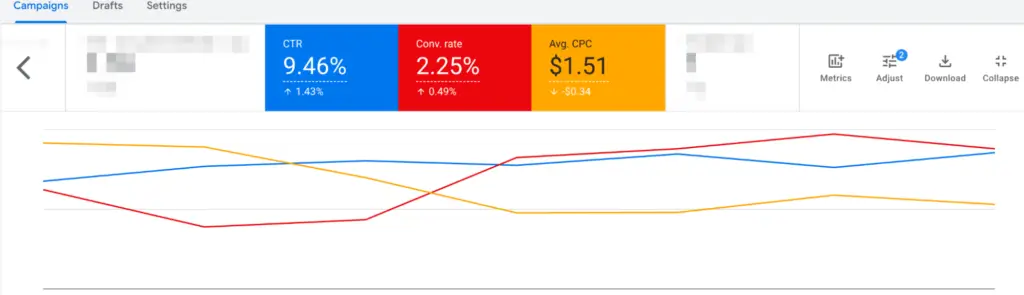
After these updates, CTR and conversion rates gradually increased, while CPC decreased.
Ongoing Optimization
After implementing the most critical changes, we moved to a weekly optimization process during which we:
- analyze the performance of every system element, from campaigns to ad extensions;
- reallocate budgets;
- review bidding strategies;
- adjust bids by audience, geotargeting, and device type;
- review search terms and add irrelevant ones as negative keywords;
- add strong-performing search terms as keywords;
- optimize ad copy and ad extensions;
- monitor policy and approval statuses;
- process platform recommendations.

Expert Commentary
For a successful Google Ads launch, it is extremely important to provide the algorithm with the right signals from the very beginning so it can learn properly. That is why we first focused on setting up high-quality conversion tracking through Google Analytics 4. After that, the system became much better at understanding which user actions are actually valuable for the business and optimizing ad delivery more accurately.
In search campaigns, everything revolves around keywords. When we carefully analyzed the campaigns that had already been launched, we discovered a large number of broad keywords that were actively “eating” the budget while delivering almost no results. They were often triggering completely irrelevant search queries, which significantly reduced the effectiveness of the advertising.
In addition, many businesses still do not create a separate branded campaign. Because of this, competitors can easily run ads targeting the client’s brand name and capture part of the traffic. We decided not to repeat this mistake and made sure to add such a campaign. It protects the brand, controls visibility for branded searches, and ultimately significantly improves the overall performance of the entire account.
Challenges We Faced
The medical industry in Google Ads always faces strict moderation. The system carefully reviews ad copy, extensions, and landing pages.
Because of this, the account regularly faced suspensions and ad delivery limitations.

How We Solved the Restricted Drug Terms Issue
Google Ads often interpreted procedure names as violations of its medical products policy (Restricted drug terms).
Simply editing the ad almost never helped, so we used a different approach that allowed us to restore ad delivery faster:
- creating duplicate ads with new IDs;
- rewriting the copy using more neutral wording;
- reviewing the landing page content;
- redirecting traffic to a different landing page when necessary.
How We Solved the Destination Not Accessible Issue
At times, Google Ads rejected ads due to a Destination Not Accessible error, even though the landing page was working properly.
In these situations, we:
- checked the page from different browsers, devices, and IP addresses;
- looked for technical issues or regional restrictions;
- submitted appeals against moderation decisions;
- provided recommendations to developers if a real issue was found.
This allowed us to quickly restore campaign performance and avoid losing leads.
How We Adapted to Remarketing Restrictions in the Medical Industry
Google Ads does not allow traditional remarketing for medical services. Audience lists were getting blocked, losing compatibility with campaigns, or simply stopping working.

Because of this, we built a different approach and launched a standard display campaign with narrow audience targeting through:
- industry-related keywords;
- custom interests;
- users similar to the client’s website visitors and competitors’ audiences.
This allowed us to maintain display advertising and support brand awareness even without standard remarketing.

Expert Commentary
The most important element of Google Ads optimization is working with search queries. Adding high-intent search queries as new keywords helps increase the volume of quality traffic. Excluding irrelevant queries with negative keywords prevents ads from showing for phrases that do not match the client’s offer. In our case, these were informational and educational searches (how, what, when, etc.).
This type of optimization has a positive impact on campaign performance. We aim to achieve the highest possible relevance between the user’s search query, the keyword, and the ad copy. This improves ad relevance, increases CTR, and generates more clicks and leads within the same budget.
Myroslav Lychak, РРС Specialist at marketing.link
Results
In the U.S. medical niche, leads are usually expensive. However, through systematic account optimization, we achieved significant results:
- Increased the number of leads by 150%—from 8 to 20 per month.
- Reduced cost per lead (CPL) by 47%—from $82 to $43.

We turned Google Ads into a channel that delivers predictable results. Clean analytics taught the algorithm to work with the right signals. Semantic cleanup allowed the budget to be invested only in high-intent search queries. Ongoing work with moderation resolved technical issues.
As a result, the client received a stable flow of leads in a niche where Google Ads constantly creates additional barriers.
Conclusions
This case clearly shows why it is not enough to simply “set up advertising.” In competitive niches, results are determined not by budget size, but by the quality of decisions.
The following approach delivers results:
- clean analytics;
- strict control over search queries;
- a strong account structure;
- continuous work with ads and moderation.
This approach allowed us to increase the number of leads by 2.5x while nearly cutting CPL in half.
Order an individual consultation for your business
-
Tags
