

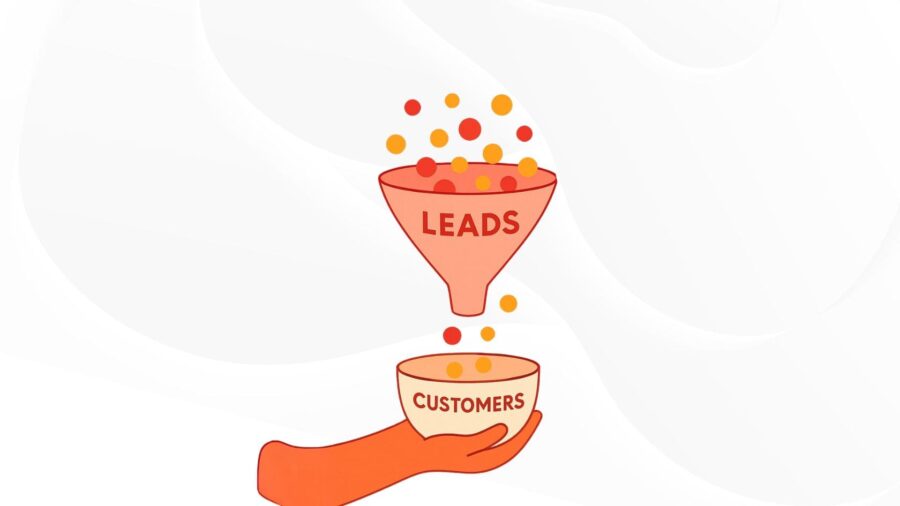
WHO ARE MARKETING QUALIFIED LEADS (MQL)?
-
Post author

-


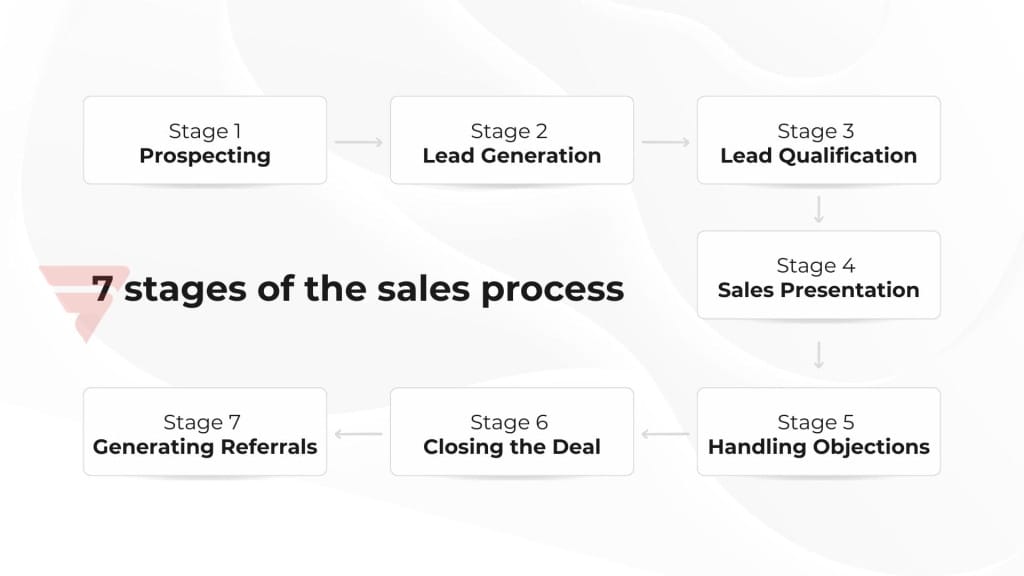
The customer journey can be very short if the purchase is spontaneous. Typically, this applies to inexpensive trending products or those that evoke strong emotions in consumers. However, in most cases, the sales process is lengthy and multi-step. Between acquiring a potential customer and presenting the product, lead qualification takes place. At this stage, the consumer decides whether they are ready to learn more about the offer. At the same time, the company can assess how targeted and financially capable the lead is.
What Is It About?
- What is MQL, and how to determine lead quality?
- How does lead qualification differ from lead scoring?
- Stages of lead qualification
- Why is identifying a Marketing Qualified Lead important?
- Tips for attracting and qualifying leads
- Conclusions
What is MQL, and how to determine lead quality?
From the initial introduction to the product to the decision to purchase, some time passes. During this period, the consumer may compare products, learn about the company, address financial issues, or simply get distracted by other matters. For a brand, it is essential to understand which channels and tools to use to increase interest among the target audience and what offers will be most relevant to each audience segment.
It is necessary to distinguish between lead types based on their readiness to purchase a product or service.
- Potential Customers—Consumers whose profiles match the ideal customer profile of the company. For offline businesses, this could be a store visitor or even someone who walked by and looked at the storefront.
- Marketing Qualified Lead (MQL)—Consumers who actively interact with the brand’s marketing channels, such as social media, but have not yet communicated with sales managers or made a purchase.
- Sales Qualified Lead (SQL)—Individuals who are more ready to pay for a product or service as they voluntarily provide information about themselves by filling out lead forms and other methods. These are hot leads that the marketing department hands over to the sales department for consultation regarding payment methods, delivery, choosing specific products, etc.
SQLs can include potential customers who received a lead magnet and demonstrated further interest in the brand, showing readiness to purchase a paid solution.
In contrast, a Marketing Qualified Lead (MQL) does not show interest as clearly. Without proper analytics work, some actions that qualify a lead as marketing-qualified may go unnoticed.
What Actions Identify a Marketing Qualified Lead?
- Clicking a link in a PPC ad.
- Filling out a lead form to subscribe to a newsletter.
- Registering for a demo version of a software product.
- Downloading an eBook or another free resource.
- Saving products to a wishlist.
- Adding products to the shopping cart.
- Repeated visits to the site or spending significant time on the website.
- Following a social media page.
- Commenting on a post (e.g., inquiring about price or color options).
However, such actions can also be performed by unqualified leads or even non-targeted users. For example, a competitor may download a free product or monitor the site’s operations to borrow or copy an idea.
Characteristics of Qualified Potential Customers
- They understand the products and are familiar with your brand.
- They have the necessary budget to make a purchase and see the value of the product or service.
- They know which solution they need and may choose between several options.
- Price is not the key factor in their decision to buy or cooperate.
Overall, such leads are well-prepared for successful deal closure, and this preparation occurred during their interaction with the company’s marketing materials. They are at the beginning of direct interaction with the brand. Sales managers only need to consult them and assist with payment processing.
📌 Read the article: How to create an excellent Lead Magnet for your Landing page?
MQL criteria can vary depending on the specific goals of the company, target audience, and marketing channels. It is important to determine the level of engagement—how actively the potential client interacts with the brand.
The optimal conversion rate from MQL to SQL is considered to be 13%. After that, less than 50% of SQLs turn into customers. The more MQLs are properly handled by managers, the higher the return on investment in marketing and advertising will be.
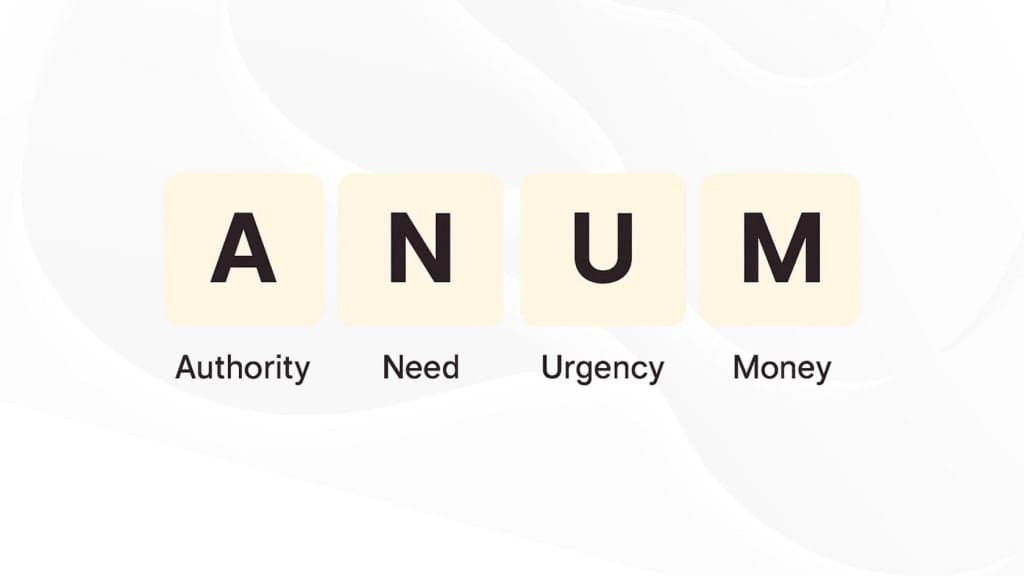
Lead qualification is the comparison of potential buyers with the profile of your ideal customer. Different formulas are used for such analysis, and the elements of these formulas depend on the industry, B2B or B2C, etc. Let’s look at one of the simplest universal techniques for determining lead quality—qualification using the ANUM formula.
Lead Qualification Formula
- A—Authority: Is the person you are communicating with a decision-maker for the purchase?
- N—Need: What problems of the potential client can the product solve?
- U—Urgency: Can the potential client make a decision soon, or is the process likely to be lengthy?
- M—Money: Does the client have enough funds to purchase the product or service you offer?
The last point is often misleading, especially in offline sales. If a customer enters a store and does not pay attention to prices, it does not necessarily mean that cost does not matter to them. They may not plan to buy anything at all and are just browsing. At the same time, a person asking about the price in an Instagram store may be choosing a seller from dozens and may not respond after your reply.
If we are talking about B2B, it is worth focusing primarily on those potential clients who can make a decision to cooperate and make a payment within a specific period. Otherwise, the sales department may spend too much time on consulting.
How Is Lead Qualification Different from Lead Scoring?
Lead scoring is not about finding only “hot” leads. The procedure allows you to determine how much resources should be invested in different categories of potential clients for the company. It is a process of determining the value of potential clients for the business. The name comes from the word “score”—“point”. Each potential client is assigned a certain number of points, obtained as a result of evaluation based on a set of external and internal criteria.
External criteria include information that is publicly available, such as the client’s location, or for B2B—the industry of the company, the position of the person, etc.
Internal evaluation criteria are also called deep criteria. These include data related to the lead’s behavior, such as the number of site visits or the fact of interacting with a lead magnet.
Scoring is often confused with qualification, but there are slight differences between them. The first method of evaluation is precise, as its results are easily expressed in numbers. In contrast, qualification is more flexible, showing the correspondence of a potential client to the company’s target audience profile and helping to focus on interested leads.
Lead scoring helps identify the most profitable lead generation channels. If you get 100 potential clients per month from Facebook and 500 from Instagram, at first glance, the second option may seem more profitable. However, a deeper analysis allows you to understand the situation and make the right conclusions.
Perhaps 50 out of 100 leads from Facebook belong to SQL, while in Instagram—only 20 out of 500. This indicates the relevance of investing time and money in the platform that gives higher conversion not just in likes or even subscriptions but in consultation requests, lead magnets, and purchases.
Lead scoring promotes the alignment of efforts between the sales and marketing departments. A clear evaluation system gives marketers an understanding of whom and when to pass to sales managers and with whom to continue working using ads and valuable content.
📌 Read the article: How to work with difficult clients
Steps of Lead Scoring
- Creating a Target Audience Profile
Start by defining what your ideal client should look like. Use brainstorming, competitor analysis, and forums, as well as focus group surveys. - Analyzing the Target Audience
Compare the ideal client with the actual one. At this stage, it is worth communicating with the sales department and directly with customers. You can ask sales managers which offers are most relevant to different target audience categories. For current clients, you can use quizzes or surveys in email newsletters, polls in social media posts, etc. Consider both external (surface-level) and internal (deep) criteria. - Developing a Scoring System
Not all criteria are equally important for a specific brand. For example, for an online tutor or another expert, registration for a webinar may be more significant than subscribing to a Telegram channel. The relevance of the criterion is determined based on the percentage of leads converted into buyers. Marketers and sales managers should agree on the calculation of points for each criterion. At this stage, you can prioritize the evaluation criteria for the company. - Finally, it is necessary to determine the range of points considered as more or less qualified based on the previous step. It is advisable to develop your own priority scale, for example:
- 0-20 points—low priority;
- 21-49 points—medium priority;
- 50 or more points—high priority.
It is advisable to periodically review and improve your lead scoring model. Track how many MQLs convert to SQLs and analyze in detail the profiles of leads successfully passed by marketers to the sales department.

Expert Comment
The term MQL leads usually refers to service businesses—from any services or SaaS and moving from trial mode to full service—to local service companies.
In the e-commerce sector, they typically track returns. So, if a user places an order and picks it up without returning the product, they simply track the percentage of returns.
However, in service businesses, it is crucial to track MQL—and it must be monitored.
A common mistake among owners or marketers of small and medium-sized businesses is not tracking MQL leads by channels.
Quite often, clients may decide, for example: the cost per lead in Google Ads is $49, while in Facebook Ads, it is 2,50 or $5. The first thought may seem to be: let’s turn off Google Ads. But in reality, with $241 and 5 leads in Google, there could be 2–3 sales, while with the same amount in Facebook—100 leads and only 1–2 sales (depending on the industry: for some, 5 out of 100 is the norm, for others—1, and for others—40–50). However, the time spent by managers to process 100 inquiries is significant.
Therefore, especially when there are several paid channels, it is essential to track the entire funnel—not only applications but also qualified leads and sales—and calculate the exact customer acquisition cost (CAC).
Lead Qualification Stages
Lead qualification also occurs in stages. However, before starting this process, it is important to ensure that the potential client is truly ready to move forward. A clearly defined request indicates that the consumer is set on taking specific actions and is ready to pay. However, simply stating a goal is not always enough.
If we are talking about an online store, a lead qualification example might look like this:
“I want to buy black leather ballet flats. Do you have size 38 available?”
However, if we are discussing a complex product, particularly in the service sector, education, or promotion, the potential client should outline measurable desired outcomes. This shows that the person has invested considerable resources in analyzing the problem and searching for solutions.
For example:
“I would like to increase organic traffic to my website, but currently, my traffic is 500 visitors per day, which is 10% of the desired metric. Can you help me achieve my goal in 4-5 months?”
Understanding one’s project and having a realistic perception of the time required to solve the problem are very important indicators for B2B. Otherwise, specialists such as project managers or even company executives may face communication challenges with the client.
To avoid misunderstandings, it is worth coordinating key terms of cooperation with the sales department, which they should communicate during lead qualification. This same information should be conveyed to marketers and all specialists involved in lead generation.
Short or inconsistent responses from a potential client during qualification are likely indicators that they may not be able to clearly articulate their needs in the future and may not allocate time for collaboration (for example, for filling out briefs).
In such cases, it is better to disqualify the potential client than to risk reputation and waste time on unrelated tasks, such as independently searching for information or multiple attempts to contact the client.
Three Lead Qualification Steps
- Audience Research.
- Detailing information about potential clients.
- Actual qualification.
Let’s look at them in more detail:
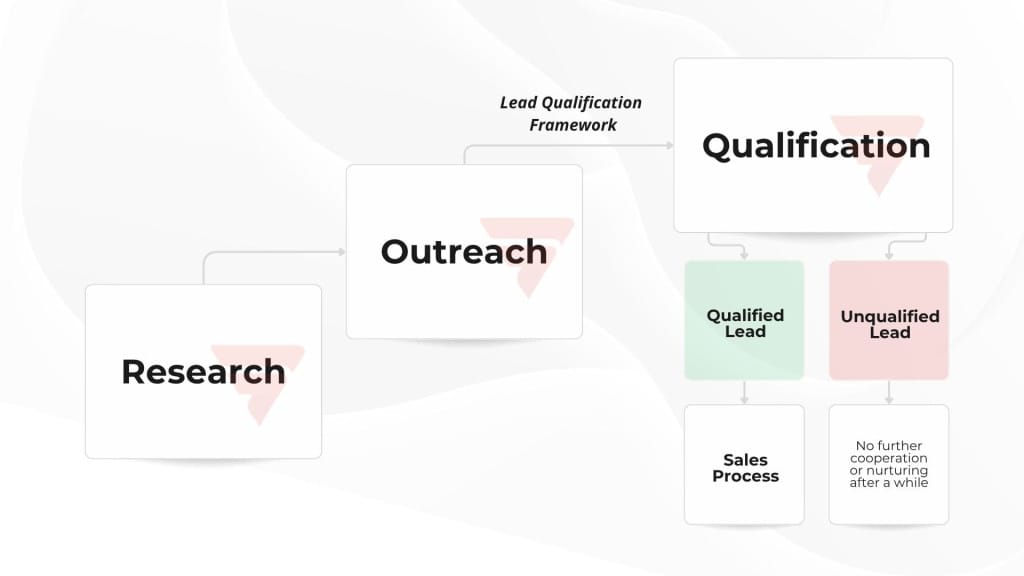
Research
This is where every advertising campaign or promotional strategy starts. Based on the target audience analysis, you can identify the ideal customer for the company. Usually, at this stage, general information is collected, which can be obtained online or through analytics services.
Expanding Information
You can specify and expand the data about the target audience using surveys in email newsletters, polls during calls, and so on. A lead magnet in the form of a free consultation is often used to benefit the company. During the conversation, you can not only answer the potential customer’s key questions but also learn more about them and record the information.
Interestingly, 50% of all sales happen only after the fifth interaction with an average potential customer. Most companies don’t take this into account and stop trying to establish contact much earlier.
Qualification
After receiving answers to clarifying questions through interviews, surveys, and questionnaires, you will be able to determine which potential customers from the database can be qualified and moved further down the sales funnel.
Two Methods of Lead Qualification
- Analysis of Qualification Indicators
This approach involves filtering clients based on a list of indicators. The more characteristics match, the more likely the lead can be considered an MQL.- Understands their needs and can articulate their desires.
- Researching ways to solve their problems.
- Has a clearly defined budget.
- Understands how the purchasing process works.
- Has a say in the purchase decision-making process.
- Quantitative Assessment
Scoring leads in points is more accurate. First, you need to create a list of criteria for selecting qualified leads. Then, assign a specific score to each criterion, taking into account the company’s business processes. Let’s consider an example of scoring using the ANUM formula. In this case, the main criteria will be authority, need for the product, urgency of the decision-making process, and financial capability. After receiving responses from a potential customer to a series of clarifying questions, you need to rate each criterion from 1 to 5 points. After completing the survey, calculate the total score.
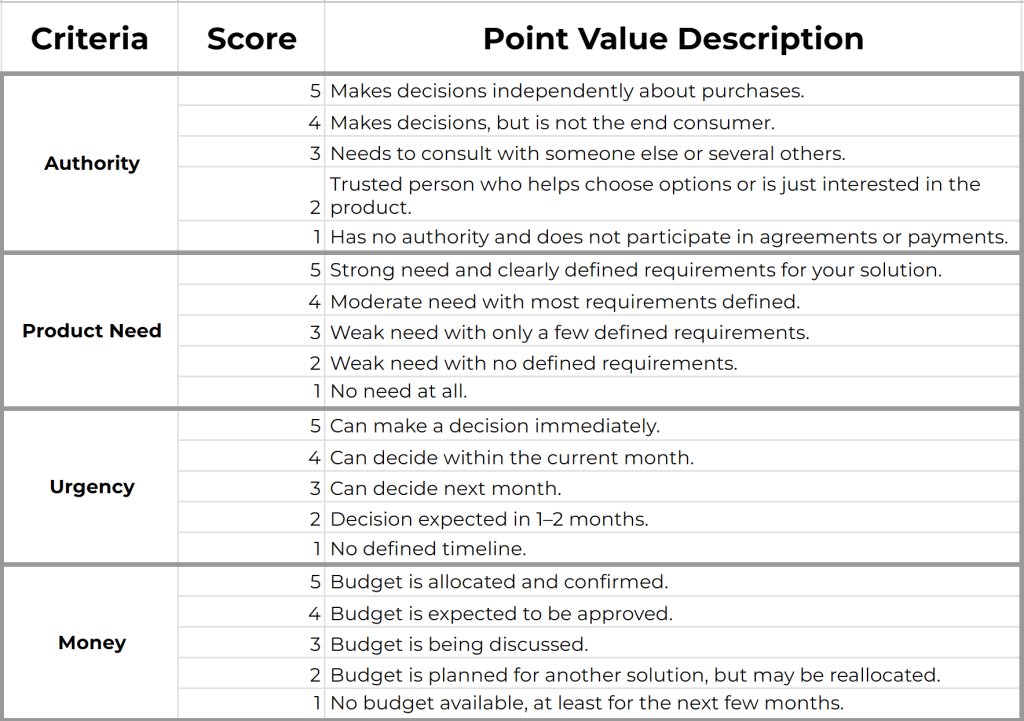
The score assigned to a lead indicates their qualification level. For example:
- 20–25 points—Hot lead, fully meets qualification criteria, easy to convert to SQL.
- 13–19 points—Interested warm lead, requires follow-up from the sales department.
- 7–12 points—Not sufficiently interested, requires further engagement through marketing tools.
- 5–6 points—Potential client does not meet qualification criteria; it is more beneficial for the company to disqualify them than to spend resources on further engagement and qualification.
Engagement level and behavioral data can provide valuable insights for the sales department to successfully convert MQL to SQL. Potential clients who are not considered MQL will have a much longer journey to completing a target action. As a result, the brand will spend maximum resources on leads that may never make a purchase.Quantitative evaluation combined with qualification indicators analysis will allow you to invest time and resources only in promising leads.
Why is defining a Marketing Qualified Lead important?
Focusing marketing efforts on Marketing Qualified Leads accelerates business growth. The product and the brand as a whole cannot appeal to everyone. Some may find the price unsuitable, others may be dissatisfied with the range or service. However, with well-structured lead qualification processes, managers will always have leads to work with, consulting rather than pushing a product or service. Defining MQL offers multiple advantages for business.
- Time savings: Sales managers won’t waste valuable time on “cold” leads.
- Revenue growth: A high closing rate is the main reward for effective lead qualification.
- Personalization of messages and ads: Marketers will know who to target and which channels to use. Personalized offers can increase profits by at least 15%.
- Spam and bot detection.
- Identification of the best lead generation channels.
- Marketing and sales synergy: Marketers will better understand when to direct leads to the sales department and who should not be prioritized.
Thus, lead qualification allows you to clean the lead database, leaving only those who can bring profit to the company.
Tips for Lead Acquisition and Qualification
Lead qualification becomes much easier if, at the acquisition stage, you can filter out random conversions, use only relevant keywords, and stick to channels that are relevant to your target audience. Follow specific rules to ensure effective lead acquisition and MQL determination.
- Use Meta Ad Manager ads: This platform offers numerous targeting options and allows you to reach the maximum number of potential clients.
- Promote video content: This can include webinars and conferences, educational or entertainment content, short videos, and full-length video stories.
- Address clients by name: Users highly appreciate personalization. Direct communication is the best way to qualify a lead.
- Use cross-sell and up-sell: A relevant additional offer can increase the interest of a potential client and raise their qualification level at the stage of receiving extended information.
- Segment MQL into categories based on interests, pain points, and goals: This will help in creating effective strategies to increase conversions through various means.
- Do not ignore consumer opt-outs: Respect GDPR and other relevant promotion rules in your region, as they involve serious fines and reputational risks.
- Remember that some leads complete target actions for reasons unrelated to making a purchase: This can include competitors using your site for research or simply wanting to get something for free.
- Analyze behavioral factors: Make the qualification process flexible, considering the specifics of your business when determining the level of interest.
- Assign lead scores by aligning the evaluation system between marketers and sales teams.
- Request feedback from existing clients: They can help you understand the details of the target audience profile and personalize communication.
- Discuss deal terms if your product is complex, expensive, or multi-component.
Sometimes companies providing services avoid disqualifying leads, thereby damaging their reputation. If you realize that a potential client’s request does not match what you can provide, or if your specialists cannot meet the desired deadlines, it is better to notify the consumer and refuse cooperation or offer an alternative solution.
After qualification, focus on building positive relationships with potential clients.
“Sales team members must communicate with team members who are responsible for achieving the client’s goal within the specified time frame. Sometimes they may not be able to meet the client’s objectives on time, and you will need to decide whether to reprioritize the team, offer potential clients an alternative schedule, or disqualify them because you simply cannot meet their needs within their timeline.”—”20 Questions for Faster and Better Lead Qualification“, Neil Patel
It is advisable to focus on the number of MQLs rather than their quality. Otherwise, you may end up with a large number of unqualified leads that will only waste the company’s time and resources.
Conclusions
Lead qualification is the process of determining whether a potential customer fits the ideal target audience profile. Assigning leads a level of interest in your products or services shows their potential, indicating whether the company has a chance to gain loyal customers with a high average check and a long lifecycle. To effectively identify MQLs, marketing and sales departments must work in alignment.
Proper lead qualification involves understanding the buyer’s real needs. It includes thorough research, detailed information collection during communication with potential clients, and the actual qualification process. The final stage can be qualitative or quantitative—you can identify qualified leads based on their characteristics or assign each segment a specific score based on a formula that suits your needs.
All of this helps to determine whether it is profitable to invest time and resources in further informing and serving a potential customer.
Frequently Asked Questions
MQL (Marketing Qualified Leads) are potential customers who are at the beginning of the buyer’s journey. They are exploring how a product or brand content can help solve their problems. On the other hand, SQL (Sales Qualified Leads) are prospects who are more ready to engage with the company or make a purchase than MQLs. Usually, they ask specific questions, are open to conversations with the sales team, or are interested in a product demo.
The marketing qualified lead stage is a step in the customer journey where the potential buyer is identified as a qualified prospect by the marketing team.
Personal data refers to any information about a person that can be used to identify them, including previous search queries, user activity, website or app visits, demographic information, location, and more.
Sales Accepted Lead (SAL) refers to leads that have been transferred from the marketing department to the sales department for further processing.
There are various techniques for qualifying leads. Sales and marketing teams work together to conduct lead scoring to determine how likely a prospect is to make a purchase.
Common criteria for selecting qualified leads include demographic information, behavioral data, engagement level, purchasing power, and more. The list of qualifying questions depends on the specifics of the business.
-
Tags
