
WHAT IS DIGITAL MARKETING: TYPES AND EXAMPLES
-
Post author

-


Over 90% of online shoppers in the U.S. search for information about products and brands online before buying something in a physical store. Most marketers believe that increasing brand awareness is more important than direct sales campaigns.
Digital marketing is a relatively new field and is now the most important part of business promotion. It mostly uses online tools and works on several levels. It builds long-term relationships with the target audience and is constantly growing in its capabilities.
What is this about?
- What is digital marketing and how is it different from traditional marketing?
- Advantages and disadvantages of digital marketing
- Types of digital marketing with examples
- How to create a digital marketing strategy
- How to start a career in digital marketing?
- Conclusion
What is digital marketing and how is it different from traditional marketing?
Digital marketing covers both online and offline promotion of products and services, but its main focus is online engagement. The biggest difference from traditional marketing is that digital methods are two-way—they allow communication with the audience.
A potential customer can’t interact with a flyer or billboard in a way that gives feedback to the advertiser. But in the digital world, every user reaction can and should be tracked, and the brand continues the conversation with the potential customer. Digital marketing is flexible and always evolving—new tools and platforms appear while old and ineffective ones disappear.
Digital strategies usually combine several platforms and methods at once. Being omnichannel helps increase brand recognition and move users through the four stages of the sales funnel:
- Awareness. A person learns about or remembers the brand and begins forming positive associations with the product.
- Interest. The consumer visits the company’s website or social media, engages with blog content, likes or comments, shares posts, or browses materials and offers. They may subscribe to emails or download a lead magnet.
- Decision. Depending on the product or service, this can take minutes or more than a month. They may test a demo or get a consultation but still compare with alternatives. In B2B, this process usually takes longer than in B2C.
- Purchase. The main goal is placing an order and payment. But the effort doesn’t stop there. With a good strategy, this customer becomes a repeat buyer through personalized offers. New articles and videos keep appearing across different channels to continue the brand relationship.
The goal of digital marketing is to create several touchpoints and guide the customer through a multichannel campaign. A good example is the Starbucks Rewards app. It lets users shop, check, and reload their card from a smartphone. The app account syncs with all other channels, making it easy and building loyalty.

Digital marketing should not be confused with online marketing. Digital is a broader term—it includes non-internet channels like digital TV, mobile SMS, and video games. What unites them is digital technology, audience interaction, and the ability to measure results.
“…Digital marketing campaigns have become common, using a mix of SEO, SEM, content marketing, influencer marketing, content automation, campaign marketing, data-driven marketing, e-commerce marketing, social media marketing, social media optimization, direct email marketing, display advertising, ebooks, optical disks, and games.”—”Digital marketing,F” Wikipedia
Types of Digital Marketing by Scale
- Basic digital marketing includes promotion on social media and sometimes traffic growth through SEO. These are usually startups or small businesses with small budgets—around a few hundred dollars per month.
- Intermediate digital marketing is used by mid-sized businesses with stable income streams. These brands use PPC, email campaigns, and video marketing. Monthly spending can reach several thousand dollars.
- Advanced digital marketing is done by large companies and corporations. They use well-planned omnichannel strategies that require a lot of time and money to build. Advanced digital marketing can cost tens of thousands of dollars per month.
According to forecasts, the average annual growth rate of digital marketing from 2021 to 2026 will be 17.6%. Expert Market Research reported that in 2023, the digital marketing sector in the U.S. reached $363 billion.
Pros and Cons of Digital Marketing
Promoting products and services with digital tools has many advantages over traditional methods like billboards, business cards, flyers, and TV ads.
“As of 2023, there were 5.19 billion internet users and 4.88 billion social media users worldwide. On average, internet users spend 6 hours and 40 minutes online each day.”—“What Is Digital Marketing? Types, Strategies & Best Practices.” Janette Novak, Forbes Advisor
Let’s look at the main benefits of digital marketing:
- Targeting the right audience
Precise ad settings let you show only relevant content to consumers. Thanks to targeting based on age, location, interests, and other data, campaigns reach people who are interested or might be interested in the products or services. Also, targeted ads allow you to personalize offers. - Lower budgets and low entry cost
Even one offline event can cost you more than a long-term online promotion. A good example of budget-friendly marketing is stores on Instagram. Their owners may not have websites but still sell successfully through social media. The cost of one lead is 61% cheaper than in traditional marketing. - A/B testing and detailed analytics
Campaign analysis helps improve content and ads by reducing costs and increasing conversion rates. Advertisers can test ad variations on different audience segments and see which ones work better. - Customer reviews and UGC
About 50% of consumers trust online reviews as much as personal recommendations from friends and family. Customer comments and user-generated content spread online very fast. The main thing is to make sure the reviews are positive and to handle the negative ones by fixing mistakes. - Maximum engagement
You can use a website and search ads, emails and messengers, social media and content marketing—all at once. This helps engage the audience better. For example, posting interesting and unique texts in a company blog can attract visitors and increase conversion. According to HubSpot, 56% of people who read company blog posts eventually buy something from that company. - Measurable results
With tools like Ubersuggest and Google Analytics, you can analyze traffic, track conversion rates, and measure other key metrics. - Global reach
There are no geographic barriers in digital marketing. For international business, you only need the internet, an understanding of local laws, and a reliable delivery system if you’re selling physical products. - Flexible strategy
You can adjust your digital marketing strategy at any time. All tools are flexible and can adapt to new promotion conditions—unlike long-term traditional marketing campaigns. - Instant feedback
Companies with strong digital strategies can quickly interact with new customers on one platform and connect other channels, building a strong relationship. A website visitor can get a reply just seconds after submitting a request or using an online chat. Social media is also a great space for starting a dialog and giving professional advice to followers. - Building relationships
Effective SMM strategies, loyalty programs, and events help build long-term and loyal customer relationships. This satisfies one of the main emotional needs—feeling part of a community. - Using modern technologies
Today’s consumers like interaction. They want to engage with the website and enjoy full online shopping experiences. Augmented Reality (AR) technology can help with that. Thanks to AR, online shoppers can “try on” clothes, shoes, accessories—even hairstyles or makeup. There are many tools for designing interiors, vehicles, and more, which are added to websites to improve user experience and increase conversion rates.
“According to Think with Google, by 2025, over one-third of Gen Z shoppers will use AR for purchases.”—“What Is Digital Marketing?“—Neil Patel
There are many tools, services, and software made for online promotion, and they make a marketer’s job easier and more accurate. Artificial intelligence is being used more and more. Global brands like Nike and Starbucks are already using it. For example, ChatGPT helps draft posts and optimize content using keywords. AI can create videos and images, write text, and build content plans. But its abilities are limited, so a specialist should always check and improve the materials.
Digital marketing helps create ads with a high return on investment (ROI) and reach business goals faster. A downside of digital tools is that they require you to always stay in touch with customers and carefully guide them from one stage of the sales funnel to the next. But this is also a big advantage—it helps you avoid losing potential customers.
📌 Read the article: What Is 7P Marketing and the Marketing Mix
Types of Digital Marketing with Examples
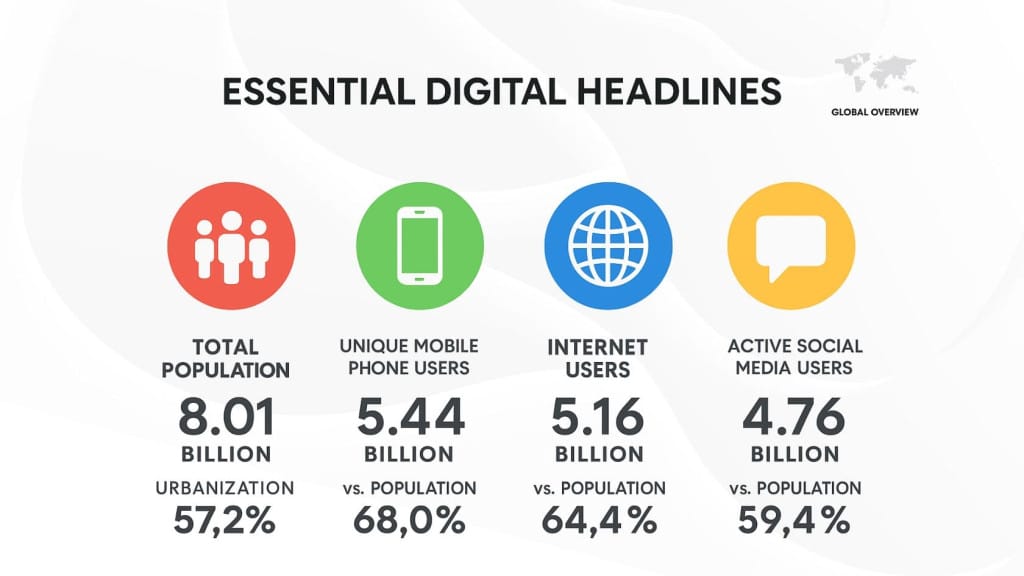
There are 5.44 billion mobile phone users, 5.16 billion internet users, and 4.76 billion social media users around the world. To reach your target audience in your area, it’s enough to start with one or two types of digital marketing.
SEO
One of the most affordable types of digital promotion is website search engine optimization. SEO (Search Engine Optimization) is a set of methods aimed at getting web pages to rank higher in search results.
“In a survey by Search Engine Journal, 49% of respondents said SEO gives the highest return on investment (ROI) among all digital marketing channels.”—“What Is Digital Marketing? Types, Strategies & Best Practices,” Janette Novak, Forbes Advisor
Websites that are optimized using internal and external SEO methods show up on the first pages of search results when users enter their queries.
Internal optimization includes several steps:
- analyzing the niche, researching competitors, and finding keywords for promoting different pages;
- working on the website’s structure, including menus and categories;
- creating page URLs;
- writing meta tags like Title, Description, H1, H2, etc.;
- publishing optimized texts and images on the website;
- checking navigation, looking for duplicate pages and broken links;
- improving page load speed;
- checking indexing status.
External optimization means placing links to your site on trusted web resources. This helps build a good brand reputation with your target audience and improves trust from search engines. The collection of links to your site from other sources is called the backlink profile. Ideally, these links should grow through high-quality articles and collaborations with other websites—this connects SEO to content marketing and affiliate marketing.
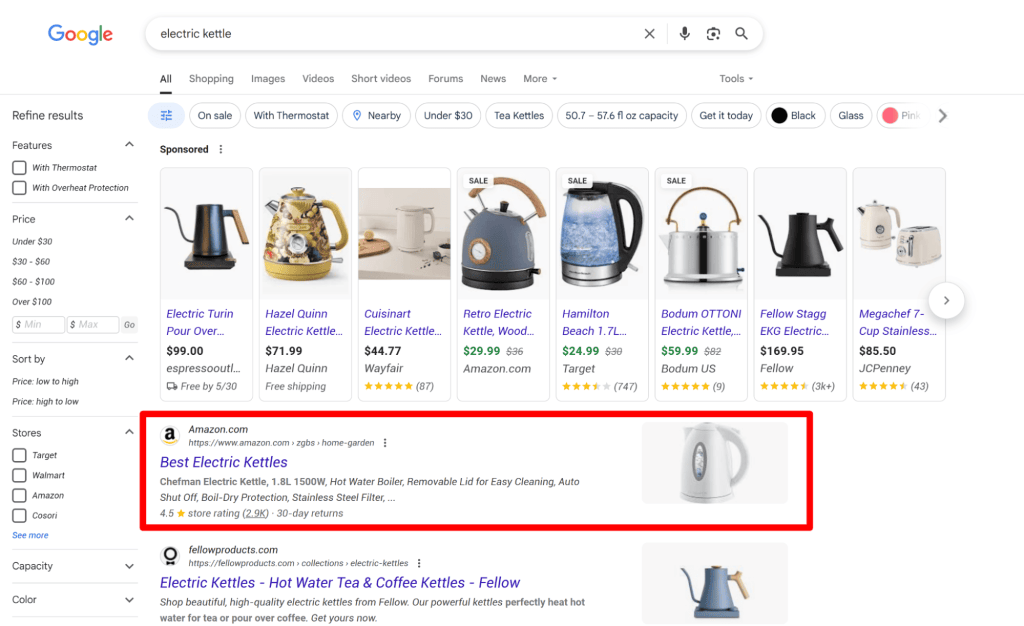
A big plus of SEO is that you can promote your website at a relatively low cost. The downside is that it takes time to see results, and it’s hard to reach the top if there are big companies in the niche. For example, when you search for “buy electric kettle,” Amazon pages usually show up first—right after the product ads.
Keywords can have different levels of competitiveness and frequency. They can also be branded or non-branded, as well as local. Local SEO means optimizing content for a specific geographic area, including directories and listings. One free way to promote a company in a certain region is to appear on Google Maps and create a profile in Google My Business.
PPC
Another type of digital promotion is SEM (Search Engine Marketing)—which means using paid methods in search marketing. Advertisers often use PPC (Pay-per-click)—ads that charge the advertiser for every click. This type of advertising is called contextual because it appears based on the context of user search queries.
These ads can show up as search results marked “Ad,” or as banners and visual ads on partner websites. Advertising can be split into search ads and display ads. Display ads appear on websites that are part of the ad network. When you search for a popular product, Google can show you a way to compare prices and see images of the product, letting you click on the ad you like.
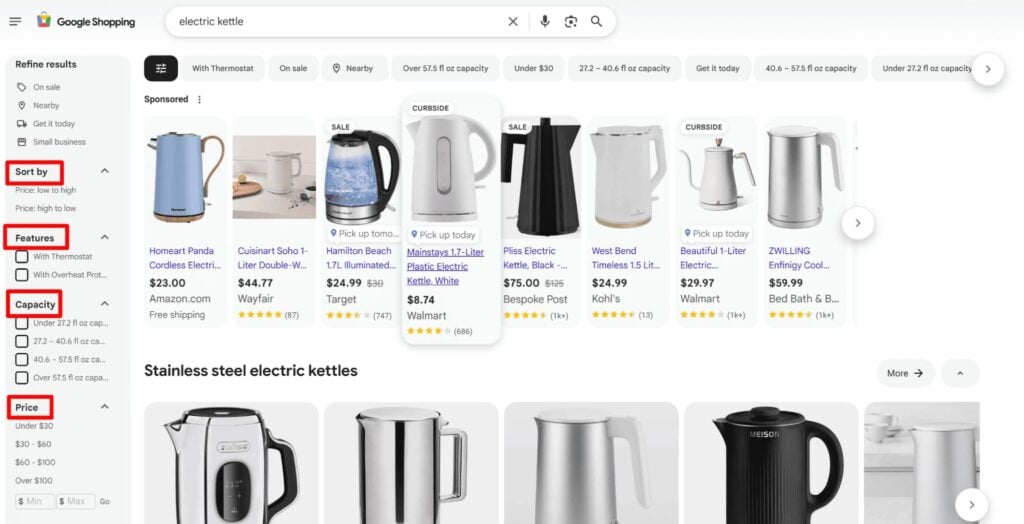
Google Ads is the biggest PPC platform, but not the only one. You can also buy pay-per-click ads on the Microsoft Search Network (Bing and its partners), as well as on YouTube, Facebook, Instagram, Snapchat, LinkedIn, Amazon, TikTok, and more.
Content Marketing
Promoting a brand by sharing useful or fun texts, videos, or images is a long-term but very effective method. Thanks to digital tools, content can go “viral,” which means it spreads quickly among users. This can include articles, videos, infographics, ebooks, courses, and more.
Most internet users today prefer to learn about products or services through short videos. Macy’s, for example, posts informational product videos on their YouTube channel, including YouTube Shorts.

Content marketing also includes SERM (Search Engine Reputation Management)—building and managing a brand’s reputation online. Customer reviews shape how people see a company, its products, and its service. It also includes press releases, interviews, news about awards, collaborations, and participation in events—even charity ones.

“HubSpot is a great example of content marketing. It uses a mix of blogs, newsletters, videos, and podcasts to connect with its audience. It also offers free templates, ebooks, workbooks, and courses that keep people coming back.”—“What Is Digital Marketing?”,—Neil Patel

📌 Read the article: Which Should You Choose: SEO or Paid Ads? A Complete Review
SMM
SMM (Social Media Marketing) means using social networks to reach business goals. You can create a business profile for free, and there are many low-budget ways to grow followers. That’s why many small businesses start with social media.
Targeted ads on Instagram, Facebook, TikTok, and other platforms let you show ads to the right people based on age, gender, location, education, behavior, interests, and more. These platforms have detailed user profiles and can track behavior, phone model, and location. That’s why most ads shown are relevant to what users want.
“Social media is the main way 78% of internet users learn about brands. Almost half of American shoppers say they’ve bought something through social media.”—“What Is Digital Marketing? Types, Strategies & Best Practices” Janette Novak, Forbes Advisor
Besides the most popular platforms, businesses should also use new social platforms that are trending with their target audience. This helps you stay ahead of competitors who don’t keep up with the latest marketing news.
Native advertising in social media works well. To promote a new product or service, you can partner with a few bloggers whose audience matches your target market. You can offer a barter or pay for a post. While brands used to pick influencers with millions of followers, now the trend is to work with micro-influencers—smaller accounts where followers still trust the content and don’t get “ad blindness.”
Many people mix up influencers and brand ambassadors. They have similarities, but working with a blogger can be a one-time campaign, while brand ambassadors have long-term relationships. Their values should match your company’s, which makes the ad feel more natural, and the audience is more loyal from the start.
Example of ambassadorship in social media. A good example of brand ambassadorship on social media is the sportswear company Gymshark and fitness influencer Nikki Blackketter (@nikkiblackketter), who helped create a line of athletic clothing. Her image matches the brand’s target customer, so tagging products in photos and mentioning them in posts feels natural and helps the company make a profit.

Affiliate Marketing
Affiliate marketing is a partnership between two brands, where one company promotes the other’s products and gets paid for each click, lead, or sale—depending on their agreement.
To track performance, both sides use affiliate UTM links. These links help identify visitors who came from a specific affiliate and show what actions those visitors took on the website. A downside of this kind of digital marketing is that managing many affiliate programs can be difficult. There is always a risk of fraud.
The strategy of affiliate links is often used by large publishers or companies that include ads in their emails. Amazon regularly uses this approach to reach customers. Another strong example of affiliate marketing is Shopify.
Email Marketing
The most well-known way to send information and ads is email marketing. Its biggest challenge today is staying compliant with laws like the CAN-SPAM Act and the General Data Protection Regulation (GDPR).
One company that uses email marketing is Starbucks. They include animations, product comparisons, and emotional calls to action in their emails.
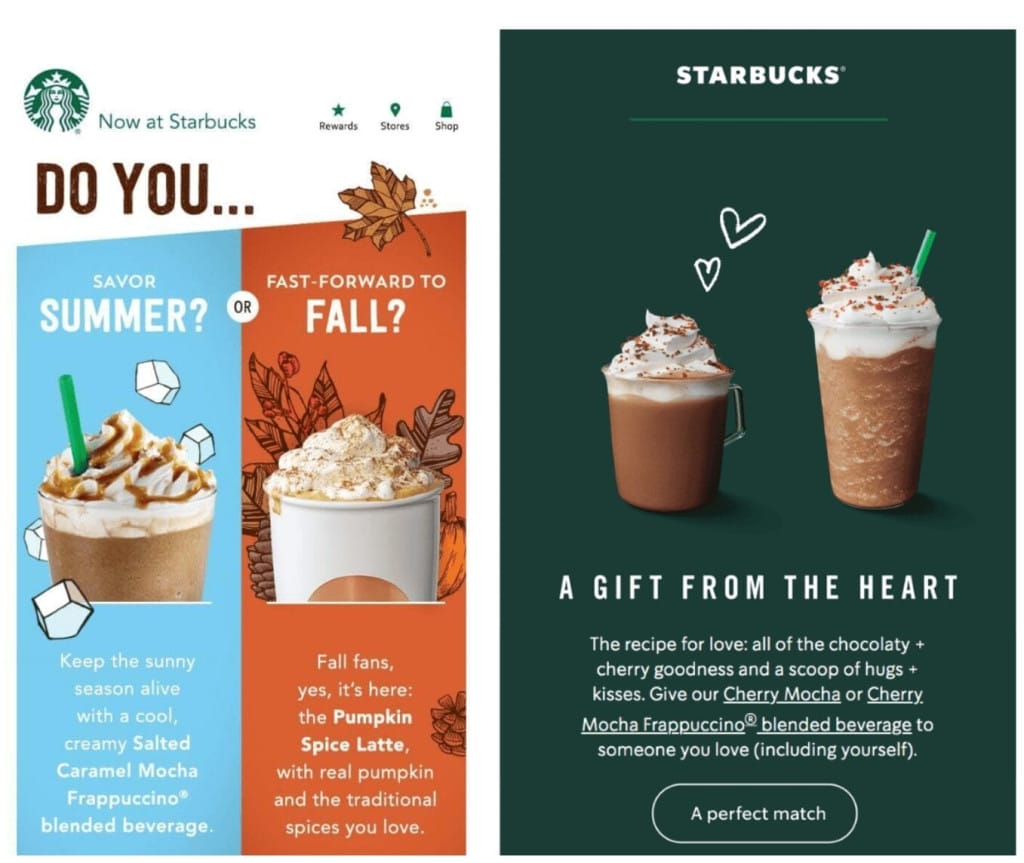
Email campaigns can be manual or automated. Manual emails include product recommendations, discount offers, updates, or helpful content like curated lists. The second type of email is triggered automatically when a user registers, subscribes, places an order, takes another key action—or doesn’t (for example, abandoning a shopping cart). This type is called a trigger email.
Special software helps marketers segment customer lists, design attractive emails, schedule send times, and track key metrics like open rates, click-through rates (CTR), conversions, and bounce rates.
Video Marketing
Since 2016, the role of video content in digital marketing has grown a lot. Before, people mostly watched videos on YouTube, where they saw ads in video format. Now, short videos are most popular on Instagram and other social media platforms. The rise of TikTok and its active audience helped boost the trend of fun, short videos.
Videos don’t always have to be funny. Many companies use them to teach or share useful info in an interesting way. Video marketing can increase website engagement, help customers with tutorials and product reviews, or show a brand’s expertise through webinars, conferences, and workshops.
To promote products, companies also use marketplace marketing by listing items on Amazon, Etsy, eBay, and similar sites. The most effective digital marketing works when it combines different tools and follows a clear strategy.
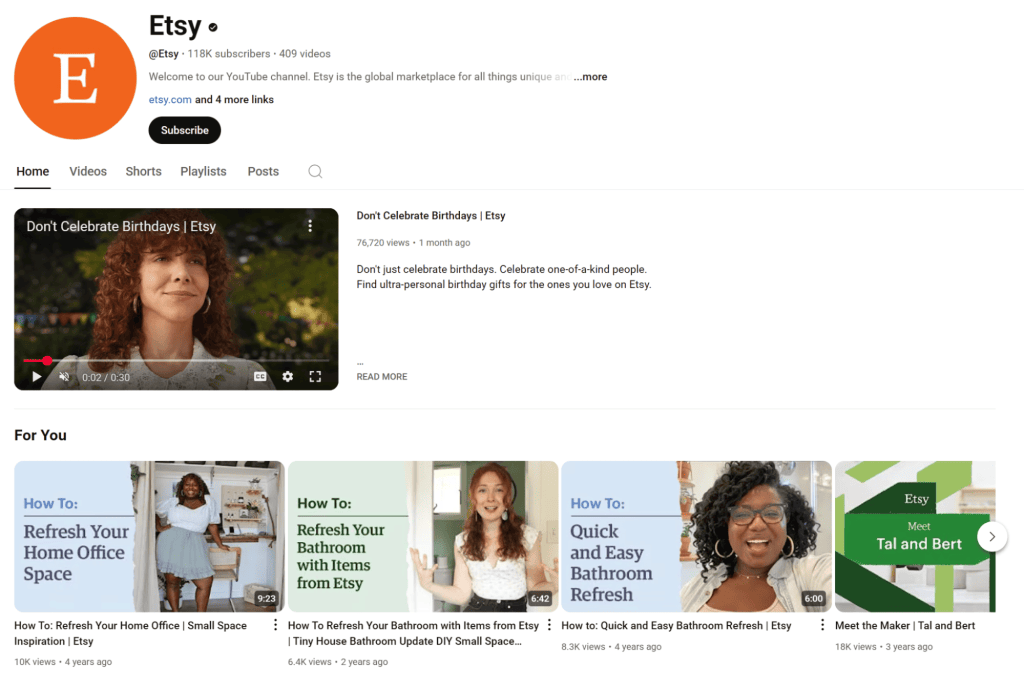
Here are some examples of offline digital marketing. This type of marketing uses digital tools but doesn’t require the potential customer to be online at the moment.
SMS Marketing
Studies show that 98% of text messages are read within three minutes after they’re received. The “Unread” status pushes people to open the message quickly. Text reminders can improve customer service. For example, pharmacies send alerts when prescriptions are ready, and clinics or beauty salons remind clients about upcoming appointments.
Mobile marketing plays a key role in loyalty programs. It’s an easy way to share offers and gifts with members. There are over 310 million smartphone users in the U.S. Use mobile messages as an extra channel, without sending too many alerts.
QR Codes
QR codes are barcodes that take users to a web page or mobile app. All you need now is a phone camera to scan and open the link. This tool is useful for collecting feedback, especially in restaurants, gyms, clinics, and salons. QR codes are also used to add or redeem points in rewards programs.
Digital TV Advertising
TV marketing means using ads to promote products or services. According to Comscore, 81% of Americans with Wi-Fi watch digital TV, mostly on platforms like Apple TV+, Disney+, and Hulu
For marketers, digital TV is a plus because it offers precise targeting and analytics. Unlike traditional ads, digital TV ads are personalized based on user data, such as interests and demographics.
Platforms like Vidzone add custom ads between shows, based on the viewer’s profile.
In-Game Advertising
Advertising in video games is a unique method that puts brand content directly inside a game. This can be either hidden or shown as banners. The success of this strategy depends on game type, brand fit, platform, tech used, and ad visibility.
Building a Digital Marketing Strategy
To get results and ROI from digital marketing, start with a solid strategy.
- Set Goals
What do you want to achieve right now—more website visits, better brand awareness, or higher sales? There are many possible goals. If you’re a marketer managing multiple projects, remember that every brand needs a different approach. - Define Your Target Audience
Look at common traits like age, gender, income, education, location, interests, and problems related to your product or service. Then create a unique offer that speaks directly to this audience. - Set a Budget
Try to assign a budget to each digital channel. Include costs for paid tools, software, hosting, etc. Figure out which influencers or companies you want to work with and how much they charge for ads or services. - Choose the Right Channels
Pick platforms and tools based on where your audience spends their time. Social media and SEO are cheaper than PPC or high-end video ads. Most businesses don’t need expensive options when starting out. - Track and Improve
Watch your results and run tests. Optimize not just your ads, but also your website and content. Landing pages, presentations, articles, and videos should be expert-level, trustworthy, and original. They should meet Google’s E-E-A-T standards (Experience, Expertise, Authoritativeness, Trustworthiness).
Tracking digital marketing results is easy—but competition is high. In the beginning, check your data daily. Later, once a week or month is fine. Set small goals and update your plan as trends and technologies change.
How to Start in Digital Marketing
To work in digital marketing, you’ll need the right software—email tools, keyword research programs, plagiarism checkers, automation platforms, and CRM systems. Together, these may cost between $100 and $2,000 per month.
But first, update your resume. Even if you don’t have much experience, self-education matters. To show your skills, get a Google digital marketing certificate. You can take these online courses on Coursera.
Online courses help build skills in IT support, e-commerce, project management, UX design, and data analysis. Some nonprofits get grants from Google.org and offer free training. A Google certificate is a strong part of your resume. You can add it to your LinkedIn or website.
Conclusion
Digital marketing means using online and tech tools to promote your business. It’s different from traditional marketing because it includes data analysis and direct communication with your audience.
The main types of digital marketing are SEO, SEM (PPC), social media (including influencer marketing), content marketing (including video), affiliate marketing, email, and offline methods like digital TV ads, QR codes, and mobile messages.
To succeed in digital marketing, you need a plan. Set clear goals and a budget for each tool or channel. Stay flexible—the ability to meet your audience’s needs is a major advantage of digital marketing.
Frequently asked questions
Digital marketing is a part of marketing that uses digital technologies and the internet to promote products and services.
To get started in digital marketing, you can enroll in a digital marketing certification program or take related courses. After that, it’s a good idea to do an internship in a marketing department of a company that specializes in digital marketing.
To work in digital marketing, you need to have certain knowledge and skills, understand how popular marketing tools work, and keep learning about different promotion channels. It’s also important to understand how to develop marketing strategies and do analytics.
A digital marketer uses digital tools and digital marketing methods, such as social media marketing, SEO, and content marketing, to improve customer loyalty and increase sales of products and services. To be a successful digital marketer, you need to be skilled with different digital media and have strong marketing skills.
The easiest type of digital marketing is creating and sharing content on social media platforms, such as Facebook, Twitter, and Instagram.
A professional certificate from Google shows your qualifications. You can add it to your resume, LinkedIn profile, social media, and more.
-
Tags
