

QUIZ MARKETING: WHAT IT IS AND HOW IT CAN HELP BUSINESSES EARN MORE
-
Post author

-


According to marketing research, interactive content grabs users’ attention 81% more effectively than static content. One type of interactive content on websites and social media is quizzes—tools used in quiz marketing. Well-designed surveys help collect data about the target audience, promote products and services, and increase the loyalty of potential customers.
The most significant advantage of quizzes is their viral nature, as they often provoke instant reactions and are widely shared. The reason is that the results of such tests showcase the user’s uniqueness and evoke positive emotions. Sometimes, they provide valuable insights; other times, they simply entertain.
What’s it about?
- What are quizzes and quiz marketing?
- How to create a quiz?
- Examples of quiz marketing
- Tips for using quiz marketing
- Conclusion
What are quizzes and quiz marketing?
A quiz in marketing is a universal tool for generating quality leads—a fun and engaging way to interact with the audience through short online surveys.
Therefore, quiz marketing is a method based on interactive surveys, quizzes, tests, and more. Quizzes are used at various stages of customer interaction, but most often, they introduce the user to the brand and serve as the first step in engaging with a company or expert.
Benefits of quiz marketing for business
- The conversion rate of landing pages in the form of quizzes can be very high. After taking the test, people expect to receive results and additional value, which is usually offered after they answer the last question.
- Placing a quiz on a webpage helps promote the site, improving its SEO metrics, including the duration of visitors’ stay on the page.
- Quizzes on social media receive many shares, thus increasing brand awareness.
- Surveys provide more information about the target audience, highlight new segments, and improve the sales funnel and marketing strategy overall.
- The data collected from quizzes helps enhance the product if the right questions are included.
- Collecting email addresses or other data helps create a contact database for email marketing and incorporate newsletters into the marketing strategy.
- A well-designed quiz can act as a consultant for a potential customer by providing personalized recommendations.
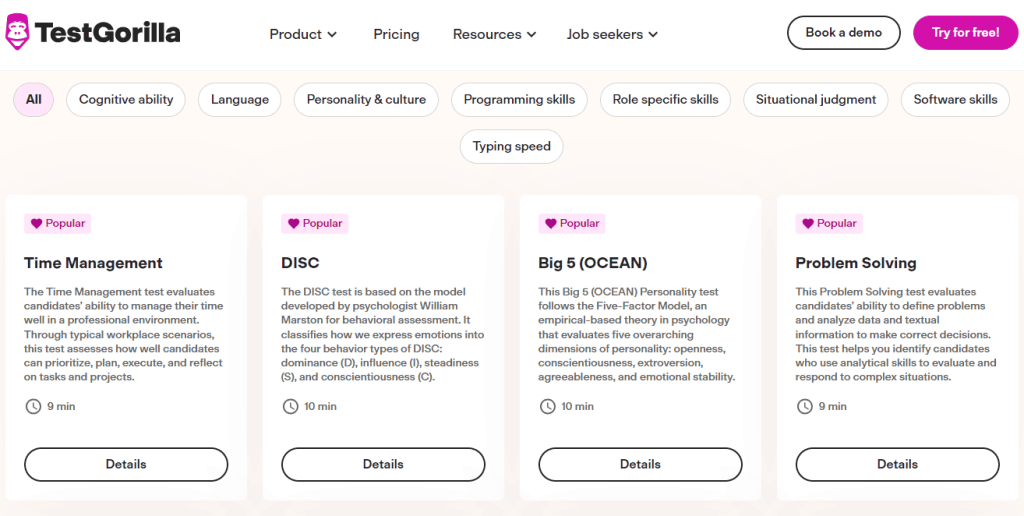
Depending on the business direction, a quiz can be either short and playful or highly informative. For example, the Test Gorilla website features a variety of tests to assess professional skills in various fields, cognitive and personal traits, and more.
For example, the HubSpot quiz is designed to select candidates who will work with HubSpot’s sales, marketing, and customer service software.
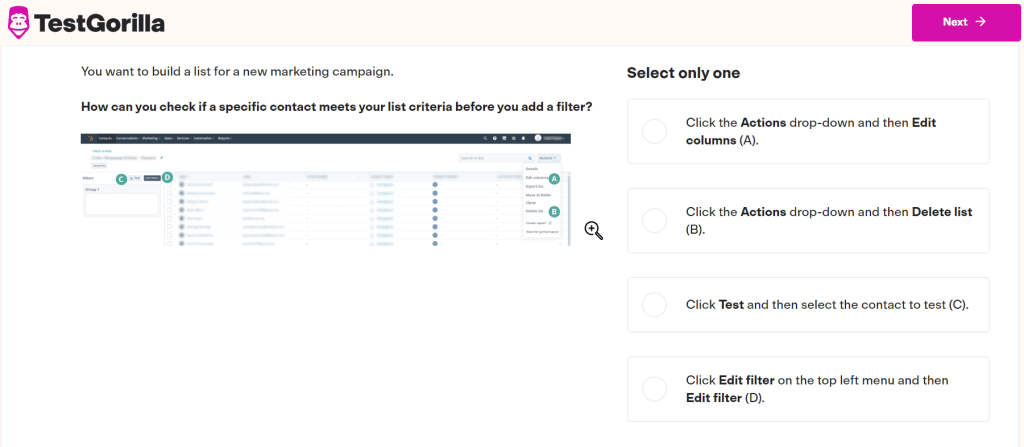
An example of a quiz to assess the level of knowledge on the page
Depending on the goals, there are several types of quizzes. They differ in volume, complexity, and design, as they are aimed at different target audiences.
- For Lead Generation. This type of quiz includes a few simple questions and a bonus in the form of a lead magnet, such as a personalized cost estimate, a website audit, or similar offers.
- For Increasing Sales. This quiz is usually tailored for the personalized selection of a specific product, and after completing it, the user receives a relevant offer.
- For Engagement. A variation of the sales quiz. After completing it, the user receives a link to a specific platform where they can purchase something related to the quiz topic and its results.
- Entertainment Quiz this type of quiz boosts audience loyalty and builds relationships between the brand and the target audience. A humorous quiz can help reach a new audience or remind existing customers about the brand.
- Educational. The goal of an educational quiz is to test or reinforce knowledge, such as determining language proficiency or choosing online courses.
The quiz builder Outgrow offers various quiz templates, including entertainment quizzes for attracting customers. One such template is a Harry Potter-themed questionnaire.
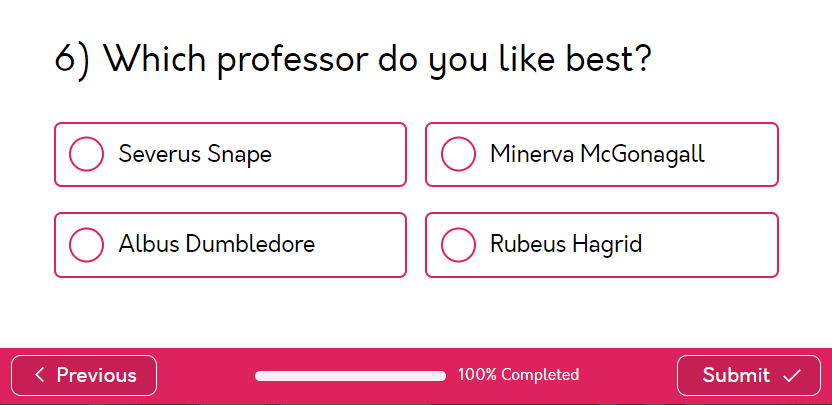
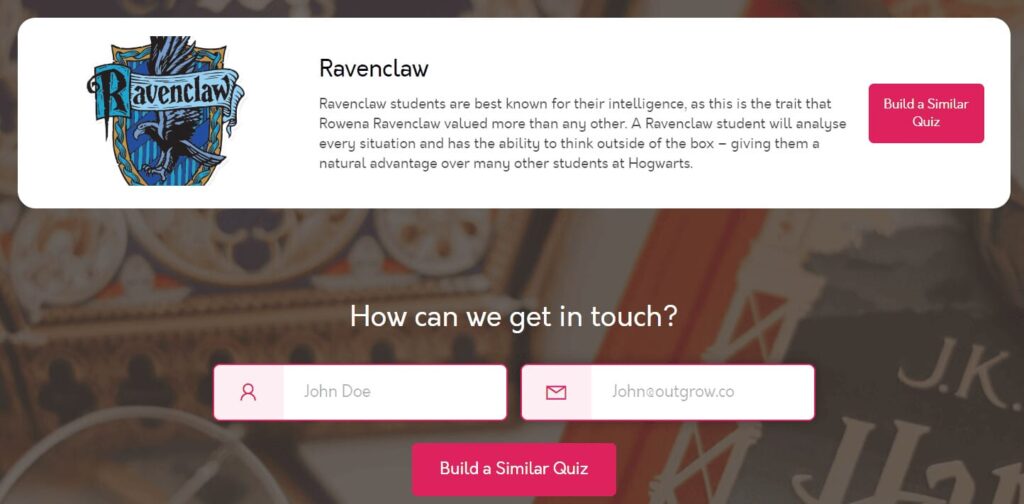
An example of a humorous entertainment quiz can be found here
Unlike traditional tests, quizzes are interactive and include images, clickable elements, and more.
How to create a quiz?
To make a quiz effective, you need to carefully plan every detail from both a marketing and technical perspective. Creating a quiz involves several key steps:
- Define the Target Audience.
- Set Survey Goals.
- Choose the Quiz Type and Placement.
- Write Headlines and Texts.
- Select Images and Design.
- Launch the Quiz and Monitor Results.
Defining the target audience
At the initial stage, study the needs and problems of your main audience segments. Identify the common questions clients ask consultants or managers, and review comments and feedback on social media.
Setting goals
Your goal could be increasing revenue, boosting website conversion rates, or improving other metrics.
Choosing the quiz type and placement
You can use several quiz types and place them in newsletters, on the website, or a dedicated landing page if a marketing campaign is planned for a specific product.
Writing headlines and texts
Questions should be short and clear, and headlines should align with the brand’s tone of voice.
Selecting images and design
If possible, include photos of your products or other unique images that are not only visually appealing but also help guide users in choosing answers.
Launching the quiz and monitoring results
When launching, you need to set up how the results are displayed and ensure the lead form works properly. Check the results regularly, and if the quiz is on a website, you can use Google Analytics. Monitor if users abandon the quiz at certain questions—you might need to shorten or rephrase them.
Often, potential clients complete the quiz but do not enter their contact information at the end. Marketers should think about what value they can offer to encourage users to fill out the lead form after completing the quiz.
Tools and platforms for creating quizzes
There are various tools and platforms for creating quizzes. Some are universal, like Outgrow or Shortstack. Others are more specialized—for example, Thinkific is great for educational quizzes. You can use one of these services or hire a specialist to develop an interactive survey.
Examples of quiz marketing
Glossier provides personalized skincare recommendations based on quiz responses.
📌 Read the article: How to respond to customer reviews
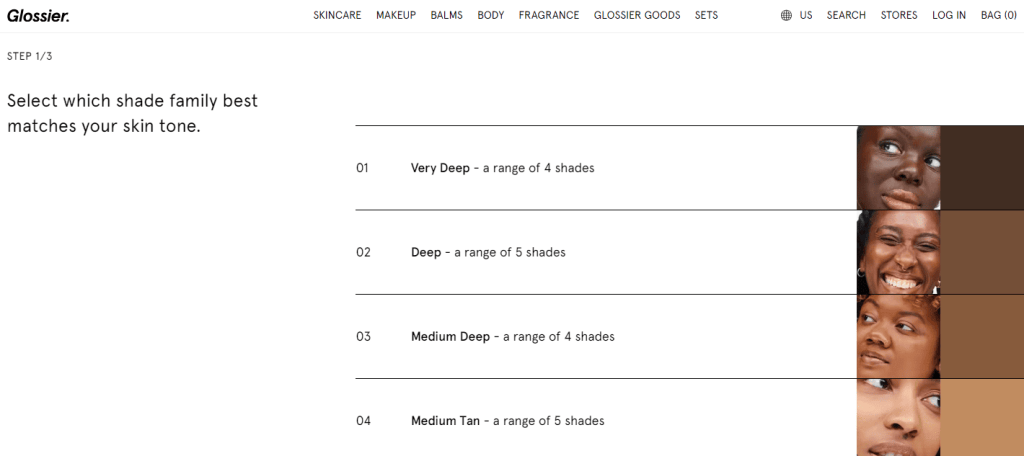
An example of a quiz for selecting skin care from Glossier
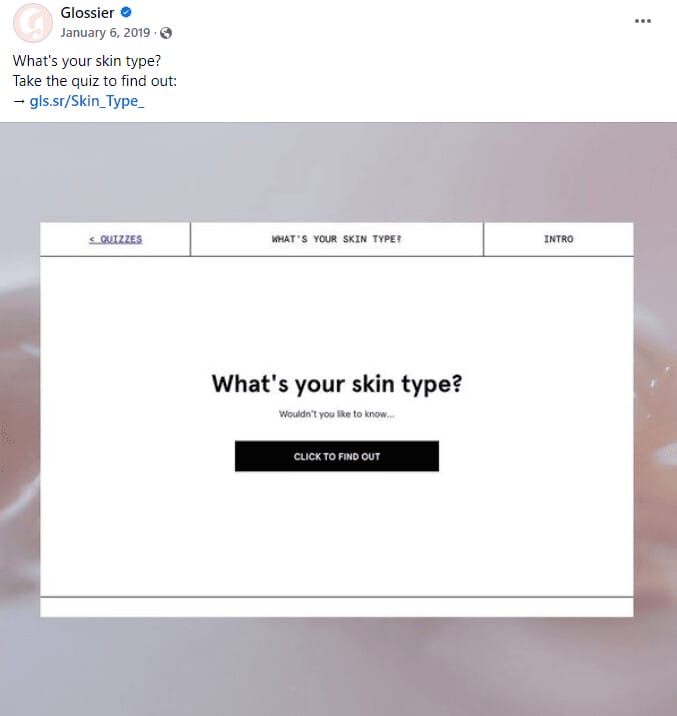
The brand uses Facebook to spread the word. This is a great way to drive targeted traffic to your website from social media.
Warby Parker offers a quest to select glasses based on the style and shape of your face. After completing the quiz, you can order glasses.
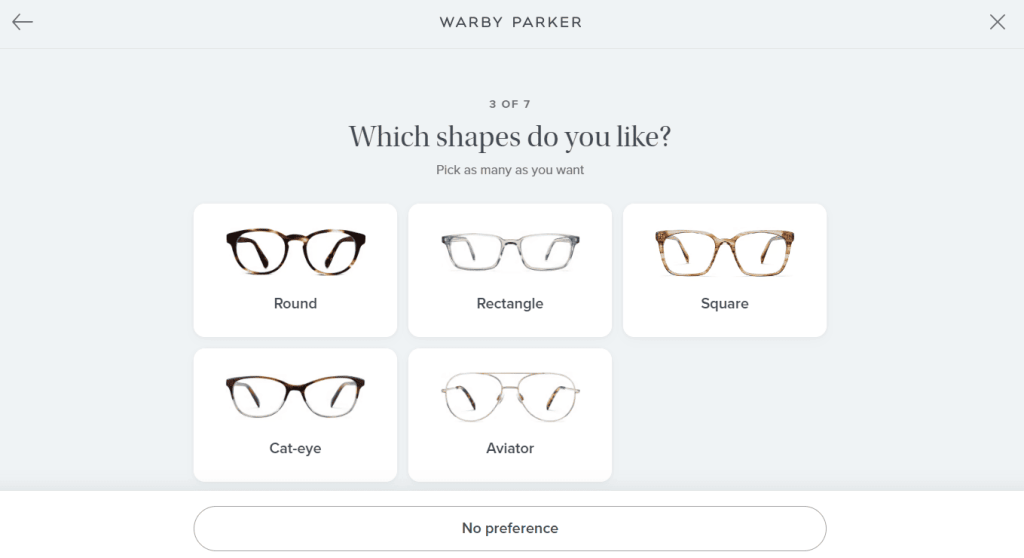
A fragment of a quiz by Warby Parker
Users perceive such quizzes as useful selection services. The selection process can be a pleasant experience for users, and they are more likely to order something from an online store.
In some cases, users should be given the opportunity to choose several answers to one question. To make the survey process easier and more enjoyable, you can add accompanying texts, as the wedding dress brand DAVID’S Bridal does. At each stage of the quiz, in addition to the question and images, there is a descriptor and a compliment to the user.
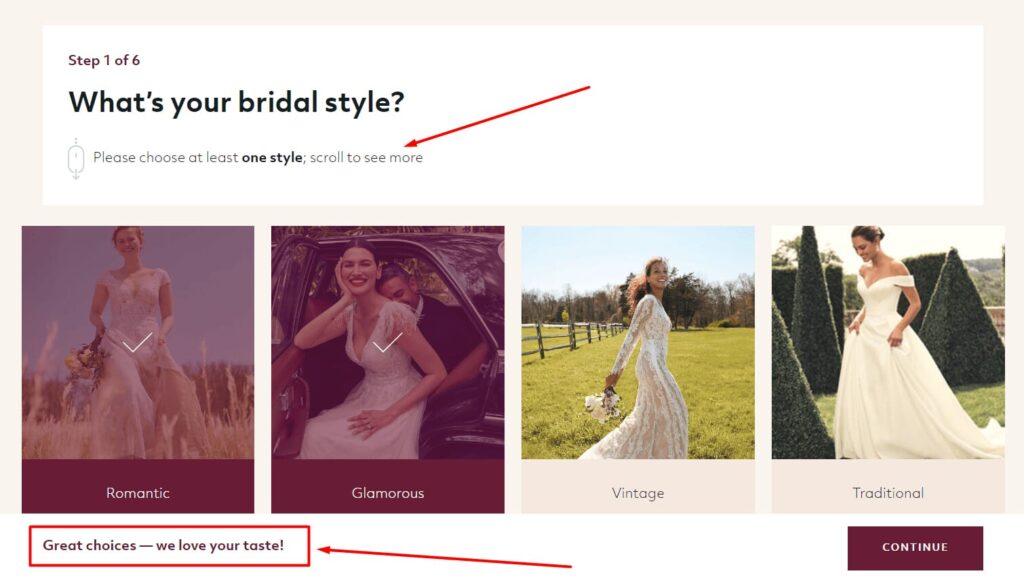
An example of a properly executed visa
The Proven brand offers a quiz for selecting skin care products. The quiz looks quite original: there is a visualization of personally selected products that changes as you go through the survey, and the questions themselves alternate with interesting thematic facts.
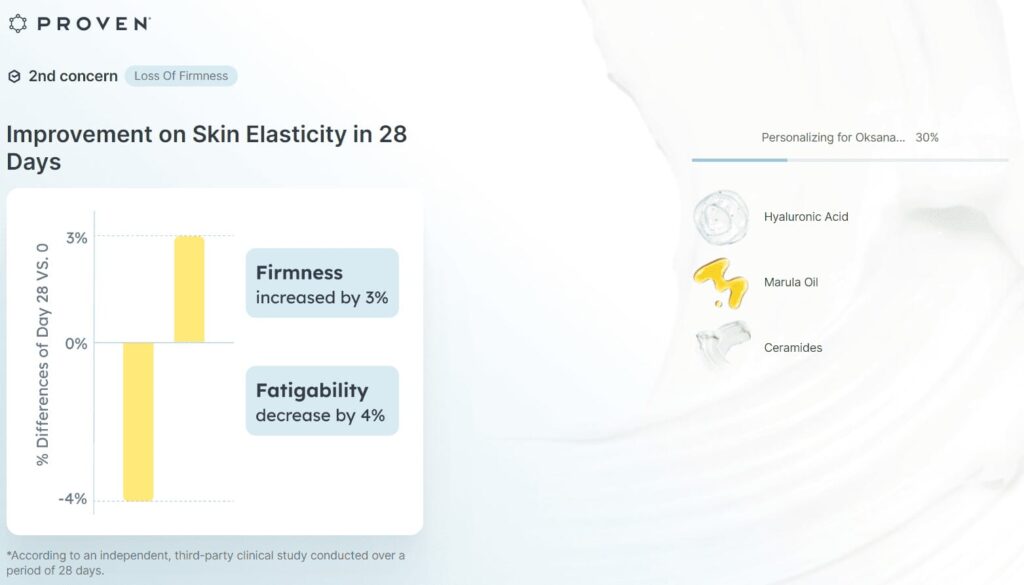
An example of a quiz for selecting skin care
Hims gives you the opportunity to choose a men’s haircut. To do this, it offers a mini-quiz directly on the main page, with vivid images and a large number of options. At the end, there are two offers to choose from—sign up for a free visit or start treating hair loss.
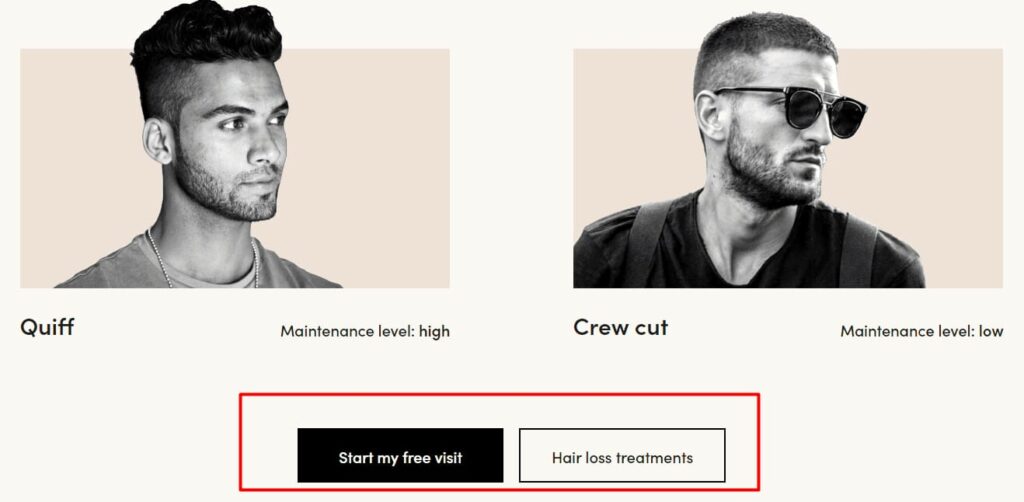
Quiz for choosing a haircut from the manufacturer of hair products Hims
Tips for using quiz marketing
Modern platforms provide ready-made templates for creating quizzes. We recommend analyzing question lists and survey designs from competitors, as well as from related business niches. Below are some tips for creating and using quizzes for business.
- A quiz should evoke emotions. To achieve this, use contrasting buttons, catchy wording, and vibrant images.
- The optimal number of questions is 7–10, and for some complex and engaging topics—up to 15. If there are more questions, the likelihood increases that the user will get tired, distracted, or not complete the quiz.
- The goal of any survey in marketing is to get the potential client to take a specific action. Therefore, it should include a simple lead form that is valuable to the business.
- Use simple questions to help reduce the dropout rate.
- Clearly define the workflow of the quiz to provide relevant and valuable results to your users.
- To encourage users to share their results, add social media widgets to the results page.
- Optimize the quiz for mobile devices.
- Check the effectiveness through A/B testing and split testing.
- Personalize the content. Adjust questions based on the preferences of a specific target audience segment and target those user categories.
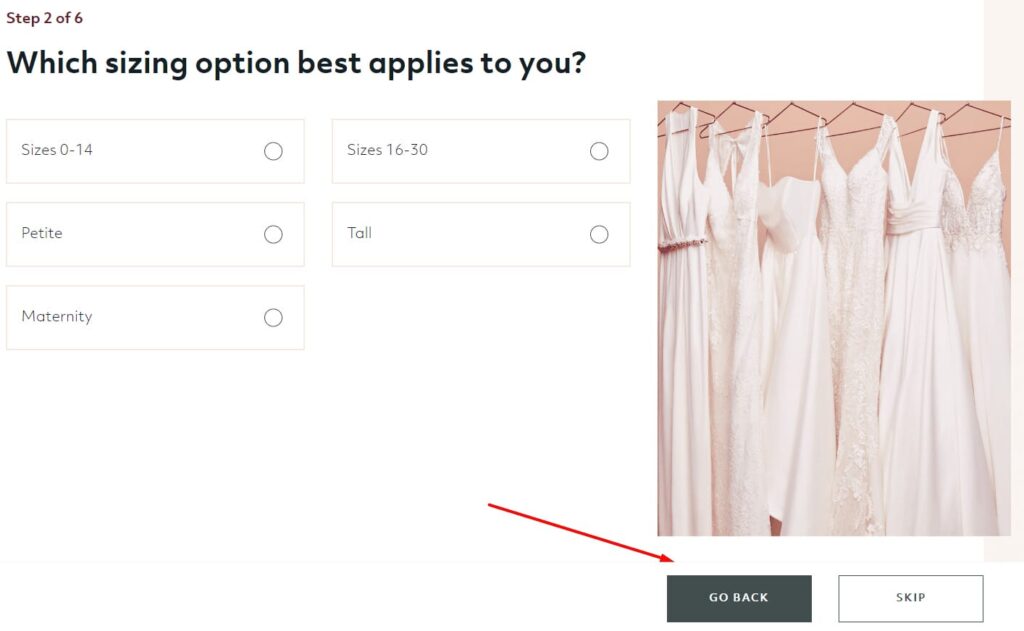
It is important for the quiz to be user-friendly. Provide the ability to go back to the previous question and change the answer.
📌 Read the article: Customer Reviews: Types and Examples of Presentation on the Page
Ensure that as many people as possible see the quiz. Think about where to place the quiz and links to it. You should promote it on various platforms, primarily on the website.
The brand DAVID’S Bridal offers users to choose their style through a quiz. At the beginning of the main page, there is a visual representation of the selection process, a call to action that says, “Answer a few questions in our Wedding Dress Style Quiz to get personalized recommendations,” and a “Start Quiz” button.
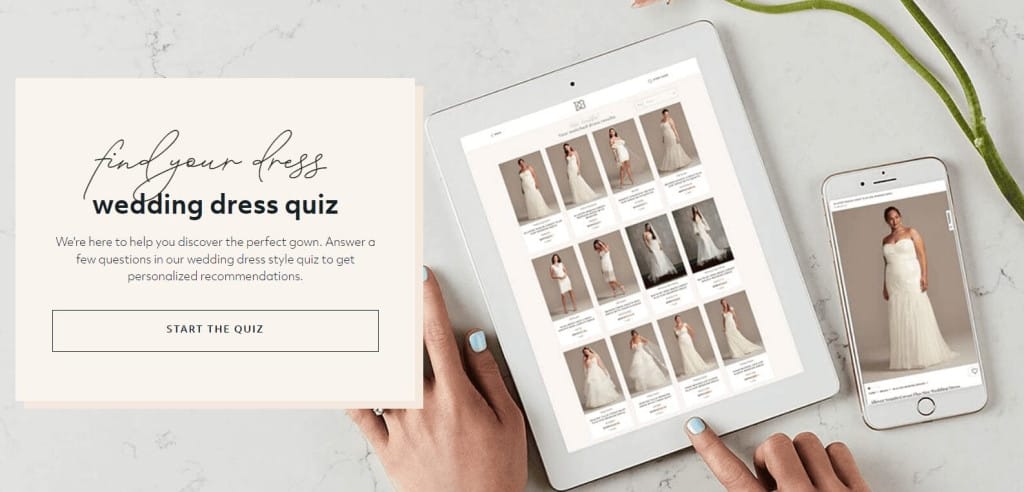
Example of a quiz link added to the site—page
Use social media marketing. The specific platform should be chosen considering the age group you plan to reach. Each platform has its own peculiarities for adding active links and placing surveys.
SEO can be used as an additional method to promote the site with the quiz. Add relevant keywords to the page that will help the user understand the value they will receive, such as a free expert consultation based on the test results.
We recommend using quizzes in email marketing, messenger campaigns, and more. Maintain continuous interaction by adding various tests that complement each other in the messages. This will help maintain the interest of potential clients.
Conclusion
Quizzes are interactive content designed to attract clients, gather data, and increase sales. Surveys placed on websites and other platforms engage users, help them understand the product or service, and choose the best option. For business owners, they serve as a mediator between them and the audience, helping them better understand the needs of potential clients and improve engagement.
To create an effective quiz, you need to thoroughly study your target audience, write precise questions and headlines, come up with a lead magnet, and ensure the quiz functions properly from a technical perspective. Modern surveys can include illustrations, interactive elements, and more.
The choice of format, length, and placement of the quiz depends on the purpose of creating it. It could be lead generation, increasing revenue, attracting visitors to the site, improving brand awareness, or providing some value to clients, such as educational or entertainment content.
Answers to questions
Quiz marketing is a method of engaging clients online through surveys. They can take the form of online product or service selectors, knowledge tests, or entertaining interactive questionnaires. Business quizzes share a common goal—collecting contact data.
Quizzes for businesses help gather contact information of potential clients, analyze the target audience, improve interaction with consumers, and increase their loyalty and brand awareness.
-
Tags
