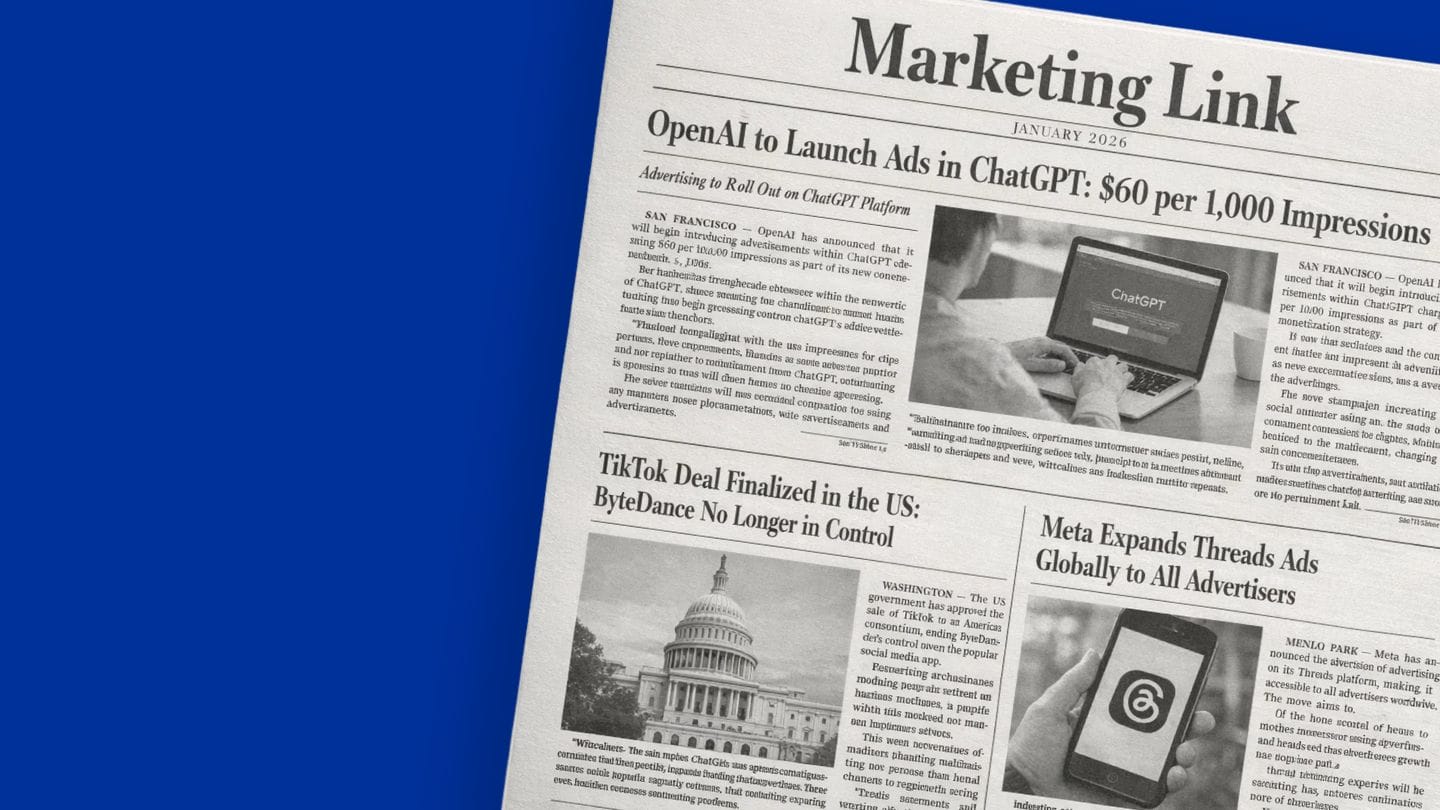
AI & MARKETING NEWS DIGEST—JANUARY 2026
Marketing Link has gathered all the most interesting news for January—AI advertising, YouTube auto-dubbing, ads in Threads, and AI-driven PMax. As well as the main scandals of the month involving Grok AI and France’s digital sovereignty.
Paid Media
Google Ads
Google Ads updated Data Exclusions for Performance Max
Source seroundtable.com
Google Ads added data exclusions in Performance Max—now it is possible to exclude any website visitor lists or customer match lists. The data exclusion feature, which was spotted as a test back in October, is now available in about 80% of accounts.
Google announced a series of AI updates: Google AI Direct and the Universal Commerce Protocol
Source socialmediatoday.com
The most important update—the launch of Gemini agents that work on brand websites, and the Business Agent directly in Google Search. In the first case, a retailer can quickly launch its own Gemini-based AI assistant for consultations, customer support, and guiding users through the purchase process. In the second case, users can interact with a brand directly in search results without visiting the website.
At the same time, Google introduced the Universal Commerce Protocol (UCP)—an open technical standard that allows agents (for example, in Gemini or Google Search) to complete purchases directly, without redirects. UCP already works with Google Pay, and PayPal support is coming soon. This means AI can place an order directly in search or in an AI chat.
Google introduced Direct Offers in search—promotional discounts directly in the AI interface. This is a dynamic discount in the style of “-20% right now”, generated by Google AI. Merchants upload promo codes themselves, and AI decides when to show them. These ads are integrated into PMax and standard Shopping campaigns but are displayed in a separate product block.
Campaign total budgets are now available in Search, Performance Max, and Shopping campaigns
Source blog.google
Google Ads is launching Campaign Total Budgets—fixed budgets for the entire promotion period. Now advertisers can set the total amount to spend for the whole campaign with a start and end date, and Google will automatically distribute the budget daily to spend it fully by the end date without manual daily adjustments. This now works not only for Performance Max, as before, but also for Search and Shopping campaigns.
Google expands Local Pack Ads
Source seroundtable.com
Google has started showing Local Pack Ads in more cases. When users search for local services or products, ads may now appear directly in the local results block, next to maps and reviews, instead of or before organic listings.
These ads run through Google Ads and Local Campaigns, and Google Ads now optimizes their delivery based on user intent signals, geolocation, behavior, and other algorithmic factors. This is how Google blends organic results with ads.
Google launches the Ads Decoded podcast
Source blog.google
Google launched a new podcast, Ads Decoded, where Ginny Marvin, Ads Product Liaison, breaks down what actually works in campaigns—with case studies, AI optimization, algorithm changes, and practices that impact results.
The Google Ads support form now works as an AI agent
Source seroundtable.com
Google updated the Support Form for Google Ads—it is no longer just a form where you describe an issue and wait for a response, but an AI agent that analyzes the request and suggests solutions.
When an advertiser starts typing a description of an issue (for example, why impressions dropped or ads are not approved), the system uses artificial intelligence to understand the problem, ask follow-up questions, and suggest relevant steps without waiting for a live support agent. Google is effectively moving customer support into AI.
Google AI Mode shows prices on product images in search
Source seroundtable.com
Google has started testing automatic price tags directly on product images in AI Mode search results— when AI not only shows a product image but also overlays the price and short offer details. These labels are generated based on data from Merchant Center and similar sources, but AI decides when and to whom to show this “price overlay” to help users make decisions without visiting the seller’s website.
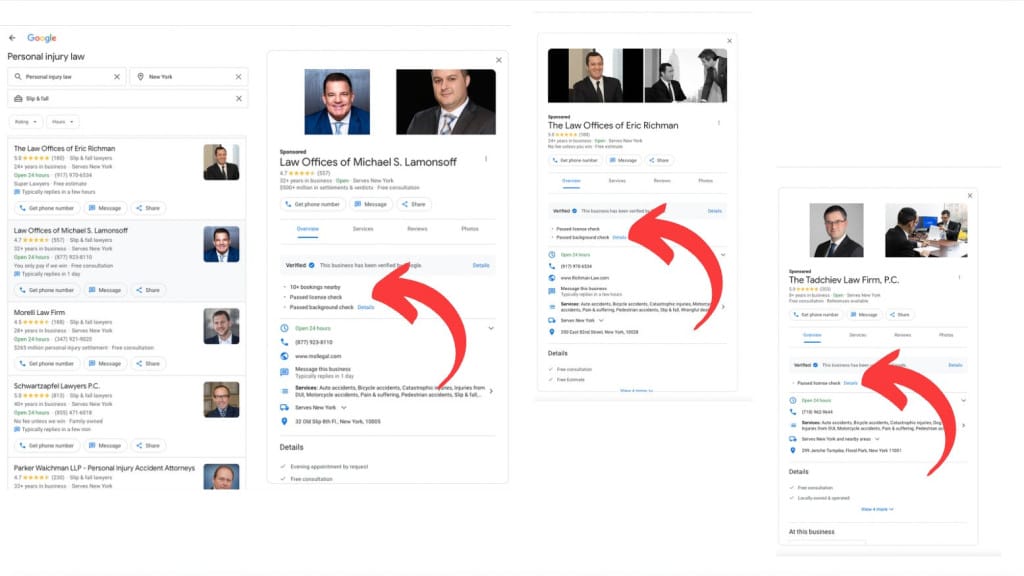
Google adds a Verified section to Local Service Ads
Source seroundtable.com
Google expanded Local Service Ads (LSA) with a new “Verified” section, where businesses with confirmed licenses, insurance, reviews, and contact information receive a special badge in their ads. This change is meant to increase user trust and improve conversions for advertisers, as people are more likely to choose a verified option for services where safety matters (repairs, plumbing, cleaning, and similar services).
Google Ads is testing A/B experiments for Shopping
Source seroundtable.com
Google has started gradually rolling out A/B testing for Shopping campaigns in Google Ads. Now you can compare different ad and strategy options—for example, titles, images, product descriptions, or bidding settings—to see which option performs better in real conditions. This tool was previously available for Search campaigns.
Google Ads is rolling out A/B testing for creatives in Performance Max
Source seroundtable.com
Now you can test which ads, images, or videos perform better without creating separate campaigns or duplicating PMax strategies. Basically, all assets are split into three types: a control group (A), a test group (B), and shared assets. This is useful for those who want to optimize PMax creatives not by guessing, but through real experiments.
Merchant Center now supports Business Agent
Source seroundtable.com
Google has updated Google Merchant Center by adding support for Business Agent—an AI agent that lets brands interact directly with shoppers through AI interfaces, including in Search and in Gemini. Now retailers can connect their Merchant Center account to Business Agent so AI can answer questions about products, availability, price, or shipping. For now, the feature is available only to some retailers in the US.
Google Ads is rolling out Brand Linking
Source seroundtable.com
Google Ads has started rolling out Brand Linking in the Google Ads Lab section—a new way to connect brands to ads (logo, brand name, website, profiles) within Google ads. These settings are synced across different ad formats. According to Google, this helps brands better control their visual identity and increase recognition in paid results, especially in competitive Shopping and Search ads. This feature is still experimental and is available only for selected accounts.
Google Ads added a “Go to” button in Change History
Source seroundtable.com
A “Go to” button has appeared next to each change entry, taking you directly to the place in the account or campaign where the change was made. Before, when reading change history, you had to manually find where the changes happened (for example, in a specific ad group, budget settings, or keywords).
Google adds search data to Demand Gen
Source blog.google
Now advertisers can see attributed brand-search data—how many Google and YouTube queries happened specifically because of the ads. Also, scannable QR codes have appeared in CTV ads, letting viewers on YouTube on TV instantly interact with the ad. Google is also expanding support for the Hotel Center feed, allowing hotel advertisers to include dynamic ads with prices, ratings, and availability in Demand Gen campaigns.
Bing Ads
Microsoft Advertising allows up to 50 search themes in PMax campaigns
Source about.ads.microsoft.com
Advertisers can add up to 50 search themes to their PMax campaigns so AI Ads better understands which queries matter for their business. Now you can combine search themes with LinkedIn profile targeting and other audience signals (including impression-based remarketing). Previously, the limit for search themes in Performance Max campaigns in Microsoft Advertising was 25.
Paid Social
YouTube
YouTube enabled auto-dubbing for all creators
Source blog.youtube
YouTube first launched automatic dubbing for selected creators back in 2024, but now it allows automatic dubbing into other languages for all creators, not only big channels or partners. AI speech synthesis automatically translates the audio into other languages without manual voiceover for any channel, regardless of size. Technically, the system analyzes the original audio → translates → creates a dubbed track.
YouTube priorities for 2026 from the platform’s CEO
Source socialmediatoday.com
Neal Mohan named YouTube’s priorities for 2026—focus on AI, CTV, child safety, shopping, and creator monetization. You won’t need third-party apps anymore, because directly in YouTube you’ll be able to create a “digital creator likeness,” but the other side is that the platform will step up the fight against spam. They don’t say how, but most likely also with AI. For Shorts, they are preparing a carousel of static images in the feed.
Good news for marketers—the platform wants to launch shopping and purchasing without leaving the app.
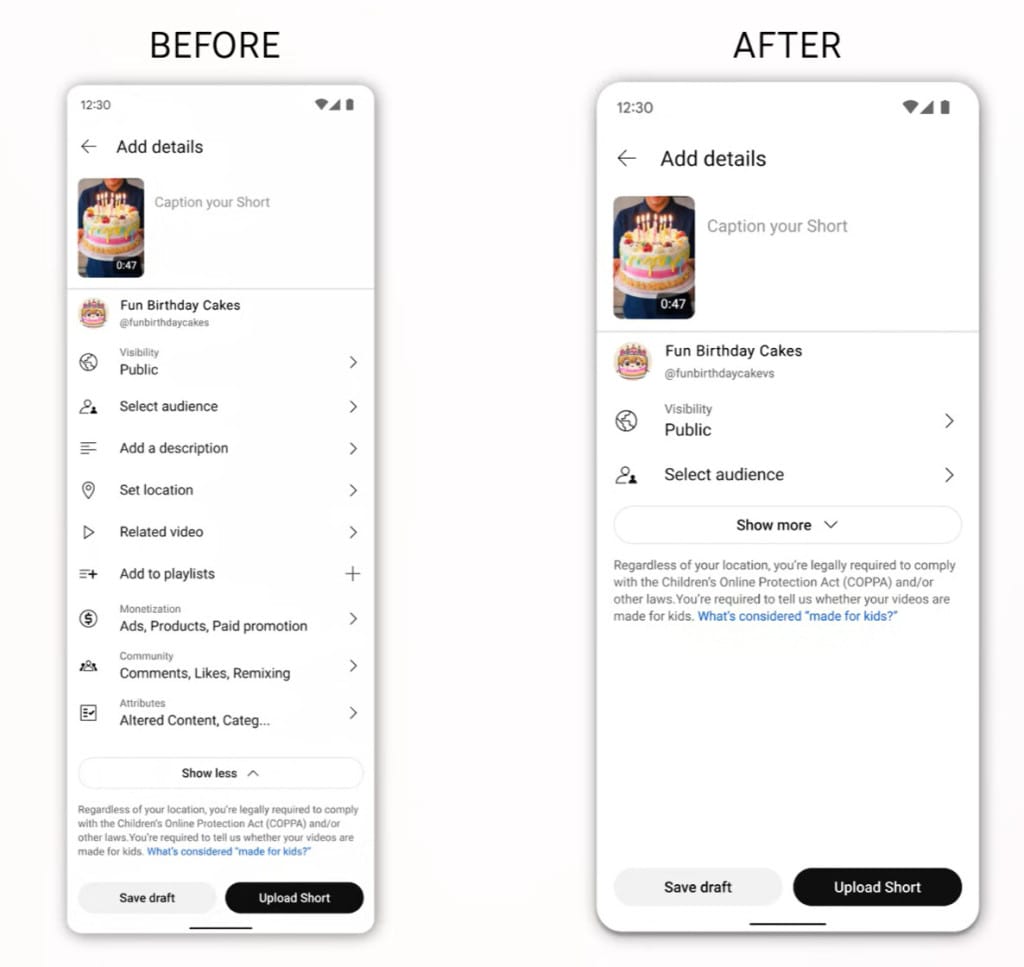
YouTube updated video management options in the mobile app
Source socialmediatoday.com
YouTube added new ways to manage your videos right in the mobile app—instead of three small buttons at the bottom, there is now a full menu: edit, archive, delete, quickly share, change visibility settings, and more. Now it will be so easy that the main thing is not to miss key details in the description to rank better. YouTube expects that this will lead to more content on the platform.
YouTube expanded targeting and added AI image-to-video conversions
Source socialmediatoday.com
Now, when promoting videos through Promote, you can target impressions to people based on their interests (for example, gamers, beauty enthusiasts, travelers, and so on). This complements the existing basic parameters, such as demographics, countries, and languages, and allows you to hit the right audience more precisely.
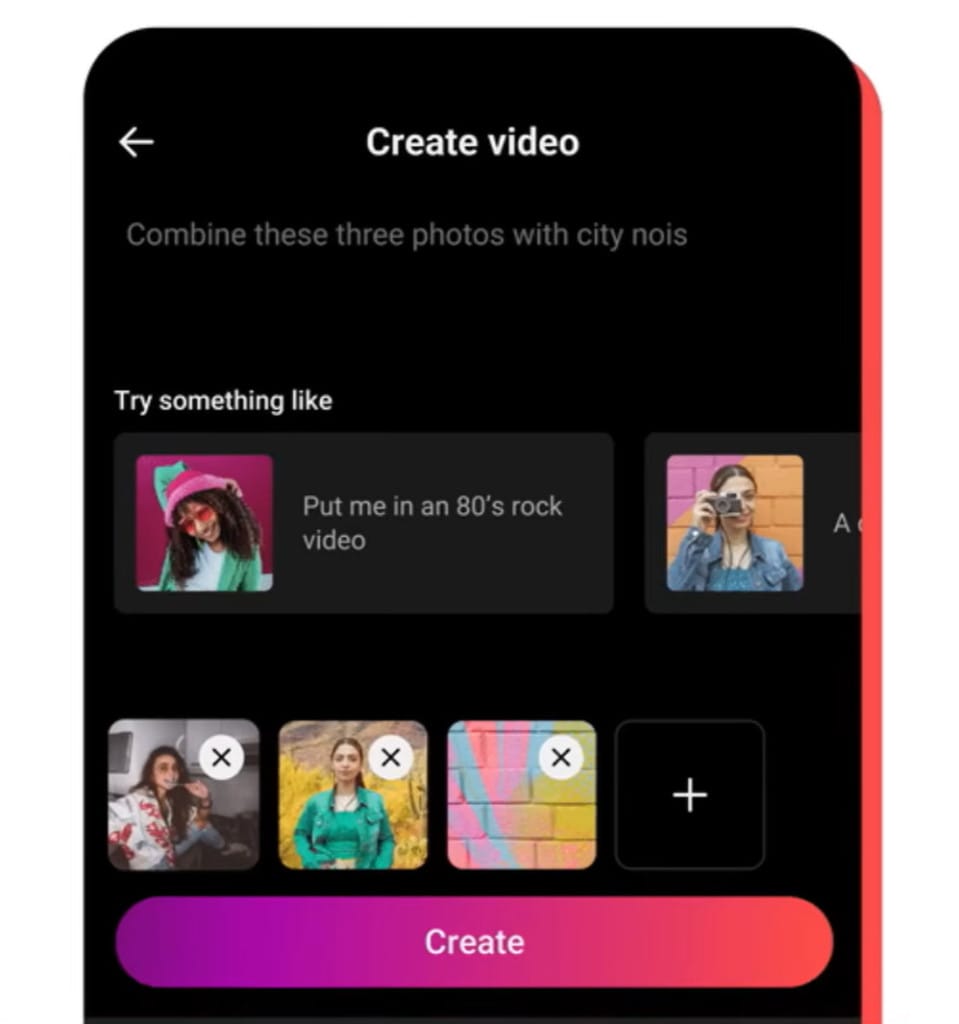
New AI tools help automatically turn images into video—the so-called “Ingredients”—into 8-second clips using the Veo GenAI model. You can add sound to the video.
Meta
Meta made ads in Threads available for all advertisers
Source socialmediatoday.com
If previously ads were available only to selected advertisers, then on January 26, 2026 they will roll out worldwide. Formats—images, video, and carousels, which look “native” among posts and run on the same personalization system as Facebook and Instagram. Why they are rushing—Meta is building new data centers and urgently needs money.
Meta added more languages to AI translations for Reels
Source fb.com
Meta is expanding AI translation in Reels—videos can be automatically translated and dubbed not only with text, but also with AI voiceover. At the start, Meta AI translation for Reels supported four languages: English, Spanish, Hindi, and Portuguese. Now several more languages of India have been added: Bengali, Tamil, Telugu, Marathi, Kannada.
To activate translation mode, you need a Page + professional mode, as well as 1,000 followers—details in support at facebook.com/business.
Meta Ads trends for 2026—WordStream overview
Source wordstream.com
WordStream names the key trends that are already changing the approach to ad campaigns on Facebook/Meta in 2026:
- Clear, accurate data and conversion tracking are foundational, as platforms rely on strong signals for effective campaign optimization.
- Strategy and audience segmentation remain critically important.
- Authentic creative and design tools help ads stand out thanks to real images that outperform AI content.
- Platform AI optimization will get ahead of manual testing.
Pinterest, Reddit, LinkedIn
Pinterest released a 2026 planning guide
Source business.pinterest.com
Pinterest’s guide with key moments, holidays, and events of the year around which brands can build campaigns is divided into three blocks: calendar holidays (fixed dates), personal life events (celebrations, weddings, moves), and major global events that do not repeat as often.
Pinterest emphasizes that 600 million users use the platform specifically for planning and shopping—and that purchase decisions are often made even before an ad campaign starts.
Reddit is launching automated AI Max campaigns
Source redditinc.com
This is a new ad campaign format where AI independently optimizes targeting, bids, and placements to distribute budget as efficiently as possible. In short, Reddit is getting its own version of Performance Max from Meta or TikTok Smart+ campaigns. Reddit will also introduce new “top audiences” in an expanded analytics section.
LinkedIn ran visibility tests in AI search
Source searchenginejournal.com
LinkedIn shared real success signals for AI search that truly impact content visibility in AI-generated results. The authors of the study are Inna Meklin, LinkedIn Director of Digital Marketing, and Cassie Dell, LinkedIn Organic Growth Group Manager.
Two key takeaways from the study:
- Structured data and headings are critically important.
- Factual accuracy and source authority are needed: the author and publication date must be clearly indicated.
TikTok USA: the deal is closed, ByteDance is no longer the main owner
Source searchenginejournal.com
TikTok has officially structured its U.S. business as TikTok USDS Joint Venture LLC. ByteDance kept 19.9%, and the remaining 80.1% belongs to a consortium of American and international investors—including Oracle, Silver Lake, MGX. The deal valuation is around $14 billion. The new CEO is Adam Presser, and Oracle will manage the algorithms and data storage.
SEO
Google warns about risks of subdomain hosting
Source seroundtable.com
Free subdomains (like yoursite.provider.com) may rank poorly in search, even if the content is high quality. Google believes such subdomains are often associated with low quality, spam, or “temporary” projects.
We also remind you that Google reserves the right to block all sites on a hosting provider if it appears to have an unusually high percentage of spam sites.
Google integrates Google Developer Program Premium directly into Google AI Pro and AI Ultra subscriptions
Source blog.google
So developers don’t have to pay separately for cloud when they move from a prototype to a real application. Subscribers will receive monthly Google Cloud credits: $10/month for Google AI Pro and $100/month for Google AI Ultra. These credits can be used for deployment and scaling via Vertex AI, Cloud Run, or the Gemini API.
Which AI bots analyze websites and how they affect SEO—Hostinger analysis
Source hostinger.com
The main idea is simple: traditional SEO bots (Google, Bing, OpenAI, Anthropic, Perplexity, DuckDuckGo, and others) collect content for generative models and assistant-style answers. Some of them already crawl pages as often as search bots, while others do it selectively, depending on the content type.
New data shows that many sites intentionally block crawlers. This means companies that block training bots may exclude themselves from “parametric knowledge”—the long-term memory AI models have about a brand, products, and services, and AI will be forced to build answers based on third-party sources or knowledge graphs rather than from the primary source.
Such a copyright or content protection policy can reduce a brand’s visibility in AI assistants or generative results (GEO), even if it still ranks well in classic search.
Google found bugs in WordPress plugins
Source searchenginejournal.com
The Google Crawl Team filed a bug report against WooCommerce because its add-to-cart parameters created extra URLs that wasted a site’s crawl budget—and WooCommerce quickly fixed the issue, but other unnamed plugins fixed nothing.
Parameters like ?add_to_cart=true are often added not manually by site owners, but through plugins, and they can create new URL combinations that look like separate pages to Googlebot, increasing the number of pages that need to be crawled, downloaded, and indexed, even if they are actually duplicates.
Google published AI Guidelines for WordPress
Source searchenginejournal.com
The recommendations explain how to properly implement AI content and features without harming SEO: AI-generated content should be high quality, relevant, human-reviewed, and tied to the site’s goal, not created automatically.
The guidelines cover proper labeling of AI content, avoiding excessive duplication and automated filling, and how to integrate AI features (chatbots, recommendations, description generation) so they add real value to the site rather than replacing the core information.
SEO traffic will drop by ~43% in three years
Source reutersinstitute.politics.ox.ac.uk
A Reuters Institute study shows that online publishing leaders worldwide expect a significant decrease in organic traffic from search engines—nearly 43% by 2029 due to the expansion of AI-answer search, which increasingly gives users information without visits to websites.
Some respondents even think losses could exceed 75%. According to Chartbeat, traffic from Google Search has already dropped by about 33% across thousands of sites over the past year.
Bing is expanding AI search worldwide
Source seroundtable.com
Microsoft announced that Multi-Turn Search—a Bing mode where AI remembers previous queries in a session and supports multi-step dialogue—is now available globally, not only in limited regions. This feature lets a user ask for clarification, continue a topic, or change the direction of a query, and Bing AI keeps the context of previous answers, like you’re having a conversation instead of entering new keywords. Previously it was available mostly in the U.S. and some English-speaking countries, and now Microsoft is rolling it out worldwide along with support for local languages.
Industry
AI
OpenAI is preparing ads in ChatGPT at $60 per 1,000 views
Source bemarketing.com, theinformation.com
OpenAI is building an advertising platform inside ChatGPT. Ads in ChatGPT are not fully launched yet—testing will begin soon in the free version of the online chatbot and a lower-cost version called Chat GPT Go, which costs $8 per month. The company plans to spend ad revenue on cloud computing services and data centers.
OpenAI intends to set a fairly high price for ads in ChatGPT—about $60 per 1,000 impressions, and OpenAI does not plan to provide advertisers with full performance data, for example whether users made a purchase after viewing. Instead, advertisers will get only general view and click metrics, and more detailed metrics may appear later.
Google integrates Gemini into Gmail
Source nytimes.com
A new AI Inbox feature, instead of a chronological list of emails, analyzes messages by context and priority, automatically creates a to-do list and an overview of important topics, and brings the most important emails to the top. Gemini in Gmail also summarizes long email threads and lets you ask questions in natural language.
Some of these tools are already available to a limited group of testers, and others are expected to appear for all users soon. This is one of the biggest email updates in 20+ years.
Moltbook—a social network only for AI agents
Source nytimes.com
Moltbook has appeared—a social network built in a Reddit-like format where posts, comments, and voting are done not by people, but by autonomous AI agents. The platform, created under the leadership of technologist Meta Schlicht based on OpenClaw, limits human participation to the role of observer, while bots interact with each other without direct human control.
Experts note that many “discussions” look human-like, but do not imply consciousness, and instead demonstrate how AI can imitate social behavior patterns.
Google launches Google AI Plus subscription in new countries
Source blog.google
The AI Plus plan provides access to Gemini 3 Pro and Nano Banana Pro in the Gemini app, creative features in Flow, help with research and writing in NotebookLM, and 200 GB of cloud storage with the option of family access for up to five people. In the U.S., the price is $7.99/month with a 50% discount for the first 2 months for new subscribers, and in other countries it depends on local pricing.
Google Trends launches “Explore with AI”
Source blog.google
A new feature that breaks down trends, explains their cause, and provides insights about search fluctuations. Instead of analyzing tables and charts on your own, you ask AI, and the system immediately explains: what exactly is rising or falling in queries, which events or seasonal factors affected the trend change, and which keywords and segments are worth considering.
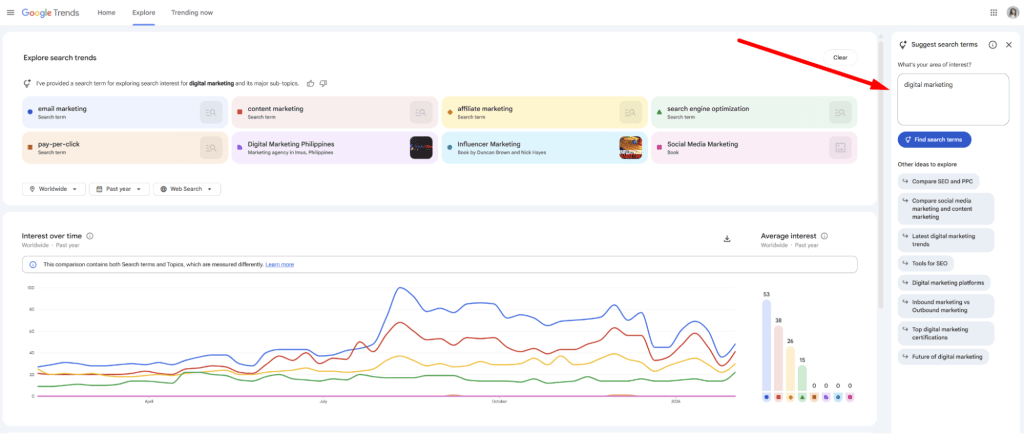
Explore with AI works in dialogue mode—you can ask AI about trends and get a detailed answer with charts, examples, and explanations, not just a list of numbers.
Gemini App launches “Personal Intelligence” in the app
Source blog.google
Google added a new feature in the Gemini App called Personal Intelligence—an AI assistant that answers questions, analyzes your data (calendar, notes, emails), connects them, and provides personalized responses.
Gemini shared how Nano Banana Pro can be used
Source blog.google
Google explained which scenarios Nano Banana Pro delivers the most value in:
- Photo and video editing—changing backgrounds, colors, and composition without Photoshop/plugins.
- AI retouching and correction—automatic frame fixes, removing defects, optimizing for social media.
- Generating marketing creatives—turning ideas into ready banners, stories, and covers.
- Style experiments—creating visual variations (retro, 3D, art effects) to test audience response.
- Personalized images—integrating faces/logos into content with AI adaptation to context.
Gemini is still ad-free—the reason is simple: trust in the assistant
Source searchenginejournal.com
Google DeepMind CEO Demis Hassabis confirmed at the World Economic Forum in Davos that Gemini has no ads and there are currently no plans to show ads inside the AI assistant, because the company believes ads could undermine user trust in a personal assistant. Google says it has not yet decided how advertising fits into a trust model, and therefore is refusing it at this stage, even as competitors (for example, OpenAI with ChatGPT) are already testing ad formats.
Nano Banana trends 2025
Source blog.google
Google summarized 2025 with the Nano Banana AI model—a tool for image generation and editing that went viral in the Gemini App and produced 13 creative trends in a year.
Top Nano Banana 2025 trends:
- 3D figurines—creating realistic miniatures from photos.
- Portraits with a younger “me”—AI creates joint photos from childhood.
- Comics from text prompts—3-panel stories without drawing.
- Art and watercolor styles—turning photos into art.
- Hairstyle experiments—test-driving a new style.
- Complex infographics, holiday edits, isometric images, game scenes, fashion looks, photo restoration, puppies in the frame, and other creatives.
AI product and brand recommendations are very inconsistent: SparkToro research
Source sparktoro.com
A new SparkToro overview shows that AI often gives contradictory, inaccurate, or incompatible recommendations about brands and products that marketers may get from AI tools—the same query can return different brands or products as the “best.” Also, rankings and recommendations sometimes do not match real market data—AI chooses trending brands, not the ones that actually dominate search. SparkToro emphasizes: AI visibility ≠ real visibility, and AI data can be misleading.
Wix launches Harmony AI—a new AI website builder
Source searchenginejournal.com
Harmony AI generates a full structure, design, and content based on a text prompt. You can describe, for example, a business and goals, and Harmony AI automatically creates a site with sections, styles, images, and text, ready to publish.
Chat GPT launches a new Health feature
Source thenextweb.com
OpenAI officially announced ChatGPT Health—a separate section in ChatGPT where you can safely connect your medical records, data from Apple Health, MyFitnessPal, and other wellness apps. This does not replace a doctor and does not diagnose, but it helps you understand your data and better prepare for medical conversations. Access is currently limited—via a waitlist for ChatGPT users (Free, Go, Plus, Pro) outside the EU/Switzerland/United Kingdom, and broader availability on the web and iOS is expected in the coming weeks.
OpenAI is working on its own social network without bots
Source forbes.com
OpenAI is developing a social network that, by design, should eliminate fake accounts and automated bots through real-person verification. The idea emerged as an attempt to solve a problem that turned the platform toxic due to mass bot accounts—and both Meta and X face the same issue. Possible solutions are based on biometric verification (Face ID or iris scanning via the World Orb device) to confirm that a real person is behind every account. A small team (<10 people) is working on the project, and details about launch or format have not been officially confirmed yet.
YouTube became the main data source for AI answers
Source adweek.com
YouTube surpassed Reddit as the most frequently used source of information for AI answers, because videos with clear descriptions, transcripts, and structured content work better for answer generation than simple text posts on forums.
Claude launches Cowork—an AI assistant for everyday tasks
Source claude.com
“Claude Code for the rest of your work”—a new feature in the form of a research preview. Cowork works through Claude Desktop on macOS (and is available for Max/Pro/Team/Enterprise plans) and allows AI to read, edit, create, and organize files directly on your disks and perform complex tasks, for example organizing downloads, compiling a report from a pile of notes, creating a presentation, or processing data from screenshots.
Siri will run on Google Gemini
Source engadget.com
The updated version of Siri in 2026 will run on Google Gemini technology, which the company will use as the foundation for its AI models and Apple Intelligence features, including the voice assistant. Bloomberg and CNBC wrote that Apple may pay about $1 billion per year for a license to the Gemini model, and this integration should fix Siri’s long-standing limitations and make it much smarter with context tasks and long dialogues. The new Siri is planned to be presented in iOS 26.4 in spring 2026, with further major releases in iPadOS and macOS updates.
Meta bought the AI startup Manus for $2 billion
Source techcrunch.com
Manus quickly went viral in Silicon Valley. It creates autonomous AI agents that don’t just respond to prompts, but plan and execute complex multi-step tasks (research, data analysis, coding, and so on) and already sells subscriptions to business clients. The only concern is Meta—the Chinese origin of the founders of this startup.
The Grok AI scandal
Source theguardian.com
Because of Elon Musk’s Grok AI chatbot, over nine days 4.4 million images were created and published, at least 41 percent of which were sexual images of women. After an update, Grok began massively generating sex content without people’s consent, including highly sexualized photos of women and children, including through simple prompts like “remove clothing” or changing poses. This triggered global public outrage, politicians, and human rights advocates, and X was forced to restrict the feature to paid subscriptions to identify users and reduce misuse.
Regulators worldwide (the United Kingdom, the EU, and other countries) considered fines, investigations, and even possible bans related to X/Grok to protect against such AI abuse.
Technology
SpaceX officially acquired xAI
Source nytimes.com
Elon Musk officially completed the merger of SpaceX and his AI startup xAI into a massive corporation with an estimated value of about $1.25 trillion, where SpaceX is valued at about $1 trillion and xAI at $250 billion.
SpaceX now controls AI models (including Grok and the X platform) and plans to use its rockets, Starlink satellites, and even data about launching orbital data centers to build space-based infrastructure for large-scale AI computation, which, in Musk’s view, will be more energy-efficient than on Earth. The deal became part of preparations for a SpaceX IPO, possibly as soon as this summer.
MIT named 10 breakthrough technologies of 2026
Source prnewswire.com
A list of 10 Breakthrough Technologies of 2026—technologies that could truly change the world in the coming years.
Among the key breakthroughs:
- hyperscale AI data centers that create energy challenges;
- new nuclear energy reactors with safer and cheaper designs;
- embryo scoring—genetic tests marketed as a way to choose the best traits of future children;
- AI companions that turn chatbots into emotional partners;
- commercial space stations;
and other innovations that, according to experts, are truly worth watching closely this year.
France is creating “digital sovereignty”
Source thenextweb.com
The government ordered public sector employees to abandon Zoom and Teams and switch to the national platform Visio, with its own AI transcripts and features, so that government data and communications are under French jurisdiction control, not U.S. Big Tech. France and Germany are pushing for European independence from American technologies, investing billions in their own AI, cloud infrastructure, and regulation to avoid technological dependence on the U.S. or China.
